Ebook Info
- Published: 2011
- Number of pages: 416 pages
- Format: PDF
- File Size: 2.03 MB
- Authors: Peter Harrison
Description
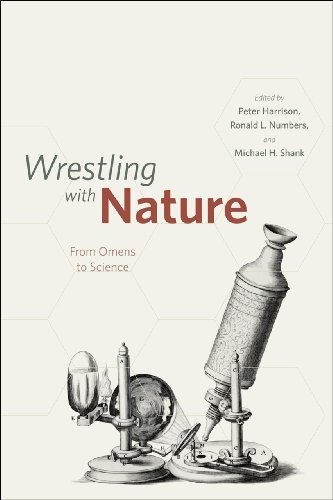
When and where did science begin? Historians have offered different answers to these questions, some pointing to Babylonian observational astronomy, some to the speculations of natural philosophers of ancient Greece. Others have opted for early modern Europe, which saw the triumph of Copernicanism and the birth of experimental science, while yet another view is that the appearance of science was postponed until the nineteenth century.Rather than posit a modern definition of science and search for evidence of it in the past, the contributors to Wrestling with Nature examine how students of nature themselves, in various cultures and periods of history, have understood and represented their work. The aim of each chapter is to explain the content, goals, methods, practices, and institutions associated with the investigation of nature and to articulate the strengths, limitations, and boundaries of these efforts from the perspective of the researchers themselves. With contributions from experts representing different historical periods and different disciplinary specializations, this volume offers a fresh perspective on the history of science and on what it meant, in other times and places, to wrestle with nature.
User’s Reviews
Reviews from Amazon users which were colected at the time this book was published on the website:
⭐When did science actually start and how was it practiced through time and diverse cultures? Historians of science have answered this question from many angles in the past, but this collection focuses on how these diverse cultures actually perceived themselves and how they practiced the study of nature in their own context. There is general agreement that science as we know it is a product of the 19th century. Before then, people technically did not “do” science. Most cultures did not have a packaged concept like what we call “science”, no distinctions between natural & supernatural or science & pseudoscience, and Westerners followed the long path of natural philosophy from the ancient world.Further reading:
⭐
⭐Here are samples from the book:Introduction“One of the biggest gaps in the history of science is the paucity of studies of the history of the meanings of “science” and other labels used by investigators of nature to describe their own activities. Recent developments within the discipline suggest that such a study is long overdue, for it is now commonly claimed—rightly or wrongly—that “science” is an inadequate and unhelpful way of describing the systematic study of nature in the past. As a university discipline, the history of science is a relatively young field that traces its origins to the late nineteenth century. Early historians of science often tended to assume that while the science of the past differed in many ways from the science of the present, it was nonetheless essentially the same kind of enterprise. A key feature of these early histories of science was an emphasis on the progressive and cumulative nature of science. Past scientific achievements were understood in terms of the contribution they had made to an increasingly more sophisticated and rational understanding of the natural world. George Sarton (1884-1956), often regarded as the father of the history of science, thus insisted that all material and intellectual progress “can be traced back in each case to the discovery of some new secret of nature or to a deeper understanding of an old one.” For Sarton and a number of his fellow pioneers in the field, the importance of the history of science lay in the fact that it was the one discipline which more clearly than any other demonstrated the progress of human civilization.” (1); “In keeping with this vision, histories of science from the first half of the twentieth century traced humankind s gradual intellectual and material progress from modest beginnings in Egypt and Mesopotamia to the present. The key periods of history, according to this account, were the golden age of Greek science and the scientific revolution of the seventeenth century. It was taken for granted in these large-scale narratives that throughout history, “science,” in spite of its changing context, was more or less the same kind of thing, namely, a quintessentially rational and systematic approach to the natural world. Given this conception of the nature of science, the purpose of setting out its history, as Sarton succinctly expressed it, “was to illustrate impartially the working of reason against unreason.” Science, in every age, was accordingly distinguished from myth, popular prejudice, superstition, religion, and magic. Today, these classical narratives of the history of science still hold considerable appeal for practicing scientists and continue to provide the basic plot lines for popular histories of science. Over the past thirty years, however, historians of science have become increasingly dissatisfied with this story. Some have gone so far as to suggest that “science,” as we now understand it, is a relatively recent phenomenon—specifically, a product of the nineteenth century. Certainly there is merit in the suggestion that in previous periods of history what we would presently regard as science was distributed across a number of distinct but related activities, such as “natural philosophy” and “natural history.” These expressions, it might be argued, were not simply different labels for what later became known as science. In fact, as the use of these two particular terms—natural philosophy and natural history—might suggest, they retained important links with philosophy and history (broadly construed), and they included moral and religious elements that are now almost completely absent from science. It is now often claimed that one tangible indication of the belated birth of modem science was the appearance of a new vocabulary. As one historian put it, “Our present use of the word ‘science’ was first coined in the nineteenth century and, strictly speaking, there was no such thing as ‘science’ in our sense in the early modem period.” This claim draws support from the Oxford English Dictionary, according to which the dominant sense of the term in modern use—branches of study that relate to the phenomena of the material universe and their laws, and which exclude reference to the theological and metaphysical—dates from April 1867. It is also significant that the now-familiar term “scientist” was used for the first time in the nineteenth century and was only fully accepted in the early twentieth. Pushing the lexicographical evidence even further, specialists of different historical periods have often make similar claims about the meanings of “science.” Sir Geoffrey Lloyd writes in relation to the study of nature in ancient Greece that “science is a modern category, not an ancient one there is no one term that is exactly equivalent to our ‘science’ in Greek. Historian of medieval science David Lindberg observes that the modem term “science” has connotations that differentiate it somewhat from the earlier study of nature. If we come to the Middle Ages with our modem conceptions of science in mind, he cautions, the result is likely to be a distorted impression of the past. Expressing the point even more strongly for the sixteenth century, Nicholas Jardine has observed that “no Renaissance category even remotely corresponds to ‘the sciences’ or ‘the natural sciences’ in our senses of the terms.” Yet the linguistic evidence alone is not conclusive, and the discontinuities between our present understandings of “science” and those of the past can be overstated. The ancient Greeks observed a clear distinction between “science” and mere “opinion,” and from classical antiquity those intellectual practices labeled “science” enjoyed a special status. Medieval discussions about whether, and in what sense, theology was a science reflect this, as do comparable discussions about the scientific status of medicine and certain of the mathematical disciplines. There also seem to be strong affinities between some of the usages of “science” In the seventeenth century and those of our own era, as the title of Galileo’s ‘Discourses Concerning Two New Sciences’ (1638) indicates. The significance of the relatively late appearance of the English term “scientist” is not altogether clear, either, for it might be argued that there were much earlier expressions in other European languages that were equivalent to this label in certain respects. The French ‘savant’ (or ‘scavan’) dates from the seventeenth century. The Italian ‘scienziato’, which Italians still use for their scientists, goes back even further to the sixteenth century. The English used the expression “virtuoso,” which had similar connotations. In no case are these expressions synonymous with “scientist,” but they capture a similar sense of someone who is engaged in the serious and systematic study of nature, amongst other things.” (2-3)Ch.1 Natural Knowledge in Ancient Mesopotamia“In the context of the ancient near east, and in particular Babylonia – which represents most the most important locus of scientific activity before the classical period of ancient Greece – we can say at the outset that neither the words nor the concepts “science” and “nature” were part of the conceptual landscape. The same is true for astronomy, as we understand it today.” (9); the views of the heavens of ancient cultures are “irreducibly different from ours” (9-10); review of sources on Mesopotamian astronomy available – mainly cuneiform tablets and unreliable astronomical reviews by ancient Greek and Roman writers; Babylonian sources range from 1800 BC to 75 AD; prominence of omens and divination; horoscopes and the zodiac; astrology; the “Enuma Elis” is a major source for Babylonian astronomy; much of the Babylonian natural order is humans able to see the workings of the godsCh. 2 Natural Knowledge in the Classical WorldPliny’s universe was eternal, a very large sphere, rational, and a god; “Indeed, there is no real ancient analog of the modern scientist, whose research is funded by government or industry, and who works in a laboratory producing research publications on a full-time basis. There are ancients who can be said to “do science” (forgiving the anachronism of the nineteenth-century word “science” here), but the institutional contexts are so very different from the modern ones as to make it difficult to describe this doing as what we would think of a job. Instead, what we have is a situation where well-educated (and therefore typically upper-class, almost universally male) individuals performed various investigations into nature whenever they could afford the time.” (39); natural philosophy; the cosmos being spherical was a very common view and was best argued by Aristotle; mathematics and observation in Ptolemy and GalenCh. 3 Natural Knowledge in the Arabic Middle Ages“The study of nature in the medieval Arabic-speaking world was characterized by two currents that usually flowed in parallel, while occasionally crossing over and feeding one another: these were the intellectual traditions associated with ‘kalam’ and ‘falsafa’. Although one is tempted to translate these terms respectively as “theology” and “philosophy,” it is not clear how helpful such labels are for understanding the differences between the two, since both traditions were interested in roughly the same set of questions, and their answers often shared common intuitions. Perhaps a better way to distinguish between the two is to consider how the historical actors viewed themselves and what they thought the differences were. The proponents of ‘falsafa’ saw themselves as adopting, adapting, and generally extending the Greek philosophical and scientific tradition, while the advocates of ‘kalam’, envisioned themselves as promoting a way of thought intimately linked with the Arabic language and the Islamic religion. The emphasis of this characterization is on the two groups’ own perceptions of themselves rather than whether the perceived differences were as real as they thought. This chapter focuses primarily on the notion of nature as it appears in the ‘falsafa’ tradition, namely, as a continuation of Aristotle’s discussion of nature as well as that by the Greek Aristotelian commentary tradition.” (59-60); “The English term “nature” comes from the Latin ‘natura’, which itself is derived from the Latin verb ‘nascor’, “to be born, spring forth, originate.” Latin-speaking philosophers themselves frequently understood the philosophical sense of ‘natura’ by reference to Aristotle’s definition of the Greek term ‘phusis’, which, like its Latin cousin, comes from a verb (‘phuo’) meaning to bring forth, produce, or engender. What is common to both the Greek ‘phusis’ and the Latin ‘natura’ is that a nature has the sense of something arising from within a thing itself rather than coming from without. It was in this vein that Aristotle provided what would become the classical definition of nature as “a certain principle and cause of being moved and being at rest, belonging primarily to that in which it is essentially, not accidentally.” Thus a nature, according to Aristotle, is something wholly internal to a thing that accounts for the various activities (or motions) of that thing. In the Arabic-speaking world, although the philosophers sometimes used ‘haqiqa’ (“truth or reality”) to characterize a thing’s nature—and indeed this term was the preferred term in ‘kalam’—by far the most common philosophical term for nature was “tabi’a” (and sometimes the etymologically linked “tab”. Indeed, when we turn to the Arabic translation of Aristotle’s ‘Physics’, the rendering of the definition for nature is practically verbatim with its Greek counterpart: “Nature [tabi’a] is a certain principle and cause on account of which the thing in which it is primarily is essentially, not accidentally, moved and at rest.” Virtually every Arabic-speaking philosopher simply assumed this definition, either implicitly or explicitly.” (60-61)Ch. 4 Natural Knowledge in the Latin Middle Ages“Today, the English word “science” and its counterparts in other vernaculars denote primarily the systematic inquiry into nature, an activity that is firmly anchored in the world’s universities. This partnership traces its ancestry to the later Middle Ages.” (83); from the 13th century til today universities gave a home to specialized studies of nature; the rich diversity of the sciences (included mathematics, moral philosophy, rational philosophy, etc)Ch. 5 Natural History“A reading of other natural histories from this period brings additional surprises: justifications for the study of nature were markedly different from those of our own era, the practice of natural history called for procedures utterly unlike those that we commonly associate with the natural sciences, and the very object of study—”nature”—was conceptualized differently. Finally, if we consider the career of natural history, from its revival in the sixteenth century to its decline in the nineteenth, in each of these aspects—its relation to other disciplines, its motivations and justifications, its methods, its subject matter—the enterprise of natural history underwent significant change. In short, the natural history of these earlier historical periods bears only a remote resemblance to any currently practiced discipline.” (118); in the Renaissance natural history was revived; natural history was loosely what we would call zoology – a complete catalogue of living creatures; natural history was a religious duty; Carl Linnaeus; Francis Bacon; 19th century events for natural history; natural history may still be alive today under the field of “ecology”Ch. 6 Mixed MathematicsOn the place of mathematics as a discipline; in the 17 century the term “mixed mathematics” emerged and a few decades later the term “physico-mathematics”Ch. 7 Natural PhilosophyBy 1815, natural philosophy had transformed into classical physics (173-174); “The character of natural philosopher is more difficult to set forth than the nature and periods of natural philosophy. A common escape, which makes natural philosophers “practitioners” of natural philosophy, will not do. “Practitioner” has too much the air of “professional,” as in “general practitioner.” Johnson gives clergymen and idolaters (“papistical practitioners”) as examples. He also allows the use of the term for an “exercised, thorough-paced practitioner of … vices,” or anyone else who does something habitually). Although some eighteenth-century people practiced natural philosophy as an art or profession and others used it to practice upon the gullible, most who claimed the title natural philosopher did not consider natural philosophy a vocation. In 1718 the Royal Society asked its members to identify their interests, “to show what all are good and bad for.” Almost 60 percent could not manage to name a subject. Half of those who did, some forty Fellows, specified “mathematics and natural philosophy,” not because they “practiced” them but because Newton had. Except for a very few, they were at most dilettantish cultivators of their favorite sciences.” Even those who devoted much of their time to natural philosophy avoided the stain of practice. For the same reason, “men of science,” as they liked to call themselves in the nineteenth century, rejected William Whewell’s neologisms “scientist” and “physicist” as smacking of “dentist, “a paid practitioner of an unpleasant profession.” On the continent, ‘physicien’ and its counterparts ‘Physiker’, ‘Naturkundiger’, and ‘fisico’ may have had a shade more of the professional about them than natural philosopher. The salaried members of the leading academies, specifically those of Paris, Berlin, and St. Petersburg, were required to contribute original papers to their academies’ publications. Most of the members of the provincial academies in France were professional men in the eighteenth-century sense—lawyers, doctors, clergy, military men—and improving agriculturalists. It was much the same in the economic and patriotic societies in the Germanies, with, perhaps, a greater proportion of small landholders. No more in Europe than in England was a term with the professional overtones of “scientist” required. ‘Scientifique’ used as a noun and ‘Naturwissenschaftler’, the equivalents of “scientist,” were introduced in the later nineteenth century. Few among those who called themselves natural philosophers or ‘physiciens’ followed the “Encyclopedie’s” dictate about philosophizing: “A true philosopher does not see through others’ eyes.” The Royal Society’s arms bear a similar slogan, ‘Nullius in verba’, which the learned recognized as Horace’s injunction not to swear allegiance to any school or master. “The philosopher,” continues the “Encyclopedie”, “is to give the reasons for things, or, at least, to seek them. Those who stop at reporting what they see are only historians. Those who calculate and measure the proportions of things, their sizes and values, are only mathematicians. But he who arrives at discovering the reasons why things are as they are and not otherwise, is a true philosopher.” What applied to the genus philosopher applied also to the species natural philosopher, since physics, according to the “Encyclopedie”, made up a third of philosophy. The natural habitat of the true natural philosopher was the academy of science. There are indications that the proportion of true natural philosophers in them increased after 1770. In 1776, the Royal Society called a moratorium on the election of foreign members who, on average, were less truly philosophical than even the English; and when it lifted the ban, it required evidence of productive engagement with natural philosophy (or some other science) for admission. Another example is the Society Italiana delle scienze, founded in 1782 to strengthen ties among the natural philosophers of the peninsula. Despite its mission of inclusiveness, the society applied the tightest tests of the time, to the approval of those who passed it. The polymath peripatetic Jesuit physico-mathematician Roger Boscovich wrote the society’s founder: “I’m glad that your Society ltaliana is progressing and I entirely agree that it will be very good to restrict the number [of its members] so as not to make it a Noah’s arc.” Similarly, the Hollandsche Maatschappij der Wetenschappen, which had begun in 1758 with a membership representative of all the literate animals in nature, had restricted itself by the end of the century to “professionals who are professors, or have acquired their reputations by ‘their’ work.” The rise in the proportion of professionals and professors in the academies coincided with an explicit acknowledgment of the arrival of exact natural philosophy. In 1785 the Paris Academy added a new class of “experimental physics” to its group of mathematical sciences. Likewise, in 1807 the Hollandsche Maatschappij established a new division for “experimental and mathematical sciences.” The Hollandsche Maatschappij’s specification of ideal academic types included two novelties: professionals and professors.” (179—181)Ch. 8 Science and MedicineMedicine was often seen as an art and technical for most of history; in the late 18th century, but mainly the early 19th century, medicine became associated with science more and more with some historians estimating clinical medicine arriving around the 1790s in France and spreading everywhere eventually; Americans got trained in Europe e.g. Germany) in clinical medicine but when they returned to America they could not find employment since America had not developed clinical medicine like Europe had – so in 1893 the first real American medical science school opened up: John Hopkins School of Medicine; the emergence of many medical sects influenced the drive to distinguish true medical practice from other form of healing; alternative forms of medicine (e.g. osteopathy, chiropractic, etc) emerged which also cloaked themselves as scientific endeavorsCh. 9 Science and Technology“Huxley’s lament marks one position in a long-running discourse among scientists and engineers in Britain and the United States about the proper relationship between what was generally called “science and the useful arts” in the nineteenth century, “pure and applied science” from the 1880s to World War II, and “science and technology” from the 1930s to the present. The existence of multiple phrases in this discourse does not indicate a confusion in terminology nor a search for the correct terms to name timeless and spaceless referents. Instead, the multiplicity of key phrases, each of which conveyed a variety of meanings, indicates the historical complexity of debates about epistemology, the authority of science, and the boundaries marking the fields of science and engineering in the nineteenth and twentieth centuries.” (225); “The phrase “pure and applied science,” rather than “science and technology,” dominated discussions among scientists and engineers about the relationship between systematic knowledge and the useful arts in the United States from the early 1880s to the 1930s. The term “technology” was not part of these debates in the nineteenth century because at that time it chiefly meant the “scientific study of the practical or industrial arts,” a meaning popularized by the names of such prominent technical colleges as the Massachusetts Institute of Technology, founded in 1865.” (226); engineering as “applied sciences” and engineers as “applied scientists”; science and technology as social forces; some major changes that affected the views of both science and technology from the 1880s til today are the growth of engineering inside firms, the growth of industrial research laboratories, two world wars and the Cold war, and technological unemployment during the great depressionCh. 10 Science and Religion“It was not always so. Indeed, prior to about the middle of the nineteenth century, the trope “science and religion” was virtually nonexistent. To be sure, there was a good deal of discussion of the appropriate relationship between nature and the Bible, the two “books” that God had given humans for their edification. But because virtually all of the participants in that discussion agreed that the Author of those two books would ensure that no real contradiction in their testimony could occur, they tended to limit their focus to the relative value and perspicuity of God’s two modes of revelation. They did not grapple with the more global issue of the interaction of “science and religion.” The pairing of science and religion did not become prominent until the definition of both terms attained recognizably modern form. “Religion” was the first to do so. Within the Christian tradition, with which this paper deals, elite members of the church hierarchy had long devoted attention to theology, but prior to the seventeenth century, most adherents of the faith had treated religion primarily as a life of piety and communal devotion and a set of ritual practices. But with the proliferation of beliefs that occurred in the wake of the Reformation and the discovery of a plethora of “heathen” beliefs during the course of Europeans’ voyages into hitherto uncharted parts of the world, doctrinal claims assumed new importance, and by the end of the Enlightenment “beliefs” had become central to the way that people envisioned the nature of religion. The nature and meaning of “science” also changed in important ways. During the seventeenth and eighteenth centuries, students of the natural world called natural philosophers and natural historians sought to associate their efforts with theological inquiries and made God-talk central to their endeavors. Isaac Newton, for example, maintained that whatever truths might be gleaned from the Scriptures, “the proof of a Deity and what are his Properties belong to experimental philosophy.” John Winthrop IV, an American who made something of a name for himself in the British colonies as a practitioner of natural philosophy, echoed Newton’s claim, declaring in 1753 that “the consideration of a DEITY is not peculiar to Divinity, but belongs also to natural Philosophy.” Natural historians, by calling attention to the multitude of ways in which living things attested to the existence of a rational and benevolent Deity, also gave their studies a distinctly theological cast. In the face of such commitments, titles juxtaposing “natural philosophy and religion” or “natural history and religion” were conspicuous by their absence. The boundary between the natural sciences and religion in Great Britain and North America, the geographical foci of this chapter, remained extremely porous well into the nineteenth century. This has prompted some historians to suggest that the production and dissemination of science and religion were emanating from a “common context.” There are certainly some grounds for adopting that position. Many Christians believed that scientific inquiry disclosed “statements, specifications, facts, details, that will illustrate the wonderful perfections of the infinite Creator”; therefore, they thought it reasonable to regard “the calm investigation of science, stamped with the seal of Christian charity,” as “the best of all swords and all shields.” Moreover, some Christians valued the sciences for the light they could shed on the meaning of biblical passages relating to Creation, Noah’s Flood, and other incidents in sacred history. Although efforts were sometimes made to show that the conclusions of individual sciences could be reconciled with revealed or natural theology, there was little sense that religion and science constituted fundamentally different enterprises. Rather, the view that prevailed in the mid-nineteenth century was that articulated by Samuel Harris, a clergyman who eventually became a professor of theology at Yale, when he declared in 1852 that “every science runs into theology; every science borders on theology, and the explorer cannot traverse it without presently crossing over into the theological domain” Notwithstanding the prevalence of that view, however, as early as 1750 an ever-growing number of investigators in the realms of natural philosophy and natural history began making determined efforts to pursue their inquiries untrammeled by concern with the testimony of the biblical narrative. They also began to substitute natural laws and agencies for the supernatural in accounting for the history, structure, and operation of nature. Hostility to religion motivated few of these investigators, and for much of the nineteenth century most continued to ascribe events to supernatural intervention when they found it impossible to explain them adequately in other ways. Nevertheless, the trend was clear “men of science” increasingly came to assume that “it is the aim of science to narrow the domain of the supernatural, by bringing all phenomena within the scope of natural laws and secondary causes.” Charles Darwin may not have sufficiently appreciated the options available to an omnipotent God when he asserted that the doctrine of special creation was no explanation at all. However, the thrust of his complaint highlighted the direction in which thinking about the nature of scientific explanation was moving. Although the rate at which the norms and practice of scientific investigation became naturalistic was slow and uneven, by 1875 many natural scientists clearly preferred to confess their ignorance rather than invoke the supernatural in discussing natural phenomenon. What later came to be called “methodological naturalism” emerged as the reigning norm within the Anglo American scientific community.” (254-256); in the late 19th century the term “science” was more constricted than in previous tomes; Figure 10.1 shows that in 1800 virtually no books were indexed on “Religion and Science”, but by the 1870s and 1880s there were quite a few and the next century by 1995 there were many more such books (259); Figure 10.2 shows that the phrase “Religion and Science” in periodicals was virtually nonexistent in 1825 and grew from the 1860s on wards (260); how religion and science became seen as two different spheres in the 20th century; creationism, intelligent design, and scientific naturalism’s impact on the views of science and religion* Ch. 11-14 are in the comments section below.
⭐
⭐
⭐
⭐
Keywords
Free Download Wrestling with Nature: From Omens to Science in PDF format
Wrestling with Nature: From Omens to Science PDF Free Download
Download Wrestling with Nature: From Omens to Science 2011 PDF Free
Wrestling with Nature: From Omens to Science 2011 PDF Free Download
Download Wrestling with Nature: From Omens to Science PDF
Free Download Ebook Wrestling with Nature: From Omens to Science