

Ebook Info
- Published: 2006
- Number of pages: 894 pages
- Format: PDF
- File Size: 9.25 MB
- Authors: Katharine Park
Description
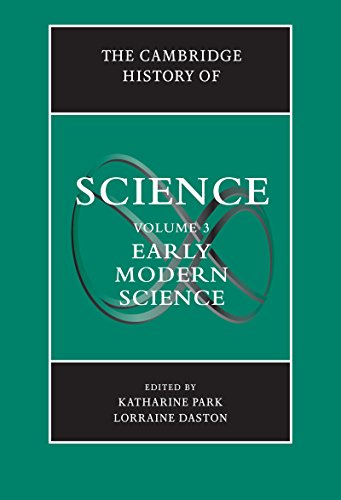
This book provides a comprehensive account of knowledge of the natural world in Europe, c.1500–1700. Often referred to as the Scientific Revolution, this period saw major transformations in fields as diverse as anatomy and astronomy, natural history and mathematics. Articles by leading specialists describe in clear, accessible prose supplemented by extensive bibliographies, how new ideas, discoveries, and institutions shaped the ways in which nature came to be studied, understood, and used. Part I frames the study of ‘The New Nature’ in the sixteenth and seventeenth centuries. Part II surveys the ‘Personae and Sites of Natural Knowledge’. Part III treats the study of nature by discipline, following the classification of the sciences current in early modern Europe. Part IV takes up the implications of the new natural knowledge for religion, literature, art, gender, and European identity.
User’s Reviews
Reviews from Amazon users which were colected at the time this book was published on the website:
⭐Very efficient.
⭐Excellent book for all those interested in the history of science
⭐This book was honestly not a pleasure to read. But if you’re reading it, you’re only concerned about learning the scientific knowledge of the time period, right? This book makes an excellent resource for what is presumably its intended audience, which is the scholars that need to look up information about a particular subject about the science of 1492-1720. If you read through this entire book in the hopes of learning the “sum of human knowledge” at the time period…well, you might get something along those lines, but you’ll be bored by the dull and jargon-filled writing style.Here’s a brief overview of what you’ll find in this book:After the book’s introduction, it starts with a description of physics studies at the time. Combined with the next section on methods of obtaining scientific knowledge, the first two hundred pages (excepting the Introduction, which is well-written) are some of the worst to read for a general audience. It would seem that unless you have a Ph.D in physics, the first quarter of the book won’t enrich your understanding of it much. Summarizing the methodology section, the message here is that experimentation was not yet accepted as scientifically usable until the very end of this era. Until then, observation of nature and arguing about observations through rhetoric were the only reputable methods of discovering knowledge.Part II of the book is the “who studies science, and where do they study it at” section. Personally, I think this is the most well-written and informative section of the book. The message of this section is that there was no such thing as a “scientist” in this time period, and that the most successful contributors to science at the time were those that could obtain patronage from a nobleman in exchange for teaching the nobleman about math and science. University professors, at this time, were not nearly as influential or reputable as they are today.Part III of the book is the real substance of the book — the “what science was studied” section. Botany, Astronomy, Optics, Mechanics, and Mathematics seem to be the hot topics here, as these all came out of the era much more advanced than they entered into it.Part IV of the book is the cultural effects of science at the time. Unfortunately, this whole section seemed lacking in any real substance. The Literature section was mildly informative, but the sections on Religion, Art, and Gender just reiterate what previous chapters had already said, and not as well. It seems almost like these chapters were thrown in as a precursor to future volumes of the book where more interesting discussions can happen in these chapters.All in all, this book was tedious to read from cover to cover. Scholars looking for a particular piece of information about science from 1492-1720 will most likely find it here, so they can cite it in their own research…but for an average reader looking for a comprehensive explanation of knowledge in those centuries, they will be disappointed here. I also would strongly recommend not making this your first introduction to the material, as these authors write as if you have already heard of the famous and important people and ideas of the time. I read
⭐and
⭐before reading this book, and I’m very glad I did so. I would say that those two books combined give a better overview than this book does, despite those being shorter in length combined and broader in topics.The organization of this book also somewhat forces the reader to only be interested in reading a section or two out of this book, instead of reading it all the way through, because every chapter re-introduces the same handful of people (such as Aldrovandi, Copernicus, and Galileo) and organizations over and over again.Use this book as a citation in a graduate paper, but don’t expect it to be a good read.
⭐The content is, you would expect, very good.The formatting is outrageously bad, especially for an ebook of this price. The table of contents is not interactive. The search function is unusable. The book is a series of separate pages which do not flow to the screen. All told this is a frustrating reading experience that you would not expect from Cambridge.
⭐Iperbolic background
Keywords
Free Download The Cambridge History of Science: Volume 3, Early Modern Science in PDF format
The Cambridge History of Science: Volume 3, Early Modern Science PDF Free Download
Download The Cambridge History of Science: Volume 3, Early Modern Science 2006 PDF Free
The Cambridge History of Science: Volume 3, Early Modern Science 2006 PDF Free Download
Download The Cambridge History of Science: Volume 3, Early Modern Science PDF
Free Download Ebook The Cambridge History of Science: Volume 3, Early Modern Science