Ebook Info
- Published: 2016
- Number of pages: 408 pages
- Format: PDF
- File Size: 13.53 MB
- Authors: Hao Wang
Description
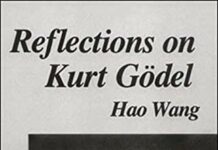
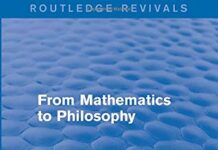
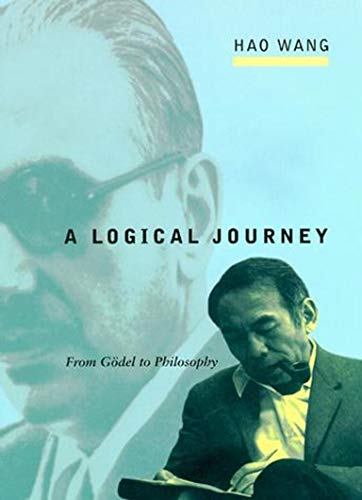
Hao Wang (1921-1995) was one of the few confidants of the great mathematician and logician Kurt Gödel. A Logical Journey is a continuation of Wang’s Reflections on Gödel and also elaborates on discussions contained in From Mathematics to Philosophy. A decade in preparation, it contains important and unfamiliar insights into Gödel’s views on a wide range of issues, from Platonism and the nature of logic, to minds and machines, the existence of God, and positivism and phenomenology.The impact of Gödel’s theorem on twentieth-century thought is on par with that of Einstein’s theory of relativity, Heisenberg’s uncertainty principle, or Keynesian economics. These previously unpublished intimate and informal conversations, however, bring to light and amplify Gödel’s other major contributions to logic and philosophy. They reveal that there is much more in Gödel’s philosophy of mathematics than is commonly believed, and more in his philosophy than his philosophy of mathematics.Wang writes that “it is even possible that his quite informal and loosely structured conversations with me, which I am freely using in this book, will turn out to be the fullest existing expression of the diverse components of his inadequately articulated general philosophy.”The first two chapters are devoted to Gödel’s life and mental development. In the chapters that follow, Wang illustrates the quest for overarching solutions and grand unifications of knowledge and action in Gödel’s written speculations on God and an afterlife. He gives the background and a chronological summary of the conversations, considers Gödel’s comments on philosophies and philosophers (his support of Husserl’s phenomenology and his digressions on Kant and Wittgenstein), and his attempt to demonstrate the superiority of the mind’s power over brains and machines. Three chapters are tied together by what Wang perceives to be Gödel’s governing ideal of philosophy: an exact theory in which mathematics and Newtonian physics serve as a model for philosophy or metaphysics. Finally, in an epilog Wang sketches his own approach to philosophy in contrast to his interpretation of Gödel’s outlook.
User’s Reviews
Editorial Reviews: Review The great logician Kurt Godel devoted many years of his life to philosophy but published little not directly related to his technical work. The late Hao Wang’s reconstruction of his remarkable conversations with Godel records Wang’s encounter with and reflection on a very distinctive view of the world, at odds with the spirit of the time. The conversations also fill out many of the cryptic remarks in godel’s published philosophical writings. This book will be indispensable for anyone wanting to understand Godels philosophical thoughts. (Charles Parsons, Edgar Pierce Professor of Philosophy, Harvard University)In his later years Godel chose to express to Hao Wang various aspects of his unpublished philosophical views, with the understanding that they would someday be published in the form, in some sense, of ‘discussions.’ The result is a remarkable book which contains important and unfamiliar insights into Godel’s views on a wide range of issues, from mind vs. machine, concept vs. set, and truth vs. proof, to marriage, religion and the ‘afterlife,’ and politics. (Palle Yourgrau, Author of The Disappearance of Time: Kurt Godel and the Idealistic Tradition in Philosophy)Experts in mathematical logic will find this book of engrossing interest. For mere philosphers it will have a different fascination: in seeing how the achievements of a genius can seem to him to provide a firm foundation for a species of Platonism and the conviction of the superiority of minds over computers, and at the same time can encourage him to favour a quasi-Leibnizian speculative metaphysics and theology. Hao Wang records and assesses the whole with an expert and balanced reasonableness. (Sir Peter F. Strawson, Magdalen College, Oxford) Review Experts in mathematical logic will find this book of engrossing interest. For mere philosphers it will have a different fascination: in seeing how the achievements of a genius can seem to him to provide a firm foundation for a species of Platonism and the conviction of the superiority of minds over computers, and at the same time can encourage him to favour a quasi-Leibnizian speculative metaphysics and theology. Hao Wang records and assesses the whole with an expert and balanced reasonableness.―Sir Peter F. Strawson, Magdalen College, Oxford, Endorsement About the Author Hao Wang is Professor of Logic at The Rockefeller University and author of scores of articles and several books on logic, computers, and philosophy, including From Mathematics to Philosophy (extensively discussed with Gödel and containing contributions by him) and Beyond Analytic Philosophy: Doing Justice to What We Know (MIT Press Bradford Books). He is currently preparing a companion volume, Conversations with Kurt Gödel which will concentrate on Gödel’s unpublished ideas. Read more
Reviews from Amazon users which were colected at the time this book was published on the website:
⭐This book, so far, is painfully ‘clear’, and is causing me great consternationonly because it is so thought provoking that i have to put it down after, whatseems to be, every other paragraph ‘and’ put my feet up, close my eyes & ‘thiNk’about what I’ve just read, …and this after i’ve ‘already’ read most all of hisother books, all of Gödel, and completed a project-paper (“The Lemma ofAxiom”), critiquing the basis of logic, per se, used in Gödel’s two incompleteness{“un-decideability”} theorems. ….agh-!!!Without a doubt this book ‘iz’ a ‘necessary’ Necessity, I just haven’t a clue inwhich order one should (for research purposes) read ‘this’ one.A clear 6 out of 5 ⭐️‘s !!!
⭐Wang’s presentation of Godel brings the supergenius mathematical logician within the reach of people who are neither logicians nor mathematicians … at least occasionally. “Godel, Escher and Bach,” a previous best-seller effort, didn’t manage to do that. I never thought I could or would stay with a book I comprehended so little. It was like digging through a 5 gallon drum of sunflower seeds in search of a cupful of sesame seeds that I could digest and metabolize. But I couldn’t stop! Every time I found one of those sesame seeds I could understand and maybe even use to help me understand something else, I got a rush of motivation to keep on reading, in hopes there would be at least one more such sesame seed! The reason was Wang’s delivery, based on his very way of being. He is a smart, trained mathematical logician himself who grew up in a contrasting philosophical culture [featuring Chinese nontheistic assumptions] and he managed to become as humble and honest and open minded and open hearted an individual as I have yet encountered in person or on the printed page. His use of self disclosure … an au currant recommended practice among scientist science writers … demonstrates a Goldilocks model for others to follow: not too much — no egotistical tangents, and not too little — he is remarkably clear about his own assumptons, biases and prejudices. Even if you don’t care much about understanding Godel, the book is worth reading to get acquainted with Hao Wang.
⭐There is so much information about the thinking of Godel. It gives one a fresh perspective on Godel and his proofs.
⭐Anything about Godel is good
⭐As advertised.
⭐A highly readable work for anyone interested in learning more about Gödels personal and philosophical views, beyond his more technical work with mathematical logic. Can strongly recommend it.
⭐I used to know Hao Wang and to a lessor degree Godel. Both were fine mathematicians and anything they would have had to say about mathematics I would have wanted to know. Not surprising as I was a professor of mathematics at the University of California. I admit to not knowing much about philosophy and this book is concerned with Godel’s philosophical thinking. I learned for example that Godel rejected logical positivism which was interesting to me. But when I also learned that Godel created ontological proofs of the existence of both God and the hereafter; proofs that Godel acknowledged would be unconvincing to those who weren’t already convinced I began to feel there wasn’t much meat for me to chew on in this book. A few chats with professional philosophers about Godel’s well known philosophical views convinced me – the book was not for me.Apparently Wang thought otherwise and so you have to decide for yourself.
⭐Reading this book is discovering something entirely new about Kurt Gödel. It is the same revelation I had when I read the theological works of Isaac Newton. With partial exception to Laplace, the great mathematicians were theologians. Of course, Gödel’s reflections fall into the category of “natural theology” or, if you wish, “metaphysics;” nevertheless, it reveals a unity between mathematical innovation and theological thinking. I cannot recommend this book too highly. There is an isomorphism in arguments for God’s existence and arguments about infinity in mathematics (I include formal logic and its metatheory under this same rubric of “mathematics”). For example, mathematical induction resorts to infinity in its argument when it employs the method of recursion. Gödel’s famous incompleteness theorem also employs recursion when he applies Gödel numbering (modeling symbols and formulas in arithmetic with prime numbers). The common theme of noncontradiction in logic and its analogue of dividing by zero in number theory finds its analogue here with metaphysical assertions about the problem of infinite regress when we decline to posit an ultimate or infinite power grounding the entire order of things. This ultimate ground or referent warrants the appellation of “God.” Because part of the order of things involves “personality,” I would add that this warrants positing “God” as “personal,” not “impersonal” as understood by the heathen. Gödel goes through these arguments and much more. His concept of consciousness as a unity sounds like he was influenced by Kant’s notion of the transcendental unity of apperception or it could be an original thought. It is better to read one great book by a great mind such as this than a hundred books by mediocre minds.
⭐Libro importantissimo che illustra la fase più tarda del lavoro intellettuale del logico e matematico più noto del secolo scorso, fase durante la quale egli si occupò di filosofia e teologia, adottando un punto di vista associato alle idee di Leibnitz (monadologia) e Husserl (fondazione della filosofia come fenomenologia assiomatica). Dopo essersi occupato di “logica matematica” il logico delinea qui la possibilità di sviluppare una “filosofia matematica”.
⭐There are a number of books on Godel available, but this book and an earlier one by Hao Wang ‘ Reflections on Kurt Godel’ are essential to a good understanding. They form a solid starting point from which to enter the set of five books on Godel’s collected works.
⭐人生後半のゲーデルは「神意に打たれる」ことを待っていた。プラトンもデカルトもフッサールも、そのような体験を経たのだ、とワン先生との対話で繰り返し語った。ワン先生は「しかしそれは訪れなかった」と前作の『Reflections on Kurt Goedel』で書いていた。自覚がなかっただけで、訪れたんじゃないの?と私は思った。数学は人間意識の創造物なのか、あるいは、人間意識から独立した「絶対の実存」なのか、というのは答えが出しようのない疑問である。そもそも「数とは何か」に答えがない。「数学は絶対の『現実』だ」と信じる人々をプラトン主義者と呼ぶ。「神を信じる者」とハッキリ言ったらいいのに、とも思うが、ある時期から西欧のスーパーインテリ世界では「神」がタブー語のようになった。形而上学(中世神学)への猛烈な反動である。ライプニッツが「モナド」と言ったり、ゲーデルが「one unity」とか言ったりするのは、「神」のことだ。言語ったら疑いもなくまんま人間の作り物だし、「絶対なる何か」を指して何と呼んでもよろしいとは思うが、彼らの言葉に接する凡人にとっては面倒なことだ。ゲーデルが少年時代から青年時代を生きた頃、ヒルベルトという大数学者がいた。彼は数学をチェスのようなゲーム、つまり、「人間意識が作り上げたルールに沿ったゲーム的なシステム」として捉えたらしい。そうなると「不可知はない」となる。そして「We will know − we must know!」という有名なスローガンを唱え、「ヒルベルトプログラム」への参加を仲間たちに呼びかける。二十歳を超えたばかりのゲーデル青年は、この「数学の唯物論化」を粉砕すべく、「不完全性定理」を発表する。数学を、古の場所、神秘の領域に還そうとしたのである。私はこの時のクルト・ゲーデルは神意に打たれたのだと思っている。ただ、こういうことは二回はない、というだけで。本書は、前作『Reflections on Kurt Goedel』に続くワン先生のゲーデル考察本。ワン先生が脱稿前に亡くなって最終校正をかけられなかったせいで、内容的に前作との重複が多い。本書でワン先生が「哲学者としてのゲーデル」を強調するのは、出版当時、ゲーデルはあくまで数学者で、哲学者ではない、と見做す傾向があったからだ。哲学書を出版していない、というのが俗な意味で致命的なのだろうが、ゲーデルは、自分は現代思想の潮流とは真逆にいる人間で、持論を発表出来ない、と感じていたらしい。本を書こうが書くまいが、哲学者は哲学者であろうと私は思っている。頭の中身が哲学者ならば、「本を出さない」という行為も含めて、哲学者だ。後年出版されたゲーデル関連本の重要なソース本であり、他書で引用される「ゲーデル語録」もここから取られている。ワン先生自身の意見が多過ぎると本国密林で批判があったが、ワン先生は書記ではない。ご本人だって優秀なロジシャンなのだから、相手に何か言われれば自分の考えを持つのは当然だろう。神を信じ、来世を信じたゲーデルに対して、無神論者・中国人としてのワン先生の戸惑いのようなものが率直に出ていて面白い。後世の人間は文句を垂れる前にワン先生にシェイシェイと言うべきだ。
⭐
Keywords
Free Download A Logical Journey: From Gödel to Philosophy (MIT Press) in PDF format
A Logical Journey: From Gödel to Philosophy (MIT Press) PDF Free Download
Download A Logical Journey: From Gödel to Philosophy (MIT Press) 2016 PDF Free
A Logical Journey: From Gödel to Philosophy (MIT Press) 2016 PDF Free Download
Download A Logical Journey: From Gödel to Philosophy (MIT Press) PDF
Free Download Ebook A Logical Journey: From Gödel to Philosophy (MIT Press)