

Ebook Info
- Published: 2018
- Number of pages: 352 pages
- Format: PDF
- File Size: 23.55 MB
- Authors: Terrence J. Sejnowski
Description
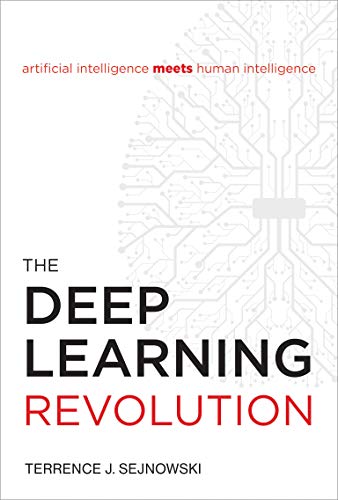
How deep learning—from Google Translate to driverless cars to personal cognitive assistants—is changing our lives and transforming every sector of the economy.The deep learning revolution has brought us driverless cars, the greatly improved Google Translate, fluent conversations with Siri and Alexa, and enormous profits from automated trading on the New York Stock Exchange. Deep learning networks can play poker better than professional poker players and defeat a world champion at Go. In this book, Terry Sejnowski explains how deep learning went from being an arcane academic field to a disruptive technology in the information economy.Sejnowski played an important role in the founding of deep learning, as one of a small group of researchers in the 1980s who challenged the prevailing logic-and-symbol based version of AI. The new version of AI Sejnowski and others developed, which became deep learning, is fueled instead by data. Deep networks learn from data in the same way that babies experience the world, starting with fresh eyes and gradually acquiring the skills needed to navigate novel environments. Learning algorithms extract information from raw data; information can be used to create knowledge; knowledge underlies understanding; understanding leads to wisdom. Someday a driverless car will know the road better than you do and drive with more skill; a deep learning network will diagnose your illness; a personal cognitive assistant will augment your puny human brain. It took nature many millions of years to evolve human intelligence; AI is on a trajectory measured in decades. Sejnowski prepares us for a deep learning future.
User’s Reviews
Editorial Reviews: Review The Deep Learning Revolution is an important and timely book, written by a gifted scientist at the cutting edge of the AI revolution.—Nature—If you’re serious about deep learning, as either a researcher, practitioner or student, you should definitely consider consuming this book.—InsideBigData— Review Sejnowski’s intimate tour of the history and people who have led the deep learning revolution offers insights and anecdotes on every page. The Sturm und Drang of the story permeates the book as you partake of the author’s personal involvement and excitement.―Vint Cerf, internet pioneer About the Author Terrence J. Sejnowski holds the Francis Crick Chair at the Salk Institute for Biological Studies and is a Distinguished Professor at the University of California, San Diego. He was a member of the advisory committee for the Obama administration’s BRAIN initiative and is President of the Neural Information Processing (NIPS) Foundation. He is the author of The Deep Learning Revolution (MIT Press) and other books. Read more
Reviews from Amazon users which were colected at the time this book was published on the website:
⭐This book is NOT about deep learning principles or practice. Despite its titillating title, this is strictly a personal memoir which deals entirely in stories about past colleagues, students, and friends who worked with the author in developing rhe field of neural networks.Since about 1980 Professor Terrence Sejnowski has worked with biologically inspired neural nets. However, his work is NOT notable for the theory behind or the development of today’s deep learning algorithms that arose circa 2006. Thus this book consists wholly of a light historical introduction to most of the people who were active in the days of early NNs (since 1975), and Dr Sejnowski’s kinship with them, but little beyond that.The text explains none of the technical details of Dr Sejnowski’s work, nor the work of other NN pioneers, nor does it offer any tangible predictions or insights into the likely implications of NNs, deep learning, or AI.Frankly, titled as it is, this book was a HUGE disappointment to me. It doesn’t delve into deep learning nor any other facet of artificial intelligence to any extent. Read it only if you want a breezy history of Dr. Sejnowski.
⭐This book is a memoir. In addition, although the author does not explain or go into detail about about deep learning, he gives a good perspective on its development over the time of his career, and places it in a larger perspective. Despite not explaining or clarifying technical terms, theory and practical methods, his book is fairly enlightening, as he contributed in important ways to the field, and knew or worked with numerous researchers who contributed significantly. The book has numerous insightful remarks. He seems to have a very open mind, an enormous amount of curiosity, and a tremendous dedication. I recommend his book to achieve some perspective on this currently important field, which has much potential for contributing to many fields of study, and itself has been a multidisciplinary field. Deep learning seems to have acquired much more importance in recent years with the great progress that has been made in computers, in their computing power, miniaturization and success that deep learning has achieved in numerous specialized areas.
⭐How can someone who was this deeply involved with this whole process of AI development totally ignore others doing parallel work and pretend they are being objective and complete? I was wary as soon as I went to the index and looked for Jeff Hawkins (who in my estimation is way ahead of where Sejnowski and Hinton are in figuring out this theory) and….you guessed it not mentioned. So he has a competing lab, but still, you should cover competitors who are way ahead of you. Just a warning, this is not the whole story and a bit self-serving for Hinton and Sejnowski.
⭐This book is a historical review of deep learning, focusing almost exclusively on the authors work or works leading to the authors work. This self-serving writing leads to a lack of breadth of the history of the field and a sense that the only important problems are those solved by Terrence Sejnowski. Not that he hasn’t done a good amount of important work, but this book reads like a written exercise in self-gratification.
⭐This book is fantastic. Terrence J. Sejnowski is a true omiscent individual. In this book, you will learn not just about the history and evolution of AI, ML and DL but you will understand the correlation between cognitive neuroscience and deep learning. It is written as a “hybrid” memoir. And although, I understand the concepts of which he writes about. The way he wrote this book is just so rich, and in depth that you appreciate his stories, and experience. That said, he goes over a great detail about deep learning, and provides great examples.He does a wonderful of breaking down the hierarchy of Visual cortex from the retina and thalamus to the temporal cortex showing a correspondence between cortical areas and layers of a convolutional neural network. And how it compares from human biology to computational neural networks.In this book you will learn not just about deep learning, but you will dive into cognitive neuroscience, neuroscience, and deep learning.I loved every single page of this book. I even purchased the audio book. Incredible quality. Terrence is an amazing author and I am a huge fan.
⭐This is a great book for you to understand and appreciate the work of those scientists who contributed the success of today’s machine learning approach to artificial intelligence.I am a practitioner of mathematical modeling with different methods. I always believed the nature can and did give us a lot inspiration for scientific discovery and the neural network borrowed the idea from biological neural structure. But this book demonstrated how extensively our progress in neurobiology and artificial intelligence directly derived from biological study of organic structure.Highly recommend this book for those who have a technical background to enjoy the anecdotes as “gossipy” in their spare time. For some topic you will enjoy more if you know the technical background.
⭐Did not like the book and stopped reading half into it. The book is not for an average reader. Felt like you would need a PhD in neuroscience to understand it. Waste of money!
⭐The Information Age will mature with AI. It is all not so simple as you might think. Sejnowski was a major shaper of this field and I’m not aware of anything better.I’m still waiting for the Tao of AI, etc.
⭐I recognise that sources of research and names of contributors should be mentioned. However the book could be cut in half if this magnitude of names, universities and research organisations could be moved to references, not part of the reading text as such. And please omit the references to the author on “every” page.
⭐This is an excellent and thorough overview of the topic.
⭐Das lesbarste Buch über künstliche Intelligenz, das ich je gelesen habe. Die vielen persönlichen Bezüge des Autors zu Wissenschaftlern in der KI- aber auch Hirnforschung lockern das Buch schön auf und erlauben dem Leser viele unbekannte Einblicke in die Geschichte von künstlicher Intelligenz, aber auch das Informative über der Entwicklung und Anwendung von künstlichen neuronalen Netzen kommt nicht zu kurz. Wunderbar!
⭐Très bon ouvrage mais trop autocentré sur l’auteur et ne parle pas assez de façon profonde de deep learning
⭐Bem completo e com explicações detalhadas.
⭐
Keywords
Free Download The Deep Learning Revolution (The MIT Press) in PDF format
The Deep Learning Revolution (The MIT Press) PDF Free Download
Download The Deep Learning Revolution (The MIT Press) 2018 PDF Free
The Deep Learning Revolution (The MIT Press) 2018 PDF Free Download
Download The Deep Learning Revolution (The MIT Press) PDF
Free Download Ebook The Deep Learning Revolution (The MIT Press)