Ebook Info
- Published: 2005
- Number of pages: 324 pages
- Format: PDF
- File Size: 11.92 MB
- Authors: Kostas Gavroglu
Description
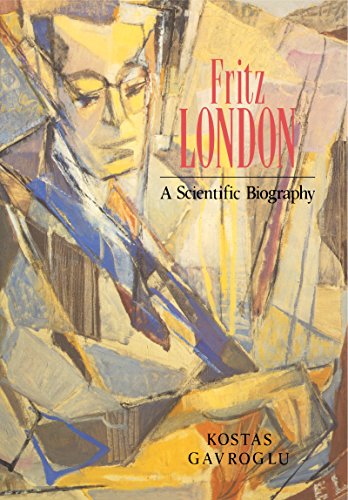
Fritz London was one of the twentieth century’s key figures in the development of theoretical physics. A quiet and self-effacing man, he was one of the founders of quantum chemistry, and was the first to give a phenomenological explanation of superconductivity. This thoroughly researched biography gives a detailed account of London’s life and work in Munich, Berlin, Oxford, Paris, and finally in the United States. Covering a fascinating period in the development of theoretical physics, and containing an appraisal of London’s work by the late John Bardeen, this book will be of great interest to physicists, chemists, and to anyone interested in the history of science.
User’s Reviews
Reviews from Amazon users which were colected at the time this book was published on the website:
⭐This is something more than an unalloyed biographical sketch of Fritz London. In addition, this is something more than a typical run-of-the-mill review, as it is also a commentary on the progress of science. The book, Fritz London: A Scientific Biography (Cambridge, 1995), by Kostas Gavroglu, is itself a microhistory of a bygone age of exploration into the uncharted realms of chemistry and the quantum physics of superfluidity and superconductivity, something that we may not experience again for decades. In this instance Gavroglu’s focus is on one of the principal and relatively unsung champions of that period–the late Fritz London (1900-1954), philosopher of science, visionary logician, and dedicated theoretician in quantum thermodynamics. Professor Gavroglu himself has been a visiting scholar at universities in the US and the UK, with research interests in the history of low temperature physics and physical chemistry, and is currently Professor of the History of Physics at the University of Athens. The untold story actually begins over a century ago, where even the late Nobelist John Bardeen–who wrote the Afterword to Gavroglu’s book–repeated a widespread misconception. The history of superconductivity is intimately connected with that of cryogenics. And, that history began 118 years ago, in 1877, with the first liquefaction of oxygen by the French physicist Louis Paul Cailletet and the Swiss Raoul Pierre Pictet. By 1894 the Dutch physicist Heike Kamerlingh Onnes of Leiden demonstrated the first commercial liquid-air plant, and four years later the British chemist Sir James Dewar liquefied hydrogen. But it wasn’t until July 10, 1908, that Onnes succeeded in liquefying helium, the most difficult of all the gases to liquefy because of its extremely low 4.2° K (-269° C) boiling point. Three years later superconductivity was discovered in a rod of frozen mercury by Georg Holst, a student of Onnes, who was assisted by G.J. Flim, an instrument maker and master craftsman of Leiden who had built the first helium liquefier for Onnes. Flim later founded a school for instrument makers, while Holst became the first director of the Philips Research Labs in The Netherlands. Onnes, himself, was highly skeptical that a metal such as mercury could just suddenly lose all resistivity to an electric current, and didn’t believe Holst’s finding until he had repeated the experiment several times himself. That same year (1911), Onnes published the results of those landmark experiments as an appendix to another paper, in which he did give credit to Holst but none to Flim. Two years later Onnes received the Nobel award for his work in cryogenics. And, although one might be tempted to say that he wasn’t the principal discoverer of record for superconductivity, which indeed he was not, the accomplishments of Onnes were nonetheless impressive. It was during this period of exciting discoveries early in our century that Fritz London grew up. His first published effort in 1921, the year he graduated from the University of Munich, was an unusual philosophic essay on antipositivist and antireductionist ideas in the face of prevailing positivist attitudes of the scientific community. This preliminary view by London was a key to his early development toward a more mature “systematic attempt to explore the possibilities of a different theoretical approach, to be able to articulate the differences between a macroscopic theory on the one hand, and the phenomenological and fundamental theories on the other.” His search for macroscopic principles amidst quantum mechanical nuclear events set the tenor for the rest of his life. And, even as his mathematical skills increased, so did his horizons. But there were also some false trails, as when his youthful enthusiasm led him into an abortive attempt to extend Hermann Weyl’s theory unifying gravitation and electromagnetism within the framework of quantum mechanics. In 1924, Satyendra Bose, deliberating on Planck’s radiation law, and shortly after, Albert Einstein, considering molecular matter, formulated the quantum mechanical effect of an ideal gas with integral electron spin that would begin condensing below a certain temperature. This would initiate London’s eventual interest in superconductivity and superfluidity through his investigation of macroscopic quantum phenomena. In 1925 London published his first physics paper with Helmut Hönl on atomic band spectra. In 1926 Erwin Schrödinger, in a four-part paper, outlined his equations of wave mechanics based on the concept of matter waves introduced four years earlier by Louis de Broglie. But, the earliest application of quantum mechanics to covalent chemical bonding by means of such atomic wave functions by spin-pairing of electrons was presented in 1927 by London and Walter Heitler, then at Zürich, showing a dependence on the Pauli exclusion principle. But, according to critic Linus Pauling, they were also building on the semiempirical 1916 proposal by chemsist Gilbert Lewis that ionic and homopolar bonding could be explained by electron-pair sharing of atoms. The Heitler-London paper was almost universally hailed as presenting one of the most promising theories regarding chemical valence. London, however, was furious at the Americans, Pauling, John Slater, and Robert Mulliken for their–in his view–excessively pragmatic approach to chemical bonding. By 1928 London was Schrödinger’s assistant in Berlin, and his career seemed firmly established. Then, as the domestic winds began to change drastically in Germany with the rise of National Socialism, Fritz London and his brother Heinz, being Jews, were advised to find appointments in safer political climates. Frederick Lindemann, then at Oxford, was setting up a low temperature laboratory and needed physicists and theoreticians to staff the facility and teach. Imperial Chemical Industries generously underwrote fellowships for displaced Jewish scientists. Arnold Sommerfeld and Einstein had recommended London and Hans Bethe to Lindemann, and so Fritz went to Oxford in 1933, followed by Heinz London a year later, while Bethe opted for Manchester. Max Planck was upset and thought Fritz was making a mistake by leaving Berlin. About this time Walther Meissner and R. Ochsenfeld had demonstrated that superconductors exhibited strong diamagnetism. And, within a few months of Heinz joining Fritz, they had worked out the electrodynamics of superconductivity and presented a theoretical proposal of the phenomenon. In 1935 Fritz London had formulated that superconductive electrons exhibited a rigid wave function with a wavelength of the dimensions of the superconductor and, because of the restraints of the uncertainty principle, must be comprehended in momentum space rather than phase space. Thus, superconductivity is a macroscopic quantum phenomenon, where the superconductor itself becomes in effect a single diamagnetic atom. Despite such industriousness, London was unhappy at Oxford. When the ICI grant ran out in 1936 London moved to the Henri Poincaré Institute in Paris. Within a short while he had worked out the equations of state for superfluid helium, another macroscopic phenomenon, which occurs below 2.19° K, and obeys the Bose-Einstein statistics in the condensation phase that cannot be described and understood by classical hydrodynamics. When the inclement political winds reached into France, London took a position at Duke University in the US during the fall of 1939 and spent the war years in relative isolation. But in 1940, his brother Heinz, Walter Heitler, and other German scientific refugees in England were unexpectedly interned for several months. Fortunately, all were eventually released. Yet Fritz discouraged his brother from coming to the US, citing the loneliness and anonymity, whereupon Heinz ultimately became a British subject and worked on their atom bomb project. Still, during the early 1940s, London continued to theoretically investigate van der Waals forces, and even entered the theoretical lists in biology by responding to an article by Albert Szent-Györgyi and agreeing with him that there was much more of an interrelationship between quantum mechanics and biochemistry than had been theretofore demonstrated. By 1946, when London was invited to speak at the Cambridge Conference on Low Temperatures, he hoped to meet many of his old colleagues as well as several from the USSR, although the latter never arrived due to travel restrictions for Soviet scientists. London had been at theoretical odds with Lev Landau, the outspoken Russian enfant terrible who had once been victimized by a Stalinist purge because of his own candid views, and who had independently formulated a theory of superfluidity based on vortex phenomenon in quantum hydrodynamics. London, who had up until then been critical of his friend and colleague, Lazlo Tisza, for his two-fluid model of superfluidity, unexpectedly reversed his stance, as it appeared that the Soviet physicist had also embraced Tisza’s model, and London hoped to reconcile the intellectual difference he had by recourse to the Bose-Einstein condensation as a rationale. Landau’s approach was ambitious and infeasible, according to London. But since Landau was held in high esteem and had otherwise ignored London’s work, it seemed better to proffer a theoretical olive branch. But then Landau later criticized Tisza, and Tisza in turn had been supported by London, but by 1950 experiments in adiabatic demagnetization ironically tended to support Landau. Nevertheless, London could never philosophically accept Landau’s approach. In the early 1950s independent relevance of the Bose-Einstein condensation for superconductivity was forwarded by Richard Feynman, Vitaly Ginzburg, and M.R. Schafroth, respectively, wherein it was shown that the Bose-Einstein condensation has a magnetic response characteristic of the Meissner effect. Schafroth thought that electron pairs obeying Bose-Einstein statistics could play a role in the explanation of superconductivity. The relevance of electron pairs as it applies to London’s work was first made by Richard Ogg at Stanford in 1946, where his experiments gave evidence for trapped pairs and that their Bose-Einstein degeneracy temperature appeared to be in the right range, but Ogg’s views were expressed in the language of an experimental chemist rather than a theoretical physicist, and so were largely ignored. Late in 1950 the first volume of London’s magnum opus, Superfluids, appeared. The second was published in November 1954, seven months after his death on March 30. Just the year prior (1953) he was awarded the Lorentz Medal for distinguished contribution to the field of theoretical physics. Only four others had previously been beneficiaries: Max Planck, Peter Debye, Arnold Sommerfeld, and Hendrik Kramers. And so, with Fritz London passed another pioneer in the annals of physics and physical chemistry. Reviewer’s Note: Of Richard A. Ogg I have first-hand knowledge, having become first acquainted with him in 1952 when he was a physical chemist at Stanford University, his being then involved with low-temperature reactions at his Stanford laboratory. At the time, he was completing a research project with liquefied ammonia gas, looking for some elusive particles he jocularly referred to as oggons. Since I had a background in chemistry Ogg and I talked shop, but in a bit we got into a rather one-sided discussion of what I recall were quite unfamiliar areas involving such things as solvated electrons and Bose condensations–terms which didn’t impinge on my own analytical experience until some 20 years later. I also recall that Ogg was excited about being on the verge of some new theoretical discoveries, but about which he said that he wasn’t at liberty to divulge, notwithstanding the fact that he had just given my inexperienced ears a prime clue–some cryptic thing about oggon pairs. Months later a turf skirmish developed at Stanford’s chemistry department, and Ogg was ordered to take down and remove his equipment and instrumentation, and to desist from pursuing his research project. He was crushed, both academically and psychologically. Several years later, in 1957, John Bardeen, Leon N. Cooper, and J. Robert Schrieffer of Bell Laboratories proposed their now well-known BCS theory–the name derived from a combination of their initials–a theory which accounted for most of the properties of superconductors, where non-local equations were found to be compatible with London’s fundamental principles, and for which they shared the 1972 Nobel award in physics. (This was the second such shared award for Bardeen, who was one of the co-developers of transistor theory in 1947.) I had wondered for years what ever became of those oggons, and only much later found out that they had become Cooper pairs as an adjunct of the BCS theory of superconductivity, these being pairs of bound electrons which occur in a superconducting medium, the relevance of which was first demonstrated by Ogg in 1946 through sustained persistent ring currents at 93° K in a liquid ammonia medium. London himself had also been intrigued with Ogg’s experimental findings and expressed regret at not meeting with him at the Cambridge cryogenics conference at that time. And, the last I had ever heard about Richard Ogg was the apocryphal story that he was found sitting under a tree with a book of Marcel Proust in one hand and a bottle of cyanide in the other. The gauntlet was later experimentally picked up by Bernd T. Matthias of UC La Jolla and Bell Labs, who, in a keynote address at the Cryogenics Engineering Conference at Stanford which I attended in 1967, generated great excitement by announcing achieving superconductivity at 20.2° K in a niobium alloy. Interest in subsequent years gradually declined, however, when intensely increased effort brought correspondingly diminished achievements, barely pushing superconducting temperatures beyond 30° K. But, the apex and breakthrough was finally reached in 1986 by K. Alex Müller and J. Georg Bednorz at IBM Zurich with their metalloceramic oxide conductors, achieving superconductivity at temperatures above that of liquid nitrogen, accepting the Nobel award in 1987 for their discovery, and initiating the new age in superconductors dreamt of by Fritz London. And, whatwith the first demonstration in late summer of 1995, by Eric Cornell, Carl Wieman, and their colleagues at the University of Colorado at Boulder, of the Bose-Einstein condensation of superfluid rubidium at temperatures within 0.2 microdegree K of absolute zero, London would have been equally as pleased.
⭐
Keywords
Free Download Fritz London: A Scientific Biography in PDF format
Fritz London: A Scientific Biography PDF Free Download
Download Fritz London: A Scientific Biography 2005 PDF Free
Fritz London: A Scientific Biography 2005 PDF Free Download
Download Fritz London: A Scientific Biography PDF
Free Download Ebook Fritz London: A Scientific Biography