

Ebook Info
- Published: 2005
- Number of pages: 320 pages
- Format: PDF
- File Size: 2.14 MB
- Authors: David Dobbs
Description
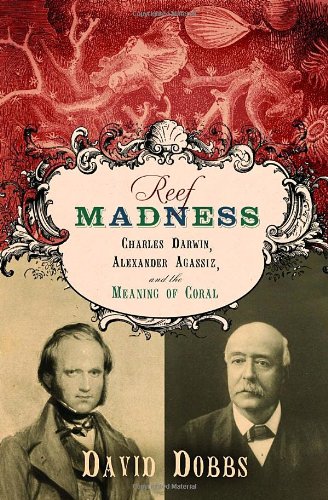
Reef Madness opens up the world of nineteenth-century science and philosophy at a moment when the nature of scientific thought was changing, when what we call “science” (the word did not even exist) was spoken of as “natural philosophy” and was a part of theology, the study of “God’s natural works.” This is how what is now called science, until then based on the presence and hence the authority of God, moved toward reliance on observable phenomena as evidence of truth. At the book’s center, two of that century’s most bitter debates: one about the theory of natural selection, the other about the origin of coral. Caught in the grip of these controversies were two men considered to be the gods of the nineteenth-century scientific world: Charles Darwin, the most controversial and ultimately the most influential; and the Swiss-born zoologist Louis Agassiz, almost forgotten today but at the time even more lionized than Darwin. Agassiz was a paleontologist, the first to classify the fossil fish of the planet, and the first to conceive the idea of the ice age that altered our view of the Earth. He taught at Harvard, founded the Museum of Comparative Zoology, was one of the founders of the Smithsonian and of the National Academy of Sciences, and was considered the greatest lecturer of his time—eloquent, charming, spellbinding. Among his admirers: Emerson, Theodore Roosevelt, William James, and Thoreau. Agassiz believed that nature was so vast, complicated, and elegantly ordered that it could only be the work of God. We see how this central principle of Agassiz’s was threatened by Darwin’s most central theory—that species change through natural causes, that we exist not because we’re meant to but because we happen to. Agassiz, forced either to disprove Darwin’s principle or give up his own, went to war full tilt against the theory of natural selection. It was a war that, beyond its own drama, had a second important effect on the new world of science. David Dobbs tells how Agassiz’s son, Alexander, one of the most respected naturalists of his time, who witnessed his father’s rise and tragic defeat yet supported the theory of natural selection over his father’s objections, himself became locked in combat with Darwin. The subject of contention was the “coral reef problem.” As a young man of twenty-six, Darwin, with only a small amount of data, put forth a theory about the formation of these huge beautiful forms composed of the skeletons of tiny animals that survive in shallow water. It explained how the reefs could rise on foundations that emerged from the Pacific’s greatest depths. This became the subject of Darwin’s first long paper, and it propelled him to the highest circles of British science. The obsessed younger Agassiz spent the next thirty years in a vain effort to disprove Darwin’s coral theory, traveling 300,000 miles of ocean and looking at every coral mass. In so doing, he laid the groundwork for oceanography, through which, in 1950, the question of the origin of coral was finally resolved. In Reef Madness, Dobbs looks at the nature of scientific theory. He shows how Darwin was crucially influenced by his encounters with the Agassiz father and son, and how the coral problem prefigured the fierce battle about evolution. Original, illuminating, and fascinating, Reef Madness uses these large human struggles, which devastated two lives and shaped the thinking of another, to make real the Victorian world of science and to show how it affected the century that followed and continues to this day to affect our own.
User’s Reviews
Editorial Reviews: From Publishers Weekly Few questions in 19th-century science aroused more controversy than the origin of coral reefs. Charles Darwin posited that the corals grew upon sinking land forms, a theory widely accepted despite its lack of empirical evidence. Enter Alexander Agassiz (1835–1910), son of the renowned naturalist Louis, whose earlier dispute with Darwin over evolution tarnished his reputation as a scientist. A meticulous researcher, Alexander disapproved of Darwin’s “intuitive leaps”; he believed that proper science must work “through eyes-on observation and the tireless accumulation of reliable information.” To this end, he spent the last 25 years of his life visiting every major reef formation on the planet. But though he gathered a wealth of evidence that seemed to refute Darwin, he never published his findings. By the 1950s, when technology enabled researchers to drill for deep coral samples, data proved that Darwin had guessed right after all. Dobbs (The Great Gulf, etc.) clearly sides with Agassiz in this story of clashing intellects and egos, arguing that Alexander’s aversion to confrontation and his emphasis on methodology sprang from the embarrassment caused by his father’s stubborn creationism, as well as from annoyance at Darwin’s stoking of his own reputation. That Alexander’s failure shows Darwin’s theory to be all the more brilliant may be an unintended irony of this engrossing chapter in the history of modern science. Copyright © Reed Business Information, a division of Reed Elsevier Inc. All rights reserved. From Booklist Charles Darwin’s first scientific splash, a theory on the formation of coral atolls, is now accepted; but it had a rival in a theory advanced by naturalist Alexander Agassiz. Dobbs approaches this chapter in scientific history from a number of perspectives, including Alexander’s personality as formed in the shadow of his father, Louis, one of the most famous naturalists of the Victorian era. On a more abstract level, Dobbs discusses the balance between induction and deduction in scientific reasoning. The biography is inherently more interesting, and Dobbs highlights the contrast between Alexander’s introspection and his father’s charisma and self-centeredness. By the 1870s, Louis Agassiz rigidly resisted Darwinism; Alexander accepted evolution but not, when he learned of data collected on the seminal expedition of the Challenger, Darwin’s idea about atolls. Darwin contended they formed around subsiding mountains; Alexander maintained the coral accreted upward. Describing Agassiz’s voyages to atolls, Dobbs skillfully relates a story that, if lacking a triumphant ending, yet depicts Agassiz’s quiet drama in constructing a theory, wrong though it was. Gilbert TaylorCopyright © American Library Association. All rights reserved Review “Brilliantly written, sometimes almost unbearably poignant, Reef Madness provides an enthralling picture of three grand scientific minds: the stormy relationship of Louis and Alexander Agassiz and their fateful enmeshment with Charles Darwin. The coral reef story becomes a microcosm of the conflicts—between idealism and empiricism, God and evolution—which were to split science and culture in the nineteenth century and which still split them today.”—Oliver Sacks, author of Uncle Tungsten “Reef Madness eloquently demonstrates the importance of ideas. David Dobbs gives life to a debate that should simply have given insights into our past. But, surprisingly, the debate has remained very much with us, giving this book enormous contemporary relevance.”—Mark Kurlansky, author of Salt: A World History “Engaging, tantalizing, and well written. The best kind of intellectual history. Like Louis Menand’s The Metaphysical Club, Reef Madness brilliantly sets a small group of passionate thinkers into a living context, deftly illuminating the people, their place and time, and their vigorous, world changing arguments.” —Andrea Barrett, author of The Voyage of the Narwhal “A wonderful book! A masterful and thrilling account of the origin of coral reefs and the men who debated those origins. David Dobbs tells the complex tale of how brilliant scientists, such as Alexander Agassiz and Charles Darwin, often bitterly disagree in the search for truth and the remarkable power of scientific inquiry as it unfolds over time.”—Howard Markel, author of When Germs Travel About the Author David Dobbs was born in Texas and attended Oberlin College. His articles have appeared in Audubon, Popular Science, and Outside. His previous books include The Northern Forest (with Richard Ober) and The Great Gulf. He lives in Vermont. Excerpt. © Reprinted by permission. All rights reserved. The name Agassiz, from the southern, Francophone area of what is now Switzerland, means magpie—a bird, of course, but also a person, as Webster’s puts it, “who chatters noisily.” If this did not hang well on the reserved man that Alexander Agassiz would become, it fit his father snug. Louis Agassiz talked as voluminously and engagingly as anyone ever has about science, or for that matter about almost anything. He could mesmerize a room full of scientists, an auditorium flush with factory workers, or a parlor pack of literati, including his salon companions Oliver Wendell Holmes, Ralph Waldo Emerson, and Henry Wadsworth Longfellow, the sharpest talkers in a smart and garrulous town. He was one of those brilliant, babblative sorts whose immense skill in their main work is nearly eclipsed by their gift for talk.The orative urge can serve teachers well, scientists poorly. Yet if it distracted him from work, Louis’s eloquence accounted for much of his renown, throwing a glow around his theories and accomplishments that made them appear more illuminating than they were. His reputation grew much larger than justified by a sober look at his work. In Louis’s American prime, from the mid-1840s to the late 1850s, the clerisy considered him the country’s supreme scientist and one of its greatest intellectual talents. The public granted him that status even longer, well beyond his death in 1873. When he passed away, the major newspapers carried the news in huge type on their front pages, as if a president had died, and the nation’s vice president attended the funeral. The country’s top literary figures wrote aggrieved elegies; Oliver Wendell Holmes composed one for the Atlantic Monthly, a sort of house organ for Louis, adding to the several Agassiz odes he had already printed there. Even today, though time and Louis’s lost battle against Darwin have diminished his reputation, he stands as one of the giants of American science. Of scientists (rather than inventors) working in America, only Albert Einstein ever gained a similar combination of professional respect and public adoration. Yet Louis Agassiz’s work never remotely approached the originality, importance, or practical implications of Einstein’s. With one exception, his ice age theory, the main theories he promoted fell obsolete, at least among scientists, even before he died. Yet he still stands as a scientific icon. His fame comes in part from his establishment of the Harvard Museum of Comparative Zoology, a highly productive institution that trained many good scientists and, through example, competition, and direct mentorship, helped spur the development of other leading institutions. This and his ice age work would rightly place Louis Agassiz among the significant figures of American science. But those accomplishments don’t explain his exalted status.How did a man who made few enduring original scientific contributions become a lasting symbol of American science? As his early biographer, Jules Marcou, a French protégé who followed Louis across the Atlantic to work with him for several decades at Harvard, noted, “He was one of those very few men whose works are not sufficient to make him entirely known; one must meet him face to face. . . . Agassiz himself was more interesting than his works.” This can read as both praise and damnation, of course, reflecting the ambivalent tone of Marcou’s biography. (Marcou’s book, published after Louis had died, would enrage Alexander, who tried to have its more critical and personal passages suppressed.) But Marcou knew Louis well. He recognized in him that intangible quality that enables some people to move others to adoration, action, and a permanent change in thinking. Louis Agassiz thrillingly personified a Romantic ideal that combined deep learnedness with avid curiosity—and flattered his followers by emphasizing the latter. Though his own best work rested as much on reading as on observation, he urged his students to “study nature, not books.” It was a delicious invitation to a young country in a Romantic era. With his childlike enthusiasm, acute eye, mongoose-quick mind, and charming mispronunciations, Louis sold beautifully the primacy of clear-eyed observation over bookish learning. To an audience eager to claim its own intellectual legitimacy he insisted that vigorous, hands-on study of nature would not only strengthen mind, body, and soul but yield a knowledge greater than any library could hold. It was as if Louis’s mentor Georges Cuvier, the learned taxonomist and brilliant lecturer of early-nineteenth-century European science, had fused with Walt Whitman and Teddy Roosevelt.Was ever another like him? His son, Alex, must have asked himself that, as virtually everyone who knew Louis did at some point. The obvious answer was no. He threw a hell of a shadow.2When he was twenty-one, Louis Agassiz wrote his father, “I wish it may be said of Louis Agassiz that he was the first naturalist of his time. . . . I feel within myself the strength of a whole generation to work toward this end, and I will reach it if the means are not wanting.”Even for someone just past twenty, this ambition, particularly its sense of possessing the power of an entire age, is stunning in its confidence, scope, and focus. Yet young Louis had good reason to feel so strong. He was an accomplished, determined, and stupendously energetic prodigy. The son of a pastor, raised near the Jura Mountains in southwestern Switzerland (then a loose collection of cantons under Prussian rule), Louis showed from his earliest days a precocious brilliance. As a boy he spent countless hours hunting, fishing, and gathering bugs, small mammals, and fish, keeping many of the survivors in cages and aquaria at home. (Magpie also denotes an obsessive collector.) When he was fifteen, he composed a ten-year plan for himself requiring rigorous collecting and dissection of specimens; wide reading in science, literature, and philosophy; and eventual study at leading natural history institutions in Germany and then Paris before launching his career as a naturalist at twenty-five. He would follow this program with remarkable faith. During his adolescence (which he spent mainly at a boarding school twenty miles from home), he not only carefully classified his finds but studied the logic behind the different classification systems then in use—a concern, as we’ll see, central to nineteenth-century zoological studies in general and to Louis’s career in particular.He was prodigious in talk as well. At boarding school he attracted a circle of fellow bright gabbers, and by the time he entered university at fifteen, he hosted a student salon, known as the Little Academy, which convened in his rooms several evenings a week to discuss science, art, and culture. “Agassiz knew everything,” recalled a fellow Little Academician. “He was always ready to demonstrate and speak on any subject. If it was a subject he was not familiar with, he would study and rapidly master it; and on the next occasion he would speak in such brilliant terms and with such profound erudition that he was a constant sourse of wonder to us.”When his salon mates went home, Louis would resume studying, then go to bed late. The next day he would rise at six, spend most of the morning working in the lab, fence (at which he excelled), eat lunch, take a walk, study until dinner, and then reconvene his Little Academy and talk till the wee hours. He seemed never to tire (Alex and his friends would later call him “the steam engine”), and he appeared to retain all he heard, read, or saw. Once, asked to identify a fish, he recalled by drawer number a similar specimen he had seen more than a decade before at a natural history museum in Vienna. A subsequent letter verified both the identification and the drawer number.He possessed a brash confidence that he could generally back up. According to one story (of many he would spawn), Louis, affronted by some perceived slight given his Swiss fencing team by a German team while he was studying in Munich, challenged the German team to a match in which he alone would take on the entire squad, one at a time. The Germans laughingly agreed. Louis dispatched first their best fencer and then their next-best three before the Germans threw in the towel.He carried this competitive exuberance to friendships. He and his close friend Alexander Braun (who would become both a prominent botanist and Louis’s brother-in-law) once became so caught up in a conversation about fencing that they took up rapiers and sparred without thinking to put on their masks. They did not stop until Louis, the quicker of the two, had slashed his friend’s face.He pursued education and career with similar zeal. His self-designed program ran into trouble early in his college years, when his parents made it clear they expected him to be a physician. He solved the problem (and retained his family’s financial support) by executing both his own and his parents’ plans, earning a medical degree even as he followed his own agenda by studying natural history in Lausanne, Zurich, Heidelberg, Vienna, and Munich. He took both degrees in early 1830, at the age of twenty-two. Then he returned home for a few months to finish his first book, a catalog of fish, and planned the next stage of his campaign: Paris.Louis’s ambitions had included Paris from the beginning, for Paris was then Europe’s most important center of natural history study, outranking both London and Munich. At its heart was the Muséum d’Histoire Naturelle, the largest and most prestigious institution in natural science, where Jean-Baptiste Lamarck and Georges Cuvier headed an illustrious and rivalrous staff. Their primary preoccupation was identifying, dissecting, and cataloging the many biological specimens of living and extinct species being sent to the museum from around the world. This discipline of classification, also known as taxonomy, had been essentially founded a century before, when the Swede Carolus Linnaeus roughed out the classification hierarchy of kingdom, class, order, genus, and species (phylum and family were added later) that has served so well and flexibly ever since. Linnaeus also invented binomial nomenclature, by which each species is known by its genus and species names (Homo sapiens, Falco peregrinus).Linnaeus’s system furnished a treelike organization in which to place new species. But it did not settle how many branches that tree should have at each level or how to decide on which branch a new species should reside. Those questions remained open, and the many scientific expeditions sent around the globe in the eighteenth and early nineteenth centuries had quickened the debate on how to answer them. Explorers were discovering species at an unprecedented rate, and the emerging science of paleontology was complicating things further. You had to figure out where to place not just an iguana but an iguanodon, a pterodactyl, and a platypus. You had to define categories broad enough to accommodate these species but narrow enough to be meaningful. What physical differences should divide categories at the most basic levels? How heavily should structural considerations weigh versus physiological? Was a crab, for instance, more like a spider or a starfish? A starfish more like a crab or an anemone?Underlying these questions, and giving taxonomy the air of grand endeavor, was the sense that the discipline was not merely distinguishing among creatures but limning the order of God’s work. Taxonomy rose mainly from the practical need to identify all the species being discovered. But its emergence offered a great theological and political convenience, for it came at a time when those in Western science—funded and conducted largely by institutions and people who were either pious or under pressure to seem so—were glad to find a way to reinforce Judeo-Christian tenets. Discoveries about the earth’s age, like Copernicus’s and Galileo’s work two centuries before regarding our place in the universe, had forced a looser, more metaphorical interpretation of the Bible’s account of creation, making science once again seem a doubter of religion. Geological findings made it clear the earth was older than the Bible said it was, and the fossil record seemed to contradict the story of Noah’s flood. Although these discoveries didn’t turn Christian dogma upside down the way Copernicus’s work did and Darwin’s would, they forced a reworking of the biblical version of creation, a process that discomfited many and threatened some.By placing all life into a systematic structure, however, taxonomy could glorify God by showing the order of his work. The binomial system did this beautifully, for its bifurcating-branch system graphically brought all life-forms back to the same tree trunk. This organizational scheme need not be theistic, of course; the same taxonomic system later readily described a nature created by evolution. But the tree of life described by Linnaean taxonomy could be easily offered and accepted as the work of God. Who or what else could create an array so marvelously complex and interconnected? Taxonomy allowed naturalists to elaborate rather than undermine the notion of a world made by a single, omnipotent Creator.All this, along with the many new species being discovered, made taxonomy one of the most exciting disciplines in all of science. And Paris was the center of the taxonomic world, with Cuvier, Lamarck, Etienne Geoffroy Saint-Hilaire, and other taxonomists competing ferociously to parse God’s order. Cuvier had claimed the greatest renown among them through a combination of strong science, shrewd politicking, and bold showmanship. He had fundamentally transformed taxonomy by rejecting the notion of an animal kingdom that merely ranged from the simple to the complex and dividing it instead into four broad categories that he called “embranchments”: vertebrates, radiates, mollusks, and articulates. These same categories, which today we know as phyla, have (with about thirty additional phyla discovered since Cuvier’s time) headed the animal-kingdom framework ever since. This innovation created a far more logical and useful classification of the animal kingdom. In addition, Cuvier’s 1812 Recherches sur les ossements fossiles des quadrupèdes pioneered the science of paleontology and the classification of fossils. Cuvier even claimed to have developed a system, which he called the “correlation of parts,” for extrapolating an animal’s entire anatomy from almost any bone. Presented with just one bone from a newly discovered skeleton, he would wow audiences by predicting the structure of the remainder. He once did this with a fossilized opossum embedded in rock, successfully predicting, from what he could see of a tiny portion of the skeleton, that it would be an animal of the marsupial family.Early in his career, Cuvier invented the term “balance of nature,” a coinage reflecting his belief that every piece of nature had a traceable link to every other. “Nature makes no jumps,” he wrote in one of his early papers, a 1790 Journal d’Histoire naturelle article about wood lice. He was essentially quoting Aristotle, but the idea served his purposes well. A wood louse was related to a snail and a whale, and if you worked long enough, you could trace the links. Read more
Reviews from Amazon users which were colected at the time this book was published on the website:
⭐This is a superb work of historical science, a gripping story, well-told. And it has everything… Father-son dynamics, the history of science, and the rise of Darwinism, as the story is played out through a profile of Alexander Agassiz and his dad, Louis, one of the last Lamarckians. The main reason I liked the book was the quality, drive, and consistent voice of the insightful prose. The writing is simply lyric! If you liked books like Dava Sobel’s book “Longitude” or Mark Kurlansky’s “Cod: A Biography of the Fish That Changed the World” — you’ll LOVE this book.
⭐It was interesting how science was conducted in the early 20th century.
⭐In the Kindle edition errors in layout and text are frequent, distracting and egregious.Otherwise, Reef Madness is a five star book.
⭐great book
⭐As a reader of anything to do with Darwin, I picked up this book without really knowing anything about the coral reef theory (apart from a vague recollection from the Beagle voyage), and was immediately gripped by the Agassiz saga. The book is very well written, and tells its story very well — except that towards the end it bogs down in the various alternative theories (I got a little tired of it all). But the last two chapters were quite stunning and made it all worthwhile.This is really an exemplary book on models of scientific activity and thinking. It is surprising that it is out of print.
⭐This book is fascinating on many fronts. First, it is a quite readable and informative biography of Louis Agassiz and his son Alexander. Second, it is an account of one of the longest-running controversies in the history of science. And, finally, it gives great insights to the current debate in the US over the teaching of “intelligent design.”Louis Agassiz was considered one of the world’s greatest scientists (or natural philosophers as they were called at the time), and, after his migration to the United States from his native Switzerland, was viewed as America’s greatest naturalist. He was a shrewd self-promoter who parlayed his explanation of glaciation and ice ages, and his encyclopedic knowledge of animal taxonomy, into a position of power and influence. However, he was a follower of Cuvier, and believed that species were created immutably by God. The fossil record was explained by a series of catastrophic annihilations (floods, ice ages) followed by divine creation of completely new species. Needless to say, he did not accept the theory of the origin of species by natural selection as propounded by Darwin. He and Darwin’s followers engaged in heated, personal exchanges and attacks. In the end, however, Agassiz was nearly destroyed by the ensuing controversy, and his reputation and influence suffered severely.Alexander, on the other hand was more mild-mannered and consciously avoided being drawn into his father’s fights. He was a widely respected naturalist and an expert on marine zoology, and privately accepted the truth of evolution. He had his own disagreement with Darwin, however, over Darwin’s widely-accepted theory of the formation of coral reefs. While not nearly as destructive as his father’s evolution dispute, the disagreement involved much publishing, many attacks, and the accumulation of reams of data supporting each side. The fact that this controversy was not settled authoritatively until core samples were taken on Eniwetok atoll before the nuclear tests of the 1950’s, long after the protagonists were dead and buried, makes for an almost mystery novel-like tale.At times, the book reads like today’s newspaper accounts of groups trying promote the teaching of creationism and intelligent design in our children’s classrooms. Even though this debate was seemingly settled nearly 150 years ago, some ideas die hard.This is quite an enjoyable read.
⭐This is a very good book about Louis and Alexander Agassiz. The former a brilliant young, narcissistic naturalist whose expository skills catapulted him to scientific prominence but he met his comeuppance by arrogantly misusing his assistants and then fighting the theory of evolution with faulty data. He self-destructively discredits his earlier real contributions. He is a tragic figure. He wanted nature to speak for itself rather than theories, but was committed to a creative god making order. The picture of Darwin that the book gives is much less useful repeating in incomplete ways what is in other much better histories. The great contribution of the book is the laying out of the bio’s of Louis and Alexander and sketching, almost as a scientific mystery unfolding a step at a time, the contesting ideas of how coral reefs form. Darwin’s theory of subsistence dominates despite mounting evidence to the contrary. And then Alexander never publishes his comprehensive refutation of the theory for reasons that are never known. The book ends with the irony that when drill holes are made for the atomic test in the Pacific in the 1960s it turns out that what was taken to be sandstone underlayment of reefs thrust up like the sandstones of Dover, are really old reef detritus and hence, along with plate tectonics atolls are really piled up reef growth on top of subsistent subterranean mountains. So, in the end Darwin was correct although not because of anything other than having made an appealing guess, i.e. he had no evidence. The book ends with a Popperian criteria for science, falsification, which the author takes to have been the razor of what is truly scientific which could have been used to parse through the contesting claims. Darwin’s theory was not falsifiable and Alexander made observational mistakes based of his theoretical commitments despite his claim of letting nature speak. But the book is really an example of a more complex scientific process where there is a great mix of scientific authority, i.e. the Darwinians’ assumption that the master must be right and much anomalous data, like were the lagoons formed by dissolving coral and contesting claims for the role of erosion. With the understanding of ice ages, it became clearer that reefs rose out of the water as water levels changed, so there was relative subsiding. Earlier anti-Darwinians rejected subsistence because there was no evidence for it. The author says that science always works by imaginative (hypothesis) leaps and then the winnowing of evidence. Yes and no. Certainly as with Kepler and other instances, the vast accumulations of inductive evidence lays the foundation for many explanations. And like reefs, the evidence over time can preclude clear explanations even though explanations are offered. Feyerabend’s or Rorty a la Kuhn’s picture of science, as a combination of verification, falsification, inductions, etc is much better that either pure Kuhn or Popper.Charlie Fisher, author of
Keywords
Free Download Reef Madness: Charles Darwin, Alexander Agassiz, and the Meaning of Coral in PDF format
Reef Madness: Charles Darwin, Alexander Agassiz, and the Meaning of Coral PDF Free Download
Download Reef Madness: Charles Darwin, Alexander Agassiz, and the Meaning of Coral 2005 PDF Free
Reef Madness: Charles Darwin, Alexander Agassiz, and the Meaning of Coral 2005 PDF Free Download
Download Reef Madness: Charles Darwin, Alexander Agassiz, and the Meaning of Coral PDF
Free Download Ebook Reef Madness: Charles Darwin, Alexander Agassiz, and the Meaning of Coral