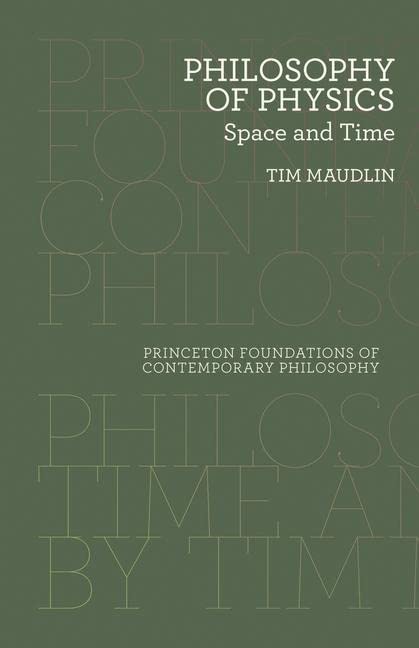
Ebook Info
- Published: 2015
- Number of pages: 200 pages
- Format: PDF
- File Size: 4.44 MB
- Authors: Tim Maudlin
Description
Philosophical foundations of the physics of space-timeThis concise book introduces nonphysicists to the core philosophical issues surrounding the nature and structure of space and time, and is also an ideal resource for physicists interested in the conceptual foundations of space-time theory. Tim Maudlin’s broad historical overview examines Aristotelian and Newtonian accounts of space and time, and traces how Galileo’s conceptions of relativity and space-time led to Einstein’s special and general theories of relativity. Maudlin explains special relativity with enough detail to solve concrete physical problems while presenting general relativity in more qualitative terms. Additional topics include the Twins Paradox, the physical aspects of the Lorentz-FitzGerald contraction, the constancy of the speed of light, time travel, the direction of time, and more.Introduces nonphysicists to the philosophical foundations of space-time theoryProvides a broad historical overview, from Aristotle to EinsteinExplains special relativity geometrically, emphasizing the intrinsic structure of space-timeCovers the Twins Paradox, Galilean relativity, time travel, and moreRequires only basic algebra and no formal knowledge of physics
User’s Reviews
Editorial Reviews: Review “One of Choice’s Outstanding Academic Titles for 2013″”Taking up the conceptual foundations of classical and modern physics, Maudlin explains in a clear manner how Einstein’s special and general theories of relativity emerged from Newtonian mechanics and Galilean relativity. . . . This is a solid work that deserves careful study and rewards readers accordingly.” ― Choice”I would highly recommend Philosophy of Physics to anyone who wants to get a deeper historical and philosophical perspective on the nature of space and time, as well as to any physics student who has been confused by the twin paradox.”—Robert M. Wald, Physics Today”Maudlin has successfully undertaken a very difficult task: to write a book about the physical theories of space and time, accessible to every learned person with genuine interest in philosophy and the foundations of physics, with little mathematical prerequisites but without betraying the physical theories. We are really anxious to read the second volume of his work.”—Chrysovalantis Stergiou, Metascience”An accessible and highly engaging introduction to the major issues in the physics of space and time.”—Matt Farr, Philosophy in Review Review “Exceptionally clear and comprehensive, this engrossing volume will be extremely useful to students. Most introductions to space-time and relativity are written by physicists, but readers interested in a careful examination of the philosophical foundations of the subject are much better served by starting here. I had fun reading this book.”―Sean Carroll, author of From Eternity to Here: The Quest for the Ultimate Theory of Time”Maudlin adroitly guides readers through the mathematical, physical, and philosophical subtleties of Newtonian physics and special and general relativity. The book is filled with lucid and original observations, and succeeds in presenting material that was previously only accessible to those who could stomach significant amounts of differential geometry. A major contribution.”―David Wallace, University of Oxford From the Back Cover “Exceptionally clear and comprehensive, this engrossing volume will be extremely useful to students. Most introductions to space-time and relativity are written by physicists, but readers interested in a careful examination of the philosophical foundations of the subject are much better served by starting here. I had fun reading this book.”–Sean Carroll, author of From Eternity to Here: The Quest for the Ultimate Theory of Time”Maudlin adroitly guides readers through the mathematical, physical, and philosophical subtleties of Newtonian physics and special and general relativity. The book is filled with lucid and original observations, and succeeds in presenting material that was previously only accessible to those who could stomach significant amounts of differential geometry. A major contribution.”–David Wallace, University of Oxford About the Author Tim Maudlin is professor of philosophy at New York University. His books include The Metaphysics within Physics and Quantum Non-Locality and Relativity. Read more
Reviews from Amazon users which were colected at the time this book was published on the website:
⭐The content of this book is as good as the other reviewers have said. However, the publisher has done the author and the readers a great disservice. The book is painful to read because there are so many misspelled and missing words on almost every page that constantly keep interrupting the reader’s concentration and ability to follow the author’s explanations. This is one of the worst publishing works I have ever seen. Just damn sloppy publishing.
⭐I bought this book seeking a better understanding of Special Relativity (SR), finding the conventional expositions confusing.Readers of this book should read a conventional exposition emphasizing Minkowski’s spacetime geometric approach first, else they won’t appreciate Maudlin’s criticisms and improvements.Maudlin’s first three chapters provide the historical background of Newton and Galileo’s understanding of space and time. He explains why they are inadequate – particularly Newton’s concepts of absolute space and absolute time – and then launches into his version of SR in chapters 4 & 5. He builds Minkowski spacetime as a real affine 4-dimensional space of events endowed with a real-valued function of pairs of events called the Interval [a quadratic pseudo-metric]. He emphasizes the intrinsic geometry and its applications to physics. Instead of talking about the “constant speed” of light, which tacitly is a Newtonian notion, he says that “the trajectory of light in a vacuum is independent of the physical state of its source,” an experimental fact. Hence “the geometry of spacetime alone determines the trajectory of light rays” (in a vacuum). This endows each event with the structure of future and past light cones.He dispenses with the two principles upon which Einstein based his theory of SR, asserting instead his three principles:LAW OF LIGHT: The trajectory of a light ray emitted from any event (in a vacuum) is a straight line-ray on the future light cone of that event.The trajectory of any physical entity that goes through an event never goes outside the light cone of that event.RELATIVISTIC LAW OF INERTIA: The trajectory of any physical entity subject to no external influences is a straight line in spacetime.CLOCK HYPOTHESIS: [Ideal] Clocks measure the Interval along their trajectories.He admits that the latter hypothesis is peculiar and elaborates on its precise meaning in chapter 5, which is all about Lorentz coordinates and measurement. This chapter becomes quite technical and is mainly suitable for physicists. In it he provides an experimental set-up that shows in what sense his SR predicts and explains the constancy of the speed of light.There is much, much more in Maudlin’s treatise that is original and provocative. I look forward to reading his projected volume 2 about Matter.
⭐I am no expert in Physics, but I am considered one in Philosophy. This book does not deal that much with what is normally understood as the latter, because most of the people think Philosophy plains deals about ideas related to the psychic dimension of the human existence. That, nevertheless, is just an incomplete understanding of that which Philosophy is.This book deals a lot about Geometry, Cartesianism, Newton and Leibnitz. All of them though of themselves as Philosophers of nature and not as scientists. Thus, this book is about TRUE ontology, and TRUE methapysics, the way the illustrated philosophers understood them to be.It’s not an easy book to read and requires a good level of intelligence from the reader, thus it is a VERY GOOD book.I really liked it and I learned a lot.
⭐A good look at ideas about space and time – Aristotelian, Newtonian, Leibnizian Machian, and Einstein/Minkowskian ( relativistic. )The author reminds us that it is useful and interesting to think about ideas and not just ‘shut up and calculate’.Physicists on the whole are trained and encouraged to do the latter and an implicit graduation requirement is a sneering disdain for ‘philosophy’.The ones who succumb to the pressure and merely conform and perform rarely go on to do anything particularly great.The other point to be gained from this book is that Relativity ( special and general) is exquisitely subtle. If you think you understand it you probably don’t. It Confuses the hell out of me to be perfectly honest. And it’s not the math that’s puzzling. That’s the easy bit.
⭐Back in my student days, one of my housemates was a philosophy student. When we’d talk physics I’d invariably start writing equations, and he’d always pepper me with questions about what was *really* happening behind all that math. His questioning on the fundamentals really helped sharpen my thinking about physics.Tim Maudlin’s “Philosophy of Physics” will similarly hone your thinking, at least for the narrow part of physics it covers (space, time, relativity, and kinematics). The issues of inertial versus non-inertial frames, the postulates of relativity, time dilation, and Lorentz contraction are “simple” in the sense that any good physics undergraduate can do calculations with them competently, but the careful definition and interpretation of these concepts has sometimes stumped even first-rate physicists. Maudlin does a nice job of clearing up some of the misconceptions about these topics found in popular physics texts.Very little math is used. Certainly any physics, math, or engineering student will find this book “easy” in the sense of not needing any mathematical heavy lifting. Don’t let that simplicity fool you into thinking it’s a mindless read, or worse, not worth reading at all: this is a book about clear thinking about subtle concepts, not about struggling through mathematical complexities.It’s a well-written book with clear explanations. I highly recommend it to every scientist who wants to understand relativity and mechanics at a deeper level.
⭐You need more than basic algebra to understand this book. If you haven’t studied Math in over 10 years forget it. How much high school Geometry/Algebra do you really remember?This book is best for people with a math/physics background or people who want to invest a large amount of time learning.
⭐This is a strange book to classify. Yes, it is about the philosopy of physics, but rather than speculating about the grand scheme of things, as some scientific philosophers do, author Tim Maudlin seeks to find the meaning behind what science currently tells us about space and time. Physicists are often encouraged to just “shut up and calculate” rather than try to find the meaning behind the equations. This leaves a gap for philosophers of science to fill.It’s a well-written book but I wouldn’t say it’s aimed at the raw layperson. Yes, anyone can read it and get something out of it, but I think you’ll get more out of it if you have a reasonable understanding of the physics of space and time at the outset. There is some maths in this book. It is kept to a minimum and the non-mathematical person can simply skip it without losing much, but a basic understanding of the maths at work will make for a richer experience.Some of the concepts physics exposes are at odds with our everyday experiences and can be hard to grasp. I think books like this help in that respect.There are seven chapters covering: Classical Accounts of Space and Time, Evidence for Spatial and Temporal Structure, Eliminating Unobservable Structure, Special Relativity, The Physics of Measurement, General Relativity and The Direction and Topology of Time.It’s well worth a read and I think there’s room for more books like this. It’s the sort of book you’ll probably want to read slowly, reflecting on what you’ve read at regular intervals.
⭐This has become one of my favourite books since I bought it a couple of years ago.It is written clearly and quite argumentatively, so there is plenty to think about and to disagree with. It is revealing to compare Maudlin’s ideas on this topic with those expounded for the general reader by Einstein in his “Relativity, the Special and the General Theory”. For alternative views, i would also recommend “Physical Relativity” by Harvey Brown, and remarkable contributions by maverick thinkers, Hanoch Ben Yami and N Viv Pope, (available on the internet).
⭐well written, explained and easy to follow. Good in depth explanation of the theories of space and time from Aristotle to general relativity.
⭐A*
⭐if someone would like to find the link between philosophy and physics this book is the one
Keywords
Free Download Philosophy of Physics: Space and Time (Princeton Foundations of Contemporary Philosophy, 5) in PDF format
Philosophy of Physics: Space and Time (Princeton Foundations of Contemporary Philosophy, 5) PDF Free Download
Download Philosophy of Physics: Space and Time (Princeton Foundations of Contemporary Philosophy, 5) 2015 PDF Free
Philosophy of Physics: Space and Time (Princeton Foundations of Contemporary Philosophy, 5) 2015 PDF Free Download
Download Philosophy of Physics: Space and Time (Princeton Foundations of Contemporary Philosophy, 5) PDF
Free Download Ebook Philosophy of Physics: Space and Time (Princeton Foundations of Contemporary Philosophy, 5)