Ebook Info
- Published: 2001
- Number of pages: 182 pages
- Format: PDF
- File Size: 5.08 MB
- Authors: Peter Pesic
Description
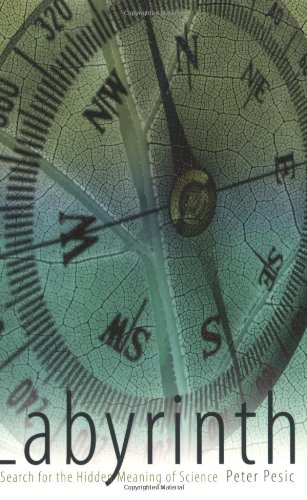
The scientific quest seen as a search for nature’s secrets.Nature has secrets, and it is the desire to uncover them that motivates the scientific quest. But what makes these “secrets” secret? Is it that they are beyond human ken? that they concern divine matters? And if they are accessible to human seeking, why do they seem so carefully hidden? Such questions are at the heart of Peter Pesic’s enlightening effort to uncover the meaning of modern science. Pesic portrays the struggle between the scientist and nature as the ultimate game of hide-and-seek, in which a childlike wonder propels the exploration of mysteries. Witness the young Albert Einstein, fascinated by a compass and the sense it gave him of “something deeply hidden behind things.” In musical terms, the book is a triple fugue, interweaving three themes: the epic struggle between the scientist and nature; the distilling effects of the struggle on the scientist; and the emergence from this struggle of symbolic mathematics, the purified language necessary to decode nature’s secrets. Pesic’s quest for the roots of science begins with three key Renaissance figures: William Gilbert, a physician who began the scientific study of magnetism; François Viète, a French codebreaker who played a crucial role in the foundation of symbolic mathematics; and Francis Bacon, a visionary who anticipated the shape of modern science. Pesic then describes the encounters of three modern masters―Johannes Kepler, Isaac Newton, and Albert Einstein―with the depths of nature. Throughout, Pesic reads scientific works as works of literature, attending to nuance and tone as much as to surface meaning. He seeks the living center of human concern as it emerges in the ongoing search for nature’s secrets.
User’s Reviews
Editorial Reviews: Review In this brief book, Pesic examines the struggle between scientists and nature.―Tech Directions Review In this brief book, Pesic examines the struggle between scientists and nature, from Bacon to Einstein; how the struggle affects ‘the character of the scientist’; and how this struggle led to the development of symbolic mathematics. Pesic also shows the manifold ways that their sense of spirituality spurred and undergirded these scientists’ drive to understand nature.―Tech Directions About the Author Peter Pesic, writer, pianist, and scholar, is Director of the Science Institute and Musician-in-Residence at St. John’s College, Santa Fe. He is the author of Abel’s Proof: An Essay on the Sources and Meaning of Mathematical Unsolvability; Seeing Double: Shared Identities in Physics, Philosophy, and Literature; Sky in a Bottle; and Music and the Making of Modern Science, all published by the MIT Press. Read more
Reviews from Amazon users which were colected at the time this book was published on the website:
⭐This is a wonderful little book, the sort of book I might like to be able to rate a 6! It’s not that the writing is great (which it might be), but its mind-opening capacity is what counts for me.I had known some of what Pesic writes about, such as Newton’s diligent – I can’t say dabbling, I doubt that Newton dabbled anything! in alchemy. What was this about from one of the seminal thinkers in science? What was he searching for? But then there is Newton’s own image of himself sitting on the shore playing with a shell when the ocean of knowledge lay before him. Did he rate gravitation and optics as of such peripheral significance?For me the key came on page 126 with … ‘It was suspected that pi was transcendental …. but the greater surprise is that MOST numbers are transcendental; the algebraic numbers are densely surrounded by infinite swarms of transcendentals’. This means that despite all the clever mathematicians that have come along with their insights and thereoms and clever tricks, most problems cannot be solved analytically. MOST of the Universe is obscure – maybe we are blinkered by the scientific revolution into thinking science accounts for everything.But then we come to Einstein and his difficulties with quantum theories. What complex ‘explanations’ physicists now weave! Surely they fail the test of Ockham’s Razor! It is as if something is missing. For me I have a nagging suspicion that there is something that the scientific revolution has pushed aside. It appears I don’t have the thinking capacity to work with it; something that is not scientific but just as real. Something along the lines of feelings and responses to match forces and masses. Just think what it would mean if these two aspects of reality(and there may be many others) engaged at the subatomic level. Heisenberg’s Uncertainty Principle might be an indicator that such an engagement exists!Is this what Newton was searching for in alchemy, biblical studies, the gnostic writings? He surely knew a lot was missing – but where to look for it?
⭐
⭐
Keywords
Free Download Labyrinth: A Search for the Hidden Meaning of Science in PDF format
Labyrinth: A Search for the Hidden Meaning of Science PDF Free Download
Download Labyrinth: A Search for the Hidden Meaning of Science 2001 PDF Free
Labyrinth: A Search for the Hidden Meaning of Science 2001 PDF Free Download
Download Labyrinth: A Search for the Hidden Meaning of Science PDF
Free Download Ebook Labyrinth: A Search for the Hidden Meaning of Science