Ebook Info
- Published: 2014
- Number of pages: 360 pages
- Format: PDF
- File Size: 7.21 MB
- Authors: Peter Pesic
Description
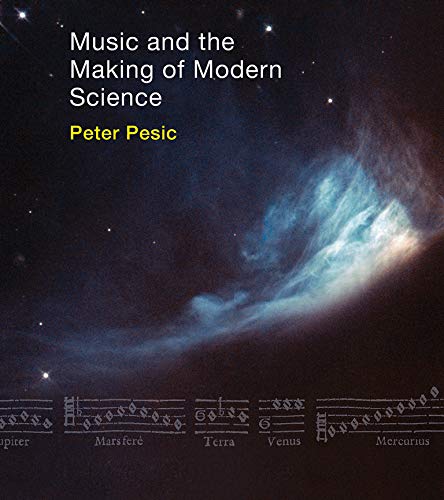
A wide-ranging exploration of how music has influenced science through the ages, from fifteenth-century cosmology to twentieth-century string theory.In the natural science of ancient Greece, music formed the meeting place between numbers and perception; for the next two millennia, Pesic tells us in Music and the Making of Modern Science, “liberal education” connected music with arithmetic, geometry, and astronomy within a fourfold study, the quadrivium. Peter Pesic argues provocatively that music has had a formative effect on the development of modern science—that music has been not just a charming accompaniment to thought but a conceptual force in its own right. Pesic explores a series of episodes in which music influenced science, moments in which prior developments in music arguably affected subsequent aspects of natural science. He describes encounters between harmony and fifteenth-century cosmological controversies, between musical initiatives and irrational numbers, between vibrating bodies and the emergent electromagnetism. He offers lively accounts of how Newton applied the musical scale to define the colors in the spectrum; how Euler and others applied musical ideas to develop the wave theory of light; and how a harmonium prepared Max Planck to find a quantum theory that reengaged the mathematics of vibration. Taken together, these cases document the peculiar power of music—its autonomous force as a stream of experience, capable of stimulating insights different from those mediated by the verbal and the visual. An innovative e-book edition available for iOS devices will allow sound examples to be played by a touch and shows the score in a moving line.
User’s Reviews
Editorial Reviews: Review In this magnificent book, trotting from Pythagoras to Max Planck and beyond, Pesic shows us again and again how music informed innovation, and he offers illuminating new insights into nearly three millennia of scientific developments…. Pesic’s brilliant, unique work fills a glaring need.(Alexandra Hui, Physics Today) Pesic recounts 18 episodes from ancient Greece to the 20th century in which music provided critical inspiration, theoretical insight, and a source of analogy for scientific research. The well-written book is thoroughly researched and makes a compelling case for the centrality of music and musical thinking to the development of modern science…. The result is a novel, creative, scholarly contribution and a flexible pedagogical tool. Highly recommended.(J. D. Martin, Choice)”Pesic is doing something with this book that makes it quite original and therefore meriting close study… This is a well-argued and well-illustrated text that should be of especial interest to students and scholars (and indeed anyone) with a background in the mathematical and physical sciences or their histories… Music and the Making of Modern Science should also be of interest to (classical?) music lovers, especially those who are prepared to broaden their understanding of what music is and its enduring relationship to the cosmos.” (Penelope Gouk, Isis) Review ‘Mathematics and Music! The most glaring possible opposites of human thought!’ Helmholtz’s exclamation in 1857 may still ring true to our ears. But after reading Peter Pesic’s brilliant study, no one will be able to make such claims in good faith anymore. In a fascinating exploration of philosophers and scientists from Plato to Planck, from Heraclitus to Heisenberg, Pesic’s magisterial book rediscovers the multifaceted and age-old connections between musical thought and the natural world. In eighteen lucid vignettes Pesic explores the important role music played in key moments in the history of scientific thought: the establishment of irrational numbers, planetary motion, optics, electromagnetism, and quantum physics. Pesic is as fine a musician as he is a historian of science. He nimbly demonstrates how music has served throughout the ages as a linchpin bridging sensus and ratio, the perceptual world and the realm of numbers, and reconnects the spheres of nature and culture, as spheres that were never truly separated.―Alexander Rehding, Fanny Peabody Professor of Music, Harvard University; author of Hugo Riemann and the Birth of Modern Musical Thought; and co-editor of Music Theory and Natural Order from the Renaissance to the Early Twentieth Century About the Author Peter Pesic, writer, pianist, and scholar, is Director of the Science Institute and Musician-in-Residence at St. John’s College, Santa Fe. He is the author of Abel’s Proof: An Essay on the Sources and Meaning of Mathematical Unsolvability; Seeing Double: Shared Identities in Physics, Philosophy, and Literature; Sky in a Bottle; and Music and the Making of Modern Science, all published by the MIT Press. Read more
Reviews from Amazon users which were colected at the time this book was published on the website:
⭐This is a fascinating book. If you are interested in the mechanical development of music, the evolution of modern note structure, you will enjoy this book. However, don’t expect one of those science-for-everybody type books. It’s a technical piece with nearly as much citation as content. Because I love science and have a background in physics and astronomy, the connection of music to science made sense. If you are a music fan looking for an accessible read on the development of music, you may find this book too technical.We start out with a base of 8 notes because of the 8 heavenly bodies which, of course, are in perfect harmony as is the entirety of creation. The planets move in perfect circles. Each has its own tone though we cannot discern it. The sun, Mercury, Venus, Mars, Earth, Jupiter, Saturn and the moon all move in perfect ‘pitch’ with the earth at the center. That is perfection and music, one of the primary sciences along with astronomy, geometry and mathematics, complies with all the rules of its scientific counterparts.But if the earth is not at the center of our ‘universe’ and if dividing strings to produce nice sounds also creates ratios yielding irrational numbers, things get dicey. How can music be perfect if the math isn’t tidy?I’ll leave the rest for you to explore should you decide to get the book. Be warned, it is a bit technical and does not read “like a detective story” as many popular science books are branded. But there is web page with sound samples referenced in the book which helps the less musically inclined to grasp the ideas presented. For a technical book, it couldn’t be done any better.The design is beautiful. The content is rich and deep. The references support every line. The sound files aid the reader. Beat that.Don’t think I am discouraging you from buying the book. On the contrary, I encourage anyone with interest in music to dig in and learn. It’s worth the effort. But do understand that effort will be required for most of us.
⭐This extraordinary treatise covers in unusual incremental detail the interrelated early histories of mathematics, physics, astronomy, and music theory so readily glossed over in contemporary surveys, and it is a revelation. Author Pesic is a doctoral physicist and historian in the music department of a small New Mexico college. His wide knowledge is distilled in this scholarly, interdisciplinary account. We learn how music production initially by vibrating strings spurred the development of astronomy, analytical geometry, irrational number concepts, and optics. Music as cosmic metaphysics begins with the Pythagoreans and other classic Greek philosophers, passes through “music of the spheres” with search for harmony in a heliocentric system, and eventually reaches modern atomic wave theory. Along the way, the reader learns that the pioneers of mathematics and physics, such as Michael Stifel, Johannes Kepler, René Descartes, Issac Newton, Marin Euler, Thomas Young, and Hermann von Helmhotz, all used musical structures — tones, harmonic polyphony, scales and modes, dissonance, consonance and their interval ratios — as examples, analogies, and metaphors of their physical studies of sound, light, electricity, and matter and their essential mathematical relationships. Indeed, in the Renaissance, sound theory was, in turn, taken in consideration in composing motets and other scores. As in synaesthesia, investigators had assigned colors to sound. The wave/particle duality of matter made the development a rocky road with many provisional compromises, such as Euler’s different frequencies of pulsing wavelets of light. Interestingly, Euler also focused on the aesthetics or psychology of tone intervals with a table of “degrees of agreeableness.” Many such insightful steps fill the pages. Pesic does not mention how music as metaphysics is regarded in other cultures, such as in Sufi and Hindu principles, but in the final pages he does refer to contemporary Western multi-dimensional string theory. Considering that music is so central to humanity and well-being and that the cosmos is defined by waves and cycles, this book emphasizes how instrumental (pun intended) curiosity in music has advanced scientific and mathematical knowledge. Pesic deserves kudos for his fascinating reminder. This book may be of profound interest to historians of science, music, and philosophy but also to anyone with a deeply seated perception of music in its widest, John Cage environmental form as integral to life.
⭐Had anticipated that this book might be very “music-of-the-spheres,” and in its way it is. But it is in fact richly informative, the absorbing, gracefully written work of an author with a secure command of 25 centuries of philosophic and scientific thought. The role that musical and sonic issues played in the work (especially the formative work) of Kepler, Descartes, Galileo, Newton, Huygens, Young, Maxwell, … , Planck—people with whose biographies I had supposed myself to be fairly well acquainted—was a revelation.
⭐Action speaks louder than words: After reading this book, I invited Peter Pesic to come give a talk at the physics institute where I work. I think that most physicists would like this book. It is NOT about the physics of music, but how music influenced the development of physics. Erudite and deep.
⭐Great book, it is focused more on the science than the music, however, anyone interested in understanding the two must read this book.
⭐As a scientist with musical training, I love the fact that this book exists.
⭐Just started, but has gained my attention…
⭐Ein wunderbar gestaltetes und illustriertes Buch, welches den Zusammenhang zwischen der langen Geschichte der europäischen Musik und der Entstehung der modernen Naturwissenschaften in einem großen Überblick darstellt. Dabei werden die neuesten Forschungsergebnisse berücksichtigt. Die kosmologische Legitimation früher musiktheoretischer Konzeptionen – vor allem bei Pythagoras – wird erfreulicherweise nüchtern und ohne unpassende esoterische Abschweifungen dargestellt. Die Fokussierung auf die Naturwissenschaften macht plausibel, warum der Verfasser ein wenig den Eindruck vermittelt, dass sich Intervall- und Skalenbildungen in der langen europäischen musikalischen Tradition aus akustischen Naturgesetzen herleiten lassen würden, obwohl es sich sicherlich um kulturelle Phänomene handelt. Der wichtigste Sachverhalt aber, nämlich dass viele Ansätze und Fragestellungen aus der Musik für die Entstehung der modernen Physik als Leitfaden gedient haben, dieser historisch wichtige Sachverhalt wird überall deutlich.
⭐
⭐Bien documentado y relativo a un extenso período histórico.Hubiera deseado poder adquirir adicionalmente la versión digital por su contenido en ilustraciones musicales.Recomendable a quines tengan interés por la música y la história de la ciencia.
⭐
Keywords
Free Download Music and the Making of Modern Science (The MIT Press) in PDF format
Music and the Making of Modern Science (The MIT Press) PDF Free Download
Download Music and the Making of Modern Science (The MIT Press) 2014 PDF Free
Music and the Making of Modern Science (The MIT Press) 2014 PDF Free Download
Download Music and the Making of Modern Science (The MIT Press) PDF
Free Download Ebook Music and the Making of Modern Science (The MIT Press)