Ebook Info
- Published: 2009
- Number of pages: 457 pages
- Format: PDF
- File Size: 4.50 MB
- Authors: William Edelglass
Description
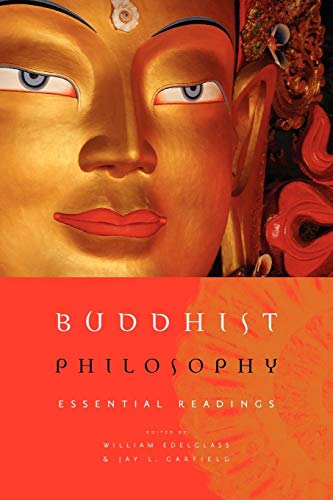
The Buddhist philosophical tradition is vast, internally diverse, and comprises texts written in a variety of canonical languages. It is hence often difficult for those with training in Western philosophy who wish to approach this tradition for the first time to know where to start, and difficult for those who wish to introduce and teach courses in Buddhist philosophy to find suitable textbooks that adequately represent the diversity of the tradition, expose students to important primary texts in reliable translations, that contextualize those texts, and that foreground specifically philosophical issues. Buddhist Philosophy fills that lacuna. It collects important philosophical texts from each major Buddhist tradition. Each text is translated and introduced by a recognized authority in Buddhist studies. Each introduction sets the text in context and introduces the philosophical issues it addresses and arguments it presents, providing a useful and authoritative guide to reading and to teaching the text. The volume is organized into topical sections that reflect the way that Western philosophers think about the structure of the discipline, and each section is introduced by an essay explaining Buddhist approaches to that subject matter, and the place of the texts collected in that section in the enterprise. This volume is an ideal single text for an intermediate or advanced course in Buddhist philosophy, and makes this tradition immediately accessible to the philosopher or student versed in Western philosophy coming to Buddhism for the first time. It is also ideal for the scholar or student of Buddhist studies who is interested specifically in the philosophical dimensions of the Buddhist tradition.
User’s Reviews
Editorial Reviews: About the Author William Edelglass is Assistant Professor of Philosophy at Marlboro College. Previously he taught at the Institute of Buddhist Dialectics, Dharamsala, India. His research focuses on Buddhist philosophy, environmental philosophy, and twentieth century continental philosophy. Jay Garfield is Kwan Im Thong Hood Cho Temple rofessor of Humanities at Yale-NUS College. His books include the translations of Nagarjuna’s Mulamadhyamakakarika: The Fundamental Wisdom of the Middle Way (OUP, 1995); Tsong khapa’s Ocean of Reasoning (OUP, 2002), and Empty Words: Buddhist Philosophy and Cross-Cultural Interpretation (OUP, 2006).
Reviews from Amazon users which were colected at the time this book was published on the website:
⭐This is definitely not an easy read, but it’s a good one — and though I usually found the introductions more valuable than the actual translations, the combination of the two helped make difficult concepts clear.On a larger scale, though, there are a couple of things that jumped out at me:1) Buddhist philosophy and Western philosophy intersect more than one might expect. Even though the two traditions were almost completely separate for two thousand years — and the great Buddhist university of Nalanda was destroyed by Muslim invaders before the University of Paris was even founded — ideas about consciousness, morality and ethics converge much more than one would think.This is especially valuable, I believe, because Westerners too often tend to dismiss Buddhism as people chanting or meditating or circumambulating Tibetan temples instead of realizing that it is a deep, complex system of thought that is much, much more than large statues and incense.2) Just as monotheistic religions will always struggle to explain the existence of evil, Buddhist thinkers will always struggle with the notion that nothing really exists, especially individuals and their egos. But if individuals don’t exist, then what is a “Buddha”? And who exactly is a Bodhisattva trying to save? And, if consciousness of oneself as an individual is not only misguided, but completely out of touch with true reality, then who is it who reads these precepts and either puts them into action or doesn’t?This fundamental paradox becomes more and more apparent as the pages turn, and though it doesn’t devalue the thinkers and their thoughts, it does call into question the foundation of the philosophy that inspires these subtle and often profound works.A warning, though: This book is not for the faint of heart, as the essays and translation are full of unfamiliar phrases and concepts, and the translations of the earlier works are often very difficult to parse. But sticking with it is ultimately rewarding, as things become more and more clear as the reader moves forward in time. So if you’re serious about understanding the complicated depths of Buddhism, these 448 pages of heavy mental lifting are an excellent exercise, and will open the eyes of those who are new to this alternate world of philosophy.
⭐This book is very helpful to those who have 1) a philosophy background, and 2) an intellectual curiosity about the connections between western philosophy and Buddhism. This is a fantastic and engaging book of essays.
⭐It’s a very interesting book. I’m a buddhist first reader so the vocabulary is hard to understand. But as a basic book is one of the best to start with.
⭐The book is a collection of individual writers from various academic institutions. It is not unified in terms of topics, and is definitely slanted in terms of comparison with other religion…i.e. Christianity, for example.
⭐a useful anthology for those with a decent knowledge of buddhism and an interest in its philosophical discourse. lots of very heavy stuff from all major traditions, with introductions that put things in context without sounding like basic buddhism 101. the material, really, is pretty challenging stuff. the main understanding and impression i got after putting this book down was: “awesome! buddhism is even deeper, more profound and more complex than i thought, and crap, i STILL have so much to learn.” a highly recommended read, though i wish this had maybe been expanded into multiple volumes for different traditions or topical areas.
⭐I’m not smart enough to understand this book and you probably aren’t either. Definitely not a casual read for the average person.
⭐This is a valuable book and worth the time to read chapter by chapter. Clearly written and represents the various threads of Buddhism extremely well.
Keywords
Free Download Buddhist Philosophy: Essential Readings 1st Edition in PDF format
Buddhist Philosophy: Essential Readings 1st Edition PDF Free Download
Download Buddhist Philosophy: Essential Readings 1st Edition 2009 PDF Free
Buddhist Philosophy: Essential Readings 1st Edition 2009 PDF Free Download
Download Buddhist Philosophy: Essential Readings 1st Edition PDF
Free Download Ebook Buddhist Philosophy: Essential Readings 1st Edition