Ebook Info
- Published: 2009
- Number of pages: 384 pages
- Format: PDF
- File Size: 7.47 MB
- Authors: Randy Ingermanson
Description
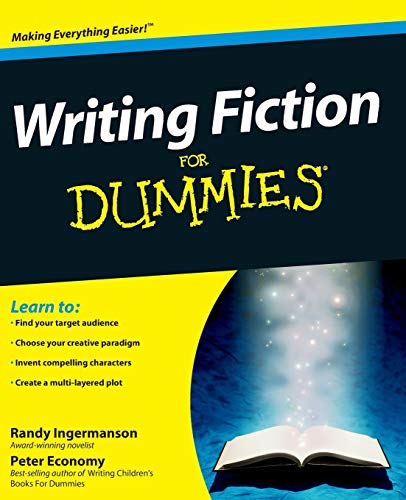
So you want to write a novel? Great! That’s a worthy goal, no matter what your reason. But don’t settle for just writing a novel. Aim high. Write a novel that you intend to sell to a publisher. Writing Fiction for Dummies is a complete guide designed to coach you every step along the path from beginning writer to royalty-earning author. Here are some things you’ll learn in Writing Fiction for Dummies:
Strategic Planning: Pinpoint where you are on the roadmap to publication; discover what every reader desperately wants from a story; home in on a marketable category; choose from among the four most common creative styles; and learn the self-management methods of professional writers.
Writing Powerful Fiction: Construct a story world that rings true; create believable, unpredictable characters; build a strong plot with all six layers of complexity of a modern novel; and infuse it all with a strong theme.
Self-Editing Your Novel: Psychoanalyze your characters to bring them fully to life; edit your story structure from the top down; fix broken scenes; and polish your action and dialogue.
Finding An Agent and Getting Published: Write a query letter, a synopsis, and a proposal; pitch your work to agents and editors without fear.
Writing Fiction For Dummies takes you from being a writer to being an author. It can happen—if you have the talent and persistence to do what you need to do.
User’s Reviews
From the Inside Flap Writing a novel can be a daunting process it will challenge you, stretch you, and change you. Whether you’ve never written fiction before or are looking to brush up your skills and learn new techniques for crafting your words, Writing Fiction For Dummies gives you savvy advice on navigating the entire writing process and turning your ideas into a well-written, marketable book. Establishing an ideal writing environment discover how to set aside enough time and an ideal location for your writing Getting ready to write fiction pinpoint your location on the road to publication, and set your strategic and tactical goals to get your novel published Discovering the principles of writing powerful fiction build a realistic story world, envision unique and exciting characters, craft the layers of your plot, and grow a theme organically Editing and polishing your story and characters put on your editing hat and analyze your characters, scrutinize your story structure, and edit your scenes to get your novel in tip-top shape Getting published learn how to write query letters and book proposals that will ignite an agent’s or editor’s enthusiasm and help sell your novel to the right publisher Open the book and find: Your strategic roadmap to getting published Help in choosing your category Tips for building a believable plot Guidelines for creating three-dimensional characters Examples of storylines that spotlight a novel’s high concept Pros and cons of various publishing methods Advice on finding the right agent and publisher
Reviews from Amazon users, collected at the time the book is getting published on UniedVRG. It can be related to shiping or paper quality instead of the book content:
⭐ I began writing novels, just a few years ago, somewhat late in life. After my novel was accepted by a publisher, I began working with editors, who marked-up my manuscript with comments like “Show, Don’t Tell”. I came to realize there must be rules and a disciplined approach for writing novels. Since the last creative writing class I took was in high school, I decided to learn some of these rules fast, so I ordered this “For Dummies” book.Writing fiction is different than other types of writing. At its simplist level, a novel is about CONFLICT: A hero(PROTAGONIST), has a goal (OBJECTIVE), but he/she is being prevented from achieving that goal by a villian (ANTAGONIST). This is what keeps readers reading: Readers “don’t like happy”, they want to read about conflict. As authors, we must create a fictional world with conflict and sub-conflicts,, until we give the reader RESOLUTION. We must create conflicts on many levels, even at the most basic level of dialogue conflicts. It’s a back-and-forth game, somewhat like fishing, reeling-in the reader with conflict, then letting them out with resolution.This “For Dummies” book describes how novels/stories are organized, points of view, narration, foreshadowing..etc.. It also explains how to analyze your novel for good story structure. It describes well the challenges you will face keeping your readers engaged in the story; modern readers, especially, can be turned-off by things such as too much omniscient narration or too many adverbs and adjectives. As readers, we are typically not aware of these rules – there many authors who don’t understand these rules – but there are, nevertheless, rules you can follow for writing novels, using a structured approach.This book will provide you with a concise, structured approach for writing novels. Lots of good information.
⭐ I used this book to write my debut novel. I read it from start to finish and did all the steps it mentioned. It helped me to flesh the characters and story arc. I’m proud to say my book is now published and it wouldn’t have been possible without this book. Its magic is in the simplicity. Thanks! 🙂
⭐ I’m a total amateur who has been writing creatively since I was a young person, and have always aspired to some day complete a novel. I used to be a fly by the seat of my pants type of writer with a binder full of unfinished ideas. Tired of this approach, I was looking for a book that would help me formulate an organized, well-structured writing process. This book delivers. There are so many good writing tools and tips in this book that it feels like having a personal mentor sitting next to my computer. I especially liked the idea of a three-act structure with a three crisis overlay. This really helped me think about the big picture and develop a formula for my novel. There are also a lot of character development questions to ask yourself, and your characters, even an opportunity to interview your characters one-by-one until they squirm and give up all of their secrets. There are tips for structuring your time and organizing your work space as well. Just and all-around great resource. It even goes so far as to give you practical advice for pitching your book and getting it published.The book is also very entertaining and extremely accessible. There are plenty of examples from classic fiction to help you understand the concepts that are being addressed. I feel like I am learning a lot and improving daily, thanks to this book.
⭐ A comprehensive tutorial for all level of writers. The process of writing a novel can be confusing and disorienting, but Mr. Ingermanson and Mr. Economy take you though step by step giving time tested advice along the way. I have read several of Mr. Ingermanson books on writhing and several of his novels as well. His “Snowflake Method” takes a little getting used to but in the end it simplifies the whole process. I highly recommend using it from the beginning to build your story as apposed to having to use it afterwards to fix structural problems – as I did the first time I used it.
⭐ Extremely comprehensive instructions and explanations to all the components and dynamics of good story telling! This “For Dummies” on writing has moved me from barely knowing how to tackle my novel – to having a clear defined plan that has my story coming together better and with more organization, to avoid unnecessary rewrites, than I could have hoped for!!! I am so grateful to Randy, his snowflake method, and the detailed work he has put into Writing Fiction for Dummies!!! Thank you Randy and Peter.Forever Grateful,D. Collins
⭐ I have read a stack of writing and storytelling books a mile high, and this one is a standout.Truby does an excellent job delving into the nuances of story, Vogler’s ‘The Writer’s Journey is also a great help, and Larry Brooks’ book, Story Engineering, explains story structure clearly and is indispensable imo, but this book lays it out plain how to write marketable fiction.The only downside to this book is that, like many ‘Dummies’ books, it’s not really for a complete dummy. I have helped out new writers with this book, and some of the subtleties go over their heads. It is most useful in the hands of someone who already has a rudimentary understanding of the concepts he explains. Being a Dummies book, he hits all the steps and ‘how-tos’ but doesn’t dive too deeply explaining them. This is not a criticism. That is what I expect when I pick up a Dummies book.If you are an experienced writer or someone who has learned all the basics but need to brush up, (you know what POV is, you understand the difference between a scene and a sequence) or if you want to have a quick reference in one book at your fingertips, this is it.I don’t want to scare away those just learning. Buy this book! Even the brand new writer can benefit greatly from it, since it gathers many concepts in one package that I had to learn by reading many books.What I do suggest for the newer writer, is to buy the following companion books:Techniques of the Selling Writer, Dwight SwainSelf-Editing for Fiction Wrighters, Renni BrownI say this because Ingermanson bases his books on the teachings of Swain and Brown, or at least what he says accords with what they teach, Swain especially. Writing Fiction for Dummies is a wonderful, fairly-detailed outline on how to puke out a novel and form it into something others will want to read, but as I said, he will state a step and move on without bogging you down in theory, which is what I like about this book.Swain’s book could be thought of as the deep reference for this Dummies book. If you want to delve deeper into what Ingermanson is teaching you, Swain’s book will fit the bill perfectly, which is why I recommend it as a companion.Writing Fiction for Dummies is all about helping you get your words down on the page and organizing them in a way that will make them marketable. I wish I had picked this book up first.
⭐ This book is so good and has everything I wanted for my students so I am using it for my Creative Writing class for my high school students. The Dummies title honestly had me thinking twice about that, but I found this to be the best basic beginner level book out there. I wanted to teach them one thing at a time when we start studying fiction next semester, such as dialogue and characterization, and this book makes it easy for me to do this while giving the students good reading to supplement my lectures. Another great thing about this book is that it is clean–there are no trashy stories, language, or examples in this book. I spent the summer going through writing books and that was my biggest problem with some of the best writing books–I had to eliminate many of them due to inappropriate material. We start using this in my class when we study fiction next semester and we are all looking forward to it. Thank you, Mr. Ingermanson, for providing us with a book that can be used with high school students eager to improve their skills in writing fiction.
⭐ The number of potential readers has declined but there still is a market for well crafted stories. I’m completing the Harry Bosch series whose plots are intricate and not obvious. The author spent a lot of time crime reporting then learning what a police detective does on daily basis for years before tackling fiction. Know your subject matter. What audience, gender, country are you writing for? What’s at stake for the protagonist? What are the obstacles in their way? How will you promote your book? Answer those questions and you’re on your way.
⭐ No filler here, this book provides a lot of detail on how to write a fiction novel, from essential ingredients, building your foundation, finding your writing style, developing structure, etc… It also provides much advice on how to get your novel published once you’ve found your voice, hammered out your novel, edited, re-edited and polished your work into something worth shopping around.This book will disillusion you from the idea that you will just sit down and write a novel in one go, with no research, no time spent developing your characters, so attention to your story world and no re-writes. However, that’s o.k., because the authors help to guide you toward a strategy for writing a fiction novel that will provide you with a much better chance of producing something worthy for your effort with out having to learn a lot of lessons other fledgling writers need to learn the hard way.Writing a novel feels a lot less daunting after reading this book, even if there are more steps to the process than I might have previously imagined.
⭐ I never thought I would say anything good about a Dummy book, let alone buy one.But, the reviews led me to believe that this is actually a good book, so I bought it.And, it is a good book. Actually, it is a very good book. It is very detailed and thorough, even to having an elevator pitch ready to go. The part about agents is helpful.But the best part is the three act part and the layering approach the author brings to the table.Putting this book in the Dummy series, to me, is a disservice to this excellent book. It is far from a cursory, introductory glance at writing fiction; if there was just one book to read on writing fiction, I believe this would be on the very, very short list.
Keywords
Free Download Writing Fiction For Dummies in PDF format
Writing Fiction For Dummies PDF Free Download
Download Writing Fiction For Dummies 2009 PDF Free
Writing Fiction For Dummies 2009 PDF Free Download
Download Writing Fiction For Dummies PDF
Free Download Ebook Writing Fiction For Dummies