

Ebook Info
- Published: 2008
- Number of pages: 168 pages
- Format: PDF
- File Size: 1.47 MB
- Authors: Beverly Tatum
Description
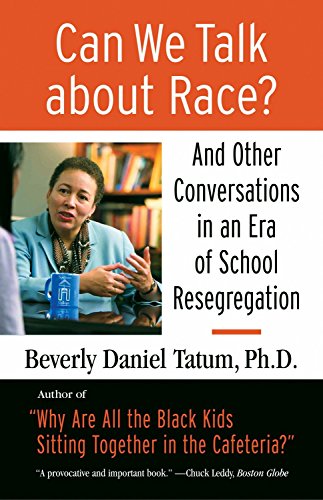
Major new reflections on race and schools—by the best-selling author of “Why Are All the Black Kids Sitting Together in the Cafeteria?“A Simmons College/Beacon Press Race, Education, and Democracy Series BookBeverly Daniel Tatum emerged on the national scene in 1997 with “Why Are All the Black Kids Sitting Together in the Cafeteria?,“ a book that spoke to a wide audience about the psychological dynamics of race relations in America. Tatum’s unique ability to get people talking about race captured the attention of many, from Oprah Winfrey to President Clinton, who invited her to join him in his nationally televised dialogues on race.In her first book since that pathbreaking success, Tatum starts with a warning call about the increasing but underreported resegregation of America. A selfdescribed “integration baby“—she was born in 1954—Tatum sees our growing isolation from each other as deeply problematic, and she believes that schools can be key institutions for forging connections across the racial divide.In this ambitious, accessible book, Tatum examines some of the most resonant issues in American education and race relations: • The need of African American students to see themselves reflected in curricula and institutions • How unexamined racial attitudes can negatively affect minority-student achievement • The possibilities—and complications—of intimate crossracial friendships Tatum approaches all these topics with the blend of analysis and storytelling that make her one of our most persuasive and engaging commentators on race.Can We Talk About Race? launches a collaborative lecture and book series between Beacon Press and Simmons College, which aims to reinvigorate a crucial national public conversation on race, education and democracy.
User’s Reviews
Editorial Reviews: Review “What Tatum seeks to do above all is trigger sometimes challenging discussions about race, and infuse those discussions with a reality-based focus on how race affects us all. Her latest book does that beautifully, asking touch questions, and patiently, inclusively seeking answers.”—Boston Globe”Ten years ago, Tatum’s book asked the question, ‘Why Are All the Black Kids Sitting Together in the Cafeteria?’ Her latest book follows up with a broader question about the nation’s readiness to talk honestly about the forces that continue to make race such a thorny issue . . . A probing and ambitious start to a series of books to prod national discussion on issues of race, education, and democracy.”—Vanessa Bush, Booklist”Four research-rich, concisely written essays on race and education, including examinations of the ‘resegregation of our schools,’ the need for educational curricula and staff that respect the diverse communities they serve, [and] the challenges of interracial friendships . . . What Tatum seeks to do above all is trigger sometimes challenging discussions about race, and infuse those discussions with a reality-based focus on how race affects us all. Her latest book does that beautifully, asking tough questions, and patiently, inclusively seeking answers.”—Chuck Leddy, Boston Globe”Another thoughtful, personal and provocative book that will encourage discussion about many of the difficult issues still surrounding race in America—in and out of the classroom.”—Marian Wright Edelman, president, Children’s Defense Fund About the Author Beverly Daniel Tatum is author of “Why Are All the Black Kids Sitting Together in the Cafeteria?” and Assimilation Blues. She is currently president of Spelman College in Atlanta, where she lives with her husband.
Reviews from Amazon users which were colected at the time this book was published on the website:
⭐In Beverly Tatum’s book “Can We Talk about Race?” she expresses issues on conversations about race that other are afraid to discuss, as well as other factors that many Americans hide inside and are afraid to converse about. She speaks from the eyes of many diverse individuals in many communities. Beverly Tatum starts out talking about the structure of Brown vs. Board of Education, and the is sues that her father faced in trying to obtain a job at a school of his choice. She also spoke about the National Anthem for black, “Lift Every Voice and Sing.” She breaks it down per verse the meaning of the song. Beverly Tatum also describes different events that she has come through in her life. Some personal and some experienced by close colleagues and students. She gives an insight on how to build better learning environments for students of different diversity. Ms. Tatum expresses the importance in reaching every students background and making them feel comfortable. She encourages teachers to utilize the importance of the ABC’s for building a stronger classroom. She expressed the A- affirming identity; B- building community; and C- cultivating leadership. Within this book, Beverly Tatum speaks to us with facts that are sometimes too afraid to be released from others.
⭐I received brand new book and love it. I bought this book for my college courses. Overall really nice books and worth of your money really.
⭐This is a book all teachers should read. Not only did it provide me with a helpful account of the history of segregation, resegregation and racism in American schools, it also convicted me personally, as it helped to reveal things I take for granted in my own teaching. Had it not been assigned in my summer class, I probably would have missed out Dr. Tatum’s thought-provoking insights. I know this book will change the way I teach in the future, and I’m thankful I had the opportunity to read it closely and critically.
⭐This is a great, easy-to-read primer on desegregation, and how racism seeps into the American education system. It includes practical encouragement for teachers and anyone involved in learning to help all students succeed and to rid inequality from the system. I am so glad I read it.
⭐I haven’t read it yet, but I read her first book. I believe this book she be apart of a professional development book study for all educators in the US. At times we even need a refresher like other industries CE( continual education)
⭐The best book ever on the dismal educational system. This book not only speaks to African American youth but all youth being separated because of innate racism in America, the only place on earth that IS a melting pot. Well written and a MUST read for anyone who wants to teach is teaching and has taught. From Kindergarden to college this is a must read. And after reading it- DO SOMETHING to change this system that is not working for our future.
⭐An amazing book and follow up to Why Are All the Black Kids Sitting Together in the Cafeteria? Tatum digs deeper into identity and racial politics as they play out in American classrooms.
⭐good book. easy read. very well organized.
Keywords
Free Download Can We Talk about Race?: And Other Conversations in an Era of School Resegregation (Race, Education, and Democracy) in PDF format
Can We Talk about Race?: And Other Conversations in an Era of School Resegregation (Race, Education, and Democracy) PDF Free Download
Download Can We Talk about Race?: And Other Conversations in an Era of School Resegregation (Race, Education, and Democracy) 2008 PDF Free
Can We Talk about Race?: And Other Conversations in an Era of School Resegregation (Race, Education, and Democracy) 2008 PDF Free Download
Download Can We Talk about Race?: And Other Conversations in an Era of School Resegregation (Race, Education, and Democracy) PDF
Free Download Ebook Can We Talk about Race?: And Other Conversations in an Era of School Resegregation (Race, Education, and Democracy)