

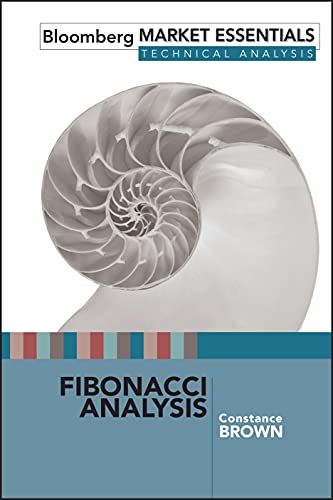
Ebook Info
- Published: 2008
- Number of pages: 208 pages
- Format: PDF
- File Size: 4.04 MB
- Authors: Constance Brown
Description
Only someone who is both a successful trader and a successful writer could pull off what Constance Brown has accomplished in this book: distilling Fibonacci analysis to two hundred or so comprehensive, clearly written, eminently practical pages. Brown knows exactly what a professional trying to come up to speed on a new trading tool needs and she provides it, covering what Fibonacci analysis is, how it works, where it comes from, pitfalls and dangers, and, of course, how to use it. Basic trading strategies are touched upon in virtually every chapter.Fibonacci analysis is one of the most popular technical analysis tools, yet it is often used incorrectly. Brown quickly clears up common misconceptions and moves on to show, step by step, the correct way to apply the technique in any market.Those with Fibonacci analysis software will learn how to use it with maximum effectiveness; those without will chart the market the old-fashioned way. All will find answers to the trader’s most important questions:Where is the market going?At what level should my stop be entered?Based on the size of my trading account, how much should I leverage into a trading position?Can I tell if I am in trouble before my stop is hit?How much should I buy or sell if given a second or third opportunity?Occasional references to other tools–including Elliott Wave, W.D. Gann, and candlestick charts–and an extensive bibliography make this book richer for accomplished technical analysts without confounding the less experienced. Plentiful real-life examples and dozens of carefully annotated charts insure every reader will get maximum value from every minute spent with this book.Gold Medal Winner (tie), Investing Category, Axiom Business Book Awards (2009)Winner: Book Series Cover Design, The Bookbinders Guild of New York/2009 New York Book Show Awards
User’s Reviews
Editorial Reviews: Book Description Constance Brown, CMT, distills Fibonacci analysis to two hundred or so comprehensive, clearly written, eminently practical pages. She covers what Fibonacci analysis is, how it works, where it comes from, pitfalls and dangers, and, of course, how to use it. Basic trading strategies are touched upon in virtually every chapter. Fibonacci analysis is one of the most popular technical analysis tools, yet it is often used incorrectly. Brown quickly clears up common misconceptions and moves on to show, step by step, the correct way to apply the technique in any market. Those with Fibonacci analysis software will learn how to use it with maximum effectiveness; those without will chart the market the old-fashioned way. From the Inside Flap Fibonacci analysis—named after the thirteenth-century Italian mathematician—is an extremely effective tool for understanding market movement. Nevertheless, Fibonacci analysis can be difficult to understand, preventing most traders from taking full advantage of this valuable technique. Fibonacci Analysis gives traders a concise and clear explanation of what this tool is, how it works, and how to apply it in today’s markets. Constance Brown covers a wide range of topics including Fibonacci analysis in cycles of expansion and contraction, Fibonacci ratios for price projection, and applications for time analysis. Brown offers practical guidance on such specific tools as rhythmic wave diagrams, support and resistance, proportional analysis, and use with oscillators. Fibonacci Analysis is eminently practical, showing the most effective use of a technique that can increase the probability of trading success. From the Back Cover Fibonacci analysis—named after the thirteenth-century Italian mathematician—is an extremely effective tool for understanding market movement. Nevertheless, Fibonacci analysis can be difficult to understand, preventing most traders from taking full advantage of this valuable technique. Fibonacci Analysis gives traders a concise and clear explanation of what this tool is, how it works, and how to apply it in today’s markets. Constance Brown covers a wide range of topics including Fibonacci analysis in cycles of expansion and contraction, Fibonacci ratios for price projection, and applications for time analysis. Brown offers practical guidance on such specific tools as rhythmic wave diagrams, support and resistance, proportional analysis, and use with oscillators. Fibonacci Analysis is eminently practical, showing the most effective use of a technique that can increase the probability of trading success. About the Author CONSTANCE BROWN (CMT) founded Aerodynamic Investments Inc. after working for more than twenty years as an institutional trader in New York. She is an active trader and frequently advises financial institutions and banks around the world. Brown’s second book, Technical Analysis for the Trading Professional, was selected by the Market Technicians Association as required reading to prepare for CMT Level 3, the final examination that awards professionals the industry’s Chartered Market Technician accreditation. She is also a member of the American Association of Professional Technical Analysts. Brown has written seven books and is the editor of Market Technicians Association’s Journal of Technical Analysis. She lives in South Carolina. Excerpt. © Reprinted by permission. All rights reserved. Fibonacci The Fibonacci number series: 0, 1, 1, 2, 3, 5, 8, 13, 21, 34, 55, 89, 144, 233, 377, . . . is both additive, as each number is the sum of the previ- ous two, and multiplicative, as each number approximates the previous number multiplied by the golden section ratio. The ratio becomes more precise as the numbers increase. Inversely, any number divided by its smaller neighbor approximates 0.618 or phi (1). While traders with rudimentary knowledge know they can add, subtract, divide, and multiply Fibonacci ratios to obtain another Fibo- nacci ratio,11 they often do not apply this knowledge in their chart analysis. As an example, traders during the Nasdaq crash in 2000 and 2001 would have had no means to determine a price target low if they only knew how to calculate price support levels by subdividing the extreme price high and historic low into the ratios of 61.8 percent, 50 percent, and 38.2 percent. In Figure 1.4, we see the monthly chart for the Nasdaq Composite Index. Range A begins at the price high and ends at a price low signif- icantly higher than the market low. The price low selected in 1998 was a significant decline, but was not the historic low, which would have made the problem we are about to discuss worse. Traders who simply subdivided the range as defined by range A would witness the market falling through the 61.8 percent support zone and not know what to do to identify new targets. A retracement of 61.8 percent is the decline that occurred relative to the full price range selected. Traders and ana- lysts could further subdivide the range between the 61.8 percent level of A and the price low first selected to obtain additional Fibonacci ratios.12 They in turn could find additional support levels by dividing the range marked C into the ratios 38.2 percent, 50.0 percent, and 61.8 percent. We could further subdivide range D. Each of these addi- tional subdivisions shows that the Nasdaq Composite respected the ratios identified. Any Fibonacci ratio that is added, subtracted, multi- plied, or divided will produce another Fibonacci ratio. Many traders Read more
Reviews from Amazon users which were colected at the time this book was published on the website:
⭐My fib lines are so tight on so many different random tickers it’s insane. We’re talking 3 or 4 pennies off at the most, and often times it’s not off at all. This book is not very big, in fact it’s pretty small compared to my options as a strategic investment book. However, the contents inside of this book are priceless if you know what to do with the information. I will admit there are some errors in the book, but if you use common sense and read the confusing parts over and over, you will grasp the concept. It’s not for casual readers. You will need to pull up tradingview or whatever charting software you prefer, and practice the technique described in this book. If you take the time to read this book thoroughly and fully comprehend the concepts, you will see where price is going before it goes there and when the price arrives at it’s destination, you will constantly be in awe of how well this works. Of course technical analysis is not so easy, and you will also need to read other books to get an idea of which direction the price is heading, but this book will help you to see things I never thought possible. Other people think prices are random walks, this book has showed me that is total BS.
⭐If you look at the reviews of Constance Brown’s books on Amazon.com, reviewers fall into the “love it” or “hate it” categories — no one is in the middle. I’ve read almost all her books (the new one on Elliott Wave isn’t out for another few months and there is one that Amazon doesn’t carry, but B&N does). My review covers all of her books in a way, but is meant to be specific to the text on Fibonacci Analysis
⭐.Fibonacci analysis is not a trivial process, although most charting software would make you think it is. As Constance points out beautifully, the selection of pivot points isn’t as simple or mindless as “take the extreme high and low points” — markets have an internal geometry that changes over time and you have to match that geometry to pick the proper pivots and thus create the correct confluence zones. She’s very upfront about this in her Introduction and in the text itself, again and again. This analysis takes proper tools (whether computer drawn or with proportional dividers on paper) and practice … and ideally (but not mandatory) a mentor to help guide you.Is this book a stand-alone text? Yes, it is complete to itself. However, as Constance says (my paraphrase), “WD Gann spent decades learning about the mysteries of the Sacred Ratio and how to apply it; I’ve spent years, building on his and my mentor’s further teachings; and if you’re serious, you’ll spend lots of time learning the basics and then making it your own”. There is no easy road and this isn’t “all you need to know about Fibonacci in 8 easy lessons”. This is the freshman year of college and you have the rest of college and then graduate and post-graduate work ahead of you if you want in-depth understanding.Remember that this book has a limited number of examples and pages. You have to study and repeat what Constance does on your own charts for the lessons to sink in. It would be ideal to sit with her for a week, but few of us have either the time or money to do that. Reading other dedicated Fibonacci books [e.g., Fibonacci Trading by Carol Boroden
⭐) or going to trader websites using Fibonacci techniques can show you alternate methods, or better yet, give you an opportunity to see how Constance Brown’s technique improves on what is the “industry standard” for traders. All of it is learning and making this tool your own.Are there errors in the text? Yes, a few, but they are relatively minor and if you’re reading and understanding the material, you’ll know the corrections you need to make. I’ve found typos and minor corrections in most books and this has fewer that most others in the finance/trading universe.Does she answer the questions she raises in the text? Yes, she does. It may be in a later chapter or rephrased slightly, but she never leaves us wondering …In short, this is not an easy book to read, but that’s because the material isn’t easy. The writing is well done, clear and the progression from basics to advanced concepts is exactly what the student needs.This book has taken a place of honor in my trading library, next to her master work on Technical Analysis. She points out the path and gives us our first lessons, but there is no “predigested spoon feeding” here; the rest is up to us as students to find, learn, master and ultimately, pass on to others.
⭐This book is complicated and sometimes seems out of focus.However it teaches something that I haven’t found anywhere else : how to correctly select the starting and ending points of a Fibonacci range.If you look at Alan Farley, Carolyn Boroden or Joe DiNapoli books, you’ll see that their method is to identify the low and the high of each swing. I constantly lost money using Fibonacci retracements with their methods and Constance Brown explains why : the market may be contracting or expanding and you may start the range after a gap, at the beginning of a long bar, after the second correction, etc…I admit it can look very personal and somewhat arbitrary, but once you’ve done it several times, the beginning and ending points seem to jump out of the chart ; the confluence zones, hidden to most of the traders, come to life and those levels are respected within ticks… it’s almost magic (and at least this trading edge won’t be duplicated too soon by any computer program) ! This enables you to “predict” where the market will turn and as a consequence, place very tight stops… Very different from what can be taught by several “experts” : “the market should stop retracing between the 38% and 62% retracements” – in this book you’ll learn to make very precise predictions : if wrong, you get out with a minimal loss – if right, the trend resumes and you hit jackpot because you can trade a large position, as your exit point is so near the entry !On the first reading, I didn’t get everything and found that the book looses focus on several chapters (discussion on Gann or astronomy for cycle analysis for example). The last chapter, aimed at selecting which confluence zone is more significant, is unclear … I’ve read it several time and can’t understand how to do it right.However, all the discussions on the “internal markers” used to define the beginning and ending points of each grid are priceless.I almost can’t place a trade without fib grids on a chart : 5 stars !
⭐Firstly i should note i’ve been successfully trading off an on for between 15 and 20 years and for the last 10 made my living from it. Never before have I used fibonacci for support and resistance zones but in an effort to expand my knowledge i decided to purchase this book as it seemed to be well endorsed. If Ms brown uses her fibonacci methods for trading i’m surprised she ever gets past first base, they’re far too cumbersome to gain any advantage particularly in fast moving markets. The early chapters and basis for the setting of fibonacci ratios are quite helpful but even she notes that it’s very subjective as to where you choose to pick your start and end points for fiboncci projections. Choosing the mid point of a gap for 50% fib retracement for example seems somewhat odd as it’s common knowledge that support and resistance settle around upper and lower gap positions.I’m the first to admit it’s been a useful addition to my trading armoury but only to provide additional confirmation to my existing methods using tramlines and bollinger bands with a series of indicators. I gave it two stars because it’s over complicated and completely unworkable as an isollated indicator. however used in a simplistic form with other indicators and methods it’s a useful confirmation signal.Despite her suppossed time in the real world of trading Ms brown comes across more as an academic rather than a real time trader. I leave you to read the book and make your own mind up.Read anything by Elder, Murphy, Grimes, Nison, Bollinger, Morris or John Burford if you want to have a better idea of Technical Analysis
⭐This could be a great book. The information in it is new to me, and I have studied a great deal of technical and Fib Analysis. I just think the whold thing is let down by poor charts. I don’t know what the physical book is like because I have the Kindle version on my lap top, and I find the charts small with tiny writing. You cannot look at them properly even with a magnifying glass. I only hope I will still be able to use the information and bank money with it.
⭐Not very concise, it’s a torture to read trough this book because you never know where we are heading and what’s the purpose of the paragraph.It however presents interesting concepts if you’re ready to read the book multiple times.
⭐I read this book very enthusiastically. It provides the reader with good information on this topic, including the history of the Fibonacci number series and the application of the Fibonacci ratios to charts. After reading this book, the reader knows how to use the Fibonacci ratios for price projections as well as for identifying important support/resistance zones on the chart. The knowledge the reader gains can be easily applied to charts. I recommend this book as there is no comparable book on the market.
⭐alot more info and so much too learn – this one book has everything you need to understand and start using fibonacci analysis in everyday of your life – fantastic, thank you
Keywords
Free Download Fibonacci Analysis 1st Edition in PDF format
Fibonacci Analysis 1st Edition PDF Free Download
Download Fibonacci Analysis 1st Edition 2008 PDF Free
Fibonacci Analysis 1st Edition 2008 PDF Free Download
Download Fibonacci Analysis 1st Edition PDF
Free Download Ebook Fibonacci Analysis 1st Edition