Ebook Info
- Published: 2015
- Number of pages: 376 pages
- Format: PDF
- File Size: 3.41 MB
- Authors: Bertil Lintner
Description
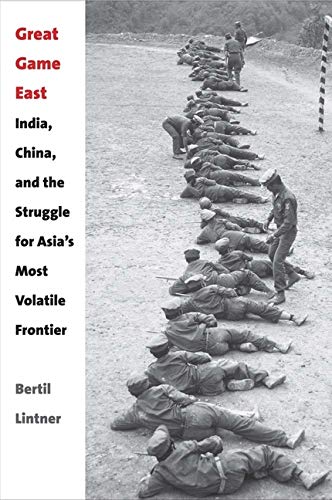
Since the 1950s, China and India have been locked in a monumental battle for geopolitical supremacy. Chinese interest in the ethnic insurgencies in northeastern India, the still unresolved issue of the McMahon Line, the border established by the British imperial government, and competition for strategic access to the Indian Ocean have given rise to tense gamesmanship, political intrigue, and rivalry between the two Asian giants. Former Far Eastern Economic Review correspondent Bertil Lintner has drawn from his extensive personal interviews with insurgency leaders and civilians in remote tribal areas in northeastern India, newly declassified intelligence reports, and his many years of firsthand experience in Asia to chronicle this ongoing struggle. His history of the “Great Game East” is the first significant account of a regional conflict which has led to open warfare on several occasions, most notably the Sino-India border war of 1962, and will have a major impact on global affairs in the decades ahead.
User’s Reviews
Editorial Reviews: Review “Lintner shines a bright light on one of the most obscure corners of Asia.”—Foreign Affairs ― Foreign Affairs“This book is as authoritative as it is intriguing.”—Literary Review ― Literary Review“This is a timely and important work that sheds light on the important geopolitical developments occurring in South Asia. . . . If indeed we are in the Asian century, Lintner’s Great Game East will be an important guide to our understanding of how this came about and what to expect in the immediate future.”—Asian Review of Books ― Asian Review of Books About the Author Bertil Lintner has written for numerous publications including Foreign Policy, Foreign Affairs, the Asia Times Online, the Wall Street Journal, the International Herald Tribune, and Politico. He lives in Chiang Mai, Thailand. Excerpt. © Reprinted by permission. All rights reserved. Great Game EastIndia, China, and the Struggle for Asia’s Most Volatile FrontierBy Bertil LintnerYale UNIVERSITY PRESSCopyright © 2015 Bertil LintnerAll rights reserved.ISBN: 978-0-300-19567-5ContentsIntroduction, 1, ONE War and Spookery in the Himalayas, 13, TWO The Nagas: Challenging the Idea of India, 40, THREE The Mizos: From Famine to Statehood, 80, FOUR Manipur: The Eternal Imbroglio, 109, FIVE Assam and Bangladesh: Foreigners? What Foreigners?, 144, SIX Burma: A State of Revolt, 171, SEVEN The Indian Ocean: A Tale of Two Islands, 204, Postscript, 233, APPENDIX 1: Chronology of Events, 241, APPENDIX 2: Major Armed Non-State Actors in Northeastern India, the Chittagong Hill Tracts, and Northern Burma, 255, APPENDIX 3: Rebel Missions to China, 262, APPENDIX 4: The Chittagong Arms Haul, 268, Notes, 271, Annotated Bibliography, 298, Acknowledgments, 320, Index, 323, CHAPTER 1War and Spookery in the HimalayasIt was an ordinary Saturday evening, 6:30 to be precise, and Brigadier John Dalvi was relaxing in a bathtub at his quarters at the army base in Tezpur. He had just played a round of golf at the town’s newly laid course and was preparing for an early night. He had a flight to catch at dawn the following day and had even turned down an invitation from his general to watch a movie at the local Planters’ Club. As commander of the 7th Infantry Brigade of the Indian Army, Dalvi was responsible for the defense of the western sector of the North-East Frontier Agency, NEFA—or today’s Arunachal Pradesh, a state in the Union of India—and always took his duties seriously. But this evening he was tempted to ignore the phone that kept on ringing. He was sick of telephone calls, and besides, he was officially on leave as of midday because it was the weekend.On the other hand, as he recalled much later: “Some extrasensory intuition told me that I had better answer it as it was probably an emergency message. Very few people knew where I was staying and only someone who wanted me desperately would persist in contacting me.” Brigadier Dalvi was right. It was an officer calling from the border town of Tawang, high up in the snow-capped mountains of northwestern NEFA. Six hundred Chinese soldiers had just crossed the Thagla Ridge and come down to the Indian Army post at Dhola. The intruders had cut a nearby log bridge and were threatening the water supply to the post. The local commander was asking for immediate help, the local officer told Dalvi over a radiotelephone from the border.It was the first serious incursion by Chinese troops into NEFA, and Dalvi was anxious to know what they were up to. He did not think it was an accident or a spur-of-the-moment decision to cross the border: “I have no doubt that the Chinese selected Saturday to ignite the Thagla incident as they correctly reasoned that by the time information reached Delhi, it would be late evening or early Sunday morning … the Chinese must have known by 1962 that no Indian Commander had any initiative to act without consulting Government.” And the government would not get its act together until Monday morning at the earliest. Dalvi concluded that the Thagla incident should not be treated as a “petty border incident.” He reminded his commander that the post had been established in an area that the Chinese did not consider part of India: “We should cater for a sharp and massive Chinese reaction. I told the GOC (General Officer Commanding) that the Chinese had the advantage of time and space and logistic support, while we suffered from grave administrative handicaps.”Dalvi’s words turned out to be prophetic. The Thagla incident and a few ensuing skirmishes were only the harbingers of what was to come later that year, 1962. On October 20, the Chinese People’s Liberation Army, PLA, launched a massive assault across the so-called McMahon Line, the crest of the Himalayas that India marks as its boundary with Tibet. China, for its part, does not recognize that border and claims not only Tibet but also most of NEFA as its own. Tens of thousands of Chinese troops launched simultaneous attacks across the McMahon Line and into the Chip Chap Valley in Aksai Chin in Kashmir in the far west of the common border. The Indian Army, ill prepared for attacks of that magnitude, was routed. On October 23, Tawang fell to the Chinese, who continued to push south, toward the foothills of the Himalayas, reaching the plains and the outskirts of Dalvi’s garrison town, Tezpur. Then, on November 21, after a month of heavy fighting, the Chinese declared a unilateral ceasefire and withdrew to the McMahon Line.India had suffered a humiliating defeat. But its troops had also shown immense bravery. Not far from Sela Pass—the highest point on the road from Tawang down to the southern lowlands—the rifleman Jaswant Singh single-handedly stopped the Chinese for three days before he was killed. A memorial was erected at the spot where he laid down his life, and today many travelers on the road to Tawang stop there to pay their respects to the brave young soldier who died defending India against an overwhelming enemy force. Many others also died fighting in the freezing cold of the inhospitable heights of the Himalayas, often cut off from supplies from the lowlands. Casualties mounted, and soon more than a thousand Indian soldiers lay dead in the mountains. At least seven hundred Chinese soldiers were killed and many more wounded as well—but that did not stop them. Massive infantry attacks, or human waves, have been part of Chinese military tactics since the Korean War in the early 1950s.It was not only the pride of the Indian Army that lay in tatters after the brief but fierce 1962 border war. The war had also a devastating effect on prime minister Jawaharlal Nehru, who felt genuinely betrayed. There could be no more friendship with China, which he had nurtured throughout the 1950s, as the Chinese had violated his trust and left India looking weak, feeble, and vulnerable. India’s leftist defense minister, Krishna Menon, who had been critical of the West and dismissed the possibility of a war with China over the border issue, was sacked. Nehru died a broken man in May 1964.Other casualties of the 1962 war hurt India’s image as a strong democracy. More than three thousand ethnic Chinese, many of them living in Assam at the time, were rounded up and sent to an internment camp in Deoli in Rajasthan. In 2010, survivors of the camp went public, saying that they wanted a monument to be raised at Deoli as “an acknowledgement of the persecution of the ethnic Chinese” forty-eight years before, and as a reminder of “our loss of freedom.” They were not “fifth columnists” for China’s Communist government—neither were the tens of thousands of ethnic Chinese then living in Kolkata who worked as tanners, shoemakers, and carpenters, and owned restaurants, beauty parlors, shops, and small businesses. They had come during British rule and now many of them chose to emigrate to Taiwan, Hong Kong, Canada, Australia, and the United States. It was not until 1998 that ethnic Chinese were allowed to become naturalized Indian citizens.India was not alone in targeting members of an entire ethnic community because their country of origin happened to be the enemy in an armed conflict. During World War II, more than one hundred thousand Japanese immigrants were interned in “War Relocation Camps” in the United States. People of Chinese descent in Assam, who were brought there as indentured laborers by British tea planters in the nineteenth century, were largely forgotten until the Assamese novelist and activist Rita Chowdhury highlighted their plight in one of her novels: “The least India can do is apologize to them for the misery inflicted by an insensitive state machinery for just being Chinese at an inconvenient time,” she said in an interview in 2010.The Chinese PLA may have withdrawn unilaterally after it had showed the world that it was capable of asserting its territorial claims if it wanted to, but the 1962 war also set in motion a chain of events that were to have a profound impact on the entire region and the stability of India’s northeastern frontier: Chinese support for the Nagas, the Mizos, and the Manipuris; Western support for the Tibetan resistance; a massive military build-up in India and modernization of its armed forces; and the covert involvement of spies and intelligence operatives in the theater of conflict that stretched from northeastern India to northern Burma and, eventually, even the Indian Ocean. India and China, once partners if not allies, became bitter enemies. No one could deny that there was a new Great Game in the East.Devastating as it might have been—and to a large extent still is—for the Indian national psyche, the 1962 war was not entirely unexpected, and cross-border espionage and regional rivalry belong to a period long before the Chinese attacks on NEFA and Aksai Chin. Diverging views on the status of Tibet, its border with India, and China’s role in all this pre-dated the war by several decades.During the colonial era, a new concept was invented to describe the status of territories that were not really under the sovereignty of any power, nor recognized as independent by outsiders. It was called “suzerainty” and was first used to describe the relationship between the Ottoman Empire and its outlying areas. Later, China was said to enjoy “suzerainty” over countries such as Korea and Tibet. It is doubtful whether there is any word in the Tibetan language—or Korean—to describe something as nebulous as “suzerainty.” By using that term, Britain and other colonial powers could appease the Chinese by making them believe that it enjoyed some kind of overlordship of a certain territory, while the actual rulers of the same territory could interpret it as recognition of a more independent status.George Patterson, a Scottish Tibetan-speaking expert on Asian affairs and a champion for the Tibetan cause, wrote shortly after the 1962 war: “The confusion in boundaries which existed in the minds of the leaders of other nations was due to a variety of reasons compounded by the geographical remoteness of Tibet, the indifference of the Tibetan Government to outside affairs and the predilection of the Chinese Government for extending the boundaries on their maps farther and farther westwards.” Patterson also noted that throughout most of Tibet’s history there was no war that could unite its many tribes against their common enemy, China. They were busy fighting each other and if the proud and independent tribesmen were opposed to any higher authority it would have been the central government in Lhasa.The official Chinese version of the situation was outlined in a book published after the 1959 anti-Chinese uprising in Tibet and the subsequent flight of the Dalai Lama to India, and in another book that Beijing produced after the 1962 war. The former contained pictures of serfs in fetters and thumbscrews, which the “former local government of Tibet” used to punish the people and safeguard the “special minority privileges” of the oppressors—and then shots of Chinese soldiers helping smiling Tibetan peasants to reap highland barley, an important crop for the Tibetans, and Chinese Army officers presenting gifts to chubby-cheeked, happy Tibetan girls. The text assures the reader that “friendly contacts between the Tibetans and China’s other nationalities, mainly the Han nationality, began a long time ago.” The Tibetans seemed to love the Chinese regardless of what dynasty was in power, sending gifts to the emperors, and the Chinese reciprocated by sending emissaries to Tibet to invite important lamas to preach the Buddhist canons. Chinese princesses happily married Tibetan dignitaries and Chinese emperors conferred titles of honor on prominent Tibetan Buddhists.Then came the 1911 Chinese Revolution and the fall of the last imperial dynasty, the Manchu Qing, and “the British imperialists lost no time in inciting their protégés, the reactionaries of the upper strata in Tibet, to stage a revolt.” The British imperialists, apparently, never ceased trying “to undermine the normal relations between the Chinese central government and the local government of Tibet.” In the late 1940s, the British—and now also the US—imperialists “tried in every way to thwart the peaceful liberation of the Tibet region of China.” But, naturally, “the Tibetan people, along with other nationalities of the motherland, will advance from victory to victory under the leadership of the Chinese Communist Party and Chairman Mao Tse-tung [Zedong].”The authors of the official Chinese publication also went on to criticize Nehru—three years before the 1962 border war: “Mr. Nehru hopes that we ‘will win them (the Tibetans and others) to friendly co-operation.’ No doubt this is a good idea, though it was meant by Mr. Nehru as an indirect charge that we have not done so and are not doing so. In point of fact, only the revolutionary proletariat can find a thorough and correct solution to the nationalities question inherited from the past.”There is hardly a sentence in the propagandistic book that China produced in 1959 that could be considered even remotely convincing. But that has not prevented a stream of foreigners from supporting the Chinese version of their occupation of Tibet—which, in turn, has made it more difficult for the Tibetans to argue their case internationally. The most notorious were Stuart and Roma Gelder, whose The Timely Rain: Travels in New Tibet became a classic in leftwing circles all over the world. The British couple interviewed a former serf who had been blinded and mutilated for stealing two sheep from a landlord. They visited schools with happy children. The Gelders assured everyone that Buddhism was alive and well in Tibet and did not witness any atrocities. Their book carried a foreword by Edgar Snow, the author of Red Star Over China and a close friend of the Chinese Communist leadership.Anna Louise Strong, an American journalist and activist who had lived in the Soviet Union before she settled in China in the 1950s, wrote the even more passionate When Serfs Stood Up in Tibet, which also depicted the Tibetans as a happy people in the great fraternity that is China. In the same vein, Israel Epstein, a Polish American journalist who later became editor in chief of the official publication China Reconstructs, wrote Tibet Transformed, which praised “Tibetan revolutionaries, old and young” and wrote about “the reactionary rebellion” in 1959.Han Suyin, who was half-Chinese, half-Belgian, also uncritically reproduced the official Chinese version in Lhasa, the Open City. Remarkably, Han visited Tibet in the mid-1970s, only a few years after the immense destruction that had taken place during the Cultural Revolution, but still saw nothing untoward.Some South Asian writers were also taken in by the Chinese propaganda. Ratne Deshapriya Senanayake, secretary general of the Ceylon Writers’ Association and president of the Ceylon Journalists’ Association in the 1950s and 1960s, wrote Inside Story of Tibet, in which he stated that the 1959 “rebellion was suppressed by the people of Tibet with the assistance of the People’s Liberation Army.” The imperialists and reactionaries used “religion as a camouflage … to mislead and deceive those who were not familiar with the true situation inside the Tibet region of China before liberation.”China’s official version of the boundary question, as published in the 1962 book, tries to be more factual than the propaganda it spread about Tibet, which was later accepted by many foreign visitors on guided tours to Lhasa and other places on “the roof of the world.” The book about the boundary, which was also published by the Foreign Languages Press in Beijing, contains official statements, letters from Premier Zhou Enlai to Nehru, and detailed maps of the areas claimed by China. But it also includes some incredible statements such as “Indian troops eventually launched massive armed attacks all along the line of Chinese frontier guards on October 20, 1962.”At the heart of the problem are two issues: the status of Tibet—and the McMahon Line, which was agreed on by Britain and Tibet at a conference in Shimla, the imperial summer capital of India in the mountains north of Delhi, in 1914, but rejected by China, which did not recognize the right of the Tibetan government to conclude treaties with foreign powers. Named after Sir Henry McMahon, the foreign secretary of British India, it follows the crest of the Himalayas and therefore could be considered a natural border between India and whatever name and status of the land north of it. The Shimla agreement also stated that, “The Government of China engages not to convert Tibet into a Chinese province. The Government of Great Britain engages not to annex Tibet or any portion of it.” (Continues…)Excerpted from Great Game East by Bertil Lintner. Copyright © 2015 Bertil Lintner. Excerpted by permission of Yale UNIVERSITY PRESS. All rights reserved. No part of this excerpt may be reproduced or reprinted without permission in writing from the publisher.Excerpts are provided by Dial-A-Book Inc. solely for the personal use of visitors to this web site. Read more
Reviews from Amazon users which were colected at the time this book was published on the website:
⭐Bertil Lintner is very skilled in taking you by the hand through a complex and mostly unknown area of the world. His analysis and insight gives you a fresh look on recent history. Sometimes the vast number of abbreviations is confusing, but the result is a great learning experience.
⭐The work by Swedish journalist deals with problems in India’s turbulent north east and China’s involvement in it. China is India’s powerful neighbor and bitter rival. Beijing is always seen working against India’s core strategic interests and has always sought ways to diminish New Delhi’s influence in her neighborhood. This tussle for power and influence in the region has been labeled by the author as new Great Game East. It is strikingly reminiscent of strategic rivalry between British Empire and Czarist Russia for the control of Central Asia.China has viewed the presence of Tibetan leader Dalai Lama and his government- in- exile in India as an hostile act and existential threat. Beijing has retaliated by supporting insurgent groups – Manipuri and Naga – operating in the India’s north east. At this point, however, author makes an interesting observation Chinese did not create this problem. Many peoples of the north east (Nagas , Manipuris, Mizos even Assamese ) have yet not reconciled to accession of their provinces to the Indian Union. Manipuris in particular believe that their rajah was tricked into joining Indian Union. So Chinese have exploited the resentment these peoples have for India to the hilt. Indians could respond by applying pressure on China’s underbelly. Regions like Tibet , Xinjiang have not properly integrated with China. Whether New Delhi has the will to do this is another matter.Over the years New Delhi has resorted to complex mixture of measures to control, if not end, the insurgencies raging in the north east. In this respect role played by RAW is particularly laudable. Author has words of praise for RAW( the Indian intelligence). RAW is the acronym for Research Analysis Wing. Plenty of documentation is available on Mossad, KGB, CIA . However RAW , according to author, has cloaked its activities in a veil of secrecy. Further, author is of the opinion, Indians were no novice to the field of espionage and had practised it from time when people of Europe lived in caves. 4 core principles Shama ( political reconciliation) Dhana ( monetary inducement) Dand ( force) Bhed ( split ) applied by RAW in its covert war were straight taken out of the book Arthashastra by Kautiliya , a great practioner of statecraft who lived more than 2000 years ago.Recently rivalry between two nations has spread to neighboring Burma and Indian Ocean. Here a few things have to be borne in mind. Chinese have a high profile presence in Burma where her interests are primarily strategic. Beijing wants an outlet to the sea for her landlocked province of Yunnan. China has invested considerable sums of money in improving Burma’s poor road infrastructure and in exploration, development and production of that country’s oil and natural gas reserves. But of late military regime’s attitude toward her big neighbor has changed. Relations with India and the western powers have improved as Rangoon seeks to reduce her dependence on China. Beijing is certainly not happy by those developments.Few things which made profound impression in me were the developments in the Andaman sea . First of course is the installation of radars and electronic listening posts in Cocos islands for intercepting Indian naval communications and for collecting telemetry data on Indian missile tests conducted along the Orissa coast. In 1994 Indian coast guard intercepted and apprehended some fishing vessels close to Indian naval base in the Andaman Sea. The vessels were carrying Burmese flag but her crew was all Chinese. The vessels did not carry fishing equipment but had radio communication sets, depth sounding gear. Nature of their job could easily be surmised. These men were on a covert mission to measure depth of sea floor near India’s military installations in the Andaman Islands.Suddenly the idyllic Andaman Sea has become important to the maritime defense of India, a fact brought home by another development, smuggling of weapons for insurgent groups operating in the India’s north east. Alarmed by these developments New Delhi has established a new integrated command of the armed forces in the region called FENC (Far Eastern Naval Command). Author concludes his work by claiming moving away from Himalayas the Indian Ocean Region (IOR) would soon become bone of contention between the two nations. However despite all the saber rattling I don’t see any prospect of an armed conflict with China. Both nations in the years to come would continue poking at each other detrimental to peace and stability of the region
⭐A page-turner it is not, but for an understanding of relationships, structure, independence movements, and ethnicities in the China-India-Burma-Bangladesh- Nepal-Sikkim border regions it is hard to beat. If your knowledge of these regions is restricted to a few groups, peoples such as Karen, Kachin and Shan, be prepared to expand your horizons. Appendices, notes, index.
⭐This book is an overall masterpiece of well written information from first-hand accounts from a man who had done extensive traveling all around the Northeast and it is quite interesting to look at the various issues plaguing the region from a different perspective. Would highly recommend for those first time individuals who are intrested in learning about the political history of the NE region in a non biased way. Cheers!
⭐Good book. Gives insights into the troubled North East regions as well as adjoining Burmese tribal territories. (and how China has been exploiting this unrest). Based on very extensive interactions the author has had with local communities.
⭐Intrested or not, scholar or layperson alike, every one should read this book..And all the books written by Bertil..
⭐Great observations and analysis, and convincing. Liked the author always ever since his true story/autobiography “Land of Jade.”
⭐I read every book of Bertil Lintner. His vast knowladge on Southeast Asia is found in every sentence of his books.
Keywords
Free Download Great Game East: India, China, and the Struggle for Asia’s Most Volatile Frontier in PDF format
Great Game East: India, China, and the Struggle for Asia’s Most Volatile Frontier PDF Free Download
Download Great Game East: India, China, and the Struggle for Asia’s Most Volatile Frontier 2015 PDF Free
Great Game East: India, China, and the Struggle for Asia’s Most Volatile Frontier 2015 PDF Free Download
Download Great Game East: India, China, and the Struggle for Asia’s Most Volatile Frontier PDF
Free Download Ebook Great Game East: India, China, and the Struggle for Asia’s Most Volatile Frontier