

Ebook Info
- Published: 2016
- Number of pages: 432 pages
- Format: PDF
- File Size: 2.60 MB
- Authors: Bartow J. Elmore
Description
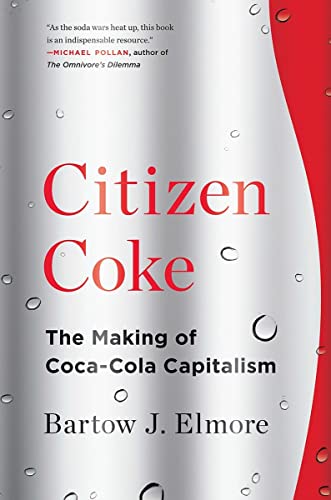
“Citizen Coke demostrate[s] a complete lack of understanding about…the Coca-Cola system―past and present.” ―Ted Ryan, the Coca-Cola CompanyBy examining “the real thing” ingredient by ingredient, this brilliant history shows how Coke used a strategy of outsourcing and leveraged free public resources, market muscle, and lobbying power to build a global empire on the sale of sugary water. Coke became a giant in a world of abundance but is now embattled in a world of scarcity, its products straining global resources and fueling crises in public health. 8 pages of illustrations
User’s Reviews
Editorial Reviews: Review “[Elmore offers] unaccustomed perspectives on a company whose leading product is a household name around the globe…I doubt the Coca-Cola Co. will much like it.” ― Marc Levinson, Wall Street Journal”What Elmore does best is analyze how Coke takes advantage of global public works and government interventions to boost its place in world markets…Citizen Coke began as a dissertation, and its points are lucid and logically presented; the language is accessible, and punchy chapter endings propel the story.” ― Beth Macy, New York Times Book Review”As the soda wars heat up, this book is an indispensable resource.” ― Michael Pollan”Coca-Cola is one of the most powerful economic institutions of our time, but its social and ecological impacts remain understudied. Now, in the hands of a talented young historian, corporate capitalism gets the attention it deserves in a careful dissection of the material underpinnings of the world’s most valuable brand. Citizen Coke will cause you to drink less and think more.” ― Ted Steinberg, author of Gotham Unbound: The Ecological History of Greater New York”Citizen Coke is a brilliant analysis of Coke’s empire in ecological, economic, and social terms. It allows us to see the contours of an economy based on partnerships between governments and corporations like Coca-Cola. It makes us conscious of the giant ecological footprint of the Real Thing, which impacts the real lives of real people. If you want a deeper understanding of our world today, read Citizen Coke.” ― Vandana Shiva, author of Stolen Harvest: The Hijacking of the Global Food Supply”A fascinating, thought-provoking approach to Coca-Cola history through the drink’s primary ingredients―water, sugar, high-fructose corn syrup, coca leaf, caffeine―and the glass, plastic, and aluminum that contain them.” ― Mark Pendergrast, author of For God, Country & Coca-Cola About the Author Bartow J. Elmore teaches environmental and business history at The Ohio State University. For Seed Money, he received the J. Anthony Lukas Work-in-Progress Award and a New America fellowship. He lives with his family in Columbus, Ohio.
Reviews from Amazon users which were colected at the time this book was published on the website:
⭐Since my fellow citizens and I here in Berkeley recently approved a tax on sweetened soft drinks despite a multi-million dollar campaign by Big Soda — by a margin of 3-to-1, of course! — I thought it might be timely to pick up the new book about the history of the Coca-Cola company, the granddaddy of the pack in Big Soda. I was expecting standard fare in business writing — a straightforward chronology of the company from its beginnings as a cocaine-laced stimulant popular in the American South to today’s universal symbol of imperialism. But that’s not what I found. Citizen Coke by Bartow J. Elmore is much more than that, and much better.The key to appreciating this brilliant book is its subtitle, The Making of Coca-Cola Capitalism. For Elmore, the Coca-Cola Company is not just a case study in successful capitalism — for many years, its brand reigned supreme throughout the world, and it still jockeys with Apple and Google for the top spot, according to the Interbrand agency. As Elmore puts it, Coke’s is “the most-recognized brand in human history.” In his view, the company pioneered what has emerged as the most profitable approach to business in today’s world: a lean mass-marketing machine that outsources both production and distribution of virtually all its products. “Ultimately,” he writes, “Coke’s genius, its secret formula in many ways, was staying out of the business of making stuff.” That’s Coca-Cola Capitalism.Whether or not the concept of outsourcing is original with the company is immaterial. Of course, it didn’t. But Coke successfully parlayed it into an unparalleled global phenomenon. “By the mid-twentieth century, Coke was the single largest buyer of sugar in the world, the largest global consumer of processed caffeine, the biggest commercial buyer of aluminum cans and plastic bottles in the nonalcoholic beverage industry, and a major water guzzler. Here was a company with an unmatched ecological appetite for an array of natural resources. It gorged on commodities in order to make profits.”What’s special about Citizen Coke is its inquiry into the ecological, social, and political impact of the company and its distinctive business model. That impact was substantial in every respect. Elmore emphasizes that “the main material investments that supported the growth of company bottlers flowed not from the Coca-Cola Company or from local businessmen but from city governments. The key ingredient was water: small bottlers with limited resources depended entirely on public water systems built, managed, and operated by municipalities.” And its principal domestic shipping costs were kept low by the heavily-subsidized railroads that spanned the nation.Citizen Coke contains nine chapters plus an introduction and an epilogue, with each chapter focusing on one critical ingredient in Coke’s success: tap water, waste tea leaves, sugar, coca leaf extract, cocoa waste, water from abroad, coffee beans, glass, aluminum, plastic, and high-fructose corn syrup.Today’s Coca-Cola — based on a formula that is strikingly different from the original, the company’s mythology notwithstanding — is a product that consists largely of cheap municipal water plus either sugar or high-fructose corn syrup, synthetic caffeine, and a smattering of coca leaf extract. The product is a principal source of today’s obesity epidemic, a major contributor to the glut in our cities’ landfills, and, in some parts of the world (including at least a few in the United States) the cause of ever-worsening shortages of safe, drinkable water.Elmore wrote this book as his doctoral thesis at the University of Virginia. He was a post-doctoral fellow at UC Berkeley in 2012-13. He now teaches history at the University of Alabama. He grew up drinking Coke in Atlanta, where the company is headquartered.
⭐Bartow J. Elmore’s Citizen Coke deviates strongly from traditional academic narratives surrounding the Coca Cola empire. Intended as a counterpoint to histories of the company regarding advertising and sociological impact of brand image, Citizen Coke is an environmental history of Coca Cola. Elmore’s core argument is that the success of Coca Cola derives from an economic and ecological strategy of utilizing pre-existing networks of resource extraction to manufacture product, characterized by Elmore as “an opportunistic, in-and-out strategy for making money” (Elmore 10). Each chapter follows a single ingredient in Coca Cola, including the history of tap water in the product, beginning in the soda fountains of the American South where raw syrup was mixed in person to create the beverage, up to Coke’s dealings with Monsanto. I personally enjoyed the book as an alternative history of Coca Cola, when as Americans our knowledge of the “Coca Cola country” usually connects to Rockwell’s pictures, Life magazine ads, and various other pop culture artifacts rather than a raw history of the product. Candidly, as the sort of person who connects more with the fluffiness of a pop culture history, there were parts of me that wanted to get at more of the social qualities of the beverage’s history. However, I loved the seediness detailed in the relationship between Monsanto and Coca Cola (especially as a Midwestern transplant), and loved the attention given to consistently illustrating the emphasis placed upon “leanness,” as Elmore describes, it in the company’s dealings to continually play up the Coca Cola capitalism the book outlines.
⭐In Citizen Coke: The Making of Coca-Cola Capitalism, Bartow Elmore examines the history of Coca-Cola from its modest beginnings until it became one of the most valuable trademarks in the world. Elmore examines every ingredient in the beverage and explained how the company could always lower its expenses by finding cheap substitutes as well as having a monopoly on the trade of some key ingredients like the coca leaf. Elmore argues that Coca cola became very successful company through marketing and outsourcing its operations to other entities. The book also analyzes the negative environmental consequences of coca cola’s success. It shows how some areas ran out of water as a result of bottling plants usage of deep ground water. Also, the author suggests that Coca-Cola impacts our public health and our societies in general due to its beverages high content of sugar and other chemicals. Citizen Coke is a well written easy to read book with many details and interesting facts. I recommend this book to anyone who’s interested in the history of coca cola and its secrets to success.
⭐A fascinating look at the surrounding political, environmental, and cultural context for Coke’s growth and gives the reader an understanding of all of the moving parts that lifted Coke up from an obscure cocaine-laced wine to a global powerhouse. Elmore breaks up the book by ingredients and discusses how those ingredients have changed over time and helped play a role in increasing Coke’s profitability and awareness. Each can almost be read as its own standalone history but the theme of the book that runs through it all is Coke itself and the particular type of business structure that has become so very popular with all of the biggest businesses and brands we see around us today which Elmore deems “Coca-Cola Capitalism.”Great read for anyone interested in a nuanced view of the ups and downs of a massive global business and the environmental and societal implications of that growth.
⭐bought as a gift – as described
⭐sehr strukturiertes Buch zur Erfolgsgeschichte von Coca-cola mit teils erschreckenden Erkenntnissen, welche der Käufer nicht kennt bzw. nicht bedenkt.This book is very dry with very few interesting anecdotes about a fascinating company. Well researched but not a page turner at all. Forced myself to finish it and skipped some dull parts.
⭐A very good insight in the history and making of the Coca Cola Company. I enjoyed reading it very much.
⭐extra knowledge in a well explored field
Keywords
Free Download Citizen Coke: The Making of Coca-Cola Capitalism in PDF format
Citizen Coke: The Making of Coca-Cola Capitalism PDF Free Download
Download Citizen Coke: The Making of Coca-Cola Capitalism 2016 PDF Free
Citizen Coke: The Making of Coca-Cola Capitalism 2016 PDF Free Download
Download Citizen Coke: The Making of Coca-Cola Capitalism PDF
Free Download Ebook Citizen Coke: The Making of Coca-Cola Capitalism