Ebook Info
- Published: 2000
- Number of pages: 129 pages
- Format: PDF
- File Size: 1.27 MB
- Authors: Olga Oliker
Description
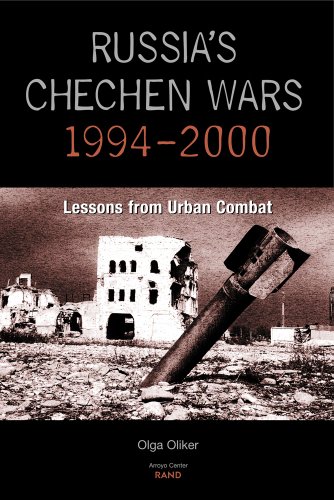
An examination of the difficulties faced by the Russian military in planningand carrying out urban operations in Chechnya.Russian and rebel military forces fought to control the Chechen city ofGrozny in the winters of 1994-1995 and 1999-2000, as well as clashing insmaller towns and villages. The author examines both Russian and rebeltactics and operations in those battles, focusing on how and why thecombatants’ approaches changed over time. The study concludes that whilethe Russian military was able to significantly improve its ability to carryout a number of key tasks in the five-year interval between the wars, otherimportant missions–particularly in the urban realm–were ignored, largelyin the belief that the urban mission could be avoided. This consciousdecision not to prepare for a most stressful battlefield met withdevastating results, a lesson the United States would be well served tostudy.
User’s Reviews
Reviews from Amazon users which were colected at the time this book was published on the website:
⭐good for understanding Russian tactics.
⭐This was a good summary, at a relatively high level, of the Chechen wars and the difficulties the Russian army had in organizing their attempts to control the countryside and Grozny. The book also illustrated the apparent myopia in the Russian army hierarchy , who did not appreciate or follow the well-documented lessons the Red Army learned in urban combat during WWII, and who evidently failed to appropriately consider the lessens of the first Chechen War when they returned in 2000. As such it is an interesting and helpful window into the stagnation of the Russian Army of the era. The book suffered, however, from insufficient and poor quality maps and a complete lack of illustrative diagrams for the key Chechen tactics and Russian counters. The observations and conclusions are well referenced, allowing the interested reader to pursue the subject further. Perhaps it is in the nature of the study that was performed to keep it at a relatively high and broad level, but I would have preferred some additional details of the specific tactics, equipment, fortifications, and logistics of the Grozny campaigns.
⭐Did not disappoint. Very knowlegeable writer, interesting facts and insights. Deep analysis of both the russian and rebel sides of the conflict. Would recommend.
⭐This is a great after action of the Chechen Wars that focuses on the urban combat in Grozny. It is short, to the point, and is full of lessons learned. It is not a combat memoir and it does not delve into the politics behind the campaigns; it is about the fighting in the streets and where Russia went wrong, and what they got right. Lots of takeaways and lessons that were paid for by the blood of many soldiers.
⭐A good read for those interested in Russian military capabilities now and at the end of the 20th century. In light of recent events in Georgia, the Ukraine, and even in Syria it’s worthwhile to consider the strengths and weaknesses inherent within the Russian armed forces.
⭐A very informative book on military lessons learned from the wars in Chechnya. The author does a great job explaining the Russian problems during the wars. The author uses many Russian language sources.
⭐Excellent
⭐Was a waste of money, IMO. Many other reads out there on the subject.
⭐The book is an excellent example about how a concise, well researched and documented analysis of a military situations should look like. The topic – the Russian intervention in Chechnya and especially the two attacks on Grozny (the capital) – give a good account of both the performance of the Russian armed forces in urban combat situations (and of the Chechen opponents), as well as of the ability of them to adapt to a situation they were not prepared for.After an introduction, which includes a summary of the pretty advanced and well developed guidelines on urban combat the Soviets developed during WW2 (largely forgotten by the time of the Chechen Wars) the author divides the book into three parts – the first war (1994-1996), the second war (1999-2000) and a summary of the findings.While specific combat situations and the shortcommings of the Russian army are examined in both periods (equipment, training, co-ordination, organization…), the author also delves into the ability of the Russian Army to develop (in a sense similar to the learning organization exploration found in
⭐Learning to Eat Soup with a Knife: Counterinsurgency Lessons from Malaya and Vietnam
⭐), in the short term (within the same battle), as well as in the medium and long terms.Overall an excellent book and certainly a good exploration in what to look out for when preparing for urban combat (both from the offensive and defensive sides). And while it confirms some significant shortcommings of the post Soviet Russian army, it is much more nuanced than to dismiss it outright as a completely incapable force – after all the Russian Army appears to have learned the lessons described in the book and to have applied them to deadly effect in the border conflict in Georgia in 2008.The Kindle edition is hyperlinked throughout (making it easy to check for the sources while reading, and directly delving into many of the online publications the author used as sources) but seems to lack the images refered to in the other review altogether.
⭐Certes il faut lire l’anglais couramment, mais ce sujet étant très peu abordé dans la presse française grand public qui préfère l’émotion idéologique immédiate aux analyses techniques approfondies bénéficiant d’un recul chronologique, on se plait à faire l’effort de lire ce livre qui met bien en valeur le manque de finesse soviétique/russe permanent tant dans la stratégie et la technique des armements. Ce n’est pas pour rien que l’arme préférée des Russes est l’artillerie lourde (canons, lances roquettes multiple, etc.). A lire pour ceux qui s’intéressent aux conflits contemporains.
⭐
Keywords
Free Download Russia’s Chechen Wars 1994-2000: Lessons from Urban Combat: Lessons from the Urban Combat in PDF format
Russia’s Chechen Wars 1994-2000: Lessons from Urban Combat: Lessons from the Urban Combat PDF Free Download
Download Russia’s Chechen Wars 1994-2000: Lessons from Urban Combat: Lessons from the Urban Combat 2000 PDF Free
Russia’s Chechen Wars 1994-2000: Lessons from Urban Combat: Lessons from the Urban Combat 2000 PDF Free Download
Download Russia’s Chechen Wars 1994-2000: Lessons from Urban Combat: Lessons from the Urban Combat PDF
Free Download Ebook Russia’s Chechen Wars 1994-2000: Lessons from Urban Combat: Lessons from the Urban Combat