

Ebook Info
- Published: 2006
- Number of pages: 256 pages
- Format: PDF
- File Size: 2.32 MB
- Authors: Erik Conway
Description
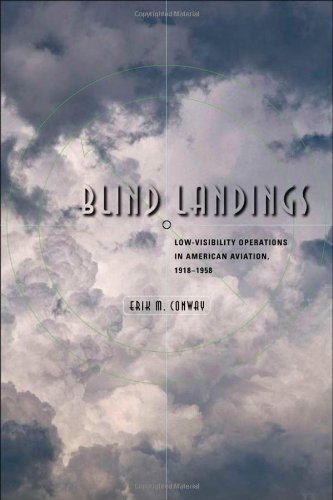
When darkness falls, storms rage, fog settles, or lights fail, pilots are forced to make “instrument landings,” relying on technology and training to guide them through typically the most dangerous part of any flight. In this original study, Erik M. Conway recounts one of the most important stories in aviation history: the evolution of aircraft landing aids that make landing safe and routine in almost all weather conditions. Discussing technologies such as the Loth leader-cable system, the American National Bureau of Standards system, and, its descendants, the Instrument Landing System, the MIT-Army-Sperry Gyroscope microwave blind landing system, and the MIT Radiation Lab’s radar-based Ground Controlled Approach system, Conway interweaves technological change, training innovation, and pilots’ experiences to examine the evolution of blind landing technologies. He shows how systems originally intended to produce routine, all-weather blind landings gradually developed into routine instrument-guided approaches. Even so, after two decades of development and experience, pilots still did not want to place the most critical phase of flight, the landing, entirely in technology’s invisible hand. By the end of World War II, the very concept of landing blind therefore had disappeared from the trade literature, a victim of human limitations.
User’s Reviews
Reviews from Amazon users which were colected at the time this book was published on the website:
⭐This book gives a detailed account of the history and long, long, evolution of the instrument landing system in use today. I would not call this a literary work; it does not read with a building sense of tension or excitement like a novel, though it could. The nature of the subject itself for any reader that is a pilot, high-mileage airline passenger, or aviation aficionado will fill in the suspense left out in the factual recounting of events.The goal of the participants from the very beginning was to achieve `blind landings’; to have the aircraft wheels literally touch the ground without the aid of any visual cues outside of the cockpit (thus the title of the book). A goal that remains, even in today’s computer driven world.What IS amazing is the amount and sometimes the pace of the system’s evolution that was dependent all too often on purely political or business decisions; not science, and not technology, as an outsider would presume. This is not always the story of science, government, and business working together to solve a common problem, though it did occur. The airlines, driven by the need to fill vacant seats and make a profit, pushed (and paid for themselves, in some cases) for adoption of any system that would improve the opportunity for a scheduled flight to reach its destination in inclement weather, even if that improvement was only incremental.Conway is to be applauded for the amount of history he has been able to amass, particularly on the early efforts towards this goal, and his extremely methodical and meticulous discussion.
⭐Outstanding content treatment of a subject not generally addressed at any length. Bibliography alone worth the read. A central point that aviation went to blind approaches not blind landings is significant and still pertinent today with the advent of space based systems…we still don’t talk about landings that are totally blind, and they are not often actually needed. Could have more material in it, would like more on the ILS development and where and how ILS is used today. Possibly a “Blind Landings 2.0” 2015 edition with that historical material as well as space based procedures and how the reluctance to trust to totally automatic or blind manifests itself in other areas and what it may mean for self driving cars, UAVs, and robotics.
⭐I found this book very interresting : it gives a good overview of the history of the Instrument Landing System, and its competition with the radar-based Ground Control Approach. Now that the satellite-based approach is starting to become the new standard, it is interresting to recall some lessons learnt before the II WW which have resulted in the adoption of the ILS by the PICAO, in 1946, more than 60 years ago.But the current satllite based approcch progress is very similar in many aspects to the ILS initial progress.
⭐Detailed story on the development and politics of low visibility and navigational aids. Some of those systems are still in use today, so I recommend this book to every commercial pilot.
Keywords
Free Download Blind Landings: Low-Visibility Operations in American Aviation, 1918-1958 1st Edition in PDF format
Blind Landings: Low-Visibility Operations in American Aviation, 1918-1958 1st Edition PDF Free Download
Download Blind Landings: Low-Visibility Operations in American Aviation, 1918-1958 1st Edition 2006 PDF Free
Blind Landings: Low-Visibility Operations in American Aviation, 1918-1958 1st Edition 2006 PDF Free Download
Download Blind Landings: Low-Visibility Operations in American Aviation, 1918-1958 1st Edition PDF
Free Download Ebook Blind Landings: Low-Visibility Operations in American Aviation, 1918-1958 1st Edition