Ebook Info
- Published: 1974
- Number of pages: 273 pages
- Format: PDF
- File Size: 2.40 MB
- Authors: Cicero
Description
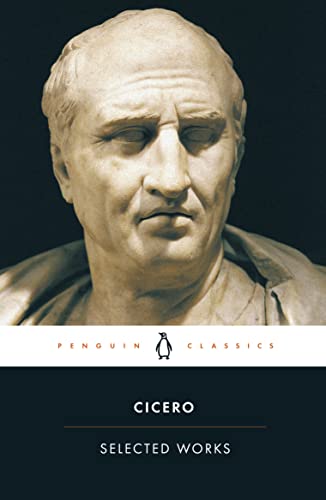
Lawyer, philosopher, statesman and defender of Rome’s Republic, Cicero was a master of eloquence, and his pure literary and oratorical style and strict sense of morality have been a powerful influence on European literature and thought for over two thousand years in matters of politics, philosophy, and faith. This selection demonstrates the diversity of his writings, and includes letters to friends and statesmen on Roman life and politics; the vitriolic Second Philippic Against Antony; and his two most famous philosophical treatises, On Duties and On Old Age – a celebration of his own declining years. Written at a time of brutal political and social change, Cicero’s lucid ethical writings formed the foundation of the Western liberal tradition in political and moral thought that continues to this day.
User’s Reviews
Reviews from Amazon users which were colected at the time this book was published on the website:
⭐Selected Works of the great Roman orator/statesman/philosopher Cicero is an excellent book for anyone approaching his work for the first time. Not only are there selections from Cicero’s writings on politics, moral philosophy and old age but there is a superb 30 page introduction written by Michael Grant. Thank you, Penguin books and thank you, Michael Grant! To provide a little Roman rasa, below are several quotes from the book along with my comments.From Michael Grant’s Introduction“Cicero was not often a very successful politician, but he derives unmistakable greatness from his insistence, against odds, that such dictatorial rulers were in the wrong because they unjustifiably curtailed the freedom of the individual; whereas the ultimate authority should be not themselves but certain unchangeable moral principles.” ——— Anybody who picks up a newspaper anywhere in the world will recognize immediately how Cicero’s writings are as relevant today as they were in ancient Rome. Matter of fact, with our omnipresent multinational corporations added to the political mix, perhaps even more relevant.“Cicero’s task was not an easy one; the Greek philosophers, to which with the added infusion of his own personality, he gave eloquent expression – far more eloquent than that of their original authors – contain much that was complicated and difficult, especially to unphilosophical Romans. ———- Cicero’s achievement strikes home for me personally, living as I do in the unphilosophical Rome of the modern world: America. We should never take for granted we have access to the writings of ancient philosophers presented in well-crafted and clearly presented books such as this one.“The moral emphasis of Stoicism (when its dogma was toned down) was very acceptable to him, and indeed the basis of a great deal of his thought and feelings on moral and ethical problems. ———- Michael Grant provides an easy-to-read short overview of how Cicero drew from not only Stoicism but many streams of Greek philosophy, such as the Pythagoreans , Platonists, Peripatetics (followers of Aristotle) and two schools Cicero particularly despised: the Cyrenaics (immediate happiness is the ultimate good) and the Epicureans (the philosophical school that shunned pubic life). Such lively and informative readings makes for a real treat.From ‘Against Verres’“One thing, then, that has influenced me is this gloating of yours over your tyrannical dominance in our courts; and another is the evident existence of men who feel not the slightest shame or disgust for their repulsive and outrageous behavior.” ——— In the world of Roman opulence and excess, Cicero could tell it like it is.From ‘On Duties’“Once I lived with great crowds around me, in the forefront of Roman publicity. But now I shun the sight of the scoundrels who swarm on every side. I withdraw as completely as I can; and I am often alone. However, as the philosophers instruct, one must not only choose the least among evils, one must extract from them any good that they may contain.” ——— This is a lesson we can all learn from: make the best of a less than ideal situation. ““Another objection urges that one ought to take account of compatriots but not of foreigners. But people who put forward these arguments subvert the whole foundation of the human community – and its removal means the annihilation of all kindness, generosity, goodness, and justice.” ——- Cicero’s words have a modern ring, as if he anticipated our 21st century world-wide culture and society.From: ‘On Old Age’“An actor need not remain on the stage until the very end of the play: if he wins applause in those acts in which he appears, he will have done well enough. In life, too, a man can perform his part wisely without staying on the stage until the play is finished. However short your life may be, it will still be long enough to live honestly and decently.” ——— This is but one of the many gold nuggets of ancient wisdom a reader will find in Cicero’s essay.
⭐Since two of my favorite people, John and John Q. Adams, lauded the works of Cicero as one of humanity’s most significant achievements in defining morality, I had great expectations for this book. I was sorely disappointed. The translator’s (Michael Grant) introduction explaining the ethics and the profound effect that this man had upon Western Civilization was probably the best part of this book. In the introduction and even throughout his writings, I did see Cicero as a man driven to live a just life and driven to create the societal conditions that would allow all others to live a just life. Grant chronicles Cicero’s fight against the various dictatorships that took control of Rome, because as Grant stated, Cicero felt, “dictatorial rulers were in the wrong because they unjustifiably curtailed the freedom of the individual: whereas the ultimate authority should be not themselves but certain unchangeable moral principles which they are incompetent to annul or amend.” Although I did see these principles expressed in his actual writings, they were more of a glimmer than an overwhelming objective and often when they were expressed they were not well argued. The book is about 250 pages long and for approximately 50 of those 250 pages, Cicero, in his Second Philippic against Antony, describes event after event in which Antony displays his repulsive animal nature. I don’t consider that to be philosophy. In his On Duties III, he argues that doing right is always to one’s advantage. I consider that to be a very juvenile approach to morality. If that were so, there would be no need for laws and we would never have to fear the control of a dictator. Perhaps Cicero’s other writings are more profound, but I was certainly not impressed with the writings selected for this book.
⭐Cicero was one of the most influential figures of the Roman Empire. This book provides a nice collection from a figure that was incredibly prolific, particularly in his later years.This book has excellent introductions and annotations that provide the necessary context for optimal understanding.
⭐Ably translated, introduced and annotated by Michael Grant, this is a short, readable selection of Cicero’s works: Against Verres; 23 letters; the second Philippic against Anthony; On duties III; and On old age. The Oxford Latin course got me interested in Cicero. Robert Harris’s Imperium trilogy and its two-part adaptation for the stage brought him and his times vividly to life, so I was curious to dip into his works. Without that grounding, I would have been bored by this book, I think. The writing is impressive (p20: his “unprecedentedly eloquent language… is the foundation of all subsequent European prose), but his arguments are long-winded, repetitious, incorrigibly boastful, and his philosophy, though attractive, has holes. What I really liked however was the feeling I had by now, primed by the Oxford course, Robert Harris and the actors, of knowing this flawed genius rather well and very much liking him, warts and all, as if he were alive & breathing, not murdered on Anthony’s orders 2062 years ago. P.245: “You cannot suppose that I should have worked so hard, day and night, in war and peace alike, if I had believed my fame would not outlast my life… my soul seemed to understand that its true life would only begin after my death; alertly, unceasingly, it fastened its gaze on the generations to come.” Salve, Cicero! Requiescat in pace.
⭐Cheap enough but would go for better quality next time considering the content
⭐Contains a good selection of his works – gives a real feeling for the man.
⭐Great read
⭐You get what you pay for. The text is small and blurry and the first character of the first word on each line is missing on some of the pages.
Keywords
Free Download Selected Works (Classics) in PDF format
Selected Works (Classics) PDF Free Download
Download Selected Works (Classics) 1974 PDF Free
Selected Works (Classics) 1974 PDF Free Download
Download Selected Works (Classics) PDF
Free Download Ebook Selected Works (Classics)