Ebook Info
- Published: 2010
- Number of pages: 377 pages
- Format: PDF
- File Size: 10.31 MB
- Authors: Paul Stephenson
Description
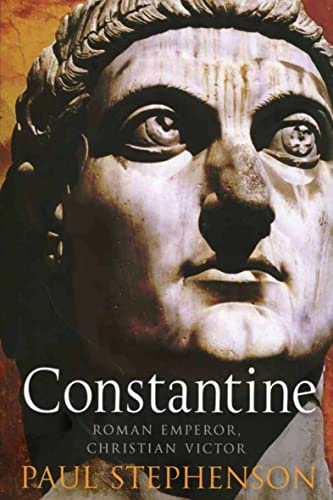
“By this sign conquer.” So began the reign of Constantine. In 312 A.D. a cross appeared in the sky above his army as he marched on Rome. In answer, Constantine bade his soldiers to inscribe the cross on their shield, and so fortified, they drove their rivals into the Tiber and claimed Rome for themselves. Constantine led Christianity and its adherents out of the shadow of persecution. He united the western and eastern halves of the Roman Empire, raising a new city center in the east. When barbarian hordes consumed Rome itself, Constantinople remained as a beacon of Roman Christianity. Constantine is a fascinating survey of the life and enduring legacy of perhaps the greatest and most unjustly ignored of the Roman emperors—written by a richly gifted historian. Paul Stephenson offers a nuanced and deeply satisfying account of a man whose cultural and spiritual renewal of the Roman Empire gave birth to the idea of a unified Christian Europe underpinned by a commitment to religious tolerance.
User’s Reviews
Reviews from Amazon users which were colected at the time this book was published on the website:
⭐Stephenson proves himself a superior historian in cogently separating historiographic wheat from chaff (easier said than done) in his “Constantine”, a truly exceptional book, insightfully conceived and methodically written. Carefully establishing a background and framework, and drawing upon written sources (with full measure of due skepticism), and numismatic and art-historical evidences as well, he constructs an astutely plausible and convincing narrative, eschewing the slog of pedantic footnote digressions, while debunking mythos and steering clear of the romanticism and artificial dramatization of historical fiction. This is not ordinary historical biography, this is trenchant investigative historiography. A great piece of work, very enjoyable, very insightful and enlightening!Caveat: In the edition I have (Overlook Press, 2010), some of the scales of maps at the front are wildly inaccurate; Map 8, the worst example, shows Constantinople’s Hippodrome to be some 100 miles in width! Nicomedia is mislocated on Map 5. And the text goes off the editorial rails in the second paragraph of p. 181, where we find the Bosphorus referred to as the Hellespont, and Lampsakos (on the Hellespont) is said to be near Chalcedon (on the Bosphorus); whereas, they are distant some 135 miles as the crow flies, much further apart by an army’s land route. I am inclined to attribute these gaffes to the publisher’s staff.
⭐Paul Stephenson finds a Constantine who is neither the pious saint nor the machiavellian poseur.Incorporating research into how people convert to new religions, how Christianity is likely to have spread during this time period, and with illuminating references to the development of the military and governmental structure, the minting of coins, and most importantly the emperor’s qualifications to rule — his genius / good fortune / divine protection making him unconquerable in battle — he gives us a very convincing life story in a clear context.D. G. Kousoulas still offers a more linear approach if you’re looking for a narrative biography. If you don’t know anything about the tetrarchy and haven’t yet learned the differences among Maximian, Maxentius, and Maximin you might (like the latter) hit your head against a wall until your eyes pop out.But I agree with more aspects of Stephenson’s reconstruction than with any other I’ve read, especially since he backs it up with the most current scholarship. I think this book also has the best descriptions of the arch of Constantine and the establishment of Constantinople (which he compares and contrasts to other imperial seats of power).It’s also fun! The enthusiasm of the voice reminds me of the popularizing but now musty G.P. Baker Constantine biography, to which I think he even refers at one point. I enjoy how he works out his ideas and I’m grateful to him for sharing them.
⭐Now I know how Christianity got so far away from following Christ’s Great Commission. Christians allowed Constantine, A Roman Emperor, to pollute The Gospel, just because “he was the first Roman emperor to convert to Christianity”. Christianity has suffered ever since. Constantine did not confess that Jesus Christ is LORD. Christianity was allowed to me placed on the mantle piece with the rest of the Roman Gods. Many Christians are still under the illusion that you can mix and match Jesus with something else, and that we are not in disobedience of the First Commandment. Christianity is responsible for many great social changes in the world. But social changes will not get you eternal life. Only faith in Christ Jesus, not Jesus and…! Notwithstanding my remarks, the book is a great read.
⭐Save your money because this isn’t a very good biography on Constantine the Great. One review said that the author has an agenda agaist Constantine the Great and he is absolutely right. The author is very ignorant of all of the evidence which points to Constantine genuinely converting to Christianity in 312 AD. There is very little on Constantine’s capabilities as a military commander. He also makes all kinds of assertions without citing sources, and some just plain ridiculous like there being a war between the “gens-flavians” and “gens-valerii”. The author apparently didn’t know that both Constantine and his father Constantius Chlorus had the nomen “Valerius”. The author also had Licinius fleeing to Dacia a lost Roman territory long abandoned by the Emperor Aurelian, and this is just to name a few historical errors! I mean where did this author get his history from? Look if you want the best biography about Constantine’s Christian Faith then read Charles Odahl’s book Constantine and the Christian Empire published as part of Routledge Press’ Imperial Biography Series which is the gold standard concerning biographies about Roman Emperors. If you want the best book about Constantine the Great’s military skills then read Constantine the Great General written by Elizabeth James & Stephen English published by Pen & Sword. There other good biographies on Constantine the Great that I could recommend but these two are a good place to start.
⭐Perfect condition.
⭐Well written, interesting and informative. While there is development of the life and times of Constantine, the focus is on the effect on Christianity from Constantine’s adoption of that religion as the official religion of the Roman Empire during the middle to latter stages of his reign. Gibbons, in his Decline and Fall of the Roman Empire has a less positive view of Constantine, his rule and influence on Christianity.
⭐Just visited Trier for the first time. I’ve read fairly extensively about the shift from the Republic to the Emperorship but not much after the end of the first century AD. This is an excellent source because Stephenson reviews the first three hundred plus years of “divine” rule before embarking on Constantine’s reign which is so dependent upon everything that’s happened before. Very readable.
⭐A very scholarly approach. Not summer beach reading. Gives a good overall view of the empire at the time.
Keywords
Free Download Constantine: Roman Emperor, Christian Victor in PDF format
Constantine: Roman Emperor, Christian Victor PDF Free Download
Download Constantine: Roman Emperor, Christian Victor 2010 PDF Free
Constantine: Roman Emperor, Christian Victor 2010 PDF Free Download
Download Constantine: Roman Emperor, Christian Victor PDF
Free Download Ebook Constantine: Roman Emperor, Christian Victor