Ebook Info
- Published: 2008
- Number of pages: 704 pages
- Format: PDF
- File Size: 4.18 MB
- Authors: David Kynaston
Description
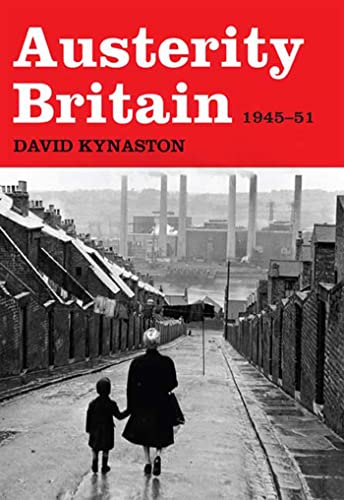
A majestic people’s history of England in the years immediately following the end of World War II, and a surprise bestseller in the UK.As much as any country, England bore the brunt of Germany’s aggression in World War II , and was ravaged in many ways at the war’s end. Celebrated historian David Kynaston has written an utterly original, compellingly readable account of the following six years, during which the country indomitably rebuilt itself. Kynaston’s great genius is to chronicle England’s experience from bottom to top: coursing through the book, therefore, is an astonishing variety of ordinary, contemporary voices, eloquently and passionately displaying the country’s remarkable spirit even as they were unaware of what the future would hold. Together they present a fascinating portrait of the English people at a climactic point in history, and Kynaston skillfully links their stories to the bigger, headline-making events of the time. Their stories also jostle alongside those of more well-known figures like celebrated journalist-to-be Jon Arlott (making his first radio broadcast), actress Glenda Jackson, and writer Doris Lessing, newly arrived from Africa and struck by the leveling poverty of postwar Britain. Austerity Britain gives new meaning to the hardship and heroism experienced by England in the face of Germany’s assaults.
User’s Reviews
Editorial Reviews: From Publishers Weekly Starred Review. Kynaston (author of the four-volume The City of London) has produced an extraordinary panorama of Britain as it emerged from the tumult of war with a broken empire, a bankrupt economy and an ostensibly socialist government. Britain between 1945 and 1951 is an alien place. No washing machines, no highways, no supermarkets. Everything was heavy, from coins and suitcases to coats and shoes. Everything edible was rationed: tea, meat, butter, cheese, jam, eggs, candy. The awfulness of 1939–1945 still lingered, and any conversation tended to drift toward the war, like an animal licking a sore place. Yet, people assumed Britain was still best: that was so deeply part of how citizens thought, it was taken for granted. By combining astute political analysis with illustrative anecdotes brilliantly chosen from contemporary newspapers, popular culture and memoirs, Kynaston succeeds in recreating the lost world of austerity. The volume represents social history at its finest, and readers may look forward to its promised sequels taking the story of Britain up to 1979 and the election of Margaret Thatcher. 20 b&w photos. (May) Copyright © Reed Business Information, a division of Reed Elsevier Inc. All rights reserved. From The New Yorker Drawing on a remarkable array of diaries, letters, memoirs, and surveys, Kynaston assembles a polyphonic history of a pivotal time. In July, 1945, Winston Churchill was swept from office in an electoral landslide, his wartime leadership already overshadowed by domestic worries like jobs and housingseven hundred and fifty thousand dwellings had been damaged in the war, and six million lacked indoor toilets. Kynastons account of the six years of Labour Government that followed attends as much to daily lifeoften grim, with rationing still in effectas to the top-down reconstruction that included the creation of the National Health Service and the nationalization of swaths of British industry. Support for such planning was broad, with even the arch-establishment Times of London in favor of the N.H.S., but not always deep, and Kynaston emphasizes the British peoples complex feelings about the policies undertaken in their name. Copyright ©2008Click here to subscribe to The New Yorker Review “Exemplary social history of a time still fresh in many Britons’ minds–and much different from the postwar era in America.” ―Kirkus Reviews (starred review)“By combining astute political analysis with illustrative anecdotes brilliantly chosen from contemporary newspapers, popular culture and memoirs, Kynaston succeeds in recreating the lost world of austerity. The volume represents social history at its finest, and readers may look forward to its promised sequels taking the story of Britain up to 1979 and the election of Margaret Thatcher.” ―Publishers Weekly“An engrossing, kaleidoscopic portrait of a people from a particular time and place. This is history as total immersion.” ―Barry Gewen, New York Times“This sparkling book–deeply and imaginatively researched, written with bounce, and informed by the wryest sensibility–charts the evolution of British society during the depleted and dingy years 1945–1951….With wit and ingenuity, Kynaston mines opinion surveys, radio shows, advertising slogans, parliamentary reports, and above all letters, diaries, and memoirs to evoke the gray tinge that permeated postwar life–the shabby frocks, the sallow faces, the grubby train compartments, the dreary meals (“all winter greens and root vegetables and hamburgers made of grated potato and oatmeal and just a little meat,” the food writer Marguerite Patten recalled). …Kynaston’s sense of structure and pacing is sure, his mastery of his astonishingly diverse material unfailing (see his opening set piece on VE Day). More vividly and penetratingly than any work of history I can recall, this book captures the rhythms and texture of everyday life. To read it is to enter a world, which helps explain why it became a surprise best seller in the U.K.” ―Benjamin Schwarz, Atlantic Monthly“In Austerity Britain, David Kynaston weaves together personal reminiscences, statistical data and media accounts to paint a portrait of this critical moment in British history…Most histories describe this period as one of idealism, hope and progress. Mr. Kynaston would not entirely disagree, but he wants to emphasize what is too often overlooked: the sheer difficulty of life in Britain between 1945 and 1951. He shows us a war-weary society weighed down by the burdens of austerity. He brings to life a world – it wasn’t so long ago – noticeably unaided by the conveniences and prosperity that Britain (like the rest of the West) now takes for granted.” ―William Anthony Hay, Wall Street Journal“In Austerity Britain: 1945-1951, British social historian David Kynaston tells the story of those drab, difficult postwar years so familiar to viewers of the stiff-upper-lip, black-and-white films the British studios were turning out at the time (‘Brief Encounter,’ ‘Passport to Pimlico’). Reading the many first-person accounts in this weighty, immensely detailed and sometimes evocative volume, you begin to see that, for countless people in that place at that time, life really was lived in a world devoid of color — a place of long lines, of shortages, of frustration.” ―Martin Rubin, Los Angeles Times“Absolutely masterful and absorbing, helped considerably by the liberal use of feedback from the vox pop through diaries, opinion polls, newspapers and broadcast reports…England was old and not very merry, a state of affairs conveyed with brilliant clarity and poignant depth in Austerity Britain.” ―Jonathan E. Lazarus, Newark Star Ledger About the Author David Kynaston was widely acclaimed for his four-volume history The City of London. He is currently a visiting professor at Kingston University in England. Read more
Reviews from Amazon users which were colected at the time this book was published on the website:
⭐Written for a British eye more than for an American, this American learned a stronger respect for the people of Britain for the way they won the war and then won back their share of industry and prosperity. Having won a glorious victory, within hours the victorious citizens of the country that sustained almost six years of war following on a prolonged depression realized that the trials of war time would be extended by the austerity of post-war Europe. While England won the war, they paid a high price. More important, the collective, heroic efforts of the large working class produced a tide of enthusiasm for nationalisation of industry, housing to replace the hundreds of thousands displaced by German bombing, and a broad social welfare plan focusing primarily on health care.It is not a pretty story. Post-war England was drab, lacking many basics, watching its empire dissolve, and driven by a strong, centralized plan to restore the economy that changed the basic way people looked at business and government. And, with the continuing pressures of rebuilding the rest of Europe, the threat of further communist expansion, and the rise of American power, perhaps Britain went too far in moving towards a benevolent but often clumsy and experimental form of socialism. It would be almost another forty years and the decisions of the Thatcher government, that saw the maturity and, in some cases, the reversal of this social and cultural experiment.This is a long, dense and colorful book, full of first-person details and observations, many of them from the surveys and observations of the government itself. Chapters focus on various aspects of the cultural and social revolution, in the classroom, on the factory floor, in the (mine) pits, in the shops, in the media, and more. At one bookstore where I looked for the book, they claimed that it was a textbook and not part of their trade book collection. While it is as thorough — or more — as any academic textbook, it reads more like a highly detailed, multi-authored journal or catalog of the period. Invest the time.
⭐David Kynaston takes a very simple, but efective approach, to his social history of Britain in the immediate post war years. He has scanned the newspapers and magazines of the day, read the diaries of the famous and the not so famous, made a lot of use of Mass Observation and the nascent public opinion polling of the day to construct both a people’s narrative of 1945 to 1951 but also to explore in more depth issues such as nationalisation, the setting up of the welfare state, women in the workplace, urban planning and reconstruction and others.All of which makes it highly readable, and one is struck both by the conservatism of British society (even though a reformist, overtly Socialist Labour government was elected to power in 1945) and the determination to create social justice (The New Jerusalem of the title) in Britain with scant regard for the situation in Britain’s many colonies. Indeed one of the most striking arguments put forward in the book is that an early abandonment of the colonial project and deployment of the resources it took up into trade and industry may have resulted in Britain at least maintaining its pre war position as one of the great powers, rather than standing by as that preeminence gradually dribbled awayIf there are any criticisms of this work, it is probably reflects the sources available to Kyanaston. There is no mention of Northern Ireland, little of Wales (other than the South Wales collieries) and little of the northern parts of England. Scotland is mainly discussed in the context of the urban planning of GlasgowBut as I say, this may be due to a lack of sources from those areas. What is a little more puzzling is a lack of discussion of the reintegration into society of demobilised servicemen – surely a key issue of the timeBut none the less an excellent history, I am looking forward to the next volume
⭐Too many needless and detailed facts, statistics, percentages, and minutiae that seriously detract from its readability,
⭐I bought this book at the same time I purchased Peter Clarke’s marvelous “The Last Thousand Days of the British Empire” on what I thought the reasonable assumption that it might provide the social history complement to Clarke’s account of the geopolitical death rattles of the Empire following the war. That it precisely served that function better than I could have imagined does not in any way diminish its value as a brilliant stand-alone analysis of everyday life in post-war Britain that will certainly never be duplicated in either its scholarship or compass. Kynaston weaves an incredibly rich fabric of first-person accounts and commentaries ranging from housewives to the Labour party’s leadership to incipient and established entertainers to sports stars and innumerable others high and low on the social scale, each citation perfectly apt and illustrative in its context. The reader feels he is living the period, suffering with the deprived homemaker, hoping against experience with the coal miner, sensing pitfalls to the social planning completely unanticipated at the time, and generally acquiring an understanding of those years that completely supplants everything one thought one knew of the subject. The book is a bit of a slog what with over 600 pages of text, and in my experience, there are very few works of this size that are worth the time and effort. Be assured that this is one of them and that every reader is looking forward to the promised sequel covering the years 1953-79. Social history, indeed, history, doesn’t get much better than this.
⭐Those who want that rose-tinted nostalgic view of Britain won’t be satisfied. This weighty and impressive series of books are rich in detail and don’t shirk from telling the truth. Sometimes that might not be what you’d expect, but then we do tend to gloss over the reality of everyday life in bygone days. What we call ‘austerity’ meant terrible deprivation for millions. Things commonplace now like central heating were rare. The idea of taking a holiday abroad was out of the question as a popular habit. Out of all that post war deprivation came a social recovery in all senses. There’s much here to enjoy as much to think about. An essential study that will remain and repay readers who wish to understand Britain from another age.
⭐Excellent title for this super book. My early school days were spent in this period and I remember the austerity, with ration cards and a general drabness. But this was the period right after the war when a first majority Labour government had much on its plate: it had to pay war debts, rebuild damaged towns and to help protect us from a dangerous nuclear armed adversary. Besides this they established the Welfare State and the NHS.The presentation keeps a nice balance between the details of the doings of politicians and the views of ‘the people’ as recorded in journals, diaries and by the Mass Observation Organisation. In this way the monotony of too much of one kind of voice is avoided.David Kynaston at the end of his account observed that what most people wanted was a safe, secure home life. He quotes from an old Dettol advert that sooths with a promise that this product is ‘The Safe Way to safety whenever and wherever infection threatens your home’. I love it. In these present , grim days of the burgeoning corona virus crisis this is just what we crave, then and now.
⭐As I am 89 years old and lived through that time I didn’t find a lot of information I could relate to. True we lacked a great many things we take forgranted today, but what we didn’t have we didn’t miss. I feel the author relies too much on Government reports, which made dry reading.Also I think he seems to have chosen the most depressing people’s quotes. Don’t want to read any further books in this series.
⭐I am only in tge first chapter of this book. I am really interested in the period. I am finding it rather detailed, wordy and the print is really small so as night time reading I’m not enjoying it that much. I’m hoping to get more into it.
⭐Not a quick read, but a book to luxuriate in, enjoying the author’s very readable style and well-constructed content. I’ve read a number of books about post-war British history and this is, to me, by far the best, being both well-written and highly informative. Prof Kynaston blends the political and social histories together seamlessly, allowing each to shed light on the other, and the book works at both the macro and micro levels, such that I came away feeling that I really understood not only the forces driving change in our country at that time, but also what it felt like to to live in that time. I’ve just bought the next in the trilogy and I hope for as much pleasure as I have gained from this one.
Keywords
Free Download Austerity Britain, 1945-1951 in PDF format
Austerity Britain, 1945-1951 PDF Free Download
Download Austerity Britain, 1945-1951 2008 PDF Free
Austerity Britain, 1945-1951 2008 PDF Free Download
Download Austerity Britain, 1945-1951 PDF
Free Download Ebook Austerity Britain, 1945-1951