Ebook Info
- Published: 2051
- Number of pages: 357 pages
- Format: PDF
- File Size: 16.54 MB
- Authors: Elizabeth Rawson
Description
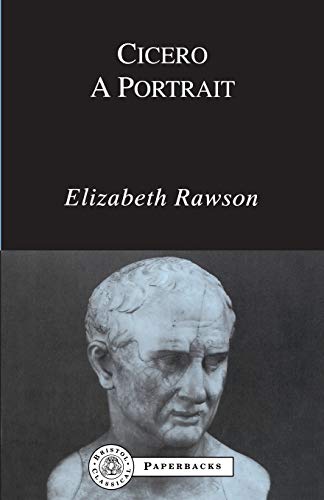
Drawing on a full range of Cicero’s speeches, essays and correspondence, as well as on the most recent research, Rawson’s highly regarded biography of Cicero – his politics and philosophy – makes fascinating reading for historians, classicists, and anyone interested in Roman history.
User’s Reviews
Editorial Reviews: About the Author Elizabeth Rawson was Fellow of Corpus Christi College, University of Oxford, UK, and author of Intellectual Life in the Late Roman Republic.
Reviews from Amazon users which were colected at the time this book was published on the website:
⭐I purchased this book after reading Anthony Everitt’s “Cicero: A Turbulent Life,” which was an enjoyable read but lacking in depth.I noticed that Rawson’ s book is listed in the bibliographies of every book on Rome that I’ve seen. Her book is a more challenging, dense read, but rewarding because in the end I feel I’ve gotten to know Cicero as a Statesman, Philosopher, and human being. He is deeply flawed, arrogant, and self absorbed, and yet admirable for his humanity and will to persevere through tremendous hardships and challenges.Highly recommended and a must read.
⭐Elizabeth Rawson, with her: “Cicero – A Portrait,” has benefitted all professional historians and lay-persons, interested in ancient Roman history, and, of course, the greatest Roman; Cicero. I found the book very balanced and extremely factual. Is a valuable book for the classroom or home enjoyment. I found it more factual and moving than Everitt’s, and his work is sensational. Is on a comparable footing to F. R. Cowell’s work from 1948. The bottom line: THIS IS AN INDISPENSIBLE BOOK FOR ANYONE INTERESTED IN CICERO. A MUST HAVE!
⭐The best book about the life and the thought of Marcus Tullius Ciceronis I’ve ever read!
⭐Rawson’s biography of Cicero is probably the ONE indispensable modern portrait that we have. Readers are advised to start here and avoid Anthonmy Everitt’s better publicised and more lavishly produced volume, “Cicero, A Turbulent Life”. Cicero has, of course, been the subject of innumerable books. His importance to any understanding of his age (or indeed our own) simply can not be underestimated. So prolific was he that during the middle ages he was actually thought to be two people. Tullius and Cicero.With each succeeding generation, new biographers shoulder forward to offer their own interpretations. Cicero’s reputation has suffered somewhat of late. A fantastic example of this is the crudely distorted and utterly unhistorical (though admittedly novelistic) treatment he receives in one of Colleen McCullough’s Masters of Rome series (which series seems to steadily deteriorate in quality and coherence from volume to volume). Here Cicero (a tub in the mind of McCollough to Caesar’s whale) squeaks and grovels his way through some of the most momentous moments in Roman history. McCollough (who comically purports in one of her “After Words” to have her “nose glued to the historical record”) is not alone — but her purportedly “historical” portrait surely remains the most distempered and dyspeptic view of Cicero in recent memory.To my view Rawson offers a readable, erudite, accessible biography that canvasses all of the important aspects of his life and thought. She is sympathetic and an admirer, but she is not blind to his many foibles.As a young man I had a perhaps unreasoning admiration for Cicero. I held him in a somewhat old-fashioned esteem. Rather like the English aristocracy of the 1500s – they loved their Tully so much that it became a fashion to name their daughters Tully. I confess I named a succession of dogs after him!But it was Rawson who provided me with the necessary perspective on him. You really need no other. I think that what is important about this volume is the careful attention devoted to Cicero’s political and philosophical works. As you can see from my review of Everitt’s book, Mary Beard has best described what we are waiting for: “a biographical account that tried to explore the way his life-story has been constructed and reconstructed over the last two thousand years; how we have learned to read Cicero through Jonson, Voltaire, Ibsen and the rest; what kind of investment we still have, and why, in a thundering conservative of the first century BC and his catchy oratorical slogans. Why, in short, is Cicero still around in the 21st century? And on whose terms? Quo usque tandem?”Cicero’s reputation gets a much needed shot in the arm IN Rawson’s volume. She writes, “whatever the shortcomings of Cicero’s political works, there is no evidence that any of his contemporaries understood the problems of the time as clearly or indeed produced nearly so positive a contribution towards solving them as he did.”Her penultimate chapter on his final year in Rome also offers a closely argued reassessment of his place in the “final conflict”. In Rawson’s view it was in 43 that he became the “true ruler of Rome” — for however brief a period.The book is filled with little gems. It is often remarked that one of Cicero’s principal contributions to Rome was his elevation of the language itself. But it was unknown to me that words such as “quality”, “essence” and “moral” were first found in Cicero (though derived from Greek roots).Also reproduced here are some of the marvelous witticisms for which he was so justly famous. Upon hearing that Brutus deemed Caesar to have “joined the boni”, Cicero remarked that he did not know “where Caesar would find them, unless he first hanged himself.” Cicero is also famous for the oft quoted expression “o tempore, o mores” which comes from his famous attack on Cataline that began, ” How far, then Cataline, will you go on abusing our patience. How long, you madman, will you mock at our vengeance? Will there be no end to your unbridled audacity”.Perhaps the most poignant assessment of Cicero was Plutarch’s, though he puts the words in, of all people, Augustus’ mouth. The story is extremely famous. August discovers a young grandson reading a volume of Cicero. The terrified boy trembles while his grandfather leafs through the book at length. At last he hands it back with the famous words: “an eloquent man, my boy, an eloquent man….and a patriot.”Cicero is one of the most important personages in all history. Indeed it is almost impossible for us to understand the roots of our culture unless we understand him. If you read nothing else of him, read this wonderful book.
⭐731. Cicero a Portrait by Elizabeth Rawson. This has proven to be an interesting book. I have learned a great deal. There is much of value. There are, to put it mildly, numerous tidbits which lend reality to and interest in the life Cicero: Tullia’s manner of walking, a table of citrus wood owned by Cicero or his interests in the Druids, Cicero’s poor penmanship.To Ms. Rawson he was not an original thinker, he often displayed courage and often lacked courage. He vacillated. He was weak. He at times wrote badly.She wonders how much courage was necessary for his defense of Roscius accused of murdering his father. Cicero directed his attack against Sulla’s powerful freedman. Cicero won the case but the author wondered how much courage he actually needed in that Sulla, though still alive, had resigned as Dictator.She makes the case that the real buzz waiting the return of Pompey from the east was the coming contest between Caesar and Cicero. This is a very interesting idea.In the aftermath of his consulship and the ever increasing troubles Cicero faced, he caused problems for himself because of his self-centeredness. She tries to balance this with a reference to his ability to laugh at himself. Yet, in much of the book there are frequent references to his conceit.She asserts that at times he wrote badly. However, there are no examples to demonstrate this. But in the same passage points out cleverness found in In Pisonem.She provides an interesting discussion on Cicero’s De Re Publica and his De Legibus. The De Legibus she views as a dogmatic list of rules. I assume that she is referring to those books which discuss the constitution he recommends. Book one is used to create a basis for the later books with its discussion of the origin of law. To apply the word dogmatic to the whole work is convenient.His qualities as governor of Cilicia are noted but modified by suggesting that he was only willing to buck lesser powerful people. Cicero enjoyed the task in ways but was eager to return to Rome. In contrast to Rawson’s assessment, Cicero was very concerned about how matters were developing back in Italy. That weighed heavily on his mind.Rawson makes an interesting suggestion about Cicero’s Brutus. She wonders that perhaps Cicero was actually directing the work to Caesar in hopes that it would nudge him toward contemplation of the Republic. She also suggests that the Stoic Paradoxes were meant to be offer comfort to those on the losing side of the civil war. Why? Because Cicero evidently chose not to follow stern and absolute Stoic lines but instead to argue that virtue is sufficient to achieve happiness or that a wise person can never suffer loss of freedom. This was very interesting.During the crisis after the death of Caesar, Cicero, Cassius, Brutus, Tertia, Porcia and Favonius met at Antium. Cicero was asked his opinion. He gave it. Then Cassius and others began to complain for sometime about lost opportunities. When Cicero tossed in his complaints, Servilia shut him down. Rawson rebukes Cicero for failing to abide by his own suggestion not to bring up past mistakes. It just seems a tad rash to criticize Cicero for something which everyone did. She does not seem to grasp the fear and concern which people must have had.Rawson rebukes Cicero for rejoicing at the death of Caesar in light of a letter by Matius. Matius was a close friend of Caesar and long grieved his death and expressed anger in his letter over those who had abandoned Caesar’s memory. She suggests that Cicero was ungrateful.I agree that Caesar was kind to Cicero. But his kindnesses only stretched as far as his own needs required. For example Caesar did offer Cicero opportunities to escape Clodius. Each offer would have required that Cicero dump his code of ethics and put him in Caesar’s camp. Then when Clodius did his thing, Caesar stood by and did nothing and in a way gave nod to the activities of Clodius. Upon Cicero’s return from exile, Caesar offered tepid support to his recall and when Cicero actually began to find ways to direct the Senate to re-establish its authority, Caesar did not hesitate to use the threat of force to restrain Cicero. Caesar was no friend to Cicero.Rawson covers Cicero’s last fight for the Republic and gives him a great deal of credit. But her book is filled with comments which remind me of Tacitus:The Third Philippic persuaded the Senate- perhaps a less crowded and representative body than Cicero claimed- that Antony’s act…..Comments like these are very common throughout. Yet, these are not backed up with any proof or examples. But just as with Tacitus, there is no direct way to claim bias, yet, the suggestion cleverly lingers.Yet, it is often not clear when she criticizes Cicero what it is he should have done. It seems at times that she has little appreciation for the shifting sands of the late Republic or politics in general. Cato, for example, is criticized for his obstinacy, yet Cicero is criticized for his willingness to wait, evaluate and do the best he can in often more than difficult situations.The book is methodical, full of information and possesses intellectual qualities. But she seems to me to be detached from an appreciation for human experiences.signed,The Obstinate Classicist
⭐The author gives a very detailed descirption of the politics that surround Cicero’s time. It fills in the political how to Ciceros rise to fame and the important people that surround him, both enemy and friend. I would recommend this book to anyone who knows about the fall of the Roman senate and what Cicero did to help and hurt it.
⭐Marcus Tullius Cicero is a figure almost unique in the Roman world. Unlike many of his contemporaries, he did not gain his reputation by being a great general like Pompey and Caesar, or by using money as a weapon like Crassus. Instead he rose high by his skill with the law and the power of his oratory. More importantly for us though, is that we know so much about the man as so many of his private and public correspondences have survived the ages, giving us insights that we have for no one else from ancient times.With the great wealth of information available Elizabeth Rawson attempts to graft a book to bring to life Cicero and his times, for which she does a great job. We get the tale of Ciceros life with its many ups and downs. From h his semi humble up bringing, Cicero decided to persue a career in politics and used the courts to make a name for himself and gain patrons and clients. His rise to the Consulship, a triumph indeed as this is something which a man of his humble background could rarely achieve given Roman politics and society at the time(He was the first of his family to achieve such a grand office and the Roman’s put great store on a families achievements in the past when looking at candidates for public office). We hear of his later agonizing over who to support during the first civil war, eventually choosing to side with Pompey, but eventually reconciling with Caesar. We eventually end up with his relationship with Mark Antony who he despised and Octavian who he badly misjudged. We of course end up with his tragic death ordered by Antony, which was met with dignity and bravery.The book flows well and is not a dry work, filled with colour and insights. There are several sections at the end of the book providing further information, a bibliography and a look at t Roman Political life, all of which are useful. For anyone wanting to know more about Cicero and his tines, this book is highly recommended.
⭐Very enjoyable and engaging biography on Cicero’s life and political career. However, as the author herself states in the introduction, the book does not focus on the technical aspects of Cicero’s writings and speeches, so those looking for this should look elsewhere.
⭐J’ai lu jadis la biographie de Cicéron par Pierre Grimal avec le plus grand intérêt. J’avais donc envie de comparer avec le classique ouvrage de Mme Rawson. Les deux livres, à mon sens, se complètent admirablement.Excellent transaction. Book as described.
⭐Very pleased
Keywords
Free Download Cicero: A Portrait (BCPaperbacks) in PDF format
Cicero: A Portrait (BCPaperbacks) PDF Free Download
Download Cicero: A Portrait (BCPaperbacks) 2051 PDF Free
Cicero: A Portrait (BCPaperbacks) 2051 PDF Free Download
Download Cicero: A Portrait (BCPaperbacks) PDF
Free Download Ebook Cicero: A Portrait (BCPaperbacks)