

Ebook Info
- Published: 2040
- Number of pages: 392 pages
- Format: PDF
- File Size: 65.75 MB
- Authors: Richard Abels
Description
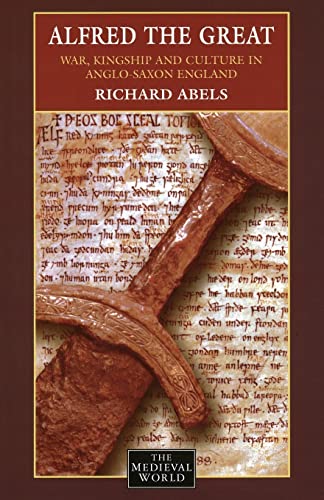
This biography of Alfred the Great, king of the West Saxons (871-899), combines a sensitive reading of the primary sources with a careful evaluation of the most recent scholarly research on the history and archaeology of ninth-century England. Alfred emerges from the pages of this biography as a great warlord, an effective and inventive ruler, and a passionate scholar whose piety and intellectual curiosity led him to sponsor a cultural and spiritual renaissance. Alfred’s victories on the battlefield and his sweeping administrative innovations not only preserved his native Wessex from viking conquest, but began the process of political consolidation that would culminate in the creation of the kingdom of England. Alfred the Great: War, Kingship and Culture in Anglo-Saxon England strips away the varnish of later interpretations to recover the historical Alfredpragmatic, generous, brutal, pious, scholarly within the context of his own age.
User’s Reviews
Editorial Reviews: Review ‘…based on wide knowledge, and not infrequent reconsideration, of the sources…this is a most useful book’. English Historical Review ‘Abels’ Alfred is a remarkable man…made believable, intriguing, relevant… this is a book for anyone who enjoys history.’ Times Literary Supplement From the Back Cover FRONT OF COVER: Final: 2.4.98 ALFRED THE GREAT War, Kingship and Culture in Anglo-Saxon England RICHARD ABELS THE MEDIEVAL WORLD SPINE: ALFRED THE GREAT ABELS [colophon] OUTSIDE TRIM: Probable price: Probable publication: BACK OF COVER: THE MEDIEVAL WORLDGeneral Editor: David BatesProfessor of Medieval History, University of Glasgow The influence of Alfred – king of Wessex from 871 to 899 – pervades English history. His victories on the battlefield and his administrative innovations not only preserved his native Wessex from viking conquest, but also began the process of political consolidation and unification that would culminate, within a couple of generations, in the creation of the kingdom of England. Alfred was a great warrior king, and an effective and inventive ruler. But, even more remarkably, he was also a lover of wisdom, who sought to preserve and disseminate Latin learning by translating into English the books most necessary for all men to know . The spiritual and literary renaissance he spearheaded gave rise to a lasting tradition of English vernacular prose and learning. He himself claimed that what he most desired was to live a worthy life, and to leave to posterity his memory in good works. This is precisely what he accomplished. Few bearers of the sobriquet the Great have so firm a hold on the title: eleven hundred years after his death, his name still resonates, and modern scholarship has not undermined his reputation. Yet that status carries its own dangers: he seems such a modern figure that each generation is tempted to recreate him in its own image. One of the great virtues of Richard Abels s splendid new study of the king, however, is to strip away the varnish of such later interpretations, in order to recover the historical figure – pragmatic, generous, brutal, pious, scholarly – within the context of Alfred s own age. The book is timely, fresh and authoritative. It is based throughout on the primary sources, but it also presents a judicious assessment of recent scholarship in interpreting the man and his times. It has been written with a student and non-specialist readership in mind, but fellow specialists will find much in it to stimulate and challenge (and many will especially welcome the re-assertion of Asser s life of Alfred as a key contemporary source for the reign, against recent scholarly attack). Richard Abels s Alfred convinces as a man who combined within himself the complexities and contradictions of his time. But, fascinating though that portrait is, this is more than just a study of an individual, however Great : the book investigates, and illuminates, the whole nature of warfare, culture and kingship in Anglo-Saxon England. RICHARD ABELS is Professor of History at the U.S. Naval Academy, Annapolis. About the Author RICHARD ABELS is Professor of History at the U.S. Naval Academy, Annapolis. Read more
Reviews from Amazon users which were colected at the time this book was published on the website:
⭐This is the single best book on Alfred the Great that I’ve come across. The author clearly knows the details very well, but the book is written in a very accessible style so a non-academic can enjoy it. Very highly recommended.
⭐Alfred, being the only English monarch styled “the Great”, is a notoriously difficult subject to write history about. The Victorian cult of Alfred made him a marked man for the debunkers of the Dead White European Male focus of history. Attempts at an even-handed review of the Wessex king’s life are fraught with peril.This book does the job magnificently. Alfred the warrior, ruler, innovator, strategist, and moralist are all presented well within the context of a 9th century Anglo-Saxon world. Alfred the pious and Alfred the ruthless are both shown as parts of the same man.While concluding that Asser’s “Life” is a legitimate source of biography for Alfred, the author does not limit himself. Extensive use and comparison between versions of the “Anglo-Saxon Chronicle” is combined with what limited charter evidence survives, archaeological discoveries and an examination of coinage patterns to round out the picture of Alfred and his times.One major strength of this work is its very careful comparisons of Alfred and his activities to those of predecessor kings of Wessex and successor kings of the Anglo-Saxons. Alfred’s reign is not studied in isolation. How Alfred was both traditional and innovative in contrast to his father and brothers helps place Alfred in the context of his times. The legacy which Alfred left his descendants (to become kings of all England) is given special attention.The author is circumspect in trying to get inside of Alfred’s head. Alfred’s physical afflictions are examined with an eye to a modern medical diagnosis and their effects on Alfred’s personality. Using the marginalia in Alfred’s own translations from Latin into the vernacular, the author tries to see inside Alfred the man – all the while cognizant that such a review is only speculative.This is a great book and a very good read.
⭐Good overview of Alfred, but for $50 plus price, so many errors, and they really matter here where we have so many unusual names and terms, so often you can’t tell what the actual word or name is. Even a spellchecker would have caught half the mistakes. And it’s unpleasant.
⭐Having read both Pollard’s biography of Alfred and that of Abels, I much prefer the latter. Both try to bring Alfred to life for the reader but Abels brings more historical detail into the narrative and there is less of an attempt to imagine often obscure motives or scenes. Also, unlike some biographies, the details in this book add to the narrative rather than distract from it. The writing flows smoothly and the reader becomes immersed in the times. Alfred was an incredible man who not only forged the beginning of a nation politically but whose intellectual curiosity and self-motivated learning set the tone for the value of education in the West. All of this in the midst of the Vikings! I found Abels’ biography to be an enjoyable reading experience about one of the pivotal people in Western history.
⭐Alfred the Great is one of England’s greatest kings , and these book deals with every aspectof alfred life and his kingdom .. my only criticism is the book sometimes get dry ! its not an easyread that goes like a novel , Alfred the Great : War , … is completely scholarship book and theauthor had done a perfect job from that point of view .
⭐This book was recommended by a medieval scholar as the best biography of Alfred, and I can easily believe it is. Despite a scarcity of written sources about Alfred, the author has painted a vivid portrait of the man, showing the justification of the title great. We not only read about the person of Alfred, but are filled in with a full background of what life was like in ninth century Britain. A terrific book!
⭐The scholarly book that I’d been looking for on this subject. Fascinating
⭐”Lordship for Alfred was the force that held together the political world and through a hierarchy of authority connected the temporal world with the spiritual…At the apex of the chain of lordship stood God and below Him the king.” This book brings us to a time when the nascent English culture and population seemed Providentially-ordered and as seen through the eyes of its king at the time, Alfred. Abels seems to not draw as strict a conclusion as Pollard as to the reasons for Alfred’s temporary dethronement but his insight on the full range of daily activities and the operational imperatives of the West Saxon royal court, provide a better view of Alfred’s kingdom, at least to this reader. One of the finer points that Abels paints as the backdrop to Alfred’s reign and personality, missed in other reviews, was the fact that the House of Cerdic engaged in a policy of conspicuous out-breeding with leading Mercian, Kentish and continental (Carolingian French) noble houses. On the face of it, this was done to unite the various aristocracies in Wessex, Mercia and Kent in the common cause of defeating the invading Viking armies. What we forget is that this gradual process of noble hybridization over several hundreds of years produced unusual capabilities in Cerdic’s descendants, which manifested in the intelligence, innovation, dynamism and complexity of Alfred, Edward and Athelstan and other descendants of this royal dynasty and their parallel offshoots.It is remarkable, for instance, to find a dynasty in the so-called “Dark Ages” that was capable of ruling Wessex and then England for nearly 500 years, who were personally responsible for the re-conquest of the Danelaw and multiple innovations in military, economic, legal and educational spheres, which culminated ultimately in the establishment of the kingdom of England before the Norman invasion. Their direct descendants (among them William Shakespeare) continued to make dramatic impacts on the economic and social milieu of the kingdom even after their ancient ‘election’ to kingship seemed to pass into remembrance. Not surprisingly, the present English royal family can claim some of its authenticity through its genetic affiliation with the original Wessex-English royal dynasty that Alfred represented through their descent from Edward the Exile’s daughter, Margaret of Wessex.
⭐This was a birthday present for a friend who is fond of British history and had stated that if she could meet a person from history it would be Alfred the great. She is still reading it so must be enjoying herself.
Keywords
Free Download Alfred the Great: War, Kingship and Culture in Anglo-Saxon England 1st Edition in PDF format
Alfred the Great: War, Kingship and Culture in Anglo-Saxon England 1st Edition PDF Free Download
Download Alfred the Great: War, Kingship and Culture in Anglo-Saxon England 1st Edition 2040 PDF Free
Alfred the Great: War, Kingship and Culture in Anglo-Saxon England 1st Edition 2040 PDF Free Download
Download Alfred the Great: War, Kingship and Culture in Anglo-Saxon England 1st Edition PDF
Free Download Ebook Alfred the Great: War, Kingship and Culture in Anglo-Saxon England 1st Edition