Ebook Info
- Published: 2017
- Number of pages: 1173 pages
- Format: PDF
- File Size: 19.84 MB
- Authors: Stephen Kotkin
Description
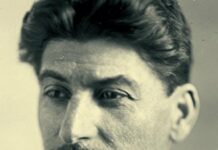
“Monumental.” —The New York Times Book ReviewPulitzer Prize-finalist Stephen Kotkin has written the definitive biography of Joseph Stalin, from collectivization and the Great Terror to the conflict with Hitler’s Germany that is the signal event of modern world history In 1929, Joseph Stalin, having already achieved dictatorial power over the vast Soviet Empire, formally ordered the systematic conversion of the world’s largest peasant economy into “socialist modernity,” otherwise known as collectivization, regardless of the cost. What it cost, and what Stalin ruthlessly enacted, transformed the country and its ruler in profound and enduring ways. Building and running a dictatorship, with life and death power over hundreds of millions, made Stalin into the uncanny figure he became. Stephen Kotkin’s Stalin: Waiting for Hitler, 1929–1941 is the story of how a political system forged an unparalleled personality and vice versa. The wholesale collectivization of some 120 million peasants necessitated levels of coercion that were extreme even for Russia, and the resulting mass starvation elicited criticism inside the party even from those Communists committed to the eradication of capitalism. But Stalin did not flinch. By 1934, when the Soviet Union had stabilized and socialism had been implanted in the countryside, praise for his stunning anti-capitalist success came from all quarters. Stalin, however, never forgave and never forgot, with shocking consequences as he strove to consolidate the state with a brand new elite of young strivers like himself. Stalin’s obsessions drove him to execute nearly a million people, including the military leadership, diplomatic and intelligence officials, and innumerable leading lights in culture. While Stalin revived a great power, building a formidable industrialized military, the Soviet Union was effectively alone and surrounded by perceived enemies. The quest for security would bring Soviet Communism to a shocking and improbable pact with Nazi Germany. But that bargain would not unfold as envisioned. The lives of Stalin and Hitler, and the fates of their respective dictatorships, drew ever closer to collision, as the world hung in the balance. Stalin: Waiting for Hitler, 1929–1941 is a history of the world during the build-up to its most fateful hour, from the vantage point of Stalin’s seat of power. It is a landmark achievement in the annals of historical scholarship, and in the art of biography.
User’s Reviews
Reviews from Amazon users which were colected at the time this book was published on the website:
⭐This is the second volume in the author’s monumental projected three-volume biography of Joseph Stalin. The first volume,
⭐covers the period from Stalin’s birth through the consolidation of his sole power atop the Soviet state after the death of Lenin. The third volume, which will cover the period from the Nazi invasion of the Soviet Union in 1941 through the death of Stalin in 1953 has yet to be published.As this volume begins in 1928, Stalin is securely in the supreme position of the Communist Party of the Soviet Union, and having over the years staffed the senior ranks of the party and the Soviet state (which the party operated like the puppet it was) with loyalists who owed their positions to him, had no serious rivals who might challenge him. (It is often claimed that Stalin was paranoid and feared a coup, but would a despot fearing for his position regularly take summer holidays, months in length, in Sochi, far from the capital?)By 1928, the Soviet Union had largely recovered from the damage inflicted by the Great War, Bolshevik revolution, and subsequent civil war. Industrial and agricultural production were back to around their 1914 levels, and most measures of well-being had similarly recovered. To be sure, compared to the developed industrial economies of countries such as Germany, France, or Britain, Russia remained a backward economy largely based upon primitive agriculture, but at least it had undone the damage inflicted by years of turbulence and conflict.But in the eyes of Stalin and his close associates, who were ardent Marxists, there was a dangerous and potentially deadly internal contradiction in the Soviet system as it then stood. In 1921, in response to the chaos and famine following the 1917 revolution and years-long civil war, Lenin had proclaimed the New Economic Policy (NEP), which tempered the pure collectivism of original Bolshevik doctrine by introducing a mixed economy, where large enterprises would continue to be owned and managed by the state, but small-scale businesses could be privately owned and run for profit. More importantly, agriculture, which had previously been managed under a top-down system of coercive requisitioning of grain and other products by the state, was replaced by a market system where farmers could sell their products freely, subject to a tax, payable in product, proportional to their production (and thus creating an incentive to increase production).The NEP was a great success, and shortages of agricultural products were largely eliminated. There was grousing about the growing prosperity of the so-called NEPmen, but the results of freeing the economy from the shackles of state control were evident to all. But according to Marxist doctrine, it was a dagger pointed at the heart of the socialist state.By 1928, the Soviet economy could be described, in Marxist terms, as socialism in the industrial cities and capitalism in the agrarian countryside. But, according to Marx, the form of politics was determined by the organisation of the means of production—paraphrasing Brietbart, politics is downstream of economics. This meant that preserving capitalism in a large sector of the country, one employing a large majority of its population and necessary to feed the cities, was an existential risk. In such a situation it would only be normal for the capitalist peasants to eventually prevail over the less numerous urbanised workers and destroy socialism.Stalin was a Marxist. He was not an opportunist who used Marxism-Leninism to further his own ambitions. He really believed this stuff. And so, in 1928, he proclaimed an end to the NEP and began the forced collectivisation of Soviet agriculture. Private ownership of land would be abolished, and the 120 million peasants essentially enslaved as “workers” on collective or state farms, with planting, quotas to be delivered, and management essentially controlled by the party. After an initial lucky year, the inevitable catastrophe ensued. Between 1931 and 1933 famine and epidemics resulting from it killed between five and seven million people. The country lost around half of its cattle and two thirds of its sheep. In 1929, the average family in Kazakhstan owned 22.6 cattle; in 1933 3.7. This was a calamity on the same order as the Jewish Holocaust in Germany, and just as man-made: during this period there was a global glut of food, but Stalin refused to admit the magnitude of the disaster for fear of inciting enemies to attack and because doing so would concede the failure of his collectivisation project. In addition to the famine, the process of collectivisation resulted in between four and five million people being arrested, executed, deported to other regions, or jailed.Many in the starving countryside said, “If only Stalin knew, he would do something.” But the evidence is overwhelming: Stalin knew, and did nothing. Marxist theory said that agriculture must be collectivised, and by pure force of will he pushed through the project, whatever the cost. Many in the senior Soviet leadership questioned this single-minded pursuit of a theoretical goal at horrendous human cost, but they did not act to stop it. But Stalin remembered their opposition and would settle scores with them later.By 1936, it appeared that the worst of the period of collectivisation was over. The peasants, preferring to live in slavery than starve to death, had acquiesced to their fate and resumed production, and the weather co-operated in producing good harvests. And then, in 1937, a new horror was unleashed upon the Soviet people, also completely man-made and driven by the will of Stalin, the Great Terror. Starting slowly in the aftermath of the assassination of Sergey Kirov in 1934, by 1937 the absurd devouring of those most loyal to the Soviet regime, all over Stalin’s signature, reached a crescendo. In 1937 and 1938 1,557,259 people would be arrested and 681,692 executed, the overwhelming majority for political offences, this in a country with a working-age population of 100 million. Counting deaths from other causes as a result of the secret police, the overall death toll was probably around 830,000. This was so bizarre, and so unprecedented in human history, it is difficult to find any comparable situation, even in Nazi Germany. As the author remarks,“To be sure, the greater number of victims were ordinary Soviet people, but what regime liquidates colossal numbers of loyal officials? Could Hitler—had he been so inclined—have compelled the imprisonment or execution of huge swaths of Nazi factory and farm bosses, as well as almost all of the Nazi provincial Gauleiters and their staffs, several times over? Could he have executed the personnel of the Nazi central ministries, thousands of his Wehrmacht officers—including almost his entire high command—as well as the Reich’s diplomatic corps and its espionage agents, its celebrated cultural figures, and the leadership of Nazi parties throughout the world (had such parties existed)? Could Hitler also have decimated the Gestapo even while it was carrying out a mass bloodletting? And could the German people have been told, and would the German people have found plausible, that almost everyone who had come to power with the Nazi revolution turned out to be a foreign agent and saboteur?”Stalin did all of these things. The damage inflicted upon the Soviet military, at a time of growing threats, was horrendous. The terror executed or imprisoned three of the five marshals of the Soviet Union, 13 of 15 full generals, 8 of the 9 admirals of the Navy, and 154 of 186 division commanders. Senior managers, diplomats, spies, and party and government officials were wiped out in comparable numbers in the all-consuming cataclysm. At the very moment the Soviet state was facing threats from Nazi Germany in the west and Imperial Japan in the east, it destroyed those most qualified to defend it in a paroxysm of paranoia and purification from phantasmic enemies.And then, it all stopped, or largely tapered off. This did nothing for those who had been executed, or who were still confined in the camps spread all over the vast country, but at least there was a respite from the knocks in the middle of the night and the cascading denunciations for fantastically absurd imagined “crimes”. (In June 1937, eight high-ranking Red Army officers, including Marshal Tukachevsky, were denounced as “Gestapo agents”. Three of those accused were Jews.)But now the international situation took priority over domestic “enemies”. The Bolsheviks, and Stalin in particular, had always viewed the Soviet Union as surrounded by enemies. As the vanguard of the proletarian revolution, by definition those states on its borders must be reactionary capitalist-imperialist or fascist regimes hostile to or actively bent upon the destruction of the peoples’ state.With Hitler on the march in Europe and Japan expanding its puppet state in China, potentially hostile powers were advancing toward Soviet borders from two directions. Worse, there was a loose alliance between Germany and Japan, raising the possibility of a two-front war which would engage Soviet forces in conflicts on both ends of its territory. What Stalin feared most, however, was an alliance of the capitalist states (in which he included Germany, despite its claim to be “National Socialist”) against the Soviet Union. In particular, he dreaded some kind of arrangement between Britain and Germany which might give Britain supremacy on the seas and its far-flung colonies, while acknowledging German domination of continental Europe and a free hand to expand toward the East at the expense of the Soviet Union.Stalin was faced with an extraordinarily difficult choice: make some kind of deal with Britain (and possibly France) in the hope of deterring a German attack upon the Soviet Union, or cut a deal with Germany, linking the German and Soviet economies in a trade arrangement which the Germans would be loath to destroy by aggression, lest they lose access to the raw materials which the Soviet Union could supply to their war machine. Stalin’s ultimate calculation, again grounded in Marxist theory, was that the imperialist powers were fated to eventually fall upon one another in a destructive war for domination, and that by standing aloof, the Soviet Union stood to gain by encouraging socialist revolutions in what remained of them after that war had run its course.Stalin evaluated his options and made his choice. On August 27, 1939, a “non-aggression treaty” was signed in Moscow between Nazi Germany and the Soviet Union. But the treaty went far beyond what was made public. Secret protocols defined “spheres of influence”, including how Poland would be divided among the two parties in the case of war. Stalin viewed this treaty as a triumph: yes, doctrinaire communists (including many in the West) would be aghast at a deal with fascist Germany, but at a blow, Stalin had eliminated the threat of an anti-Soviet alliance between Germany and Britain, linked Germany and the Soviet Union in a trade arrangement whose benefits to Germany would deter aggression and, in the case of war between Germany and Britain and France (for which he hoped), might provide an opportunity to recover territory once in the czar’s empire which had been lost after the 1917 revolution.Initially, this strategy appeared to be working swimmingly. The Soviets were shipping raw materials they had in abundance to Germany and receiving high-technology industrial equipment and weapons which they could immediately put to work and/or reverse-engineer to make domestically. In some cases, they even received blueprints or complete factories for making strategic products. As the German economy became increasingly dependent upon Soviet shipments, Stalin perceived this as leverage over the actions of Germany, and responded to delays in delivery of weapons by slowing down shipments of raw materials essential to German war production.On September 1st, 1939, Nazi Germany invaded Poland, just a week after the signing of the pact between Germany and the Soviet Union. On September 3rd, France and Britain declared war on Germany. Here was the “war among the imperialists” of which Stalin had dreamed. The Soviet Union could stand aside, continue to trade with Nazi Germany, while the combatants bled each other white, and then, in the aftermath, support socialist revolutions in their countries. On September 17th the Soviet Union, pursuant to the secret protocol, invaded Poland from the east and joined the Nazi forces in eradicating that nation. Ominously, greater Germany and the Soviet Union now shared a border.After the start of hostilities, a state of “phoney war” existed until Germany struck against Denmark, Norway, and France in April and May 1940. At first, this appeared precisely what Stalin had hoped for: a general conflict among the “imperialist powers” with the Soviet Union not only uninvolved, but having reclaimed territory in Poland, the Baltic states, and Bessarabia which had once belonged to the Tsars. Now there was every reason to expect a long war of attrition in which the Nazis and their opponents would grind each other down, as in the previous world war, paving the road for socialist revolutions everywhere.But then, disaster ensued. In less than six weeks, France collapsed and Britain evacuated its expeditionary force from the Continent. Now, it appeared, Germany reigned supreme, and might turn its now largely idle army toward conquest in the East. After consolidating the position in the west and indefinitely deferring an invasion of Britain due to inability to obtain air and sea superiority in the English Channel, Hitler began to concentrate his forces on the eastern frontier. Disinformation, spread where Soviet spy networks would pick it up and deliver it to Stalin, whose prejudices it confirmed, said that the troop concentrations were in preparation for an assault on British positions in the Near East or to blackmail the Soviet Union to obtain, for example, a long term lease on its breadbasket, the Ukraine.Hitler, acutely aware that it was a two-front war which spelled disaster to Germany in the last war, rationalised his attack on the Soviet Union as follows. Yes, Britain had not been defeated, but their only hope was an eventual alliance with the Soviet Union, opening a second front against Germany. Knocking out the Soviet Union (which should be no more difficult than the victory over France, which took just six weeks), would preclude this possibility and force Britain to come to terms. Meanwhile, Germany would have secured access to raw materials in Soviet territory for which it was previously paying market prices, but were now available for the cost of extraction and shipping.The volume concludes on June 21st, 1941, the eve of the Nazi invasion of the Soviet Union. There could not have been more signs that this was coming: Soviet spies around the world sent evidence, and Britain even shared (without identifying the source) decrypted German messages about troop dispositions and war plans. But none of this disabused Stalin of his idée fixe: Germany would not attack because Soviet exports were so important. Indeed, in 1940, 40 percent of nickel, 55 percent of manganese, 65 percent of chromium, 67% of asbestos, 34% of petroleum, and a million tonnes of grain and timber which supported the Nazi war machine were delivered by the Soviet Union. Hours before the Nazi onslaught began, well after the order for it was given, a Soviet train delivering grain, manganese, and oil crossed the border between Soviet-occupied and German-occupied Poland, bound for Germany. Stalin’s delusion persisted until reality intruded with dawn.This is a magisterial work. It is unlikely it will ever be equalled. There is abundant rich detail on every page. Want to know what the telephone number for the Latvian consulate in Leningrad was 1934? It’s right here on page 206 (5-50-63). Too often, discussions of Stalin assume he was a kind of murderous madman. This book is a salutary antidote. Everything Stalin did made perfect sense when viewed in the context of the beliefs which Stalin held, shared by his Bolshevik contemporaries and those he promoted to the inner circle. Yes, they seem crazy, and they were, but no less crazy than politicians in the United States advocating the abolition of air travel and the extermination of cows in order to save a planet which has managed just fine for billions of years without the intervention of bug-eyed, arm-waving ignoramuses.Reading this book is a major investment of time. It is 1154 pages, with 910 pages of main text and illustrations, and will noticeably bend spacetime in its vicinity. But there is so much wisdom, backed with detail, that you will savour every page and, when you reach the end, crave the publication of the next volume. If you want to understand totalitarian dictatorship, you have to ultimately understand Stalin, who succeeded at it for more than thirty years until ultimately felled by illness, not conquest or coup, and who built the primitive agrarian nation he took over into a superpower. Some of us thought that the death of Stalin and, decades later, the demise of the Soviet Union, brought an end to all that. And yet, today, in the West, we have politicians advocating central planning, collectivisation, and limitations on free speech which are entirely consistent with the policies of Uncle Joe. After reading this book and thinking about it for a while, I have become convinced that Stalin was a patriot who believed that what he was doing was in the best interest of the Soviet people. He was sure the (laughably absurd) theories he believed and applied were the best way to build the future. And he was willing to force them into being whatever the cost may be. So it is today, and let us hope those made aware of the costs documented in this history will be immunised against the siren song of collectivist utopia.
⭐Volume II of Stephen Kotkin’s STALIN: Waiting for Hitler, 1929-1941 picks up where the scholar left off, cataloging the 20th century’s most successful and ruthless dictator’s consolidation of power. In urban areas this meant building factories and marginalizing enemies. In rural areas it included forced collectivization—undoing the land distribution of hundreds of millions of acres seized by peasants since the revolution. Most importantly it meant enforcing one man’s interpretation of Communist doctrine upon 160 million people in a country that spanned 13 time zones. Dragging them into the 20th century and the first rank of world power by any means was no mean feat. Some would call it madness or impossible. Kotkin characterizes it as a triumph of will.The author expands upon Volume I’s paradoxes: there simply was never enough power to be had. As power is accumulated, so too are enemies. That requires more power, which requires more purging. It’s an unending cycle of exile, arrest or murder. Compounded by the sheer magnitude of his task (bringing Russia to the Modern Era in a decade rather than a generation) and the size of the country, the table is set for disasters of epic proportions. As his personality spirals into sociopathic paranoia, Stalin produces catastrophe after catastrophe that includes a body count that is truly mind-boggling. He also achieved some spectacular successes and the biography is richer for the fact that Kotkin is always prepared to give the devil his due. Waiting for Hitler is a triumph of scholarship over polemics.The book begins with the exile of Trotsky, and the “neutering” of Bukharin (an erstwhile ally), and exile of Rykov and Tomsky from the Politburo. Stalin is by 1929 already decisively moving against his enemies—rightists who support Lenin’s New Economic Plan or others simply charismatic and therefore a threat to the cult of Stalin (unofficially launched during his 50th birthday commemoration.) Stalin is a master at both pity and self-promotion—constantly bewailing the “attacks” of others while cutting them off at the knees. By 1930 Stalin has honed bloody skills he will use effectively for more than 20 additional years in power.Increasingly in the public imagination and Stalin’s mind, he and the state become one. An affront to Communism is an affront to Stalin and vice-versa. Therefore, the existence of Kulaks, well-to-do peasants who benefited from the breakup of aristocratic estates are deemed a “rightist” deviation—an obstacle to collectivization and must be eliminated. Indeed, any and all who resist are enemies of the state and its leader and must be forced to submit or eliminated. To the shock (and awe) of all, particularly those who supported Lenin’s more tolerant New Economic Plan, there simply was no middle ground.Forced collectivization, dislocation from the land, the ensuing peasant revolt (they slaughtered their livestock rather than let the state confiscate it) and bad harvests combined to pose a serious threat to Stalin’s power. Indeed, 1932 is one of the few times Stalin vacillates and backs down on policy, making course “adjustments”. Still, the whispers that Stalin had to go continued. To counter the whispers, purges are ratcheted up along with everyone’s paranoia. The political corpses literally pileup by the tens and hundreds of thousands.These numbers are nothing in comparison to the starvation count in rural Ukraine, Georgia and Kazakh provinces. Seven to ten million estimated dead. Families cannibalizing family members. Orphans murdered to be eaten. All because Stalin refused to admit error and abandon the collective. Worse still he would not import grain to relieve the suffering because opponents of his regime would use it to depict communism as a failure. The author states unequivocally this was a disaster of one man’s making and largely avoidable had Stalin even a smidgeon of compassion. While Kotkin’s detailed accounts make for great history it is both exhausting and at times numbing. Waiting for Hitler depressingly summons to mind Hannah Arendt’s remark about the banality of evil.By 1934-1935 the economy is on track in a remarkable comeback. It is around this time he begins to experience the adulation of the masses which Kotkin makes clear while exaggerated by the Party was also based on a fundamental truth–the Russian people loved Papa. In the cat bird’s seat, Stalin strikes, remaking the Party entirely in his image, often using the assassination of Sergei Kirov as an excuse to cleanse. The 30s show trials section was most interesting and perhaps the most psychologically revealing. Murder and purging become spectacle, modern-day cousin to a Roman circus where the outcome of the show is a foregone conclusion. Witnessing the narcissistic preening, and his opponents robotic recanting (in the hopes of at least saving their families from the same fate) is fascinating in the way a train wreck is riveting. The carnage is horrific but you can’t look away. The sense of fear and intimidation is palpable.The third section of Waiting For Hitler covers the geopolitical scene of the 1930s with the particular focus on Germany and Hitler. Again, Kotkin’s analysis is astute and multi-dimensional. Russia will be able to survive the Nazi onslaught to come in large part because of Stalin’s remarkable modernization. However murdering your experienced generals and colonels in fits of political pique only a year or two before invasion does nothing to improve your odds of survival. Also, considering everyone knew it was just a matter of time, Russia was caught surprisingly flat-footed when the moment comes. Perhaps blitzkrieg doesn’t translate to Russian.Like its predecessor, volume II is a scholarly work. It is accessible to the amateur historian but at 900 plus pages and with thousands and thousands of footnotes it is not any person’s idea of a light read. It is a commitment. Its cast of characters is like a Cecil B. DeMille production and not always easy to keep straight. Also, the detail and documentation, necessary to scholarship is also occasionally a drag—more than once I found myself thinking “O god, another plenum; another purge; another footnote.” Stalin’s life provides new meaning to the cliché “been there; done that.” That said, Waiting For Hitler will be one of those essential tomes of 20th century politics and history. I am very, very glad I read it, and a little bit glad it’s over.
⭐This book arrived today, the first page of the book was covered in an unknown white powder. Fear the KGB are trying to take me out.
⭐This is an authoritative work and well reviewed, but at nearly 1000 pages long could do with editing. How many people Stalin shot for breakfast or after do we have to know? A cast it seems of million which gets confusing. It also jumps around in a linear way so for instance there are too many disparate sections on the Spanish Civil War, Franco and Stalin. Very good on the Ribbentrop-Molotov (Nazi-Soviet) Pact of 1939. Alas my copy (late 2017) which I have only just started reading this year was poorly bound and one of the sets of photographs (interesting in their own right) fell out completely. The supplier of the book – Speedy Hen Ltd of London – gave a very unsatisfactory and automated response twice, at least initially meaning that I had to write to them, not a good service in this instance from Amazon.
⭐Still reading this. Excellent review of the years after he took power. Describes the full horror of the ‘terror’ and not only what he did but why? Paranoia, the desire to implement communism as he saw it and the love of Russia and the desire to defend it from real and imagined enemies.This a very detailed book and sometimes the list of minor provisional apparatchiks gets a bit tedious, however apart from that the best book I have read on Stalin (including Vol l).Looking forward to Vol III
⭐Kotkin’s biography is more complete and unbiased as the other recent and earlier Stalin-biographies. Its construction is complicated and especially the joining together of the Spanish civil war and the great terror is not too clear. The reader gets confused: perhaps the Spanish war affected the great terror? Kotkin does imply this (Trotsky’s comments on the civil war infuriated Stalin), but it does not seem probable. Stalin’s blindness in who was the real enemy both outside and inside of Soviet Union is astonishing.
⭐An excellent book, a great writer and a valuable insight into Stalin – different from the usual monster description. However the author really needs some good editing, he can be overly pedantic and spends too much time going into needless detail and listing irrelevant information.
Keywords
Free Download Stalin: Waiting for Hitler, 1929-1941 in PDF format
Stalin: Waiting for Hitler, 1929-1941 PDF Free Download
Download Stalin: Waiting for Hitler, 1929-1941 2017 PDF Free
Stalin: Waiting for Hitler, 1929-1941 2017 PDF Free Download
Download Stalin: Waiting for Hitler, 1929-1941 PDF
Free Download Ebook Stalin: Waiting for Hitler, 1929-1941