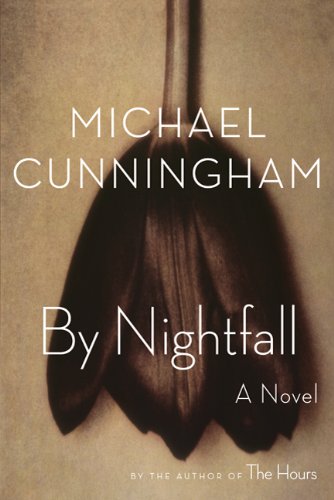
Ebook Info
- Published: 2010
- Number of pages: 256 pages
- Format: Epub
- File Size: 0.21 MB
- Authors: Michael Cunningham
Description
Peter and Rebecca Harris: mid-forties denizens of Manhattan’s SoHo, nearing the apogee of committed careers in the arts—he a dealer, she an editor. With a spacious loft, a college-age daughter in Boston, and lively friends, they are admirable, enviable contemporary urbanites with every reason, it seems, to be happy. Then Rebecca’s much younger look-alike brother, Ethan (known in thefamily as Mizzy, “the mistake”), shows up for a visit. A beautiful, beguiling twenty-three-year-old with a history of drug problems, Mizzy is wayward, at loose ends, looking for direction. And in his presence, Peter finds himself questioning his artists, their work, his career—the entire world he has so carefully constructed.Like his legendary, Pulitzer Prize–winning novel, The Hours, Michael Cunningham’s masterly new novel is a heartbreaking look at the way we live now. Full of shocks and aftershocks, it makes us think and feel deeply about the uses and meaning of beauty and the place of love in our lives.
User’s Reviews
Editorial Reviews: From Publishers Weekly Contemplating an affair that never was, SoHo art dealer Peter Harris laments that he “could see it all too clearly.” The same holds true for Cunningham’s emotionally static and drearily conventional latest (after Specimen Days). Peter and his wife, Rebecca–who edits a mid-level art magazine–have settled into a comfortable life in Manhattan’s art world, but their staid existence is disrupted by the arrival of Rebecca’s much younger brother, Ethan–known as Mizzy, short for “The Mistake.” Family golden child Mizzy is a recovering drug addict whose current whim has landed him in New York where he wants to pursue a career in “the arts.” Watching Mizzy–whose resemblance to a younger Rebecca unnerves Peter–coast through life without responsibilities makes Peter question his own choices and wonder if it’s more than Mizzy’s freedom that he covets. Cunningham’s sentences are, individually, something to behold, but they’re unfortunately pressed into the service of a dud story about a well-off New Yorker’s existential crisis. Copyright © Reed Business Information, a division of Reed Elsevier Inc. All rights reserved. From Booklist *Starred Review* Peter Harris, a dispirited Soho gallery owner in his midforties, arrives home to find his wife in the shower and marvels at how lithe she looks through the steam, then realizes that he’s admiring her much younger brother. Called the Mistake, or Mizzy, he’s a lost soul, a junkie and moocher as sexy as he is manipulative. Mizzy appears just as Peter, brooding, romantic, and self-deprecating, is grappling with his failings as a father and an art dealer. Ceaselessly observant, Peter senses, or hopes for, “some terrible, blinding beauty” that will topple his carefully calibrated life, and why shouldn’t it be his alluring, feckless brother-in-law? Even if this mad infatuation stems from Peter’s deep grief for his brilliant and fearless gay brother, who died of AIDS. In his most concentrated novel, a bittersweet paean to human creativity and its particularly showy flourishing in hothouse Manhattan, virtuoso and Pulitzer winner Cunningham entwines eroticism with aesthetics to orchestrate a resonant crisis of the soul, drawing inspiration from Henry James and Thomas Mann as well as meditative painter Agnes Martin and provocateur artist Damien Hirst. The result is an exquisite, slyly witty, warmly philosophical, and urbanely eviscerating tale of the mysteries of beauty and desire, art and delusion, age and love. –Donna Seaman Review “In his most concentrated novel, a bittersweet paean to human creativity and its particularly showy flourishing in hothouse Manhattan, virtuoso and Pulitzer winner Cunningham entwines eroticism with aesthetics to orchestrate a resonant crisis of the soul, drawing inspiration from Henry James and Thomas Mann as well as meditative painter Agnes Martin and provocateur artist Damien Hirst. The result is an exquisite, slyly witty, warmly philosophical, and urbanely eviscerating tale of the mysteries of beauty and desire, art and delusion, age and love.” –Donna Seaman, Booklist, Starred Review (July 1)”Rather witty and a little outrageous . . . for pure, elegant, efficient beauty, Cunningham is astounding. He’s developed this captivating narrative voice that mingles his own sharp commentary with Peter’s mock-heroic despair. Half Henry James, half James Joyce, but all Cunningham, it’s an irresistible performance, cerebral and campy, marked by stabbing moments of self-doubt immediately undercut by theatrical asides and humorous quips. . . a cerebral, quirky reflection on the allure of phantom ideals and even, ultimately, on what a traditional marriage needs to survive.” –Ron Charles, The Washington Post”[Cunningham] makes you turn the pages. He tells a story here, but not too much a story. You aren’t deadened by detail; you’re eager to know what happens next.” –Jeanette Winterson, The New York Times Book Review”So many of Cunningham’s physical descriptions read like confident prose poems, where you imagine what’s left between the lines . . . As a testament to the richness of the literary imagination, `By Nightfall’ is a success. You can’t read this novel without the sense of how worlds can be found in a drop of water, or in an offhand comment, or in the curve of a vase. . . `By Nightfall’ is a meditation on beauty, and it has its own indelible qualities of beauty.” –Matthew Gilbert, Boston Globe”In this rueful, daring and expansive novel, Cunningham gives us deep and thrilling access to the mind and heart of a searching, cynical, self-deprecating-except-when-he’s-self-aggrandizing modern male.” –Pam Houston, More”There are sentences here so powerfully precise and beautiful that they almost hover above the page.” –Karen Valby, Entertainment Weekly About the Author Michael Cunningham was raised in Los Angeles and lives in New York City. He is the author of the novels The Hours, A Home at the End of the World, Specimen Days, and Flesh and Blood. His work has appeared in The New Yorker and Best American Short Stories, and he is the recipient of a Whiting Writer’s Award. He received the Pulitzer Prize for Fiction and the PEN/Faulkner Award for The Hours, which was a New York Times bestseller, and was chosen as a Best Book of 1998 by The New York Times, Los Angeles Times, and Publishers Weekly. He is a Professor at Brooklyn College for the M.F.A program. Excerpt. © Reprinted by permission. All rights reserved. A PARTYThe Mistake is coming to stay for a while.“Are you mad about Mizzy?” Rebecca says.“Of course not,” Peter answers.One of the inscrutable old horses that pull tourist carriages has been hit by a car somewhere up on Broadway, which has stopped traffic all the way down to the Port Authority, which is making Peter and Rebecca late.“Maybe it’s time to start calling him Ethan,” Rebecca says. “I’ll bet nobody calls him Mizzy anymore but us.”Mizzy is short for the Mistake.Outside the cab, pigeons clatter up across the blinking blue of a Sony sign. An elderly bearded man in a soiled, full-length down coat, grand in his way (stately, plump Buck Mulligan?), pushes a grocery cart full of various somethings in various trash bags, going faster than any of the cars.Inside the cab, the air is full of drowsily potent air freshener, vaguely floral but not really suggestive of anything beyond a chemical compound that must be called “sweet.”“Did he tell you how long he wants to stay?” Peter asks.“I’m not sure.”Her eyes go soft. Worrying overmuch about Mizzy (Ethan) is a habit she can’t break.Peter doesn’t pursue it. Who wants to go to a party in mid-argument?He has a queasy stomach, and a song looping through his head. I’m sailing away, set an open course for the virgin sea . . . Where would that have come from? He hasn’t listened to Styx since he was in college.“We should set a limit,” he says.She sighs, settles her hand lightly on his knee, looks out the window at Eighth Avenue, up which they are now not moving at all. Rebecca is a strong-featured woman—who is often referred to as beautiful but never as pretty. She may or may not notice these small gestures of hers, by which she consoles Peter for his own stinginess.A gathering of angels appeared above my head.Peter turns to look out his own window. The cars in the lane beside theirs are inching forward. A slightly battered blue Toyota-ish something creeps abreast, full of young men; raucous twenty-something boys blaring music loudly enough that Peter feels the thump-thump of it enter the cab’s frame as they approach. There are six, no, seven of them crammed into the car, all inaudibly shouting or singing; brawny boys tarted up for Saturday night, hair gelled into tines, flickers of silver studs or chains here and there as they roughhouse and bitch-slap. The traffic in their lane picks up speed, and as they pull ahead Peter sees, thinks he sees, that one of them, one of the four clamoring in the backseat, is actually an old man, wearing what must be a spiky black wig, shouting and shoving right along with the others but thin-lipped and hollow-cheeked. He noodles the head of the boy stuffed in next to him, shouts into the boy’s ear (flashing nuclear white veneers?), and then they’re gone, moving with traffic. A moment later, the nimbus of sound they make has been pulled along with them. Now it’s the brown bulk of a delivery truck that offers, in burnished gold, the wing-footed god of FTD. Flowers. Someone is getting flowers.Peter turns back to Rebecca. An old man in young-guy drag is something to have observed together; it’s not really a story to tell her, is it? Besides, aren’t they in the middle of some kind of edgy pre-argument? In a long marriage, you learn to identify a multitude of different atmospheres and weathers.Rebecca has felt his attention reenter the cab. She looks at him blankly, as if she hadn’t fully expected to see him.If he dies before she does, will she be able to sense his disembodied presence in a room?“Don’t worry,” he says. “We won’t throw him out on the street.”Her lips fold in primly. “No, really, we should set some limits with him,” she says. “It’s not a good idea to always just give him whatever he thinks he wants.”What’s this? All of a sudden, she’s chiding him about her lost little brother?“What seems like a reasonable amount of time?” he asks, and is astonished that she does not seem to notice the exasperation in his voice. How can they know each other so little, after all this time?She pauses, considering, and then, as if she’s forgotten an errand, leans urgently forward and asks the driver, “How do you know it’s an accident involving a horse?”Even in his spasm of irritation, Peter is able to marvel at women’s ability to ask direct questions of men without seeming to pick a fight.“Call from the dispatcher,” the driver says, waggling a finger at his earphone. His bald head sits solemnly on the brown plinth of his neck. He, of course, has his own story, and it does not in any way involve the well-dressed middle-aged couple in the back of his cab. His name, according to the plate on the back of the front seat, is Rana Saleem. India? Iran? He might have been a doctor where he comes from. Or a laborer. Or a thief. There’s no way of knowing.Rebecca nods, settles back in her seat. “I’m thinking more about other kinds of limits,” she says.“What kinds?”“He can’t just rely on other people forever. And, you know. We all still worry about that other thing.”“You think that’s something his big sister can help him with?”She closes her eyes, offended now, now, when he’d meant to be compassionate.“What I mean,” Peter says, “is, well. You probably can’t help him change his life, if he doesn’t want to himself. I mean, a drug addict is a sort of bottomless pit.”She keeps her eyes closed. “He’s been clean for a whole year. When do we stop calling him a drug addict?”“I’m not sure if we ever do.”Is he getting sanctimonious? Is he just spouting 12-step truisms he’s picked up God knows where?The problem with the truth is, it’s so often mild and clichéd.She says, “Maybe he’s ready for some actual stability.”Yeah, maybe. Mizzy has informed them, via e-mail, that he’s decided he wants to do something in the arts. That would be Something in the Arts, an occupation toward which he seems to have no cogent intentions. Doesn’t matter. People (some people) are glad when Mizzy expresses any productive inclinations at all.Peter says, “Then we’ll do what we can to give him some stability.”Rebecca squeezes his knee, affectionately. He has been good.Behind them, somebody blasts his horn. What exactly does he think that’s going to do?“Maybe we should get out here and take the train,” she says.“We have such a perfect excuse for being late.”“Do you think that means we have to stay late?”“Absolutely not. I promise to get you out of there before Mike is drunk enough to start harassing you.”“That would be so lovely.”Finally they reach the corner of Eighth Avenue and Central Park South, where the remains of the accident have not yet been entirely cleared away. There, behind the flares and portable stanchions, behind the two cops redirecting traffic into Columbus Circle, is the bashed-up car, a white Mercedes canted at an angle on Fifty-ninth, luridly pink in the flare light. There is what must be the body of the horse, covered by a black tarp. The tarp, tarrily heavy, offers the rise of the horse’s rump. The rest of the body could be anything.“My God,” Rebecca whispers.Peter knows: any accident, any reminder of the world’s capacity to cause harm, makes her, makes both of them, panic briefly about Bea. Has she somehow come to New York without telling them? Could she conceivably have been riding in a horse carriage, even though that’s something she’d never do?Parenthood, it seems, makes you nervous for the rest of your life. Even when your daughter is twenty and full of cheerful, impenetrable rage and not doing all that well in Boston, 240 miles away. Especially then.He says, “You never think of those horses getting hit by cars. You hardly think of them as animals.”“There’s a whole . . . cause. About the way those horses are treated.”Of course there is. Rana Saleem drives a night-shift cab here. Destitute men and women walk the streets with their feet bound in rags. The carriage horses must have dismal lives, their hooves are probably cracked and split from the concrete. How monstrous is it, to go about your business anyway?“This’ll be good for the pro-horse people, then,” he says.Why does he sound so callous? He means to be rigorous, not hard; he himself is appalled by how he can sound. He feels at times as if he hasn’t quite mastered the dialect of his own language—that he’s a less-than-fluent speaker of Peter-ese, at the age of forty-four.No, he’s still only forty-three. Why does he keep wanting to add a year?No, wait, he turned forty-four last month.“So maybe the poor thing didn’t die in vain,” Rebecca says. She runs a fingertip consolingly along Peter’s jaw.What marriage doesn’t involve uncountable accretions, a language of gestures, a sense of recognition sharp as a toothache? Unhappy, sure. What couple isn’t unhappy, at least part of the time? But how can the divorce rate be, as they say, skyrocketing? How miserable would you have to get to be able to bear the actual separation, to go off and live your life so utterly unrecognized?“A mess,” the driver says.“Yeah.”And yet, of course, Peter is mesmerized by the ruined car and the horse’s body. Isn’t this the bitter pleasure of New York City? It’s a mess, like Courbet’s Paris was. It’s squalid and smelly; it’s harmful. It st… Read more
Reviews from Amazon users which were colected at the time this book was published on the website:
⭐Peter Harris’s life has never quite measured up to his youthful ideals: his daughter is barely on speaking terms with him; he and his wife, Rebecca, seem to be going through the motions of marriage; and his career as an art dealer, selling work that doesn’t really excite him much, seems to be stuck in neutral. Like so many other New Yorkers, Peter is having a mid-life crisis, and there’s nothing more unsettling (and even annoying) to a middle-aged man than an exuberant, virile, carefree fledgling–who takes the form of Mizzy, his wife’s much younger 23-year-old brother, and who, seeking his own future, camps out in their apartment.The arrival of this young would-be hero is prefigured when Peter surprises himself, halting in his tracks in the Metropolitan Museum before a statue he’s seen so many times: Rodin’s sculpture of Auguste Neyt, “his form preserved, nude, unidealized, merely young and healthy, with his life ahead of him.” Only pages later, Peter comes home to find his wife in the bathroom, “the shower sluicing away the last twenty years, a girl again.” It is, of course, Mizzy. With good looks to spare, Mizzy is himself like a work of art, “an idealized, sculpted warrior”; “youth personified, the sense of a young hero who in life was probably not so beautiful and quite possibly not that heroic.” So what Mizzy presents to Peter is twofold: as a younger, somewhat androgynous version of Rebecca, he recalls long-lost youth; as a vibrant, Mercury-like sculpture, he offers the passion that is missing from the art Peter sells. Mizzy’s attractiveness is much less a beacon of lust than it is a reflection of departed opportunity.This is a lean novel, and an immaculately crafted one. While some readers apparently feel there’s not much of a plot, I was struck by a different view: although not much seemed to be “happening” while I was reading its 200+ pages, after I finished, I realized that far more had happened than what I would usually expect from such a compact novel. We seem to be camped out in Peter’s rather ordinary, self-absorbed mind while his not-so-ordinary world is humming along, with or without him. (And the descriptions of the life of the art dealer, trailing him from Bushwick, Brooklyn, to Greenwich, Connecticut, were, to me, a fascinating revelation.) Nearly every sentence, every passage is the measured piece of art that a dealer like Peter could only hope to find engraved on the side of a bronze urn.Which makes it even more remarkable that there’s actually a “deleted scene” available to readers: last year, when the novel was still called “Olympia,” Cunningham published an early version of the chapter “Fratricide” in the debut issue of “Electric Literature.” Its final scene describes Peter years earlier, when his brother had died; he is washing the body in the hospital, with the help of a boyfriend he had only just met. The passage was omitted, perhaps, because it’s not essential to the short, focused novel we have here; nevertheless, it’s a B-side that surpasses in power and eloquence the best writing of most other novelists, and Cunningham’s fans would do well to seek it out.
⭐This is not as ambitious as “The Hours”, but there are moments where it surprises in all the right ways.Ostensibly a story about Peter Harris at midlife, expiating the ghost of his dead brother who died of AIDS, by toying with his attraction to his young brother in law. He is desparate for something to refresh in him a feeling of possibility and vigor. The art he peddles in his Manhattan gallery is not going to do it for him, and he is acutely aware that finding and representing an artist who is really a genius is not in all likelihood going to materialize. His wife seems to have settled for too much mediocrity too, and he muses over his sense of their mutual dissipation and waste. Her troubled younger brother, Mizzy, arrives on their doorstep, looking for a place to stay while he sorts out his future. His beautiful body, and his air of doomed frailty and dependence, provoke his sister and her husband into believing that if they can secure him in their private orbit, if they can curate him, angle the light properly and hang him on their wall, that the traumas and resentments of their childhoods will be “fixed”. It never occurs to either husband or wife that their restlessness is reciprocal, and that they both want to possess Mizzy and appropriate him for their private collection.They have been steadily deluding themselves all along that their spouse, ordinary and mundane, is the source of their marital doldrums, and that they alone dream of freedom.Cunningham is an artist, and a pretty accomplished one. He is particularly good at catching the disconnect between what is said aloud and what is not said aloud, giving us a fine look at Peter’s inner self, but also his wife’s too. Peter Harris comes to realize he has been neglectful of his responsibility to enter into the thoughts and needs of the women he loves, but we cannot blame Cunningham for missing anything. He seems to have a fine eye for the nuance of married small talk, and the big things that are not said, where every word is chosen for its power to provoke, and evry unspoken word is tacitly heard.
⭐This is a work of ambition!There are already enough newspaper reviews on how good this novel is. I would like to add mine: Mr Cunningham is trying to break away from The Hours, his award winning novel and bring out something new.The impressive attempt to both represent and realize characters’ voices and thoughts is very daring, creative, and original. If The Hours is an imitated continuance of V. Woolf’s Mrs Dalloway, then By Nightfall is the discontinuance and a newly awakening of Peter Harris.
⭐Cunningham doesn’t disappoint with this wonderful novel. Again it’s about people up close and personal, and the ending is reminiscent of Joyce’s The Dead. (I wonder if that was deliberate – does anyone know?). Buy, sit back and enjoy another dip into the warmth and depth of this beautiful writer.
⭐Loved the book all the way through, the emotional ups and downs the internal monologues. But the ending a little too neat, hurtling to oblivion one second then almost “tomorrow is another day”. Of course this may be my faulty interpretation rather than author’s intention.
⭐Exploration of the inner lives of characters who live in New York, are involved in the art world, and their family relationships. Explores eistential questions.
⭐I enjoyed the story but it’s the descriptions of the various characters and works in the art world that really make this book stand out.
Keywords
Free Download By Nightfall: A Novel in Epub format
By Nightfall: A Novel Epub Free Download
Download By Nightfall: A Novel 2010 Epub Free
By Nightfall: A Novel 2010 Epub Free Download
Download By Nightfall: A Novel Epub
Free Download Ebook By Nightfall: A Novel