

Ebook Info
- Published: 2020
- Number of pages: 192 pages
- Format: PDF
- File Size: 17.76 MB
- Authors: Paul Teller
Description
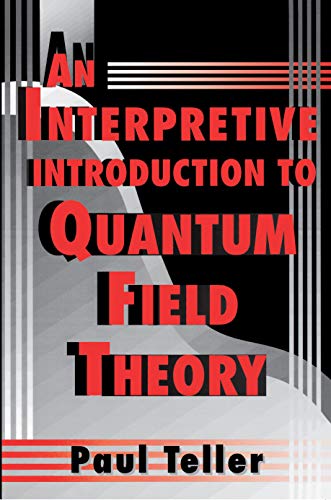
Quantum mechanics is a subject that has captured the imagination of a surprisingly broad range of thinkers, including many philosophers of science. Quantum field theory, however, is a subject that has been discussed mostly by physicists. This is the first book to present quantum field theory in a manner that makes it accessible to philosophers. Because it presents a lucid view of the theory and debates that surround the theory, An Interpretive Introduction to Quantum Field Theory will interest students of physics as well as students of philosophy. Paul Teller presents the basic ideas of quantum field theory in a way that is understandable to readers who are familiar with non-relativistic quantum mechanics. He provides information about the physics of the theory without calculational detail, and he enlightens readers on how to think about the theory physically. Along the way, he dismantles some popular myths and clarifies the novel ways in which quantum field theory is both a theory about fields and about particles. His goal is to raise questions about the philosophical implications of the theory and to offer some tentative interpretive views of his own. This provocative and thoughtful book challenges philosophers to extend their thinking beyond the realm of quantum mechanics and it challenges physicists to consider the philosophical issues that their explorations have encouraged.
User’s Reviews
Reviews from Amazon users which were colected at the time this book was published on the website:
⭐Philosophical debate on quantum mechanics was very intense and widespread in the twentieth century, and it continues without abatement in the twenty-first. Philosophical issues in quantum field theory (QFT) however are not as common, this being due possibly to the level of physics and mathematics needed to master the subject. This book is one of the few that has appeared that deal with these issues, and it serves as a fairly good introduction to them. In the preface, the author describes quantum field as a subject that is “notoriously hard to learn”. He admits having severe difficulty in the learning of it, which he blames on the lack of good presentations of the subject. One can easily find though superb explanations of QFT in the literature, both in preprint and textbook form. His presentation of QFT could loosely be described as the “older” quantum field theory, since he does not address guage theories and makes no use of modern mathematical formalism. By his own admission, all of the ideas in the book were known by 1950. The title of the book reflects the author’s view of an interpretation of a theory, namely that it gives a similarity relation that is hypothesize to hold between a model and the properties of things that the model is supposed to characterize. This notion of similarity is a purely qualitative one though, as is typical in most discourses on philosophy. For the author, the issue for interpretation is the phenomenon of “superposition” in QFT, and he also endeavors to show that the “particle” intepretation of QFT is at equal level with the “field” theoretic one. He believes that current views on QFT get the particle aspect wrong, nor show how the particle and field aspects fit together. It is the particle labeling he says, that causes problems, and his solution is via the Fock space formalism, which avoids what he calls the “surplus structure” of conventional quantum mechanics, and which avoids the temptation to ascribe properties to particles. Instead he uses a conception of “quanta”, which gives information only on what patterns of properties are exhibited. The Fock space basis states, and consequently the operators are indexed by space-time points, entailing naturally an interpretation of the theory in terms of fields. However, the notion of “operator-valued fields” that is typically expoused by practioners is criticized by the author and he lays out a different interpretation (but again using the Fock formalism), using as examples coherent states and vacuum fluctuations. He recognizes, quite correctly, that an interpretation as a quantum field takes place in a loose analogical relation to classical physics. No treatment of quantum field theory could be complete without including a discussion of renormalization. The author does not really add anything new in his discussion, as a reader can gain essentially the same content and insight (and more) in currrent papers, preprints, monographs, and textbooks on the subject. The use of cut-offs and dimensional regularization are briefly discussed, but no new insights are given into them. His solution to the problem of renormalization is what he calls a “mask-of-ignorance” approach, in which he asserts that a correct quantum field theory will be completely free of infinities. The correct theory is unknown, but this does not matter as long as attention is restricted to expressions that are independent of the cutoff and the regularization scheme. This has been said many times already though, by many different researchers and expositors of quantum field theory. A quantum field theory free from divergences has yet to be found, but another approach to the problem of infinities has taken over, that one going by the name of string theory.
⭐I don’t like false advertising. This is not an introduction to quantum field theory for philosophers. Physicists will find the philosophical chapters tedious. Lots of tedious agonizing philosophizing ( in the bad sense ) over the what the meaning of is is. Non physicists will find the technical chapters incomprehensible. They are quite technical and more an analysis of what the author finds puzzling than any kind of meaningful or readily comprehensible introduction. Which is of some value but not what the cover says it is. Though I did like the final chapter on ways of trying to understand renormalization and at least got something out of that.It seems to be a copy of an old book. The publication date of which is not given in the ebook version. But the author has a very old fashioned understanding of superposition – lingering traces of the Copenhagen interpretation – which gives us a clue.Finally the production quality is poor. There was a photocopier involved in the process at some point.This and absurdly high prices for low quality goods seems to be a feature of physics books from Princeton University Press. This would be a good reason for avoiding them.
Keywords
Free Download An Interpretive Introduction to Quantum Field Theory in PDF format
An Interpretive Introduction to Quantum Field Theory PDF Free Download
Download An Interpretive Introduction to Quantum Field Theory 2020 PDF Free
An Interpretive Introduction to Quantum Field Theory 2020 PDF Free Download
Download An Interpretive Introduction to Quantum Field Theory PDF
Free Download Ebook An Interpretive Introduction to Quantum Field Theory