Ebook Info
- Published: 1991
- Number of pages: 416 pages
- Format: MOBI
- File Size: 1.35 MB
- Authors: Plato
Description
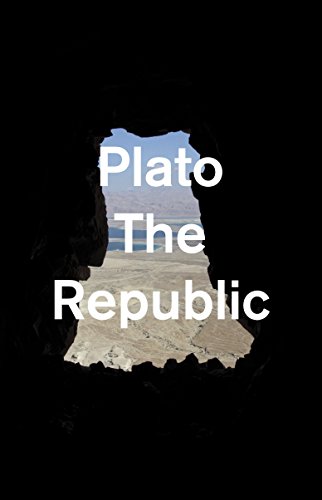
A monumental work of moral and political philosophy, a book surpassed only by the Bible in its formative influence on two thousand years of Western thought. What does it mean to be good? What enables us to distinguish right from wrong? How should human virtues be translated into a just society? In the course of its tautly reasoned Socratic dialogues, The Republic accomplishes nothing less than an anatomy of the soul and an exhaustive description of a State that both mirrors and enforces the soul’s ideal harmony. The resulting text is at once mystical and elegantly logical and may be read as a template for the societies in which most of us live today.
User’s Reviews
Editorial Reviews: Review “Must we not acknowledge…that in each of us there are the same principles and habits which there are in the State; and that from the individual they pass into the State?”What does it mean to be good? What enables us to distinguish right from wrong? And how should human virtues be translated into a just society? These are the questions that Plato sought to answer in this monumental work of moral and political philosophy, a book surpassed only by the Bible in its formative influence on two thousand years of Western thought.In the course of its tautly reasoned Socratic dialogues, The Republic accomplishes nothing less than an anatomy of the soul and an exhaustive description of a State that both mirrors and enforces the soul’s ideal harmony. The resulting text is at once mystical and elegantly logical and may be read as a template for the societies in which most of us live today.Vintage Classics are quality paperback editions of the world’s greatest written works. They are durably bound and are printed exclusively on acid-free paper. From the Back Cover “Must we not acknowledge…that in each of us there are the same principles and habits which there are in the State; and that from the individual they pass into the State?”What does it mean to be good? What enables us to distinguish right from wrong? And how should human virtues be translated into a just society? These are the questions that Plato sought to answer in this monumental work of moral and political philosophy, a book surpassed only by the Bible in its formative influence on two thousand years of Western thought.In the course of its tautly reasoned Socratic dialogues, The Republic accomplishes nothing less than an anatomy of the soul and an exhaustive description of a State that both mirrors and enforces the soul’s ideal harmony. The resulting text is at once mystical and elegantly logical and may be read as a template for the societies in which most of us live today.Vintage Classics are quality paperback editions of the world’s greatest written works. They are durably bound and are printed exclusively on acid-free paper. About the Author PLATO, with Socrates and Aristotle, is the founder of the Western intellectual tradition. Like his mentor Socrates, he was essentially a practical philosopher who found the abstract theory and visionary schemes of many contemporary thinkers misguided and sterile. He was born about 429 B.C. in Athens, the son of a prominent family that had long been involved in the city’s politics. Extremely little survives of the history of Plato’s youth, but he was raised in the shadow of the great Peloponnesian War, and its influence must have caused him to reject the political career open to him and to become a follower of the brilliantly unorthodox Socrates, the self-proclaimed “gadfly” of Athens.Socrates’ death in 399 B.C. turned Plato forever from politics, and in the next decade he wrote his first dialogues, among them Apology and Euthyphro. At age forty, Plato visited Italy and Syracuse, and upon his return he founded the Academy-Europe’s first university-in a sacred park on the outskirts of Athens. The Academy survived for a millennium, finally closed by the emperor Justinian in A.D. 529. Plato hoped his school would train its pupils to carry out a life of service and to investigate questions of science and mathematics. Plato’s old age was probably devoted to teaching and writing, he died in Athens in 348 B.C. Read more
Reviews from Amazon users which were colected at the time this book was published on the website:
⭐In Benjamin Jowett’s easy to read and enjoyable translation of Plato’s most famous dialogue you will find the philosopher Socrates delivering one of his most compelling yet revolutionary arguments.And even though we live in the modern era with its vast technological advancements this philosophical colloquy is still being, mulled over in most high schools and college classes around the world.So, how does antiquity such as this stand up to the ravages of time and compels us to re-examine who we are, where we’re going, and what our political persuasions ought to be.Plato’s student/protégé Aristotle stated, “The man who is truly a statesman is thought to be chiefly occupied with virtue; he wants to make the citizens good and obedient to the law.” He also stated, “We see that every state is a sort of partnership, and that every partnership is formed in order to attain some good. After all, it is universally true that people do act with a view to obtaining what they think [is] good for them. Clearly, then, all partnerships have some good as their objective, and the highest, most authentic good is the objective of the most authentic of all partnerships, the one that includes all others. This is the state; political partnership.” (Aristotle’s statement can be found in “The Politics Book One”.)Moreover, this syllogism that Aristotle contemplates is pretty much the standard paradigm or foundation that a Republican government adheres to, though not everyone will agree with his viewpoint. But you must realize that it’s the most altruistic response insofar as avoiding totalitarianism.Nonetheless, in a true Republic the government and the citizens must work in unison to achieve success. This is the syllogistic argument Socrates didactically tries to demonstrate to the Auditors involved in the dialogue.Furthermore, I believe Socrates’ arguments had a heavy influence over Aristotle’s political views.(For a brief introduction to Aristotle I suggest reading “The Philosophy Of Aristotle” translated by J.L Creed and A. E. Ward.)During Socrates and the Auditors’ dialectical exchange, Socrates makes many valid points such as “the democratical man grows out of the oligarchial,” also he interjects the axiom that democracies eventually become tyrannies because the definition of a democracy is “majority rule,” which unequivocally means the minority will be disenfranchised in one form or the other. But alas, not everyone is in agreement with Socrates’ conclusions.One of the Auditors is named Thrasymachus who happens to be the Sean Hannity of his day. Thrasymachus made the animadversion “that justice is nothing else than the interest of the stronger.” He then demands Socrates to explain why this omnipotent notion doesn’t hold apposite when it’s clear throughout history that this indeed is the truism. So, with his flair for answering a question with a question, Socrates attempts to reason with this brazen individual and the rest of the Auditors.The way I reasoned it, Thrasymachus’ position on the matter was more iniquitously pragmatic.A Case in point: Thrasymachus states, “”the just is always the loser in comparison with the unjust. First of all, in private contracts: wherever the unjust is the partner of the just you will find that, when the partnership is dissolved, the unjust man has always more and the just less. Secondly, in their dealings with the State: when there is an income tax, the just man will pay more and the unjust less on the same amount of income; and when there is anything to be received the one gains nothing and the other much.” This was one of the examples that Thrasymachus used to argue his point, which is in direct opposition to what Aristotle asserted years later. Moreover, it’s plain to see that Niccolò Machiavelli used Thrasymachus’ ideology as the foundation for his philosophical works such as the “Prince.”Moreover, Socrates’ fails to convince Thrasymachus of his (so-called) exiguous folly, but he now has to convince the rest of the Auditors that his philosophical perspective is isentropically illogical.In the end of the dialogue Socrates weighs in the dichotomy of good and evil, that virtue is better than immorality; fore justice breeds harmony and that everyone shouldn’t be at varianced to this concept.I also found it interesting that Socrates was a feminist, which was an extremely radical concept for the 5th century BCE. Socrates believed that women should have the same amiable rights as men. This was a philosopher who was way ahead of his time and after reading this pedagogical diatribe against mankind’s reactionary nature……well it doesn’t take a rocket scientist to figure out why Socrates was sentenced to die by drinking hemlock.After reading this I pondered that Socrates’ syllogistic remonstration for a Republican paradigm was convincing, and perspicuous, but idealistically flawed because for his aspiration to become reality all political persuasions would have to be absolute, and unfortunately that isn’t realistic.This is a 5 star read that everyone should engage in because it will help you ascertain human nature, government, and universal ideologies.
⭐Read this 50 years ago. decided I needed to read again…I recommend it to anyone who follows today’s politics.
⭐The print runs off the edge of the page so that only part of the last word of each line is printed. It’s like somebody told the printer it had wider paper than it did. Book is useless. Because it was a gift there was a delay in discovering the problem, returning the book to me, and me trying to return it to Amazon. I missed the return window by a few days and now am stuck.
Keywords
Free Download The Republic: The Complete and Unabridged Jowett Translation (Vintage Classics) in MOBI format
The Republic: The Complete and Unabridged Jowett Translation (Vintage Classics) MOBI Free Download
Download The Republic: The Complete and Unabridged Jowett Translation (Vintage Classics) 1991 MOBI Free
The Republic: The Complete and Unabridged Jowett Translation (Vintage Classics) 1991 MOBI Free Download
Download The Republic: The Complete and Unabridged Jowett Translation (Vintage Classics) MOBI
Free Download Ebook The Republic: The Complete and Unabridged Jowett Translation (Vintage Classics)