Ebook Info
- Published: 2011
- Number of pages: 272 pages
- Format: PDF
- File Size: 0.52 MB
- Authors: Susan Schneider
Description
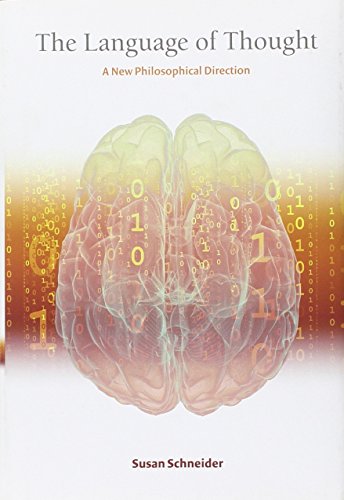
A philosophical refashioning of the Language of Thought approach and the related computational theory of mind.The language of thought (LOT) approach to the nature of mind has been highly influential in cognitive science and the philosophy of mind; and yet, as Susan Schneider argues, its philosophical foundations are weak. In this philosophical refashioning of LOT and the related computational theory of mind (CTM), Schneider offers a different framework than has been developed by LOT and CTM’s main architect, Jerry Fodor: one that seeks integration with neuroscience, repudiates Fodor’s pessimism about the capacity of cognitive science to explain cognition, embraces pragmatism, and advances a different approach to the nature of concepts, mental symbols, and modes of presentation.According to the LOT approach, conceptual thought is determined by the manipulation of mental symbols according to algorithms. Schneider tackles three key problems that have plagued the LOT approach for decades: the computational nature of the central system (the system responsible for higher cognitive function); the nature of symbols; and Frege cases. To address these problems,] Schneider develops a computational theory that is based on the Global Workspace approach; develops a theory of symbols, “the algorithmic view”; and brings her theory of symbols to bear on LOT’s account of the causation of thought and behavior. In the course of solving these problems, Schneider shows that LOT must make peace with both computationalism and pragmatism; indeed, the new conception of symbols renders LOT a pragmatist theory. And LOT must turn its focus to cognitive and computational neuroscience for its naturalism to succeed.
User’s Reviews
Editorial Reviews: Review [Schneider’s] book is good proof of the health of contemporary philosophy of mind….To get rid of old stigmas and to raise issues with certain positions is a necessary step. Schneider has provided this first step in her book, showing LOT as a viable response when she focuses it towards computational and cognitive neuroscience for its naturalism to succeed.―MetapsychologySchneider’s book….is very much in the spirit (and even the style) of what Fodor has said at one point or another. [She] chides philosophers (I suspect she is looking hardest at Fodor and friends) for not following the state of the art in neuroscience and for building theories that fail to reflect findings there. She endorses the ”global workplace” theory of central cognition developed by Baars and, later, Dehaene.―Minds and Machines―This book will undoubtedly set the agenda for future work on LOT….The quality of scholarship and writing is high throughout. Unusually for a philosophy monograph, it is also fun to read.―MIND Review Susan Schneider’s The Language of Thought: A New Philosophical Direction does precisely what its title claims: it provides a new orientation for the language of thought and the related computational theory of mind. Schneider bravely stakes out new theoretical commitments for LOT, such as a pragmatist theory of concepts and a theory of symbols. Whether you agree or disagree with the LOT approach―I myself am a critic―Schneider’s book is an absolutely necessary read for anyone interested in philosophy of mind and the foundations of cognitive science.―Mark Bickhard, Henry R. Luce Professor in Cognitive Robotics and the Philosophy of Knowledge, Lehigh University About the Author Susan Schneider is Associate Professor of Philosophy at the University of Connecticut. Read more
Reviews from Amazon users which were colected at the time this book was published on the website:
⭐Many undergraduate students doing a course in Philosophy of Mind or Cognitive Science are introduced to the theory put forward by Jerry Fodor that mental processes may be naturalised by explaining them in terms of Turing-like computational processes. The idea was that if we could identify the syntactical structure of the mind with reference to the external world then we could come some way as to explaining our “folk psychology” of beliefs, desires and intentions in purely naturalistic or, rather, mechanistic terms. Over the years it appears that Jerry Fodor became pessimistic about the chances that the endeavour would succeed. Fodor felt that such a program could not capture the holistic nature of human reasoning. For example, in order to hold a belief about one thing I must have a variety of other implicit beliefs and furthermore some of those beliefs may be variable according to the context that I am situated in. In order to have a so-called “language of the mind” the syntax or symbols that are to manipulated to create the “grammar” of thought must be invariant across a range of different situations otherwise they cannot be predictive of intentionality or intentionality based behaviour. Schneider’s book is an exposition which argues that Fodor’s pessimism is unfounded and that a computational based language of thought could be quite fruitful in understanding how we reason and interact with the world. Many of the arguments are quite technical and I would recommend this book to readers who are already familiar with the work of Jerry Fodor – particular his books “Language of Thought” and “LOT 2.” Those people who are interested in Philosophy of Mind may be struck by the fact that this book addresses a very specific issue in the study of mind and does not touch upon issues such as consciousness. For me personally, I find this refreshing. One can get tired of reading about “qualia,” philosophical “zombies” and “what it is like to be a bat” – very often these topics shed very little in the way of new light on how it is that even the most simple of people can organise themselves to catch the 592 bus to town for a 3pm job interview. Sadly, nothing in this book can shed a light on how someone does this either. Yet, this is the enterprise that an ultimate computational-based “Language of Thought” theory should achieve. I should note that part of Schneider’s hope in making the Language of Thought a viable theory of intentionality is that she sees it as being tied in with what is known as the “Global Workspace Theory.” The theory suggests that the the “central processing unit” responsible for higher order cognitive functions is related neurophysiologically to the Global Workspace in the brain that integrates information from more specific task orientated brain modules. Now, I believe the inventor of the Global Workspace model – Bernard Baars – came up with idea to explain the difference between unconscious information processing versus conscious information processing. If such is the case – what is the difference between a conscious process and an unconscious one? Do conscious information processes have qualia? If they do then why and how do they have qualia? I imagine these “consciousness” questions are one’s that Schneider (like Jerry Fodor) would rather keep away from her with a ten foot barge pole, yet they seem to lurking just around the corner. Naturalising the mind is a murky enterprise indeed.
⭐Great book
⭐
Keywords
Free Download The Language of Thought: A New Philosophical Direction (The MIT Press) in PDF format
The Language of Thought: A New Philosophical Direction (The MIT Press) PDF Free Download
Download The Language of Thought: A New Philosophical Direction (The MIT Press) 2011 PDF Free
The Language of Thought: A New Philosophical Direction (The MIT Press) 2011 PDF Free Download
Download The Language of Thought: A New Philosophical Direction (The MIT Press) PDF
Free Download Ebook The Language of Thought: A New Philosophical Direction (The MIT Press)