Ebook Info
- Published: 2019
- Number of pages: 192 pages
- Format: PDF
- File Size: 3.03 MB
- Authors: Susan Schneider
Description
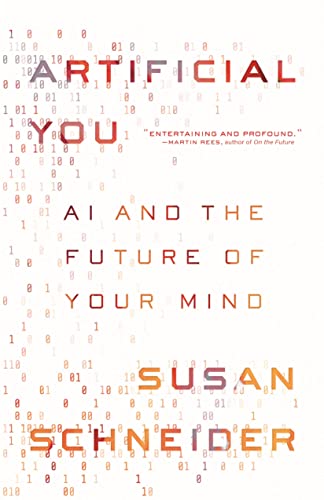
Hailed by the Washington Post as “a sure-footed and witty guide to slippery ethical terrain,” a philosophical exploration of AI and the future of the mind that Astronomer Royal Martin Rees calls “profound and entertaining”Humans may not be Earth’s most intelligent beings for much longer: the world champions of chess, Go, and Jeopardy! are now all AIs. Given the rapid pace of progress in AI, many predict that it could advance to human-level intelligence within the next several decades. From there, it could quickly outpace human intelligence. What do these developments mean for the future of the mind?In Artificial You, Susan Schneider says that it is inevitable that AI will take intelligence in new directions, but urges that it is up to us to carve out a sensible path forward. As AI technology turns inward, reshaping the brain, as well as outward, potentially creating machine minds, it is crucial to beware. Homo sapiens, as mind designers, will be playing with “tools” they do not understand how to use: the self, the mind, and consciousness. Schneider argues that an insufficient grasp of the nature of these entities could undermine the use of AI and brain enhancement technology, bringing about the demise or suffering of conscious beings. To flourish, we must grasp the philosophical issues lying beneath the algorithms.At the heart of her exploration is a sober-minded discussion of what AI can truly achieve: Can robots really be conscious? Can we merge with AI, as tech leaders like Elon Musk and Ray Kurzweil suggest? Is the mind just a program? Examining these thorny issues, Schneider proposes ways we can test for machine consciousness, questions whether consciousness is an unavoidable byproduct of sophisticated intelligence, and considers the overall dangers of creating machine minds.
User’s Reviews
Editorial Reviews: Review “One of Forbes’ Must-Read Brain Books of 2019″”Finalist for the PROSE Award in Philosophy, Association of American Publishers””Packed with material that enlightens new ways of thinking about a hot topic. . . . a philosophical tour with real-world implications and it’ll appeal most to readers who enjoy playing out scenarios. . . . One of the benefits of learning about AI is better understanding the human mind, and this book―while challenging―offers an accessible, enjoyable intro for both.”—David DiSalvo, Forbes”Schneider is a sure-footed and witty guide to slippery ethical terrain. Her exposition of the consciousness problem is laced with helpful examples. It pries clarity from the essential opacity of its central concepts, most important consciousness itself. And it is refreshingly candid.”—Aziz Huq, Washington Post”[A] demanding dialogue between philosophy and science.”—Andrew Robinson, Nature”[A] well-reasoned and thoughtful discussion about the need for AI researchers and policymakers to place more emphasis on the question of consciousness.”—Martin De Saulles, Times Higher Education”This is a fun, provocative, thoughtful and interesting book to read. . . . As we rush, almost unthinkingly into an AI enhanced world this is a book that is well worth reading.”—Simon Cocking, Irish Tech News”This book is a delight to read. Deeply satisfying: a double prolonged plea for humility as we explore questions [of AI and the nature of consciousness]. A stimulating and accessible blend of neuroethical speculation and provocation, all deriving from a deeply felt moral mission. In short, highly recommend.”—John Banja, AJOB Neuroscience”Accessible and intriguing. . . . A significant contribution to some of the often-overlooked ethical issues surrounding the continued development of artificial intelligence.”—Ken Daley, The Philosopher’s Magazine Review “This riveting book is both entertaining and profound: it presents a humane perspective on AI, a topic that has attracted too much naive hype and scaremongering. Classic philosophical problems of the self, the mind, and consciousness will soon―through transformative advances in AI―become crucial to practical ethics and individual choices. Schneider offers sophisticated insights on what is perhaps the number one long-term challenge confronting humanity.”―Martin Rees, author of On the Future: Prospects for Humanity “Is artificial consciousness possible? Could you become an AI? Would you still be you? Schneider makes a vivid and compelling case that the future of humanity may depend on the answers to these philosophical questions. Artificial You is brimming with useful tools for thinking about the mind and its future.”―David J. Chalmers, author of The Conscious Mind: In Search of a Fundamental Theory “A fascinating exploration of human-level AI and brain enhancement, combined with a passionate argument for the importance of philosophy in understanding what on earth we are doing when we pursue these lines of research.”―Stuart Russell, author of Human Compatible: Artificial Intelligence and the Problem of Control “What does it take to have a mind and be a conscious being? Could AI have a mind? Could it have a conscious mind? Might the best plan be for us to merge with our best AIs? Artificial You is a smart, bite-sized tour de force of the state of play in philosophy and science. Before you request your next mind design upgrade, read this book.”―Andy Clark, author of Surfing Uncertainty: Prediction, Action, and the Embodied Mind “As we stride eagerly into a near-future realm populated by augmented humans and artificial intelligence, Schneider probes the minefield ahead, posing stark choices that humanity will face.” ―David Brin, Hugo award–winning author of Existence and The Transparent Society “AI, metaphysics, and the future of life in the universe―Schneider writes about the biggest issues of our time with an engagingly light touch, and enviable insight and clarity. Highly recommended.”―Huw Price, academic director of the Leverhulme Centre for the Future of Intelligence and co-founder of the Centre for the Study of Existential Risk “This timely and exciting book explores issues at the intersection of philosophy of mind and philosophy of technology. Cautiously optimistic about transhumanism and conscious artificial intelligence, Schneider articulates an interesting, coherent perspective. I know of no other book that combines such a high level of quality and accessibility on these topics. Artificial You is terrific.”―Eric Schwitzgebel, The Splintered Mind blog and author of Perplexities of Consciousness About the Author Susan Schneider is the NASA/Baruch Blumberg Chair at the Library of Congress and the director of the AI, Mind and Society Group at the University of Connecticut. Her work has been featured by the New York Times, Scientific American, Smithsonian, Fox TV, History Channel, and more. Her two-year NASA project explored superintelligent AI. Previously, she was at the Institute for Advanced Study in Princeton devising tests for AI consciousness. Her books include The Language of Thought, The Blackwell Companion to Consciousness, and Science Fiction and Philosophy. Read more
Reviews from Amazon users which were colected at the time this book was published on the website:
⭐The biggest error the author makes is conflating consciousness and sentience. Consciousness is self-awareness, sentience is consciousness with feelings. Sentience requires consciousness, but consciousness may exist without sentience. Because the author conflates the terms, even using them interchangeably, many false conclusions are drawn. For instance, if we engineer consciousness into an AI, it will automatically have feelings and be entitled to moral status as a result. This is simply not the case. It’s like saying if we engineer a car with a steering wheel, the wheels and tires will automatically appear because these are found together in the existing examples of cars we’re familiar with.The author also seems to assume that if AIs are sentient, that they’re automatically entitled to equal rights as humans and that nobody will argue against this. We routinely give widely different rights even to other people, let alone how we treat non-human animals. It’s absurd to conclude without any discussion that sentient AI would receive the same rights as humans. Regardless of what you think ought to happen, it’s extremely unlikely that equal rights for AI is what will actually happen.One of the few original contributions the author makes is her ACT consciousness test, which is deeply flawed. It hinges critically on excluding concepts about how we view consciousness (i.e., as separate from our bodies) from the training process of the AI, then testing to see if the AI thinks of it on their own. How could someone writing a book about AI be so ignorant about how AIs are trained? It’s completely impossible to exclude certain concepts from the gigantic training corpora that large language models are trained on. Even if you searched for and eliminated certain words and phrases, what about all of the synonyms, metaphors, and poetic equivalents that you didn’t filter out? The ACT is completely impractical, and thus worthless.After encountering the above errors, I no longer trusted the author and chose to stop listening about a third of the way through.
⭐good insightful read for those bold enough to want a better sense of what’s going on behind the scenes
⭐Satisfactory, easy to read, but noting new…
⭐Thanks.
⭐Very well written, exhaustively researched excellent presentation of key opportunities & issues facing the R&D community as well as all of humanity as we move into the Post Human era
⭐The author makes the strong point that computers can compete with their owners for control of periferals. Kate is protecting the public with this book from not knowing what civilization is headed for in this cybernetic age. My AI centered scifi novel says a lot about this problem at https://amazon.com/author/allenmeece
⭐This book presents a primer on the mind-body problem and some of the philosophical issues surrounding AI (will it be conscious? How could we tell?) and brain uploading. To someone approaching these problems for the first time she presents an admirable overview, but occasionally she left out things which in fairness I think should have been mentioned. For instance, when delineating different solutions philosophers have offered to the mind-body problem she neglects illusionism, that consciousness isn’t a real phenomena that needs to be explained, and the related position of eliminitivism. In a similar vein, Parfit’s notions that personal identity (the “self”) is an illusion aren’t given any treatment, although Partfit is mentioned as contributing to “recent progress” on identity.The first part of the book argues for the importance of figuring out how to determine if an AI system is conscious. Advocating for attention on this question seems to be a “hobby horse” of hers lately, and for good reason. The most interesting thing she discusses is questions you could ask a robot to find out if it is conscious – the artificial consciousness test or “ACT” test. Another interesting idea is replacing parts of the brain with “chips” and then seeing if consciousness is disrupted, to isolate the parts of the brain that are responsible.The later part of the book focuses more on problems she sees with mind uploading – in particular the fact that a one-to-one copy of a brain, but using chips instead of neurons, would not be the same person (essentially the teleporter problem). I found the debate she discusses about “identity” to be largely semantic. She introduces “patternism”, a term coined by Kurzweil and a slight modification she calls “modified patternism”, which essentially says that the mind is an instantiation of a certain algorithm, not the algorithm itself, which is an abstract entity. It appears a lot of this part of the book comes from a 2008 paper of hers, which may provide a more concise and detailed summary to those who are interested in learning about it.The tragic case of Kim Suozzi, a young girl who was diagnosed with terminal brain cancer, provides a grounding for some of the discussion about personal identify and if it can be preserved even if the brain is radically enhanced or if the “software” of the brain is transferred to a computer. Suozzi was interested in pursuing a career in neuroscience and decided to have her brain cryopreserved. Some chilling details about her case that I was not aware of were discussed, such as the fact that part of her cryopreservation didn’t go so well.In summary, I wasn’t terribly enthralled with this book, but that’s probably because I’ve been immersed in the debates about consciousness and personal identity for a while (going back to a philosophy course I took in 2006-2007). I would recommend this book to newcomers to these issues over Annaka Harris’s book “Conscious”, however, since Schneider provides a more thorough treatment. There were a few interesting ideas however, so I consider it a worthwhile read/listen.
⭐Argomento molto interessante e trattato in un modo molto piacevole
⭐
Keywords
Free Download Artificial You: AI and the Future of Your Mind in PDF format
Artificial You: AI and the Future of Your Mind PDF Free Download
Download Artificial You: AI and the Future of Your Mind 2019 PDF Free
Artificial You: AI and the Future of Your Mind 2019 PDF Free Download
Download Artificial You: AI and the Future of Your Mind PDF
Free Download Ebook Artificial You: AI and the Future of Your Mind