

Ebook Info
- Published: 2009
- Number of pages: 348 pages
- Format: PDF
- File Size: 0.85 MB
- Authors: Zoltan Torey
Description
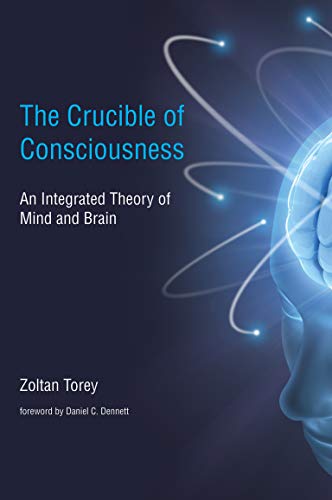
An interdisciplinary examination of the evolutionary breakthroughs that rendered the brain accessible to itself.In The Crucible of Consciousness, Zoltan Torey offers a theory of the mind and its central role in evolution. He traces the evolutionary breakthrough that rendered the brain accessible to itself and shows how the mind-boosted brain works. He identifies what it is that separates the human’s self-reflective consciousness from mere animal awareness, and he maps its neural and linguistic underpinnings. And he argues, controversially, that the neural technicalities of reflective awareness can be neither algorithmic nor spiritual—neither a computer nor a ghost in the machine. The human mind is unique; it is not only the epicenter of our knowledge but also the outer limit of our intellectual reach. Not to solve the riddle of the self-aware mind, writes Torey, goes against the evolutionary thrust that created it. Torey proposes a model that brings into a single focus all the elements that make up the puzzle: how the brain works, its functional components and their interactions; how language evolved and how syntax evolved out of the semantic substrate by way of neural transactions; and why the mind-endowed brain deceives itself with entelechy-type impressions. Torey first traces the language-linked emergence of the mind, the subsystem of the brain that enables it to be aware of itself. He then explores this system: how consciousness works, why it is not transparent to introspection, and what sense it makes in the context of evolution. The “consciousness revolution” and the integrative focus of neuroscience have made it possible to make concrete formerly mysterious ideas about the human mind. Torey’s model of the mind is the logical outcome of this, highlighting a coherent and meaningful role for a reflectively aware humanity.
User’s Reviews
Reviews from Amazon users which were colected at the time this book was published on the website:
⭐A great deal has been written on the subject of human consciousness. Historically philosophers have debated the question from almost every conceivable perspective. Many philosophers still today refer to issues of consciousness and free will as `the hard problem.’ In recent years though more and more substantive and weighty work has been written that supports the growing evidence: “Consciousness is a biological phenomenon. The concept of a dualistic, spiritual, separate plane of reality is a myth.” The most successful work on the problem in my own view has been coming from the field of neurology and not from contemporary philosophy (although I do enjoy Dennett’s books on the subject). Torey’s book, The Crucible of Consciousness, falls into this progressive category alongside the work of scientists such as Damasio and Le Doux.In this intense and well researched book Torey presents a unique and testable theory of consciousness. His thesis is that consciousness originates in the asymmetry between the right and left hemispheres of the human brain, which is the result of language acquisition. This theory is both interesting and plausible and should help to guide further research. At the same time, as one would expect, it raises a number of observations and questions. Perhaps mentioning just a few here will offer some insight into the challenges that the book raises. First and foremost Torey suggests that language is essential to consciousness. He therefore draws a distinction between animal awareness and conscious thought, but also between problem solving or even primitive tool use and reflective thinking. In some degree this view is consistent with scientific consensus, but not entirely so. Second, the acquisition of language by children and the process termed cross-lateralization of the brain by psycholinguists (which takes place during puberty) afford opportunities to test Torey’s theory. He includes a chapter on child acquisition of language but not on cross lateralization. According to Torey language evolution began with a protolanguage of a few nouns and verbs. However, consciousness requires the full package of language with qualifying words, abstract concepts and syntax in order to complete the structural asymmetry characteristic of human brains. As he explains the secondary evolution of language, though, it appears as a rather simple, almost automatic response. Yet archaeology suggests that the process took thousands of years (perhaps more than a million).There is one further area of interest that I feel is worth mentioning. Torey details a critique of those champions of artificial intelligence who wish to draw parallels between AI and human consciousness. Personally I side with Torey on this matter and not with Dennett (who has written a brief introduction for the book). As I describe in The Bridge, human thinking and computer operations are qualitatively different. A `conscious computer’ would need to reconcile a rather large gap. For computers to demonstrate consciousness would require a link between computing and a sense of self awareness. The computer would also need to acquire an instinct for survival and a capacity for thought via metaphor. Humans acquired these characteristics through millions of years of evolution. While I wouldn’t rule out the possibility of AI, it remains clear to me that these three characteristics are essential ingredients. And enhancing computers with these traits seems still to present quite a challenge.Although the author says at the outset that most of the book is accessible to the general reader, the text throughout is demanding. It is however richly rewarding and well worth the effort. I might quibble with some details, such as Torey’s use of the term `instinctual’ in discussing animal behaviour, but no comments would detract from the book’s unique perspective and valuable insights.David HillstromAuthor
⭐This is an important book for anyone interested in the origins of humankind – but particularly the nature of the human mind. As a mature student in the final stages of an MA in Philosophy frankly I am amazed that this book is not mandatory for every university course on the Philosophy of Mind. There are so many academic textbooks, journals and `learned’ articles on consciousness and the mind that regurgitate over and over the same tired ideas that have been around since Descartes’ `Cogito ergo sum’ almost 400 years ago. With each regurgitation the philosophical fog of confusion grows. For me Torey’s book blows away the fog – it has extraordinary explanatory power. The central thesis in the book rests on the asymmetrical roles played by the two hemispheres of the human brain. The way I interpret this is that, in effect, we have 2 brains or more precisely a brain (right hemisphere) and a meta-brain (a brain about a brain) (left hemisphere). The human mind is the integration of the brain and the meta-brain. The right hemisphere deals in high quality `percepts’ and is very tightly coupled to events in the external world. Lower quality copies of these percepts are passed to the left hemisphere through the corpus collosum. The left hemisphere is normally very loosely coupled to events in the external world and is free to manipulate these `lower’ quality percepts i.e. it is free to think and talk. (Of course, when circumstances require it the resources of the two hemispheres can be brought together to address a situation in the external world.) To get an understanding of the different quality of percepts handled in the two hemispheres consider (a) the mental image of a shade of blue when under direct visual observation with (b) the mental image of the same blue when it is only being thought of or spoken of. Or consider the mental image of the face of a friend under direct visual observation with the mental image of the friend when only being thought of.As I mentioned already Torey’s theory has extraordinary explanatory power. The `mysteries’ of human introspection, and `that we know that we know’ melt away. Similarly philosophical problems raised by issues like blindsight and sleepwalking simply disappear as does the phenomenon of our ability to drive safely through traffic while `daydreaming’ (and then being unable to remember anything that happened on the road over extended periods of time).Definitely a must read for anyone interested in human consciousness.
⭐
⭐
⭐
Keywords
Free Download The Crucible of Consciousness: An Integrated Theory of Mind and Brain in PDF format
The Crucible of Consciousness: An Integrated Theory of Mind and Brain PDF Free Download
Download The Crucible of Consciousness: An Integrated Theory of Mind and Brain 2009 PDF Free
The Crucible of Consciousness: An Integrated Theory of Mind and Brain 2009 PDF Free Download
Download The Crucible of Consciousness: An Integrated Theory of Mind and Brain PDF
Free Download Ebook The Crucible of Consciousness: An Integrated Theory of Mind and Brain