

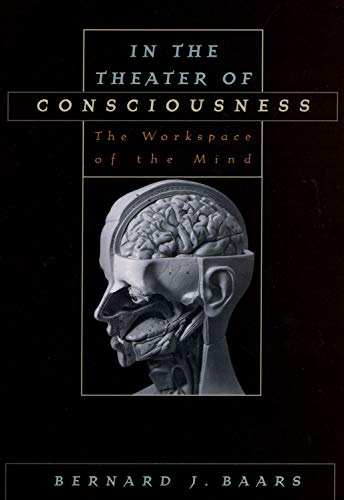
Ebook Info
- Published: 2001
- Number of pages: 210 pages
- Format: PDF
- File Size: 10.41 MB
- Authors: Bernard J. Baars
Description
Written by eminent psychologist Bernard J. Baars, this book brings us to the frontlines of the consciousness debate, offering the general reader a fascinating overview of how top scientists currently understand the processes underlying conscious experience. The study of conscious experience has seen remarkable strides in the last ten years, reflecting important technological breakthroughs and the enormous efforts of researchers in disciplines as varied as neuroscience, cognitive science, and philosophy. Scientists are just now beginning to find common ground in their understanding of consciousness, which may pave the way for a unified explanation of how and why we experience and understand the world around us. This book offers an invaluable introduction to the field, brilliantly weaving together the various theories that have emerged as scientists continue their quest to uncover the profound mysteries of the mind–and of human nature itself.
User’s Reviews
Editorial Reviews: Review “An impressive tour, centered around the question of what we might be able to discover scientifically regarding the role played by conscious experience in the functioning of the mind.”–Brian D. Josephson, Nobel Laureate in Physics About the Author Bernard J. Baars is at the Wright Institute, in Berkeley, California. He is co-editor of the journal Consciousness and Cognition and author of A Cognitive Theory of Consciousness, of which Daniel C. Dennett wrote, “For those who want to join the race to model consciousness, this is the starting line.”
Reviews from Amazon users which were colected at the time this book was published on the website:
⭐POINT OF VIEWMy targets are artificial intelligent systems which can learn like children do. Thus I am always interested in the findings of other disciplines like Psychology, Neurosciences, Linguistics etc. who dig out some interesting structures ‘behind’ the observable phenomena which appear as the underlying ‘machinery’ for all that observable behavior. Books who overcome the abundant details of a discipline and — moreover — can talk in a language, which is understandable beyond the borders of the own discipline are rare. ‘In The Theater of Consciousness’ is such a rare book.LASTING ACTUALITYAlthough the book has been written in 1997, about 14 years ago, it hasn’t lost too much of it’s importance. It’s main power is the revelation of a general structure behind the great variety of baffling phenomena accessible to our mind through our consciousness of being there, with our body, in a world. These findings have been possible on account of more then 20 years of intensive research in the field of (cognitive neurosciences. And, indeed, I became aware of this book through many recent papers in the realm of computational intelligence citing this book as an important paradigm which can be used as a guideline for the construction of an artificial consciousness.RETURN OF A PHENOMENONThere was a time when psychology as ‘behavioral psychology (behaviorism)’ dispelled the subjective dimension of human experience and tried to explain human behavior without relaying on ‘consciousness’ and closely related phenomena. This was a fruitful exercise to understand better the limits of such an approach and to learn what is needed, if one tries to explain cognitive properties like language, thinking, planning in a more appropriate theory. Parallel contributed other disciplines like evolutionary biology, ethology, and the neurosciences new empirical findings which underlined more and more the fact, that the evolution of the brain structures is responsible for the increasing complexity of human behavior. Especially emerged a new acceptance that the so-called ‘consciousness’ seems to be one of the major biological adaptations to improve a flexible, adaptive behavior in a complex changing environment. And at that point of the story comes the book of Bernhard J.Baars and presents a good readable, science-based view of the human consciousness.BEHAVIOR, PHENOMENA, NEURONSAlthough it is not possible to give a direct empirical account of the content of someone’s consciousness (the so-called ‘phenomena’ ), Baars takes a clear stand for these kind of data because it is in praxis always sufficiently possible to get some descriptions of phenomena which can practically be distinguished and repeated. Thus, one can correlate behavioral data with phenomenal data. Besides this one can correlate observable behavior to some degree with the behavior of neuronal assemblies. With these methodological differentiations it is possible for Baars to develop a model of the consciousness as a kind of an ‘interface’ (called by Baars ‘publicity organ’,p.7) between the external environment (with the behavior) as well as the brain and the body as the ‘internal’ environment.THE THEATER METAPHERTo bring all the different phenomena together in one coherent ‘view’ Baars uses the ‘metapher’ of the consciousness as a ‘stage’ and the whole body is then the ‘theater’ where the outer and inner senses as well as the ideas are the ‘players’ which want to act on the stage, and behind the stage is the ‘unconscious’ audience (embracing many different processes) which perceives the events on the stage and process them further with feedback loops. This ‘picture’ is helpful It is a simple exercise to turn it in an ordinary mathematical structure — like in physics — to present a full-fledged mathematical theory of this view of consciousness).LIMITED CAPACITYThere is one property of the consciousness which is most important: although the consciousness has access to many parts of the brain, it can in reality always process only a very small fraction of all available data.CONSCIOUS – UNCONSCIOUSThose players which can appear within consciousness are ‘conscious’, everything else is ‘unconscious’. Because the overwhelming part of the brain and the surrounding body is ‘unconscious’ it follows that a human person in the ‘light’ of its conscious processes always sees only a small fraction of the body and the world ‘measured’ by the body. If parts of the unconscious structures (parts of the body, parts of the brain) will be changed in some sense then this can only perceived by the consciousness if this has some effects which can become conscious. If one replaces parts of the brain — or of the body — in a ‘functionally equivalent’ manner then the consciousness will not be able to perceive this (strictly speaking (from the point of consciousness): if all parts of our body (including the brain) would be replaced by artificial components which would be ‘functionally equivalent’ then the consciousness would not be able to detect these changes).CONTEXT – IDENTITYIn this sense Baars calls everything outside of the consciousness, which has causal influence of the stream of phenomena, simply the ‘context’ of the consciousness. The context serves as a kind of framework which induces the profile of the ‘self’. Changes in the structure of the self can have an impact on the ‘psychological structure’ of a person, can cause ’emotional disturbances’, can induce multiple personalities, and much more.READ YOURSELFMy short description can by no way give an adequate impression of this wonderful book. I enjoyed it a lot. Perhaps it will do the same with you.
⭐I became interested in “philosophy of mind” several years ago and have since read a variety of books dealing with the mind-body-consciousness problem. “In The Theater of Consciousness” was my first read from the field of cognitive psychology. And a good read it was. It provides a concise yet comprehensive review of what can be said about human consciousness from the empirical perspective. This book is ten years old now and obviously misses a decade of new research. But I suspect that most of what Bernard Baars presents is still relevant, and provides a good foundation for what cognitive psychology is doing these days. It also helps to enhance one’s understanding of what the neuroscientists and artificial intelligence people are up to.In evaluating a technical book intended for a lay audience, the author’s attitude towards his or her readership is very important to me. Dr. Baars displays a very considerate attitude. He provides a lot of drawings, conceptual diagrams, try-it-yourself exercises, and even a few brain scan photos (quite impressive for 1997; were the book to be re-issued today, it could include a lot more of these, given the progress made in neuro-scanning since then). In the Epilogue, Dr. Baars expresses his gratitude “to the reader who has come this far on our shared journey”. My goodness, an academic doyen who actually thanks the layman for reading his book! That’s quite rare (and quite refreshing).Dr. Baars’ “theater spotlight” and “global workspace” metaphors for consciousness and its relationship to unconscious processes (and even to neuron-level workings) are indeed very useful and thought-provoking. This book will indeed help you to understand why your mind does what it does. For example, the section on “attention” as the funnel of consciousness and “absorption” as the mind’s focus upon a subject absorbing all of its limited capacity to be conscious, helps to explain how we often “suspend our disbelief” when watching TV or a movie. It also helps to explain how commercials and sales pitches work – if someone wants to sell you something and they can absorb all of your attention through entertainment, there’s not enough room left for your skeptical facilities to operate. So you buy, and only later on does your critical/analytical component get back “on stage” within your conscious mind – “gee, I wonder if that was really worth the money?” (But then the ego-rationalization “actor” appears, saying “of course it was worth it, we don’t make mistakes, it’s gonna be great”).Another important concept is “mental contexts”. Dr. Baars gives a much better explanation than I can, but in a nutshell, mental contexts are sub-conscious tendencies or “primers” that shape one’s interpretations of sensory inputs. They basically help you decide just what it is that you are seeing or hearing or smelling or feeling or reading. They are changeable — think about how you interpret the word “flies” in the lines “time flies like an arrow” and “fruit flies like a banana”. Time and fruit change the contexts here. Contexts can be applied on a higher level too, and help to explain how great intellectual discoveries come about. E.g., Einstein managed to derive and apply a unique context regarding what was widely known about space, time, motion and gravity. As a result, relativity was born.This book and its like do not close the “explanatory gap” regarding the nature of consciousness. That will require a major, high-level “context shift” akin to what Einstein did with physics. But Dr. Baars does provide a good summary of what will certainly need to be accounted for if and when that context-shift does arise. In the mean time, I feel obliged to return Dr. Baar’s gratitude for reading his book. Thank you, Dr. Baars, for writing a very good summary of what cognitive psychology offers to the field of consciousness studies. Your book clearly does help the non-specialist to understand what cognitive researchers are up to, and indeed to help the layman better understand her or his own conscious mind. Your book was very much worth the money and time that I invested into it.
⭐I think it is fair to say that Baar’s global workspace model is the most influential cognitive model of consciousness out there. The theoretical work is simply outstanding. Few would today contest the main idea behind the model -that the function of consciousness is to broadcast information to separate functional modules all arround the brain-. Some recent papers by Baars, available on line, summarize all the emirical evidence that has appeared the last decade in favour of the model. Baars is currently at the neurosciences institute, headed by Gerald Edelman, and it is no surprise his latest views seem to include reentrant connectivity and Edelman and Tononis concept of complexity. However, although this is clearly a step forward, it is far from being a THE answer consciousness studies is looking for. Baars himself sees a gap between the cognitive model and the neurophysiological machanisms involved. He has presented the ERTAS model, but it is not clear how it has stood to recent neuroscience. I’m not saying i’ts been falsified, but it has been deprived of supremacy. However, the global workspace is still a brilliant contribution to the study of consciousness. Some philosophical nuances are still roaming, however. There is no qualia in the theather, and it is not clear how the audience could be conscious..how would they enjoy the show?.
⭐Very short, easy read that covers the global workspace model in broad strokes. While this sort of book can easily become dated, Baars has the advantage in that his workspace model seems to be a very accurate cognitive description of the brain; learning about the framework he presents is still quite valuable.
⭐I felt like the book conveyed the principles of consciousness effectively, and that the author engages the reader to maintain interest and attention.
Keywords
Free Download In the Theater of Consciousness: The Workspace of the Mind in PDF format
In the Theater of Consciousness: The Workspace of the Mind PDF Free Download
Download In the Theater of Consciousness: The Workspace of the Mind 2001 PDF Free
In the Theater of Consciousness: The Workspace of the Mind 2001 PDF Free Download
Download In the Theater of Consciousness: The Workspace of the Mind PDF
Free Download Ebook In the Theater of Consciousness: The Workspace of the Mind