

Ebook Info
- Published: 2007
- Number of pages: 246 pages
- Format: PDF
- File Size: 81.35 MB
- Authors: Alex Vilenkin
Description
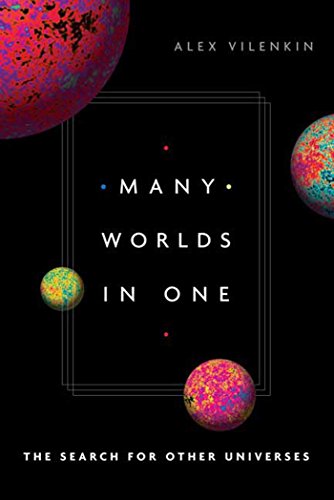
A Leading Figure in the Development of the New Cosmology Explains What It All MeansAmong his peers, Alex Vilenkin is regarded as one of the most imaginative and creative cosmologists of our time. His contributions to our current understanding of the universe include a number of novel ideas, two of which—eternal cosmic inflation and the quantum creation of the universe from nothing—have provided a scientific foundation for the possible existence of multiple universes. With this book—his first for the general reader—Vilenkin joins another select group: the handful of first-rank scientists who are equally adept at explaining their work to nonspecialists. With engaging, well-paced storytelling, a droll sense of humor, and a generous sprinkling of helpful cartoons, he conjures up a bizarre and fascinating new worldview that—to paraphrase Niels Bohr—just might be crazy enough to be true.
User’s Reviews
Reviews from Amazon users which were colected at the time this book was published on the website:
⭐Alex Vilenkin is a real physicist and he’s been at the cutting edge of cosmology research so it’s no surprise that he has a solid grip on the theoretical underpinnings and major issues and problems facing modern cosmology. What’s unexpected is that he is such a fluid and comprehensible author. Dr. Vilenkin writes beautifully – with humor, vision, impeccable organization – and great mercy for the layman. He spares us the math, but gives us a real mental picture of the issues at play. This is a great review and explanation of the modern scientific picture of the creation of the universe.And what a picture it is. Exotic states of vacuum engendering faster than light expansion; infinities contained in bubbles inside finite spaces; multiverses with endless variations in the laws of physics, most inhospitable to life. We see the history of the subject from Copernicus, Galileo, Kepler, and Newton up through Einstein and into the modern period. We get a great view of how Guth’s expansion theory resolves a host of problems and suggests, tantalizing, the nature of the stuff that gives birth to our universe (higher energy false vacuums). Much of the resulting weirdness comes about as consequences contingent on expansion. There’s a great explication of the cosmological constant and how the recent observational proof of it shatters particle physics independence from the anthropic principle (the notion that our presence here as observers is evidence that must be used to help gauge odds in a scenario of multiverses in which only some outcomes are hospitable to life such as ourselves. I find myself thrilled by these ideas and enthralled that Vilenkin gives me the impression that I’m really following along.I’d give it an unqualified rave except that I have a major problem with his central thesis that a consequence of our island universe’s infinite size is an infinity of parallel worlds and an infinity of identical earths with identical “you”s doing the same things. It’s poetic, and certainly shocking and gets the point across that infinity is a really weird concept with very strange consequences. However, his assumption that the quantum fudge factor necessary to his proof of truly duplicate universes can give rise to a truly duplicate earth with duplicate people betrays an empiricist fallacy of particle physics’ reductionism: the same particles will not build the same individual life forms because emergent complexity makes liberal use of chaotic recursive phenomena. It’s the genotype/phenotype divergence. Even if the all the particles end up in the same places (by pure chance alone like monkeys typing Shakespeare, since there’s an infinity of universes, some will bound to have all the particles in the same places) the way these particles code for complex emergent phenomena like life, brains and social structures makes use of chaos’ sensitive dependence on initial conditions to yield divergence on the quantum fudge factors alone – in direct contradiction to Dr. Vilenkin’s central conclusion.So – I’m totally down with “Many Worlds in One” as the best explication I’ve encountered on the history and evolution of the ideas and theories of particle physics as it relates to cosmology. But I’m completely at odds with Vilenkin’s central wowser that there’s an infinity of each of us in a weird cosmic hall of mirrors because it’s an inescapable consequence of infinity. I think that’s just too simplistic and reductionist a reading of how particles combine to manifest the complex emergent phenomena all the way up from molecules to life forms and higher levels of reality. The way Vilenkin blithely ignores emergent complexity reflects physicists bias that particles are an ultimate reality completely encapsulating all higher order reality in and of themselves. It’s a pretty picture; but it just isn’t that easy. Maybe my insistence that the infinities involved in chaos and emergence trump the infinity of universes reflects my own cowardice and bias – but I couldn’t help being disappointed that Vilenkin didn’t seem to have recognized that issue with that facet of his really cool theory. Ultimately, my issue here is really just a quibble since that aspect is just one in a long series of amazing ideas that get presented here. On the whole, this book is the most stimulating thing you can expose yourself to from a philosophical, spiritual, and intellectual perspective. I might dock it a point because I don’t like the pop aspect of the central thesis, but I’d highly recommend it to anyone at all for all the rest of it.A special note on the Kindle edition: footnotes are rendered with direct links, but end notes are not (forcing you to jump locations manually – annoyingly – if you want to read the end notes). The index is totally lost because of the relative locations – there are no listed page numbers, no live links, no location numbers – nothing – on the index. So if you want to use the index – buy the printed book because the Kindle version has no functioning index. The Kindle edition also has a some spelling errors from the scan, but the pictures are OK and it all works fine otherwise.Follow-up 1/28/09:Time to eat some crow. I had a nice long conversation about Mr. Vilenkin’s theory via e-mail with Mr. Vilenkin himself and he very patiently worked the idea through with me and I am forced to admit that if there are an infinite number of O-regions, then there must be duplicate Earths. All that quantum weirdness, chaos and self organizing complexity just ups the number of possible histories each particle can take. But in a universe of finite age and finite size the number of those particle histories is certainly vast but unavoidably finite, just like Mr. Vilenkin says in the book. All the ranting I just did in my review about ‘physicist’s arrogance about particles constituting an ultimate reality’ really was just intellectual cowardice – just like I hinted it might be.Our conversation isn’t quite finished yet. I’m still clinginging to a shred of hope – that the central mechanism that gives our island universe an infinite number of O-regions might not give us an infinite number of particles to populate those regions at any particular moment in time – but only trends towards infinity over infinite time. This particular objection has nothing in common with the failed avenue of attack I make in my original review. I’ll wait to hear more about that.The real upshot here is that this book is incredibly stimulating, mind bending, and mind expanding. If you really read this, you’ll never be the same. Highly recommended.Final update – I have nowhere to hide with Dr. Vilenkin; I lack the background to either full understand or debate his points about the equation of infinite time on an island universe viewed from the outside equating into infinite volume (and infinite matter present simultaneously). I’m going to have do a lot more studying. Meanwhile – definitely read this book. There’s nothing else out there like it.
⭐I always put five stars to a book that fulfill my expectations. In this case I finished the reading some fifteen minutes ago and I’m here with a kind of a torch whose fire I want to propagate through you. But the idea is not to spread the fire so as to spread the light. And this is because this book has been written to enhance the knowledge of the common people (like me) who asks deep questions and wants to understand with simple (but not trivial) answers.Well, the issue begins with the problem of knowing how this universe we live in came to be so adjusted and fine-tuned as to permit that guys like us could observe it. When I say fine-tuned I talk about the constants that rule and control the universe. You can read “Just Six Numbers” by Martin Rees and be surprised by the incredible precision of the cosmic clock. It is hard to believe that everything was just casual and easy to attribute it to somebody or something that made it.Well, Alex Vilenkin tells you what the answer to that mystery is by now. In this vein he is indebted to Alan Guth and his idea about an inflationary universe to explain how we get to the present from a very blurred past. But together with Guth there is a Pleiade of names that come and go through the book. All of them contribute to the construction of the perspective that Vilenkin defends. And the perspective has to do with the solution to the problem posed by the six numbers of Martin Rees and their astonishing precision. But not only that. It also gives you the notion that the universe could have been created from nothing (chapter 17). In penetrating Guth ideas through his proper insights on the topic, Vilenkin shows you the possibilities and the strength of the theory.At last, by following that line of thinking we stop to see just one universe with an incredible fine-tuning like ours, to begin to “see” several others with the same laws but different outputs. Some that are suitable for the kind of life we see and some others that not. Vilenkin take your hand and guide you all the way from the beginning of the cosmos to the end. In so doing, he uses his sympathy in fair equilibrium with his knowledge as a professor of physics. The chapters are short but highly informative. Every speculation is followed by a discussion on the topic. He is always telling you what to believe as a fact and what it is just an idea open to corroboration.Finally, the subject is clear and proposes a new outlook to the cosmos. It opens the solution to the limits of the previous vision that had to carry the effect of a fine-tuning universe and in doing that left behind many open questions. This recent perspective proposes new and very shocking possibilities. I’m not exaggerating. This book, with 222 pages, including notes, demands two or three days of reading. This is meritorious and constitutes a feat which is good for Vilenkin and, mainly, good for us.
⭐First let me say that I concur with other reviewers that Vilenkin writes with a voice that is seldom seen from scientists. Its easy and approachable. Vilenkin does well explaining how modern cosmology got where it is today and the evidence that lead us to our present scientific knowledge but alas as a few others reviewers have commented before when he gets to his central thesis he is nowhere as objective. Perhaps that is understandable but it was here that I missed the rigour of works that are not as approachable.I found the first half therefore stellar but the second half as he dives into his theory less so. The problem being that in some cases as he gets into very speculative areas he writes with the same level of matter of fact as when he is recounting the history of cosmolgy when the subject matter is most certainly not as certain. Some places he just either overstates his case or fails to lay down sufficient evidence.The speculative nature of the second half is by no means just my unique perspective as Discover Magazines Review mentions the same points, I was surprised to see some of the main issues tht jumped out at me being precisely what DM’s reviewers had an issue with (and many other commenters)[…]I am sure some might disagree but it seems to me that there is an abundance of overstatements and generalizations being promoted out of cosmolgy books today and unfortunately less real observational backed up science. There even seems to be an argument that somehow thought experiments can get us close enough to fundamental realities so we might not even absolutely need sound observational science to make wide sweeping conclusions. Quite a bit of that is in this book and it brought it down substantially in my eyes.
⭐This is the book for those that are sufficiently familiar with the general ideas of physics and cosmology, at the popular level, and don’t want to wade through the obligatory two hundred or so pages of history, and cut straight to a concise presentation of the latest ideas and developments. If you know your Big Bang and Inflation, and why it’s needed, then you are ready for this book. The information is delivered so rapidly and efficiently that it took a fraction of the time to read as Lisa Randell’s
⭐Warped Passages: Unravelling the Universe’s Hidden Dimensions (Penguin Press Science)
⭐but left me with far fewer questions at the end. Other reviews go into the content but the broad track is inflation of the false vacuum as something that is continuously ongoing, forming endless bubbles of true vacuum, constituting the multiverse conjectured in anthropic thinking, and how theory is converging on such a vision.I was particularly gratified to come across the notion, in the closing chapters, of the idea that the laws of physics alone could generate a universe from nothing, and the notion that any universe/multiverse that mathematics says can exist, must and does exist. This is a notion I’ve had from philosophical considerations, replacing the ethical requirement for something out of nothing of neoplatonism with the more convincing logical requiremenent out of the laws of mathematics and my resulting notion of Maths as God, or the MathGod as I call it.
⭐Conceptually brilliant and dealing with some truly mind-stretching ideas. All written clearly, logically and enjoyably. Highly recommended.Update: Please don’t be put off by suggestions that you need to have a strong science or maths background to make sense of this book. If you are drawn to the concepts that this book discusses then you have most likely come across such concepts previously and are now seeking some answers and explanations. If that is how you arrived at this point then this book is for you.
⭐A fascinating book on leading-edge cosmological thinking by one of the world experts. It’s not in technical language and it’s non-mathematical.
⭐There are not many popular science books that open up an entirely new world-view, one that is both fascinating and irritating. Although there are lots of good books about cosmology, quantum physics, and the (possible) beginning and end of the universe, this one is unique: It doesn’t simply repeat the well-known facts and fictions, but explains the dramatic developments in theoretical cosmology during the last two decades, which are not covered elsewhere (or only briefly and often in a misleading way), including some of their eminent philosophical implications.Alex Vilenkin, one of the leading and most creative researchers of our time, delivers first-hand insights from his own work and that of his friends and colleagues (altogether a veritable Who Is Who in cosmology: Alan Guth, Stephen Hawking, Andrei Linde, Alexei Starobinsky, Paul Steinhardt, Steven Weinberg and many more).Vilenkins book covers topics like the scenario of cosmic inflation (an exponential expansion of space), the origin of matter and the seeds for galaxy formation at the end of inflation, our observable universe as a tiny part of a bigger universe which is only one of a myriad of other island universes within a still inflating “false vacuum”, the possibility of different laws and constants of nature ruling those other universes, the disturbing implication of REAL “parallel universes” with all possible alternate histories and also infinite numbers of fully identical “copies” of each of us, the strange issue of the cosmological constant and its “anthropic” (i.e. life-friendly) value, the anthropic principle as observational selection, the principle of mediocrity as a new tool for cosmological predictions, the possibility of an origin of the whole cosmos “out of nothing” and without a cause due to quantum tunneling, and the danger of a “vacuum decay” in the far future which would destroy our observable universe completely.This splendid book is well understandable for laymen and also highly recommendable for more advanced readers. It is concise, very informative but not overloaded, challenging and thought-provoking, it is up-to-date, witty, has nice anecdotes, excellent illustrations and cartoons. I enjoyed reading every single page.
⭐In spite of the fact that a few concepts needed to be researched and defined outside of this reading, the book flows in a rational and organized manner. The concepts and theories themselves are truly amazing !! The idea that absolutely NOTHING existed prior to the Big Bang other than the an ever-present consciousness of thought, that not only is the perimeter of reality is expanding at a rate much higher than the speed of light but that an infinite number of universes are being created in the process, and, in addition to this, we may have parallel worlds existing because of quantum principles,….. simply takes your breath away. While the mathemaatical proofs of these theories are beyond the complexity of this book, the reader can realize that these concepts have a high degree of validity without the proofs.This is the perfect book to pick up and reread when all of the mundane and trivial things of life seem to overwhelm us. No matter how important these repressive events feel they truly are completely insignificant when contrasted to eternal reality and all that entails.
Keywords
Free Download Many Worlds in One: The Search for Other Universes 1st Edition in PDF format
Many Worlds in One: The Search for Other Universes 1st Edition PDF Free Download
Download Many Worlds in One: The Search for Other Universes 1st Edition 2007 PDF Free
Many Worlds in One: The Search for Other Universes 1st Edition 2007 PDF Free Download
Download Many Worlds in One: The Search for Other Universes 1st Edition PDF
Free Download Ebook Many Worlds in One: The Search for Other Universes 1st Edition