

Ebook Info
- Published: 1999
- Number of pages: 144 pages
- Format: PDF
- File Size: 22.40 MB
- Authors: Freeman J. Dyson
Description
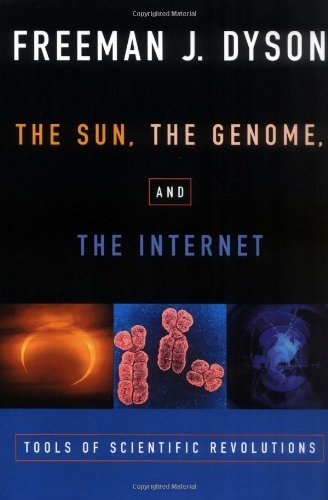
In this visionary look into the future, Freeman Dyson argues that technological changes fundamentally alter our ethical and social arrangements and that three rapidly advancing new technologies–solar energy, genetic engineering, and world-wide communication–together have the potential to create a more equal distribution of the world’s wealth. Dyson begins by rejecting the idea that scientific revolutions are primarily concept driven. He shows rather that new tools are more often the sparks that ignite scientific discovery. Such tool-driven revolutions have profound social consequences–the invention of the telescope turning the Medieval world view upside down, the widespread use of household appliances in the 1950s replacing servants, to cite just two examples. In looking ahead, Dyson suggests that solar energy, genetics, and the Internet will have similarly transformative effects, with the potential to produce a more just and equitable society. Solar power could bring electricity to even the poorest, most remote areas of third world nations, allowing everyone access to the vast stores of information on the Internet and effectively ending the cultural isolation of the poorest countries. Similarly, breakthroughs in genetics may well enable us to give our children healthier lives and grow more efficient crops, thus restoring the economic and human vitality of village cultures devalued and dislocated by the global market. Written with passionate conviction about the ethical uses of science, The Sun, the Genome, and the Internet is both a brilliant reinterpretation of the scientific process and a challenge to use new technologies to close, rather than widen, the gap between rich and poor.
User’s Reviews
Reviews from Amazon users which were colected at the time this book was published on the website:
⭐In this book Freeman Dyson contends that the driving force of scientific revolutions is more often new tools rather than new concepts. A tool-biased view of the history of physics was written by the experimental physicist Peter Galison, while a concept-biased analysis was made by the theoretical physicist Thomas Kuhn in his famous book. Being a theorist, though, Dyson considers that Galison’s view of science more pleasing, and predicts that three new technologies — solar energy, genetic engineering and the Internet — will be the most important things in the twenty-first century.Dyson’s books have always fascinated me by his wide-ranging intelligence, great insight, keen analysis and convincing arguments based on concrete examples. “The Sun, the Genome, the Internet” is not an exception. An additional agreeable character of his writing consists in the fact that he attaches importance to social justice realizable by technology. He expects that the gap between the rich and the poor would be narrowed by the ethical application of science.In the final chapters of the book, Dyson discusses the future of the society under the inexorable growth of techniques suggested by the two big surprises that happened in 1997. These surprises are the cloning of Dolly and the defeat of the world chess champion by the IBM chess-playing program Deep Blue. The first of the surprises makes Dyson think about “reprogenetics,” which is a possible future technology offering the parent the opportunity to improve the quality of life of the child by removing bad genes and by inserting advantageous ones. We cannot read Dyson’s discussion about this possibility without reminding ourselves of the science fiction “Brave New World” by Aldous Huxley.
⭐Dyson fails to reach a high scientific level since hes always regretting that there is not enough of what he thinks is social justice. If 20 percent of people do 80 percent of the work you cant blame them for looking for more. more money means i have a better life. So please Dyson more facts less guilt. And less pipedreams. Solar is not yet the answer though nuclear is. All fear of nuclear tech neglects facts like steam killing an average od 3 people a day when it first came into use. Temper your fear and hope with a little experience.
⭐Very interesting little book for anyone interested in the future of scientific investigations. It is even better than other books by Freeman Dyson because, this time, the author has spared us of his religious inclinations.
⭐I found it to be a refreshing approach to the future. Dyson has a video that I would recommend before reading the book; it puts things in perspective. I liked the up beat approach to the, our, future. Interesting and thought provoking. Will
⭐Meh
⭐Dated, but only in the sense that the technologies Dyson foresaw a great need for development 20 years ago have in many cases become today’s state of the art technologies.
⭐Perfect.
⭐Rating: “A/A+” — another excellent essay collection by anoutstanding scientist-writer._The Sun, the Genome, and the Internet_ covers scientificrevolutions, technology & social justice, and the exploration &colonization of space: familiar Dyson topics all, and delivered withhis usual grace. The three items in the title are Dyson’s hope forgenerating wealth in the world’s poor villages: the sun for cheapsolar power, the Net to end rural isolation, and genetic engineeringfor better crop plants. For example, he presents the hope ofengineering “trees that convert sunlight to liquid fuel and deliverthe fuel directly …to underground pipelines.” A neat solution todeclining oil reserves, if it works. Dyson cheerfully admits hisrecord as a prophet is mixed, but “it is better to be wrong than to bevague.”Fresh and unexpected insights are a frequent pleasure in this(and other) Dyson books. For instance, he describes hismother and aunts, prosperous British matrons all, who, in theinterval between the World Wars, accomplished such things asopening a birth-control clinic, managing a large hospital, winningan Olympic medal, and pioneering aviation in Africa — “it wasconsidered normal at the time for middle-class women to dosomething spectacular.” They were able to do this only with thesupport of a large servant class. The introduction of labor-savingappliances helped to emancipate the servants, but left middle-classwomen less free than before, a general pattern, says Dyson: “theburdens of equalization fall disproportionately on women.”Dyson is a lifelong space enthusiast, though things haven’t gonethat well lately for space fans: “we look at the bewilderedcosmonauts struggling to survive in the Mir space station.Obviously they are not going anywhere except, if they are lucky,down.” But in the long term, prospects are brighter, and awaitfinding a cheap way up and out of the gravity well (anotherenduring Dyson insight). He reports recent successful tests ofa laser-launcher and a “ram accelerator”, the latter a proposed 750-foot gas-gun — and a direct descendent of Jules Verne’s cannon-launched spacecraft in “From the Earth to the Moon”(1865). As inall cheap launch methods, the trick is to keep the fuel on theground, not in the spacecraft. With cheap spacefight, people willspread out into the solar system and beyond. Why? “Because it isthere” — some folks just have itchy feet. Others will belong tounpopular religions, or be on the run, or… any of the countlessother things that have always motivated emigrants.Dyson, unusually for a theoretician, has always been more “tinkerthan thinker”. He cites Thomas Kuhn’s classic _Structure ofScientific Revolutions_ (1962, rev. ed. 1970) as an example of afellow-physicist with the opposite bent, emphasizing ideas overthings. Of course, both are important; but some of Kuhn’s followersput forward the idea that science is about power struggles, not newideas. Dyson once upbraided Kuhn about this at a conference. Kuhnreacted angrily: “One thing you have to understand. I am not aKuhnian!”Freeman Dyson is my favorite scientist-writer. I know of no oneelse who combines his clarity of thought, graceful use of language,big ideas expressed modestly, and sense of history. If you haven’t yetread Dyson, _The Sun, the Genome, and the Internet_ would be afine place to start. Highly recommended. He is an emeritus professorat the Institute for Advanced Study, Princeton University and the author of many other books.I would particularly recommend _Disturbing the Universe_ (1979)and _Infinite in All Directions_ (1989), both among the very bestbooks ever written about science and its place in history, publicpolicy, and the exploration of space…Review copyright 1999 Peter D. Tillman[…]
⭐Fully Satisfied
⭐Much of the material here has been covered in Dyson’s other books, and there is plenty of filler. One mildly interesting aspect of this book is that Dyson revises some of his earlier predictions for scientific innovation in the near future and offers more modest proposals in their place.
⭐Professor Freeman Dyson is a great visionary. He shows how much there is to do in the world, the scope of human evolution.
⭐Livre facile à lire sur les découvertes successives en physique et mathématiques plus ou moins du 19ème au 21ème siècle, leurs applications présentes et leurs possibles évolutions dans le futur. Récits des découvertes avant et depuis le big bang, vision des physiciens par opposition à celle des mathématiciens, comment ils sont complémentaires etc.. Ouvrage clair, honnête et sans a priori, réaliste et tendant au développement humaniste des sciences. A recommander à tout individu intéressé par ce que pourrait devenir le monde futur proposé par des individus sains d’esprit.
⭐
⭐A bit outdated but still an interesting reading
Keywords
Free Download The Sun, The Genome, and The Internet: Tools of Scientific Revolutions (New York Public Library Lectures in Humanities) 1st Edition in PDF format
The Sun, The Genome, and The Internet: Tools of Scientific Revolutions (New York Public Library Lectures in Humanities) 1st Edition PDF Free Download
Download The Sun, The Genome, and The Internet: Tools of Scientific Revolutions (New York Public Library Lectures in Humanities) 1st Edition 1999 PDF Free
The Sun, The Genome, and The Internet: Tools of Scientific Revolutions (New York Public Library Lectures in Humanities) 1st Edition 1999 PDF Free Download
Download The Sun, The Genome, and The Internet: Tools of Scientific Revolutions (New York Public Library Lectures in Humanities) 1st Edition PDF
Free Download Ebook The Sun, The Genome, and The Internet: Tools of Scientific Revolutions (New York Public Library Lectures in Humanities) 1st Edition