

Ebook Info
- Published: 2014
- Number of pages: 538 pages
- Format: PDF
- File Size: 5.81 MB
- Authors: Robert E Knapp
Description
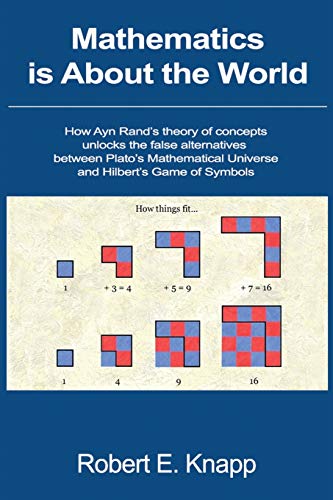
What is mathematics about? Is there a mathematical universe glimpsed by a mathematical intuition? Or is mathematics an arbitrary game of symbols, with no inherent meaning, that somehow finds application to life on earth? Robert Knapp holds, on the contrary, that mathematics is about the world. His book develops and applies its alternative viewpoint, first, to elementary geometry and the number system and, then, to more advanced topics, such as topology and group representations. Its theme is that mathematics, however abstract, arises from and is shaped by requirements of indirect measurement. Eratosthenes, in 200 BC, demonstrated the power of indirect measurement when he estimated the circumference of the earth by measuring a shadow at noon, in Alexandria, on the day of the summer solstice. Establishing geometric relationships, solving equations, finding approximations, and, generally, discovering quantitative relationships are tools of indirect measurement: They are the core of mathematics, the drivers of its development, and the heart of its power to enhance our lives.
User’s Reviews
Reviews from Amazon users which were colected at the time this book was published on the website:
⭐I much enjoyed reading this book. Knapp gives his view of mathematics being about the world. Mathematics is man’s quantitative understanding of the world. Our understanding begins with looking at the world and making our concepts conform to the world. These concepts are derived or abstracted from reality and refer to reality. Knapp criticizes the Platonic and Kant-inspired alternatives. Plato viewed mathematics as existing in another “perfect” world, timeless and unchanging, with real world entities and attributes being an inferior copy of the “perfect” world. The Kantian approach is subtly different yet similar. For it mathematical ideas exist in an idealized “noumenal” world that we can’t help from trying to impose upon the phenomenal world of experience. On either view, reality – the world of experience — is too vague, fleeting, and complicated for us to deal with except in a contrived way.“Form triumphs over substance. Relationships among ideas trump and replace any relationships to reality. Like Kant’s phenomenological world, the only world that matters, in this view, is one we construct ourselves.”Prior to Kant, castles in the air started in the sky. But a Kantian castle in the air generally *appears* to start on the ground. Then, like an Indian rope trick, the connection to the ground is removed after the castle has been built” (p. 268).“When one, as a concept of method, uses numbers to identify relationships in the world, one regards numbers as a means of awareness. But when one constructs numbers as a non-referential object, one cuts all ties to the world and treats an idea in one’s head as a self-sufficient object of awareness, an object with no reference to anything external” (p. 268).When we approximate, our math approximates reality, not the reverse. The accuracy of an approximation is a matter of precision, which is a key concept.Knapp guides the reader on a journey of the admirable achievement Euclid’s Elements. He points to differences between it and modern geometry enabled by the achievements of Descartes, Newton, Cauchy, and other renowned mathematicians.The second part of the book is more advanced, dealing with set theory, matrices, vector spaces, and symmetry. It might be a difficult read for many readers without the mathematical background for it.If Amazon allowed it, I would rate the book 4.5 stars for what it lacks. Knapp barely mentions arithmetic and counting. I believe that more about arithmetic would *strengthen* his thesis that mathematics is about the world. The positive integers used for counting (and zero) form the foundation for the real numbers. Understanding addition and subtraction of fractions call upon the important concepts of unit and transformation, which he uses extensively for different topics – measuring and vector spaces.Knapp’s focus is mostly on geometry and measurement. He defines mathematics as the science of measurement. I believe that is a big part but not the whole. I suggest instead the science of numbers or quantity.
⭐A revolutionary work. It argues for an Aristotelian and Objectivist understanding of mathematics, when mathematics is so largely Platonist. For instance, Knapp says that the object of the mathematical concept of “triangle” is . . . the real things in the real world, the world in front of our eyes, not some “ideal” triangle existing in “a mathematical space.”How can real shapes be triangles, you object, when they have imperfections? Borrowing from Ayn Rand, he advocates contextual precision. A measurement’s precision is a matter of the *standard* used. If the standard is a ruler graduated only in inches, and the human visual system, the precision standard is plus or minus about 1/2 an inch. You can’t, using your eyes, be more off than that (in my view) because it is easy to say when the end of the length being measured is: closer to one inch mark than another or approximately in the middle. So the statement “This line is between 5 and 6 inches long” is precise by that standard. 100%, perfectly, absolutely precise. It is not approximate. (That measurement would be approximate if you only eyeballed it, rather than applying a ruler to it.)The trick is that standards of measurement can be made at higher and higher resolutions, limited only by the currently available technology. So, you can use a ruler graduated in 16ths of an inch, 32nds of an inch, a complex laser-based measurement affording accuracy to a standard of micrometers, maybe Angstroms by some method or other. And mathematics, Knapp observes, is a method adapted to accommodating and dealing with *any* standard of precision. A given state of technology limits the resolution available, but the math is unlimited–i.e., whatever the standard of precision you advance to, the math still applies.Knapp argues that this means mathematics is a method of measuring real things,not a description of relationships among non-physical inhabitants of a Platonic realm of Forms: “Concepts apply to real existents, to existents that have countless differences within an essential similarity. To subsume these existents under a single concept is to recognize and focus on characteristics that do not depend on these differences.”He attacks the modern view of numbers, which is Platonic via Kant’s subjectivist turn: “The only thing that the modern viewpoint absolutely forbids is imparting any *referential characted* (this is, any reference to the external world) to the [mathematical] objects that one creates. . . . The modern view avoids referential content *on principle* . . . The constructions of Dedekind and Cantor are faithful renderings of this basic outlook: Forget about external reality. Reality is too value! It will only interfere with the rigor that mathematics now requires. Structure is all that matters. Consciousness is its own object. Accordingly, in typical Kantian fashion, the German mathematicians took the very tools by which earlier mathematicians had studied quantiative relationships . . . and made them the original objects of mathematics, standing in for the external relationships that they had been fashioned to study.” [pp 267-. 268]
Keywords
Free Download Mathematics is About the World: How Ayn Rand’s Theory of Concepts Unlocks the False Alternatives Between Plato’s Mathematical Universe and Hilbert’s Game of Symbols 1st Edition in PDF format
Mathematics is About the World: How Ayn Rand’s Theory of Concepts Unlocks the False Alternatives Between Plato’s Mathematical Universe and Hilbert’s Game of Symbols 1st Edition PDF Free Download
Download Mathematics is About the World: How Ayn Rand’s Theory of Concepts Unlocks the False Alternatives Between Plato’s Mathematical Universe and Hilbert’s Game of Symbols 1st Edition 2014 PDF Free
Mathematics is About the World: How Ayn Rand’s Theory of Concepts Unlocks the False Alternatives Between Plato’s Mathematical Universe and Hilbert’s Game of Symbols 1st Edition 2014 PDF Free Download
Download Mathematics is About the World: How Ayn Rand’s Theory of Concepts Unlocks the False Alternatives Between Plato’s Mathematical Universe and Hilbert’s Game of Symbols 1st Edition PDF
Free Download Ebook Mathematics is About the World: How Ayn Rand’s Theory of Concepts Unlocks the False Alternatives Between Plato’s Mathematical Universe and Hilbert’s Game of Symbols 1st Edition