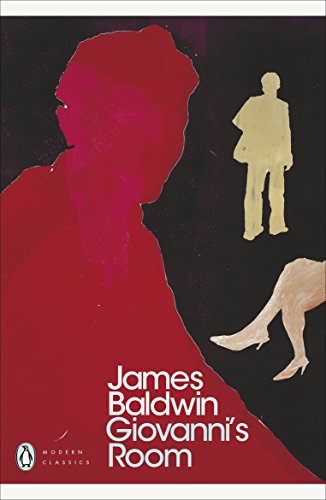
Ebook Info
- Published: 2001
- Number of pages: 178 pages
- Format: PDF
- File Size: 0.68 MB
- Authors: James Baldwin
Description
One of the BBC’s ‘100 Novels That Shaped Our World’Baldwin’s ground-breaking second novel, which established him as one of the great American writers of his timeDavid, a young American in 1950s Paris, is waiting for his fiancée to return from vacation in Spain. But when he meets Giovanni, a handsome Italian barman, the two men are drawn into an intense affair. After three months David’s fiancée returns and, denying his true nature, he rejects Giovanni for a ‘safe’ future as a married man. His decision eventually brings tragedy. Filled with passion, regret and longing, this story of a fated love triangle has become a landmark of gay writing. James Baldwin caused outrage as a black author writing about white homosexuals, yet for him the issues of race, sexuality and personal freedom were eternally intertwined.’Exquisite… a feat of fire-breathing, imaginative daring’ Guardian’Excruciating beauty’ San Francisco Chronicle ‘Audacious… remarkable… elegant and courageous’ Caryl Phillips
User’s Reviews
Reviews from Amazon users which were colected at the time this book was published on the website:
⭐Over the past couple of years, I’ve started making my way through the works of James Baldwin, the African-American writer and activist whose essays and writing grappled with race relations, sexuality and masculinity (Baldwin was himself gay, eventually openly so), and so much more. But as much as I love his essays – and I think he may be one of the great essayists of the 20th century (his essay “Notes of a Native Son” may be one of the finest essays ever written, full stop) – his fiction is no less remarkable for the ways it both explores the very themes that Baldwin so often explored elsewhere, but also for the emotional complexity and richness that Baldwin brings to bear in them. That was no surprise in Go Tell It on the Mountain, which was based very much on his own life, but the same holds true for Giovanni’s Room, a 1956 tale of a narrator confused and threatened by his own sexuality and his love for another man.The plot of Giovanni’s Room is deceptively slim – it’s the story of David, an American ex-pat living in Paris; by the time our story begins, his fiancee is already on her way back to America, and his lover Giovanni is awaiting execution. And really, in the end, that tells you everything you need to know, in a horrible way – how David’s separation from his girlfriend finds him meeting Giovanni, how he comes to terms with his own desires and love, and how his own desire to repress that part of himself ultimately leads to the destruction of his relationships. There’s an inevitability to it all that feels heartbreaking – and, no doubt, appropriately so given the mores and beliefs of the 1950s (to say nothing of a lot of gay literature of the time, which so often was permitted as long as it ended with a tragic tone representing a return to the status quo).And yet, to focus solely on the tragedy of it all is to miss the beauty and richness with which Baldwin explores David and his entire world. From the war of desires to the ease of self-delusion, from the freedom of being in a country where no one knows him to the sense of being judged for a culture that produced him, there’s a complexity and depth to Giovanni’s Room that’s hardly surprising from a writer like Baldwin – nor, of course, is it any shock to find how well-written and well-crafted the book is, as I (per usual, with Baldwin) found myself stopping again and again to mark sentences and passages:“There are so many ways of being despicable it quite makes one’s head spin. But the way to be really despicable is to be contemptuous of other people’s pain.““Somebody,” said Jacques, “your father or mine, should have told us that not many people have ever died of love. But multitudes have perished, and are perishing every hour – and in the oddest places! – for the lack of it.”“I ached abruptly, intolerably, with a longing to go home; not to that hotel, in one of the alleys of Paris, where the concierge barred the way with my unpaid bill; but home, home across the ocean, to things and people I knew and understood; to those things, those places, those people which I would always helplessly, and in whatever bitterness of spirit, love above all else. I had never realized such a sentiment in myself before, and it frightened me. I saw myself, sharply, as a wanderer, an adventurer, rocking through the world, unanchored.““Much has been written of love turning to hatred, of the heart growing cold with the death of love. It is a remarkable process. It is far more terrible than anything I have ever read about it, more terrible than anything I will ever be able to say.”So, yes, the English teacher in me delighted in the language. And that’s to say nothing of that all-too-common weakness of English teachers, seeing the life and beliefs and world of the author reflected through the novel: the way that David drifts isolated from the world around him (something that Baldwin, in his double intersection of minority status, always felt acutely), or how his relationship with his father lingers over the book (see “Notes of a Native Son”), or the sense of alienation and sadness as someone who’s left his own country (much as Baldwin had, not long before writing Giovanni’s Room).All of which is to say that as a piece of writing, Giovanni’s Room is beautiful – immaculately crafted and constructed, richly drawn, devastating in its impact, and far richer than its brevity might lead you to think. It is further testament to Baldwin’s genius, but more than that, his essential humanity – for to read Baldwin is to see someone utterly human and utterly humane, depicting the world with compassion and honesty and beauty and pain – in short, the whole spectrum of the human experience. It’s a reminder that there may be no better machine designed for empathy and understanding than a novel – and Giovanni’s Room is a well-functioning machine indeed.
⭐This is a little book, but it is anything but small.James Baldwin needs no introduction, and having finally read him was a literary treat. His reputation, I was unsurprised to learn, is earned. Some writers just exude experience, and Baldwin is one such. This is a man who has lived life. He has had playful conversations late at night and early in the morning. He has loved people he should have left alone, hated people he should have loved; and hated himself for both. His writing is a conversation with the reader, one from which you walk away understanding that here is a person who has run the gamut of the human experience, and come away from it observant enough to make others feel, and understand.Giovanni’s Room is a story of love and death in 1950’s Paris. It is brilliant commentary; on life, on love, on sexuality, on women, and men. Reading this in 1956… I mean, it had to be revelatory, for those who allowed it to be. A powerful read then, as it is now, and an empowering one. The story is as beautiful as it is tragic, and the narrator, David, is wonderfully complex. It’s that age-old thing, I guess. The reader’s inherent desire to identify with, relate to, and make justifications for the protagonist. Until you realize that you shouldn’t be doing so, and that’s where the practice of empathy comes in. Which, of course, is what reading does for you. That’s what reading is.
⭐“I feel nothing now,” I said, “nothing. I want to get out of this room, I want to get away from you, I want to end this terrible scene.”To understand America, read Baldwin. And that includes his fiction. In Giovanni’s Room, sexuality becomes the prism through which our concepts of gender, morality and success are refracted into their twisted, desperate, self-cannibalizing components. It’s not a happy book, but it is a book that will leave you feeling enlarged and courageous, prepared to feel and think beyond the prescribed borders of socially sanctioned emotions and received opinion on your own terms.A subterranean terror haunts the narrator of this book, an abscess of meaning that corrupts any attempt to frame life or shape emotions as stable, reliable constructs. However, Baldwin isn’t interested in exploring a generic existential crisis, and certainly does not entertain a happily ever after or even the resigned acceptance of an abysmal fate. His aim is higher, or at least more profound. The narrator’s life starts to implode because he refuses to confront the reality of his attraction to other men even as he acts on this attraction while his girlfriend is on vacation. Soon, all of his life’s inconsistencies, from his relationship with his father to the twisted consequences of American morality and the absurdities of gender ideals, surround him as if reflected in funhouse mirrors.Yet the narrator isn’t an innocent victim. He despises what he loves, man or woman, even though there are moments of genuine affection – or so he thinks. He protects himself by refusing to share himself with anyone; he plays roles, takes what is offered, and tries to believe some of it is real. He becomes a fugitive self, a self on the run, evanescent and impermanent and hollow at the core.As a consequence of the narrator’s perpetual bad faith, Baldwin isn’t limited to seeing the world in only one way through his character’s eyes. The narrator tears through feelings and opinions like a debutante searching for the perfect gown. Thus, Baldwin is free to use his words to excavate conflicted emotions, irrational biases, pompous philosophies and psychological equivocations. Hardly a paragraph passes without a new insight, or words parsed into combustible phrases that spill out new questions.There are pages in this book where your heart will pound. It will be terrible and riveting and compelling. A colleague, Eric Booth, once said that the difference between entertainment and art is that entertainment confirms and validates your view of the world, whereas art challenges your sense of the possible. Entertainment is all about what we already know, art takes us into the unknown. Baldwin does not confirm or validate, he challenges us to engage with what we do not yet know. He lures you into a state of mind where, very likely, you’ll start asking questions of your own that he couldn’t have anticipated. No, this is not a happy book. But, paradoxically, you’ll end up in a better place for having read it.If ideas are like stars, he helps you chart your own constellations of meaning.
⭐‘Giovanni’s Room’ is an incredibly powerful, but heart-breaking, story. The quality of the writing is quite outstanding. The central character and narrator, David, is unable to be honest and ‘authentic’ with himself or others. He is bisexual, but is unable to accept his attraction to men, even when he moves in with the beautiful and vulnerable Giovanni. David’s inability to accept who he, and the shame he feels as a result, has devastating consequences for Giovanni, and painful disillusionment for Hella, his fiancée. I will admit that I shed a tear for Giovanni at the end of the story. That this book evoked such a powerful emotion in me, is a testament to the power of the writing. I thoroughly recommend this book. It is one of the best books I have ever read.
⭐This book kept coming up as a source and a totem in other modern novels I was reading and so I wanted to see for myself why it held so much influence for other writers. The book is so evocative of a lost time and place in history, and the characters tormented by their position outside of ‘normal’ society, it is full of emotional turmoil and the loss of love in so many ways. David’s character and actions are not condoned, but he is the main voice that comes across, whereas the somehow untold stories of Giovanni and Hella would be of real interest, as they are both distant and enigmatic, portrayed as unknown and unknowable characters from David’s tormented perspective. Loved the angst and the despair of life that drips out of the book, it could only have been set in Paris.
⭐Call Me By Your Name meets Tender is the Night in Giovanni’s Room, which follows David, an American living in Paris, and his relationship with the bartender Giovanni. From the comparative texts, I have chosen you will be able to tell that I adored this novel from the first line until the last. It also reminded me a lot of Brandon Taylor’s Real Life which I did not enjoy at the time, but after reading this and seeing similarities between the two I would like to give it a second chance. Baldwin deftly handles themes of gender, of what it means to be a man, and how it intersects with sexuality. The theme of alienation and isolation permeated every fascet of the novel, from the physical of Giovanni’s room to the feeling of being, as F. Scott Fitzgerald puts it ‘both within and without’. Even serving in the role of the narrator, David is both a part of what happens and just an observer, which is fascinating to see. At under 200 pages, the book is masterful in its ability to deliver a complete story, alongside these complex themes. It’s the sort of book that is so brilliant it is difficult to review, other than to repeat how much I adore this book and urge you to read it.
⭐It must be me. I found this classic to be grey, lifeless, lacking any emotional or character engagement or development or empathy. The writing is flat and often grammatically incorrect (he does not know the difference between a comma and a full stop) and laboured. Is there a plot? Do I care about any of the lifeless characters? No. This was one of the dullest books I have read in a long time. Who was David? Who was Giovanni? And Hella? God knows. Not my thing at all. Just a flat, dead, grey thing. Not a novel in my view, just rambling prose.
⭐James Baldwin’s short novel “Giovanni’s Room”. It’s about a young man struggling with his sexuality. Published in the 50s, and set in France.Although I am straight, and have never been remotely interested in men…I have a sympathy for anyone going through any kind of emotional turmoil.David, the narrator, has a sentience which is impossible to me, and every moment would be painful if I was that aware of my feelings…but it’s Baldwin’s psychological clarity which is the punch of the book. Its USP.David finds himself, loses himself, and breaks the continuity with his old life and American destiny in a grubby little room belonging to the charismatic Giovanni. In France, homosexuality was permissible, unlike in the UK, but people’s dalliances and relationships were mostly clandestine and hidden away from the respectable veneer of society. Young men, knowing their life could never be accepted in the mainstream, find themselves at the mercy of poorly paid jobs, with no future. And many rely on the patronage of wealthy men, who prey on them in the shadows of Paris.That Baldwin was a black man, living in Paris, is notable. But despite the obvious struggles Baldwin must have faced in America and France with his ethnicity, there isn’t a trace of that in the book. But there is an intensity to sexual politics. And the character of David’s girlfriend, Hella, is drawn with sympathetic attention to her own struggles, both as a woman…and as someone who realises the person she loves, she didn’t really know at all.
Keywords
Free Download Giovanni’s Room (Penguin Modern Classics) in PDF format
Giovanni’s Room (Penguin Modern Classics) PDF Free Download
Download Giovanni’s Room (Penguin Modern Classics) 2001 PDF Free
Giovanni’s Room (Penguin Modern Classics) 2001 PDF Free Download
Download Giovanni’s Room (Penguin Modern Classics) PDF
Free Download Ebook Giovanni’s Room (Penguin Modern Classics)