Ebook Info
- Published: 2008
- Number of pages: 384 pages
- Format: PDF
- File Size: 3.51 MB
- Authors: Michael Soon Lee
Description
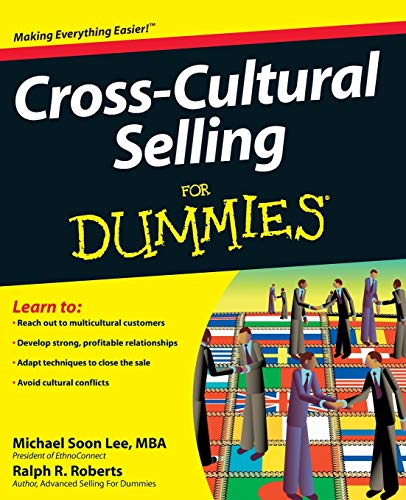
Want to reach out to multicultural customers? Cross-Cultural Selling For Dummies is packed with everything you need to know to tap into multicultural markets, from establishing solid relationships to adapting your advertising to meeting the needs of your new clientele. You’ll acquire key cross-cultural skills and build a coordinated effort that engages all aspects of your business. This practical, easy-to-understand guide shows you how to measure the purchasing power of other cultures and change the way you market to them. You’ll learn how to do multicultural research, develop a marketing campaign with wide appeal, pick the right media, tune your materials to the market, and establish a presence in the community. You’ll find tips on identifying generational differences with in a culture, pronouncing names correctly, and determining customer motivation. Discover how to:Reach out to multicultural customersDevelop strong relationshipsAdapt your sales presentations and techniquesClear language barriersBoost your street credPresent appealing financing optionsCreate a foundation for long-term successHandle negotiations with skilled hagglersRecognize and overcome objectionsAdopt techniques to close the saleCreate a strong referral baseAvoid cultural conflictsMaintain a diverse sales teamYou can realize the incredible untapped potential of the multicultural market to send your sales soaring and your profits off the charts. Cross-Cultural Selling For Dummies shows you how!
User’s Reviews
Editorial Reviews: From the Inside Flap Appeal to the multicultural market and send your sales soaringWant to reach out to customers from other cultures? This practical, easy-to-understand guide shows you how to tap into multicultural markets, from establishing solid relationships to adapting your advertising to meeting the needs of your new clientele. You’ll acquire key cross-cultural skills and build a coordinated effort that engages all aspects of your business.Adapt to multicultural markets — measure the purchasing power of other cultures and change the way you market and sellDevelop a marketing campaign with wide appeal — do your research, pick the right media, tune your materials to your market, and establish a presence in the communityBuild rapport with culturally diverse clients — identify generational differences, pronounce names correctly, and determine customer motivationAdapt your sales presentation and techniques — clear language barriers, boost your street cred, and present financing options in ways that appeal to your multicultural clienteleClose the sale — recognize and overcome objections, handle negotiations with skilled hagglers, and head off potential buyer’s remorseCreate a foundation for long-term success — excel at customer service, create a strong referral base, and maintain a diverse sales teamOpen the book and find:Six steps to a multicultural mindsetTips for overcoming stereotypesStrategies for sizing up your competitionGuidelines for building a diversity-friendly businessTips for adapting your product lineDo’s and don’ts for meeting and greetingThe most common buying signalsCulture-specific insiders informationStrategies for generating referrals From the Back Cover Appeal to the multicultural market and send your sales soaringWant to reach out to customers from other cultures? This practical, easy-to-understand guide shows you how to tap into multicultural markets, from establishing solid relationships to adapting your advertising to meeting the needs of your new clientele. You’ll acquire key cross-cultural skills and build a coordinated effort that engages all aspects of your business.Adapt to multicultural markets — measure the purchasing power of other cultures and change the way you market and sellDevelop a marketing campaign with wide appeal — do your research, pick the right media, tune your materials to your market, and establish a presence in the communityBuild rapport with culturally diverse clients — identify generational differences, pronounce names correctly, and determine customer motivationAdapt your sales presentation and techniques — clear language barriers, boost your street cred, and present financing options in ways that appeal to your multicultural clienteleClose the sale — recognize and overcome objections, handle negotiations with skilled hagglers, and head off potential buyer’s remorseCreate a foundation for long-term success — excel at customer service, create a strong referral base, and maintain a diverse sales teamOpen the book and find:Six steps to a multicultural mindsetTips for overcoming stereotypesStrategies for sizing up your competitionGuidelines for building a diversity-friendly businessTips for adapting your product lineDo’s and don’ts for meeting and greetingThe most common buying signalsCulture-specific insiders informationStrategies for generating referrals About the Author Michael Soon Lee, MBA, is a nationally recognized expert in selling and marketing to multicultural customers. He is a diversity consultant and speaker, an award-winning salesperson, and the author of several books. Ralph R. Roberts is an award-winning and internationally acclaimed real estate agent, speaker, sales coach, consultant, and author. Read more
Reviews from Amazon users which were colected at the time this book was published on the website:
⭐It’s a good book but not a good reference book. Could have been organized a little better to provide info on different cultures in one place. Instead, I had to read through entire chapters to sift out little bits of cultural info for Asian buyers, Hispanic buyers, etc.
⭐Its one of my favorite books. I love the author and recommend this book to everyone that wants to become better.
⭐The authors display cultural ignorance when they advise to go to a Cinco de Mayo celebration to learn about Mexican culture. Cinco de Mayo is hardly celebrated in Mexico and is essentially an American holiday.After such a blunder, I cannot trust the rest of the book now.This book is the exact opposite of cross-cultural. It only deals with selling stuff to immigrants to the United States. There is not a single piece of information for other countries.The book is all wrapped into yada-yada business BS without any relevant information. Do not buy this book, instead, buy this one:”Doing Business Internationally, Second Edition: The Guide To Cross-Cultural Success” by Walker et al.
⭐Why pay a consultant or trainer mucho money to teach folks in the management and on the front line of retail sales how to deal with multicultural clientele when you can find it all here? One of the features of the Dummies series of books is that it appears to give you what you need to know and do to reach your learning and behavioral objectives in a relatively quick and painless way. Currently I am also reading L’Histoire de France pour les nuls to refresh my perspectives on where Sarkozy fits in the flow of events–again a few hundred pages in the same series (French version) that would easily put my college history professor out of a job in terms of holding my interest and encouraging retention.These folks are on to something that is a wake-up call to refine how we define professionalism and conduct transfer of technology in the intercultural field. The fact, however, that so much cultural information can be presented in a digestible way is tribute to the research and professional practice that has been performed by interculturalists. It also raised the question, “After a brief snooze on our laurels, where do we go from here?” But let’s move on to the book itself.Cross-Cultural Selling for Dummies opens with a double-sided tear-out cheat sheet and an extensive table of contents, which is the next best thing a paperback can do to compete with the kinder Kindle version. The layout is extremely well organized and references to what you need from other parts of the book are regularly found in the text, making a book that says, “Use me!” rather than “Sit down and read me from cover to cover.” Icons in the margins signal key points to remember, useful tips and warnings about cultural minefields.In this sense, the book is a good model for the dissemination of cross-cultural awareness, understanding and practice on the end-user level. Certainly there are those who will complain of over simplification here as in the numerous tip sheets, quizzes and self-help guides that have long been staples of airport shops and online come-ons to intercultural services. But, the abundance of information digested here is impressive, and, after all, we need to start somewhere and trust the ingenuity of motivated learners to refine what they know and can do as practice it in daily life and commerce.Essentially Cross-Cultural Selling for Dummies is a marketing and sales course adapted to a multicultural context. Whether you are a front line entrepreneur starting your own shop, or a manager of a large staff that needs to interface with a multicultural public, the lessons are much the same. They are: be aware of the market, study it, assess your own readiness as well as the resources you need to serve it, survey specifics about the customer groups in your target environment, adjust your product line to what they want to buy, and adapt your behavior to meet their expectations of what makes for trust and good customer relations and services.The book stretches from the macro of creating an overall market research tool and marketing plan to the micro of building rapport with the individuals browsing your aisles. It tells how to meet, greet, relate and close the sale, offering copious notes about how to avoid the cultural spoilers, those behaviors that signal insensitivity to difference or are just downright off-putting or insulting to your culturally different customer.Make no mistake about it, however. Given all these perspectives, Cross-Cultural Selling for Dummies is still a book is specifically written for the US market, though I dare say it is being promoted internationally where it willy-nilly could contribute to more of the rogue globalization that we are becoming used to. Much, of course, may be useful in other cultural contexts, but not without a great deal of circumspection and adaptation. The book is specifically USian in terms of:* Those retail organizations which will most benefit by it. It addresses the US retail climate in detail. This stretches from entrepreneurial start up and the neighborhood mom and pop shops to Wall-Mart and Costco. The authors admit that greater challenges face the big multi-outlet chains and their franchises, whose client diversity is likely to be broader and more difficult to predict and manage than that faced by the neighborhood grocer, but both situations are well addressed.* The cultural groups found in the US market. While the general principles of the boilerplate of cross-cultural awareness and practice undergird the book and can be useful to many readers wherever, focus is on those cultural groups, which are most likely to walk into US stores, viz., African Americans, Hispanics, Asian Americans, and Middle Easterners and “Anglos.” All are repeatedly discussed to in the various contexts of awareness, marketing and sales, and brief synopses found at the end of the book sum up the cultural values and behaviors relevant to them in selling. Nor do the authors avoid dealing with the stereotypes and quirks of the dominant Anglo culture. This means the book can be useful if you are a Korean corner grocer in Santa Monica or a Piggly Wiggly floor manager in Memphis.* The language of the book is simple and direct with a good touch of mirth. However, there is a considerable amount of tongue-in-cheek humor, which along with the numerous slang expressions, part of everyday US banter, may puzzle both speakers of Oxford and ESL.* Diversity, is recognized and discussed as it is configured in US government legislation and US business diversity policy, i.e., it reaches beyond ethnic and national origin to note and address gender, sexual orientation, generational differences.* Economic theory. As you might expect in a practical handbook, neither underlying economic theory nor social values are explicitly in much detail in these pages. The book is simply about doing good business, about competition and the bottom line, assuming that one is “doing good by doing well.” In a world of satisfied customers everybody is better off–all the presumed benefits of well-oiled capitalistic thinking to the American Dream and the mission of the Yankee trader.Returning to my opening remarks, how does this affect the intercultural professional? Beyond the challenge to go ever deeper into cultural anthropology, raising the bar, so to speak, it invites further exploration both the dynamics and interplay of intercultural systems beyond the cultural specifics involved in them. On the teaching learning level, it is a call to really efficient, hands-on pedagogy, whether delivered person-to-person, in coaching sessions or online. A book such as this can comprehensively tell you a lot of what you need to know, but it cannot tell and debrief the first-hand stories that help learners better understand the cross-cultural dynamics nor help them drill the behaviors and learn to pick up the cues they need to become good at responding appropriately in the moment.
⭐Anyone who sells or provides service to those from other cultures will welcome the advice, tips and hints in Cross-Cultural Selling. I have read Michael Lee’s other books and listened to his CDs and I consider him an authority on this topic. His advice is practical and he and Ralph Roberts provide many easy to understand and easy to remember tips on how to avoid common mistakes in interfacing with other cultures. If your job depends on establishing rapport and trust with ethnic clients, this book is a must for you. Or if you’ve ever wanted to just get a simple understanding of Feng Shui or cultural norms (shake? bow?) then I highly recommend Cross-Cultural Selling.
⭐This book is more than just a sales book for customers from other cultures. It’s both a training manual for diversity education and for customer service training. As someone who does both as a career, I was very impressed with everything Mr. Lee had to say in this book. One thing he said in the book that hit home for me is that America may be just over 200 years old, which seems like a very long time to us, but many of our customers from other countries come from cultures thousands of years old, and for us to expect them to change immediately to suit our needs may be unrealistic.This is a must read for more people than just those who need to learn how to market to these customers, and this book answers the reasons why you might wish to learn. I was also happy that he talked about different cultures that seem inherently American, such as African Americans, Latino Americans, and Asian Americans. As the election of Barack Obama shows, America is going to need to learn how to embrace its inherent diversity, and in a hurry. Reading this book will help a lot.
⭐This timely and compelling book will help you improve your marketing and selling efforts so that you get new and improved results. In Chapter 5 “Building a Marketing Campaign with Global Appeal” you’ll learn to get your timing right, “scale back your verbiage for high-context cultures” and more. The authors discuss the power of studying cultural tendencies to predict behavior. Learn to build rapport with culturally diverse clientele. Essential skills for the global economy. You’ll be glad that you purchased this book.Tom MarcouxAmerica’s Communiciation CoachCEO, Tom Marcoux Media, LLCAuthor of
⭐Not found.
Keywords
Free Download Cross-Cultural Selling For Dummies in PDF format
Cross-Cultural Selling For Dummies PDF Free Download
Download Cross-Cultural Selling For Dummies 2008 PDF Free
Cross-Cultural Selling For Dummies 2008 PDF Free Download
Download Cross-Cultural Selling For Dummies PDF
Free Download Ebook Cross-Cultural Selling For Dummies