Ebook Info
- Published: 2012
- Number of pages: 265 pages
- Format: PDF
- File Size: 19.02 MB
- Authors: Terry Eagleton
Description
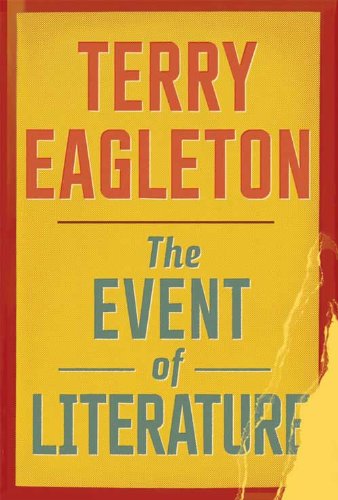
In this characteristically concise, witty, and lucid book, Terry Eagleton turns his attention to the questions we should ask about literature, but rarely do. What is literature? Can we even speak of “literature” at all? What do different literary theories tell us about what texts mean and do? In throwing new light on these and other questions he has raised in previous best-sellers, Eagleton offers a new theory of what we mean by literature. He also shows what it is that a great many different literary theories have in common.In a highly unusual combination of critical theory and analytic philosophy, the author sees all literary work, from novels to poems, as a strategy to contain a reality that seeks to thwart that containment, and in doing so throws up new problems that the work tries to resolve. The “event” of literature, Eagleton argues, consists in this continual transformative encounter, unique and endlessly repeatable. Freewheeling through centuries of critical ideas, he sheds light on the place of literature in our culture, and in doing so reaffirms the value and validity of literary thought today.
User’s Reviews
Reviews from Amazon users which were colected at the time this book was published on the website:
⭐I was bamboozled into purchasing this book by a favorable Library Journal review, which said (I paraphrase) that Terry Eagleton in The Event of Literature makes difficult concepts in literary theory easy to understand. It’s not that he doesn’t try, but the material is too refractory: for me he failed more often than he succeeded. So I offer faint praise to admit that I probably got more out of Eagleton than I would have by going directly to the legion of critics he quotes ad nauseum (Stanley Fish, Jacques Derrida, Peter Lamarque, John Searle, and many others). Why he DOESN’T quote his great Oxbridge predecessor C.S. Lewis, a REAL literary critic, is quite beyond me, unless it is considered somehow shameful for a Marxist like Eagleton to do so. The one point all these more recent hacks seems to agree on — that literature is what we as readers DECIDE TO TREAT AND READ AS LITERATURE — was made FAR MORE CLEARLY and compellingly in Lewis’ wonderful An Experiment In Criticism (1960). Read THAT if you never buy this or any other work of literary criticism.As my title indicates, Eagleton frequently argues with the critics he quotes, pointing out their absurdities, omissions, contradictions, etc., which is certainly a valuable work. That includes the YOUNGER Terry Eagleton: while he still thinks literature has no “essence,” he has come to believe that literary writing has some or all of these five characteristics — it is fictional; it has moral content; it uses figurative language; it is not practical; and it is highly valued as writing.Also insightful (to me) was his contention that what an author means as fiction may be read as true, and vice versa. It warmed my heart on page 110 to read that Frank McCourt’s Angela’s Ashes can be read (primarily IS READ now) as FICTION. I ALWAYS thought it was! I NEVER believed actual people could live in conditions that degrading, sordid and abusive.
⭐Very good
⭐Terry Eagleton is (almost) always worth reading and this book begins very well. The opening chapter offers an analysis of the realist and nominalist philosophical positions, which is surprising and welcome because Eagleton explains how the difference between the two affects the way we compose and read literature. It’s a very clear and convincing exposition which gets one’s hopes up that the rest of the book will be as unusual and illuminating. Much of the initial impetus fades away, however, and although there are many very percipient, and very funny, passages about some topics, the rest of the book is really a series of comments on the work of other critics. Necessary though this presumably is, one feels that unless the reader is familiar with the huge number of writers Eagleton mentions, much of the comment is going to be rather uninteresting. There is an attempt to treat the subject of “literature” in sections, but beyond assigning chapter headings, the actual method, of quoting and refuting, or quoting and agreeing, is constant throughout.One gets the impression that Eagleton is dealing with matters he has long felt strongly about and is consequently unable to leave anything out, and even for the reasonably well-read person, this makes for some longeurs. I would have liked to have fewer critics and more Eagleton, more of the clear-sighted understanding evident in the first chapter, that what we ultimately believe about the world actually forms or alters the way we express it. Why do we need to produce this stuff called literature, rather than just imparting information to each other? Perhaps Terry Eagleton feels embarrassed to approach the big question: the impression is that he just tired of it.
⭐A master class.
Keywords
Free Download The Event of Literature in PDF format
The Event of Literature PDF Free Download
Download The Event of Literature 2012 PDF Free
The Event of Literature 2012 PDF Free Download
Download The Event of Literature PDF
Free Download Ebook The Event of Literature