

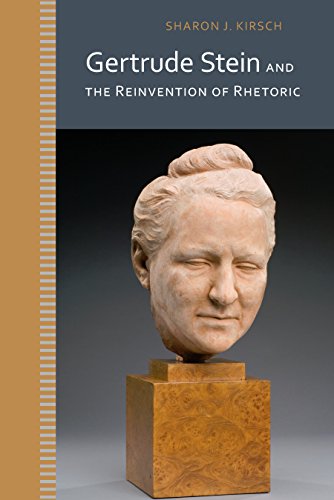
Ebook Info
- Published: 2014
- Number of pages: 176 pages
- Format: PDF
- File Size: 0.75 MB
- Authors: Sharon J. Kirsch
Description
Gertrude Stein is recognized as an iconic and canonical literary modernist. In Gertrude Stein and the Reinvention of Rhetoric, Sharon J. Kirsch broadens our understanding of Stein’s influence to include her impact on the field of rhetoric. For humanities scholars as well as popular audiences, the relationship between rhetoric and literature remains vexed, in part due to rhetoric’s contemporary affiliation with composition, which makes it separate from, if not subordinate to, the study of literature. Gertrude Stein recognized no such separation, and this disciplinary policing of the study of English has diminished our understanding of her work, Kirsch argues. Stein’s career unfolded at the crossroads of literary composition and rhetorical theory, a site where she alternately challenged, satirized, and reinvented the five classical canons of rhetoric—invention, arrangement, style, memory, and delivery—even as she invented new trajectories of literary experimentation. Kirsch follows Stein from her days studying composition and philosophy at Harvard through her expatriate years in France, fame in the 1930s, and experience of the Second World War. She frames Stein’s explorations of language as an inventive poetics that reconceived practices and theories of rhetorical invention during a period that saw the rise of literary studies and the decline of rhetorical studies. Through careful readings of canonical and lesser-known works, Kirsch offers a convincing critical portrait of Stein as a Sophistic provocateur who reinvented the canons by making a productive mess of canonical rhetoric and modernist categories of thought. Readers will find much of interest in Gertrude Stein and the Reinvention of Rhetoric. Kirsch offers myriad insights to scholars of Stein, to those interested in the interdisciplinary intersections of literature, rhetoric, and philosophy, as well as to scholars and students in the field of rhetoric and communication studies. Positioning Stein as a major twentieth-century rhetorical theorist is particularly timely given increasing interest in historical and theoretical resonances between rhetoric and poetics and given the continued lack of recognition for women theorists in rhetorical studies.
User’s Reviews
Reviews from Amazon users which were colected at the time this book was published on the website:
⭐A brilliant portrait of Stein, written against philosophical, rhetorical, and literary backdrops that seamlessly flow in and out of each other with an accessible yet sharp intelligence. This book does with Stein what Stein was ever occupied in doing with language and understanding. It gives the reader an image of her that is born of intimacy, rather than mere likeness. As it basks in the light informed by the theoretical and historical contexts, this portrait of Stein is as academic as it is inspirational.
⭐This review is for: Gertrude Stein and the Reinvention of Rhetoric by Sharon Kirsch (Hardcover)Sharon Kirsch has come up with a genuinely new way of seeing Gertrude Stein and interpreting Stein’s works. Ms. Kirsch sees Gertrude Stein as an itinerant Sophist practicing classical Greek and Roman rhetoric with her readers and audience, like a modern Socrates, emphasizing an overlooked and clearly forgotten aspect of the classical canon in rhetoric: invention.According to Ms. Kirsch, Stein is a bridge between the 19th century and 20th century in writing as well as in rhetorical instruction. Stein’s “How To Write” is the master lesson in Stein’s emphasis on invention through rhetorical style. Ms. Kirsch winningly makes the case that invention rudely and ignorantly been cut out of the teaching of English both in high schools as well as in universities practically since the dawn of the 20th century in order to preach a highly binary and linear approach to composition and persuasion.(My own good example of this ignorance of invention as an aspect of classical rhetoric was the linear thinker and linear stylist Ayn Rand who unequivocally made vicious vituperations against Gertrude Stein’s style and epistemology, claiming Stein was irrational and anti-reason. Rand couldn’t see what was Stein was doing rhetorically since Rand was fixated only a few aspects of the Greek and Roman canon of rhetoric. Ironically, both Rand and Stein had a deep appreciation for the mind, for Aristotle and early Greek philosophy, especially of classical rhetoric, and both were persuasive writers due to their deep understanding of rhetoric.)Needlessly post-graduate school oriented, this book lays out its main ideas clearly enough. The post-modern jargon the author fills up the pages of her book with can be simply excreted or deleted without threat to understanding what the author — and Stein – means to convey. You’ll definitely become acquainted with kairos and the kairotic moment while reading this curious and enlightening book.Something there is that is quite counterproductive nowadays seeing Stein’s works now being overtaken by academicians when all she wanted was to communicate plainly and in plain editions of her writing. Academicians are the worst explainers of what’s going on in the village that Stein’s prose makes.Kudos to Ms. Kirsch for coming up with a refreshingly new and valid perception of Stein’s drive to communicate. In the end she does a good enough job communicating her point of view despite all the clever, exasperating jargon.(I wrote “valid perception” in the previous sentence just above, but this assertion is not wholly proven. Ms. Kirsch does not so much prove her thesis that Stein was a modern-day itinerant Sophist on behalf of rhetoric as much as she intimates that this is the case. Ms. Kirsch suggests this is the correct way of reading Stein, and she uses Stein’s “How to Write” as her best example. However, Ms. Kirsch does not tear through the different sizes of the six, so to speak, i.e., all six chapters of “How to Write,” plus her last chapter called “Forensics,” when it comes to the whole of this text either. She selects passages she finds are representative and she skips around the book. Are her selections truly representative? That would be an induction devoutly to be tested.)
Keywords
Free Download Gertrude Stein and the Reinvention of Rhetoric in PDF format
Gertrude Stein and the Reinvention of Rhetoric PDF Free Download
Download Gertrude Stein and the Reinvention of Rhetoric 2014 PDF Free
Gertrude Stein and the Reinvention of Rhetoric 2014 PDF Free Download
Download Gertrude Stein and the Reinvention of Rhetoric PDF
Free Download Ebook Gertrude Stein and the Reinvention of Rhetoric