

Ebook Info
- Published: 1999
- Number of pages: 416 pages
- Format: PDF
- File Size: 4.30 MB
- Authors: Michael Mortenson
Description
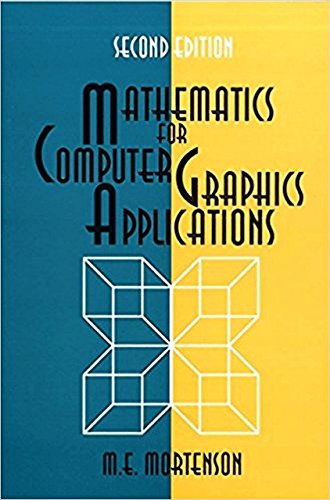
This completely revised Second Edition of “Computer Graphics” includes valuable information on major organizational changes within the last few years. This edition brings to the fore the basic mathematical tools of computer graphics, including vectors, matrices, and transformations. Additionally, it provides a strong, comprehensive base in exploring math, computer science, physics, engineering, and in special subjects such as algebraic and computational geometry, geometric modeling, and CAD/CAM. A highly diversified book that can be utilized as a primary textbook, supplemental teaching resource, individual tutorial, or key reference text. Includes new chapters on symmetry, limit and continuity, constructive solid geometry, and the Bezier curve.Provides many new figures and exercises. Contains an annotated suggested reading list with exercises and answers in each chapter.Appeals to both academics and professionals.Offers a new solutions manual for instructors.
User’s Reviews
Editorial Reviews: Review I consider the book material an essential cornerstone to the knowledge upon which students will pursue advanced study and, for some, fashion the applications of geometry to their professional study. — Ron Nowek, The Boeing Co. From the Back Cover Mathematics for Computer Graphics Applications introduces the mathematics that is the foundation of many of today’s most advanced computer graphics applications, including CAD/CAM and geometric modeling. It presents 20 key subject areas, such as vectors, matrices, symmetry, transformations, Bezier curves, surfaces, and computer graphics display geometry, in clear jargon-free language, supplemented by over 300 illustrations and an equal number of exercises. An annotated bibliography offers suggestions for further study. This edition brings to the fore the basic mathematical tools of computer graphics, including vectors, matrices, and transformations; and then uses these tools to present the geometry, from the elementary building blocks of points, lines and planes, to complex three-dimensional constructions and Bezier curves. Mathematics for Computer Graphics Applications is written for several audiences: for college students majoring in computer science, engineering or applied mathematics and science, whose special interests are in computer graphics, CAD/CAM, geometric modeling, visualization, or related subjects; for industry and government on-the-job training of employees whose skills can be profitably expanded into these areas; and for the professional working in these fields in need of a comprehensive reference and skills refresher. About the Author Michael E. Mortenson does independent research and writes on topics in geometric and 3D modeling. He is a former research scientist with a major aerospace corporation, and the author of several successful textbooks, including Geometric Modeling, Third Edition, Mathematics for Computer Graphics Applications, 2e, Geometric Transformations for 3D Modeling, 2e, and 3D Modeling, Animation, and Rendering: An Illustrated Lexicon. These works have garnered over 2400 citations. He is a graduate of the UCLA School of Engineering. Read more
Reviews from Amazon users which were colected at the time this book was published on the website:
⭐I love computer graphics books like this which can be picked up for next to nothing used.This book covers all the basics of the math pretty well, has exercises with answers to many of the questions, is well written but rather terse.It tends to convey a lot of concepts in very short sections. But I found the material to be clearly presented and largely easy to understand.
⭐This 2nd edition of a 1989 book maintains its mathematic approach with few or no relation to computers. The long title suggests a book with practical examples, but what it contains is pure math. Just to give an idea, the word “pixel” appears just in one page. However, the basics on hypernumbers, introduction on matrix methods, limits, points, lines, CSG spend half of book.Computer Graphics today is much more than geometry, by the way solved by powerful graphics cards and APIs like OpenGL. Scientific visualization uses intensively colors, transparencies, movements, animation and none of these subjects are even touched. Nowadays mathematics apply also to fog, antialianing, specular, caustics, LOD, transparencies, reflexes, lightning. Unfortunately these math applications aren’t tackled in this book. So, don’t expect to find computer graphics in this book, as we understand it today. This is still a 1989 book.If the title was just “Computer Graphics: An Introduction to the Mathematics and Geometry”, as in its first edition, it was more related to its content. Unfortunately, just extending the book’s title doesn’t make it up-to-date.
⭐This book adequately covers the theory of 3D graphics maths in a holistic manner. Its not a programming book, but it is clear enough that it is easily possible to construct algorithms from the theoretical lemmas presented. I especially learned from the clear descriptions of affine & isometric transforms, parametric line equations, constructive solid geometry, and bezier curves. The book lacked coverage of NURBS, and the section on surfaces could have been alot larger.
⭐I am only in the first 1/4 of this book, but I can say that the text is clear and the exercises are useful. A small down side was some typos in the solved exercises, that’s why it is a 4.While I haven’t finised the text yet, I peeked ahead and it seems to be a winner. I chose this book to be my backgrounder before going through Watt’s 3rd Ed. on Computer Graphics.I find that this book shows me math tools and I actually think about why they are useful, not just how they are useful.I think it is sad that algorithms books get more reviews (and sales?) while accessible, foundational books like this one get ignored, based on the low number of reviews. Maybe its because they don’t use a slick looking sample of ray tracing or radiosity on the front cover ;-).This is a book for first principles! Check it out.
⭐i receive it in very good conditions
⭐I can’t understand the raving reviews. It is weak on math, and has no practical example on CG.Let me give you an example: Chapter 2 (allegedly on “Matrix Methods”), exercise 2.20 (there are 25): Compute the determinant of the following matrix (I’ll use Matlab/Scilab notation): M = [ 2 0; -3 2] Are you serious? What about learning Limits and Continuity in one short chapter? No comments…Seriously, if you don’t already know this stuff, should you be looking at CG in the first place?After I got this book, I got F.S. Hill’s Computer graphics Using OpenGL, which is much thicker, mathematically oriented, and has practical examples in C++, and Parberry’s and Dunn’s 3D Math Primer for Graphics and Game Development which doesn’t attempt so much as Hill’s and Mortenson’s, but has nice code in C++. There might be better options. Not to mention that one has to buy and study real math books.I give it 1 star as the book falls short of its stated goals of preparing the reader for more advanced study.
⭐I have many books on the subject, but this one takes the cake. Of all my books this one explains the fundamental math algorithms in ENGLISH and allows you to intuitively understand things both from a purelely mathematical standpoint as well as from a geometric standpoint. I consulted this book after having problems understanding linear combinations and basis, and how it applies to computing the plane equation. I also learnt how to geometrically interpret the dot product. This book is inexpensive considering the subject, and a welcome addition to any personal library if your learning these things. I’m building a 3D engine for MAC/PC that require a solid understanding of linear algebra and this is basically what this book has to offer.
⭐This is an incredibly fabulous book! It covers all the basics and it covers them simply and clearly,after reading this book i *FINALLY* understood what vector spaces are, and what halfspaces are and what eigenvectors and eigenvalues are.. if nothing else the chapter on CSG is worth the price of admission, but the rest of the book is really nice too
⭐One of my favorite book! Simple to read and implement the contains
Keywords
Free Download Mathematics for Computer Graphics Applications (Volume 1) in PDF format
Mathematics for Computer Graphics Applications (Volume 1) PDF Free Download
Download Mathematics for Computer Graphics Applications (Volume 1) 1999 PDF Free
Mathematics for Computer Graphics Applications (Volume 1) 1999 PDF Free Download
Download Mathematics for Computer Graphics Applications (Volume 1) PDF
Free Download Ebook Mathematics for Computer Graphics Applications (Volume 1)