Ebook Info
- Published: 2012
- Number of pages: 212 pages
- Format: PDF
- File Size: 1.26 MB
- Authors: David Papineau
Description
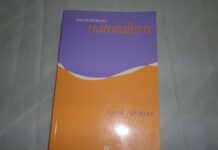
This book is designed to explain the technical ideas that are taken for granted in much contemporary philosophical writing. Notions like ‘denumerability’, ‘modal scope distinction’, ‘Bayesian conditionalization’, and ‘logical completeness’ are usually only elucidated deep within difficult specialist texts. By offering simple explanations that by-pass much irrelevant and boring detail, Philosophical Devices is able to cover a wealth of material that isnormally only available to specialists.The book contains four sections, each of three chapters. The first section is about sets and numbers, starting with the membership relation and ending with the generalized continuum hypothesis. The second is about analyticity, a prioricity, and necessity. The third is about probability, outlining the difference between objective and subjective probability and exploring aspects of conditionalization and correlation. The fourth deals with metalogic, focusing on the contrast between syntax andsemantics, and finishing with a sketch of Gödel’s theorem.Philosophical Devices will be useful for university students who have got past the foothills of philosophy and are starting to read more widely, but it does not assume any prior expertise. All the issues discussed are intrinsically interesting, and often downright fascinating. It can be read with pleasure and profit by anybody who is curious about the technical infrastructure of contemporary philosophy.
User’s Reviews
Reviews from Amazon users which were colected at the time this book was published on the website:
⭐I have to agree with the majority of the reviewers who’ve already commented on Papineau’s book. It’s concise, generally clearly written, covers a number of areas that those interested in getting deeper into philosophy, logic, mathematics, or computer science should be readily familiar or comfortable with, and serves as a very good intermediate step between the overly general pop philosophy books readily available and more serious, but also denser, more academic treatises. The four main areas covered, i.e., set theory, types of truth and possible world theories, the nature of probability, and logic and theoretical structures, are vitally important in dealing with, and thinking through, many areas of both practical and theoretical life. My only quibble, based upon the Kindle version, is that Papineau peppers his text with 25 explanatory boxes giving more detail about various topics mentioned in the main text. Some of the boxes should, I believe, be slightly rewritten and inserted into the main text since they make clearer the point or points that particular part of the text is attempting to make. If the nature of the information in the box is such that it’s nice, but essentially superfluous to the main text’s argument, then at least place the box somewhere close to the area where it’s referred. Quite often one is referred to a box, and it’s located quite a few pages further on; does one stop at the reference point and page ahead quite a way in order to read the box, or does one wait until the box comes up naturally a number of pages later when it’s not connected with what the text is then discussing. The above is a minor point I grant, but it became somewhat irritating each time it would happen. It does not, however, take away from the numerous positive points about the content of the text itself. In sum, a worthwhile read.
⭐The main thrust of this book is sorely needed in philosophy – detailed explanations of commonly-used philosophical tools (concepts, models, analogies, etc.) geared towards an advanced beginner to intermediate-level philosopher (meaning, anyone who studies philosophy, not just students or graduates of an academic program, but certainly including those). As the book says, it’s easy to find superficial treatment of things such as the “Possible Worlds” framework for talking about all sorts of things like counterfactuals, modality, meaning, semantics, truth, etc. The other immediately available resources (though not always easy to track down) are the original works and/or subsequent expert-level critiques, defenses, extensions, etc. Stuff that is much too technical for the person just learning how to use the tool. Yet, many of these “devices” (to start using the word the book uses!) are ones used quite frequently in philosophical conversation and written work, and written with the assumption that the reader already understands everything there is to know about the device. There was, until this book, nothing I could find that filled the gap between the super-easy, high-level explanation and the highly technical expert treatment. This book does that job admirably. I didn’t always agree with the reasoning and choices made in the creation of the devices, but that’s philosophy for you :-). I couldn’t have had the knowledge to agree or disagree until I understood the device in the first place (notwithstanding, of course, the common practice of holding strong political opinions without understanding the issues in the first place :-)).The book’s success could be based on the single point discussed above, but it’s also a well-written book. Engaging, erudite, witty, and just generally well-done. Highly recommended for anyone who reads/enjoys/studies philosophy more than casually, but who is not yet or has no desire to become an expert.Cheers,ScottTallahassee, Florida, USA
⭐I wish I had known about David Papineau’s Philosophical Devices when I first started studying philosophy at an academic level. So much of what makes philosophy difficult to study is bound up in concepts and principles everyone seems to have as part of their background knowledge. Many times I have gone to office hours needing tutoring on the finer points of conditionals, probability theory, set theory, the analytic/synthetic distinction, and the difference between de re and de dicto necessity. Often I left with only a little better understanding of the issues, and a vague sense of what NOT to write in a paper fearing I would say something ignorant about them. This book goes a long way in alleviating that problem, because Papineau does a wonderful job breaking these rather abstruse topics down into plain language. I was especially impressed with the clarity of exposition with respect to Kripke’s modal semantics and causal theory of reference, Russell’s paradox, Cantor’s continuum hypothesis, and Godel’s incompleteness theorem. I will revisit this volume again and again to brush up on these subjects to better my understanding and that of my students if I get the chance to teach.
⭐Excellent book for building an understanding of the basics in each topic. Authors who do good work establishing foundations for further understanding often don’t get the credit they deserve… it’s very difficult work to write clearly about complex topics! Papineau does not use confusing jargon or excessive examples, he provides clean and clear explanations and helps ease you into the theories so you can know *why* things work the way that they do, not merely *that* they work a certain way. This book is perfect for self-study, and quite compact to make it a cinch to throw in your backpack for reading between lectures or on lunch breaks.I would recommend this book to any Philosophy, Math, or Computer Science undergraduate who wants to foster a holistic understanding of the topics Papineau’s book covers. As these “Philosophical Devices” are germane to countless disciplines, many graduate students as well could benefit from the book’s concise representation of its topics.
⭐I read this book as a first introduction to the philosophy of mathematics and I learned a great deal from it. The second half of the book on probabilities, conditionals and logical systems was particularly interesting. Papineau only scratches the surface of any of the topics that he covers so reading additional material on specific concept is definitely helpful. The author suggest further readings for each section. Also this book offers no historical context. I found that reading about the history of philosophical and formal to be help a lot in contextualizing the concepts presented in this book. See book by Malpass and Marfori for example.Overall great book for non-logician non-mathematician non-philosophers but not a shortcut to anything as no particular topic is covered in depth
⭐This is an outstanding book. It is only 192 pages long but it provides all the basic information you need on Set Theory, Analyticity and the A Priori, Necessity, Probability, and Logic. The final chapter even delves into Gödel’s Incompleteness Theorem, and provides as clear an explanation of that as I have seen. David Papineau’s great strength as a writer is that he clearly knows his stuff but he is not out to impress, but, rather, to ensure that the reader gains an understanding of the subject. However, he signals where he is simplifying or where there are differences of opinion on a subject, so that the interested reader can pursue the topic later on if he or she wants to.
⭐This little book summarises a range of what Papineau calls “Philosophical Devices”, and I think of as tools – that is the tools used in a variety of philosophical situations, and which understanding of is often taken for granted in philosophy texts. You would probably have a to read quite a few books to cover the range of materials covered in this volume. It is written in a pleasantly light and easy style, for what could be very dry materials. The explanations are all clear.Examples of the explanations I found particularly good are de dicto and de re modal statements, conditional probabilities and the explanations of syntax and semantics. In each case I have read much longer and more technical explanations which have been far less helpful. Understanding the devices in this book could help with philosophical studies in epistemology, methodology, and metaphysics to name a few.My one caveat, is that in the introduction Papineau says “nothing in what follows presumes any prior knowledge”. This is a compact and helpful guide – but as such if you really are coming at this with absolutely no prior knowledge I think this may be a little too compact! (I could be wrong about this). On the other hand, if you have some familiarity but find yourself confused from time to time, or want to remind yourself about various fundamental devices that you did understand but have forgotten, you should find this an excellent and very accessible guide.
⭐This book made me realize that there had been a major gap in my philosophy education. It ought to have equipped me to read technically sophisticated literature without continually having to turn to reference books to understand basic technical ideas. It didn’t. A course based on this book would have done. Whether it is the concept of possible worlds, the various kinds of probability, or the many other ‘philosophical devices’ expained in the book, the treatment shows an unusual sensitivity to the problems encountered by someone new to the subject. The book could be used as course text but is so clearly written that it can also be recommended as a teach-yourself text. It would be very much more useful to most students than the standard course in elementary logic.
⭐It arrived quickly whithin 4-5 days from ordering it.This book is great for anyone who enjoys reading philosophical papers/books etc but strugles with the terminology that the philosophers use. Like me I have found it frustrating because I never had a philosophical background. As a person comming from mathematics I became interested in the philosophy of mathematics but lacked the knowledge of basic terminology to fully engage with the papers that I was reading.It is a marvelous book, explains everything very simply. I would recomend it to anyone who has an interest in reading contemporary philosophy or indeed philosophy of mathematics. Buy this book you are going to need it!
Keywords
Free Download Philosophical Devices: Proofs, Probabilities, Possibilities, and Sets in PDF format
Philosophical Devices: Proofs, Probabilities, Possibilities, and Sets PDF Free Download
Download Philosophical Devices: Proofs, Probabilities, Possibilities, and Sets 2012 PDF Free
Philosophical Devices: Proofs, Probabilities, Possibilities, and Sets 2012 PDF Free Download
Download Philosophical Devices: Proofs, Probabilities, Possibilities, and Sets PDF
Free Download Ebook Philosophical Devices: Proofs, Probabilities, Possibilities, and Sets