

Ebook Info
- Published: 2007
- Number of pages: 252 pages
- Format: PDF
- File Size: 1.47 MB
- Authors: Amie Thomasson
Description
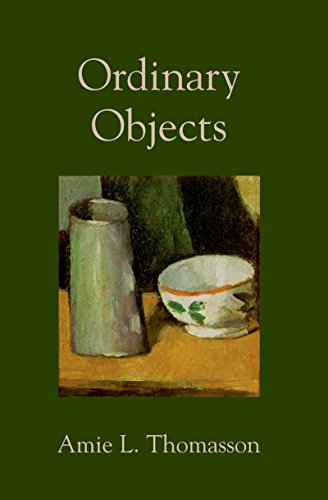
Arguments that ordinary inanimate objects such as tables and chairs, sticks and stones, simply do not exist have become increasingly common and increasingly prominent. Some are based on demands for parsimony or for a non-arbitrary answer to the special composition question; others arise from prohibitions against causal redundancy, ontological vagueness, or co-location; and others still come from worries that a common sense ontology would be a rival to a scientific one.Until now, little has been done to address these arguments in a unified and systematic way. Ordinary Objects is designed to fill this gap, demonstrating that the mistakes behind all of these superficially diverse eliminativist arguments may be traced to a common source. It aims to develop an ontology of ordinary objects subject to no such problems, providing perhaps the first sustained defense of a common sense ontology in two generations. The work done along the way addresses a number of major issues in philosophy of language and metaphysics, contributing to debates about analyticity, identity conditions, co-location and the grounding problem, vagueness, overdetermination, parsimony, and ontological commitment.In the end, the most important result of addressing these eliminativist arguments is not merely avoiding their conclusions; examining their failings also gives us reason to suspect that many apparent disputes in ontology are pseudo-debates. For it brings into question widely-held assumptions about which uses of metaphysical principles are appropriate, which metaphysical demands are answerable, and how we should go about addressing such fundamental questions as “What exists?”. As a result, the work of Ordinary Objects promises to provide not only the route to a reflective understanding of our unreflective common-sense view, but also a better understanding of the proper methods and limits of metaphysics.”Ordinary Objects is well worth reading because it sheds new light on how to preserve the credibility of familiar things.”–Marianne Djuth, The Review of Metaphysics “In Ordinary Objects , Amie Thomasson mounts a spirited and vigorous defense of the reality of ordinary objects.”–Terry Horgan, Times Literary Supplement”Ordinary Objects is a fine book…. [Thomasson] writes insightfully and persuasively, and she has a realistic view of what metaphysical arguments can and cannot demonstrate… she approaches metaphysical theorizing more systematically than many other recent writers, drawing attention to the ways in which questionable assumptions in one area of philosophy are undergirding seemingly powerful arguments in another. Everyone working in metaphysics should make time for this volume.”–R. W. Fischer, Metaphilosophy “In Ordinary Objects , Thomasson pursues an integrated conception of ontology and metaontology. In ontology, she defends the existence of shoes, ships, and other ordinary objects. In metaontology, she defends a deflationary view of ontological inquiry, designed to suck the air out of arguments against ordinary objects. The result is an elegant and insightful defense of a common sense worldview.”–Jonathan Schaffer, Philosophical Books “Amie Thomasson has written a lovely book which is certain to irritate many professional metaphysicians. But it is not just irritating: it is challenging…This book would be good supplementary text for upper-level metaphysics classes or seminars in which the sorts of arguments to which Thomasson replies are also read.”–Alan Sidelle, The Philosophical Quarterly
User’s Reviews
Reviews from Amazon users which were colected at the time this book was published on the website:
⭐Usual tome like presentation, full of ambiguities and convoluted arguments
⭐This book offers a fresh argument for metaphysical deflationism, the position that many metaphysical questions (about existence, identity, and persisitence) are either unanswerable, or easily answerable (a position Thomasson elsewhere hawks as ‘Easy Ontology’).Thomasson frames her deflationary view around arguments against the existence of ordinary objects. Thomasson argues that all the classical arguments against ordinary objects (arguments from causal redundancy, anti-colocation, Unger’s problem of the many, parsimony, and incompatibility with science) stem from a common mistake, a mistake that can be rectified when one accepts an intuitive position on reference fixing.She argues that the reference of our terms is fixed in part by the categorial concepts we employ in using the terms (Thomasson argues, a la Devitt and Sterelny, that such a hybrid theory of reference is needed to solve the Qua Problem). For example, the referent of a use of ‘Fido’ is determined in part by a causal chain, but also in part by a categorial concept (for example, DOG) which the speaker has in mind (consciously or unconsciously) when using the name. We can discover the categorial concepts associated with a singular term or sortal by looking at the application and co-application conditions of the term.Once one introduces conceptual content into the reference-fixing mechanism, one can resuscitate a notion of analyticity, which allows one to deflate metaphysical questions in the standard fashion. Questions about whether Ks exist become questions about the conceptual content associated with the term ‘K’ and whether that conceptual content was satisfied at the reference grounding of the term. Similarly, questions about identity and persistence are deflated by looking at the coapplication conditions (when linguistic convention allows that one reuse the same term) of the term.While I am very sympathetic to Thomasson’s view, I think she should have spent more time resuscitating the notion of analyticity on which so much of her diagnoses of the traditional arguments against ordinary objects depend. She needs to do more to defend the hybrid theory of reference which buys her analyticity. Merely remarking that it is needed to solve the Qua Problem is not enough. Regardless of this minor criticism, the book is remarkably lucid and well-structured. It is an invaluable contribution to contemporary meta-metaphysics.
⭐Thomasson brilliantly navigates very tricky seas. Her conclusion, that ordinary objects exist, is mundane, but she addresses numerous clever objections.
Keywords
Free Download Ordinary Objects in PDF format
Ordinary Objects PDF Free Download
Download Ordinary Objects 2007 PDF Free
Ordinary Objects 2007 PDF Free Download
Download Ordinary Objects PDF
Free Download Ebook Ordinary Objects