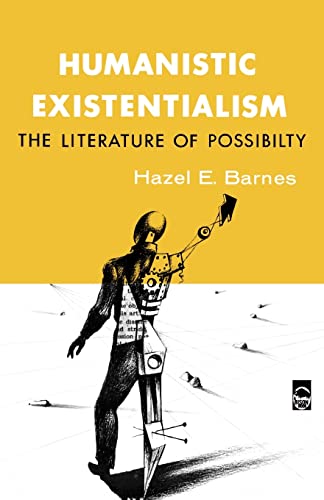
Ebook Info
- Published: 1962
- Number of pages: 419 pages
- Format: PDF
- File Size: 36.30 MB
- Authors: Hazel E. Barnes
Description
Since it was first published in 1959, this book has been generally acclaimed as “the most thorough and reliable exposition of the works of Sartre, Camus, and de Beauvoir to have appeared in this country” (Chicago Sun-Times).
User’s Reviews
Reviews from Amazon users which were colected at the time this book was published on the website:
⭐One of the most interesting books I have ever read, if not the most interesting. Her style is very readable and approachable (which is rare in philosophy, obviously, but especially when reading Sartre…) and is a times lighthearted and insightful, other times witty and expertly critical. I would recommend it highly to anybody interested in existentialism or learning more about the figures of Sartre, de Beauvoir, or Camus. Also mentions several relatively unknown figures on the outskirts of existentialism which was really interesting to see how it all tied in.
⭐I am not a fan of secondary books. I prefer to read primary sourses and for my students to do the same. However, this a wonderful secondary source that is quite engaging and does a wonderful job of explaining existentialism, which is often oversimplified and distorted. Hazel Barnes was the best!
⭐Like Alcibiades arriving late and drunk to the Symposium, I seek not so much to offer a sober oration, but rather an impromptu and heartfelt encomium praising the life and works of Professor Hazel Barnes.At the age of twenty-one, I first discovered a tattered 1959 edition of Hazel Barnes’s Humanistic Existentialism: The Literature of Possibility in a small Connecticut bookstore. The binding was creased; the pages were already beginning to separate from the spine–but like Alcibiades comparing his homely master Socrates to a statue of Silenus, I glimpsed things inside the book’s covers “so godlike–so bright and beautiful, so utterly amazing–that I no longer had a choice.” Like Socrates’ tragic student, I had no choice except to take up the moral, philosophical, and aesthetic challenges posed by Barnes’s interpretation of the existential tradition.And just what is existentialism? It is, as Walter Kaufmann points out in his own Existentialism from Dostoevsky to Sartre, “a label for several widely different revolts against traditional philosophy…. Existentialism is a timeless sensibility that can be discerned here and there in the past; but it is only in recent times that it has hardened into a sustained protest and preoccupation” (11-12). And in her Humanistic Existentialism, Hazel does a peerless job presenting the sustained protest of these often misunderstood philosophers, especially the post-WWII French existentialists Jean-Paul Sartre, Albert Camus, and Simone de Beauvior.Existentialism is not synonymous with radical nihilism or immature hedonism. Rather, existentialism is in fact a deeply ethical philosophy that demands extreme personal responsibility. If according to Sartre “existence” does indeed “precede essence,” then you as a conscious individual are free to decide what it means to exist and be human. Because an essential self is an illusion, an existentialist cannot make excuses for his or her behavior by saying, “I can’t help it. It is in my nature to lie, cheat, steal, kill, etc.” According to this philosophical system, a person’s self is the sum of his or her actions. You are what you do. You exist in this world as a conscious individual, and it is your free will that will choose at each moment how to act or not to act without resorting to someone else’s standards. However, this does not give you license for narcissism or criminality. Just as you value your free will, you must also value and protect the free will of other conscious minds. To treat someone as an object (being-in-itself) rather than a free, willing human being (being-for-itself) is to live in existential Bad Faith.Some existentialists were atheists; some were believers–but all were so overwhelmed by the horror of human suffering that they had no choice but to rebel against this metaphysical injustice. Existentialism is frightening, heady stuff. It asks hard questions of both man and God, questions few have ever dared to ask.When I discovered the works of Hazel Barnes, I was in a deep crisis of faith–a true existential crisis. If everything happens for a reason, how can a supposedly rational and benevolent universe allow so much suffering, especially the suffering of innocent children? Even though Ms. Barnes draws much of her interpretation of existentialism from Sartrean ethics (indeed, she was the first English translator of Being and Nothingness), she also has a deep understanding of existentialism’s roots in Nietzsche, Kierkegaard, and Fyodor Dostoevsky, author of the most important novel ever written: The Brothers Karamazov. (Don’t believe me? I dare any great-souled man or women to read The Brothers Karamazov and not come away profoundly changed and shaken.) In truth, Hazel Barnes was the first person to guide me toward the peerless Dostoevsky, who to this day stands as my spiritual guide and master.Professor Barnes, you opened the doorways of the philosophic life for me, and I owe you a great debt. I have never sat in your classroom, but I consider myself one of your students. Your life’s work serves as an inspiration to us all–a life lived with integrity and courage. A life lived in existential Good Faith.With respect,James B. PepeReferences:Kaufmann, Walter. Existentialism from Dostoevsky to Sartre. Cleveland: World Publishing, 1956.
Keywords
Free Download Humanistic Existentialism: The Literature of Possibility (Bison Book S) in PDF format
Humanistic Existentialism: The Literature of Possibility (Bison Book S) PDF Free Download
Download Humanistic Existentialism: The Literature of Possibility (Bison Book S) 1962 PDF Free
Humanistic Existentialism: The Literature of Possibility (Bison Book S) 1962 PDF Free Download
Download Humanistic Existentialism: The Literature of Possibility (Bison Book S) PDF
Free Download Ebook Humanistic Existentialism: The Literature of Possibility (Bison Book S)