Ebook Info
- Published: 2015
- Number of pages: 816 pages
- Format: PDF
- File Size: 2.87 MB
- Authors: Peter Catapano
Description
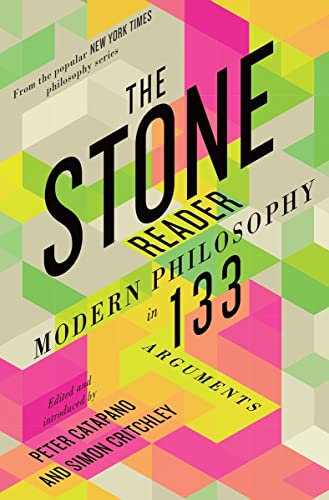
A timeless volume to be read and treasured, The Stone Reader provides an unparalleled overview of contemporary philosophy.Once solely the province of ivory-tower professors and college classrooms, contemporary philosophy was finally emancipated from its academic closet in 2010, when The Stone was launched in The New York Times. First appearing as an online series, the column quickly attracted millions of readers through its accessible examination of universal topics like the nature of science, consciousness and morality, while also probing more contemporary issues such as the morality of drones, gun control and the gender divide.Now collected for the first time in this handsomely designed volume, The Stone Reader presents 133 meaningful and influential essays from the series, placing nearly the entirety of modern philosophical discourse at a reader’s grasp. The book, divided into four broad sections―Philosophy, Science, Religion and Morals, and Society―opens with a series of questions about the scope, history and identity of philosophy: What are the practical uses of philosophy? Does the discipline, begun in the West in ancient Greece with Socrates, favor men and exclude women? Does the history and study of philosophy betray a racial bias against non-white thinkers, or geographical bias toward the West?These questions and others form a foundation for readers as the book moves to the second section, Science, where some of our most urgent contemporary philosophical debates are taking place. Will artificial intelligence compromise our morality? Does neuroscience undermine our free will? Is there is a legitimate place for the humanities in a world where science and technology appear to rule? Should the evidence for global warming change the way we live, or die?In the book’s third section, Religion and Morals, we find philosophy where it is often at its best, sharpest and most disturbing―working through the arguments provoked by competing moral theories in the face of real-life issues and rigorously addressing familiar ethical dilemmas in a new light. Can we have a true moral life without belief in God? What are the dangers of moral relativism?In its final part, Society, The Stone Reader returns to its origins as a forum to encourage philosophers who are willing to engage closely, critically and analytically with the affairs of the day, including economic inequality, technology and racial discrimination. In directly confronting events like the September 11 attacks, the killing of Trayvon Martin, the Sandy Hook School massacre, the essays here reveal the power of philosophy to help shape our viewpoints on nearly every issue we face today.With an introduction by Peter Catapano that details the column’s founding and distinct editorial process at The New York Times, and prefatory notes to each section by Simon Critchley, The Stone Reader promises to become not only an intellectual landmark but also a confirmation that philosophy is, indeed, for everyone. 50 illustrations
User’s Reviews
Editorial Reviews: Review “This stimulating collection of 133 essays fully validates the New York Times’ decision to launch ‘The Stone,’ a column devoted to twenty-first-century philosophy in all its perplexing diversity…. The Stone writers remind readers that long after Socrates challenged his students in Athens’ agora, philosophy still speaks to our deepest human concerns.” ― Booklist About the Author Peter Catapano is an award-winning opinion editor at the New York Times and the coeditor of several books, including About Us: Essays from the Disability Series of the New York Times.Simon Critchley is a best-selling author and the Hans Jonas Professor of Philosophy at the New School for Social Research. His many books include The Book of Dead Philosophers, Bowie, and Tragedy, the Greeks, and Us.
Reviews from Amazon users which were colected at the time this book was published on the website:
⭐I was motivated enough by the contents to comment upon 28 of the essays. Imagine my disappointment when I found that my full review could not be posted here due to a word count limit. I guess that just is the nature of life and experience, to be disappointing. From the 28 full reviews that I have written, I could only post a sample of 10.See pp. 278 – 291 – The two essays on AI, ‘The Future of Moral Machines’ by Colin Allen (pp.278 – 283) and ‘Cambridge, Cabs and Copenhagen: My Route to Existential Risk’ by Huw Price (pp. 284 – 291). Both essays are very well done but my question is about the AI risk that went unmentioned and was only touched upon by Huw Price. I do not think there is much risk from AI dominating humanity in terms of smart machines and robots taking over the planet and enslaving the human race The risk comes from us in the form of augmented human beings. I look to the quest for the electric car as a model. The dream of the electric was never realized but the hybrid car, part gasoline engine, part electric motor and battery, is a reality. Perhaps the dream for full AI will never be realized but I think the hybrid human, part biological, part AI, with selected augmentation, will become a reality and will become a new super race of human beings. What are the social risks and cultural outcomes of an AI augmented human race existing side-by-side with purely biological human beings? I can imagine some dark and frightening scenarios based on nothing more than the most cursory review of human history. Unless the AI augmentation technology is made available to every living human being, and there is no reason to think it will, the future of humanity divided into an augmented super race and a biological under race is very plausible. I would have liked to have seen one of the very capable contributors to this book address this risk potential with more depth and rigor than I can devote to it in this simple review.See pp. 309 – 314 for the essay by Andy Clark, ‘Do Thrifty Brains Make Better Minds?’ If this Kantian hypothesis is correct, and I think this likely, there are some unsettling implications not discussed in the essay. The idea from Kant is one of the imagination completing sense perceptions to form concepts of understanding. Basically put, the hypothesis is that our perceptions are completed, filled in so to speak, based on our expectations. That is, our expectations, built up from a long history of perceptions automatically complete the otherwise incomplete experience of immediate perception. If indeed our everyday and new perceptions are routinely competed and filled in by expectation built from our own history of perceptions and our imagination, what does this imply for such staples of human experience as eye witness testimony? If our expectations determine what we perceive, or as stated by the author “… to ’trump’ certain aspects of incoming sensory signals…” (p. 312), then “…perceiving, understanding and imagining in a single package. Now there’s a deal!” (p. 314), may not be such a great deal; at least not for one convicted on the strength of eyewitness testimony. Though this very unsettling implication is not discussed in the essay, the author does provide a wonderful quote apposite to the implication “…future perceptions will also be similarly sculpted – a royal recipe for tainted evidence and self-fulfilling negative prophecies.” (p. 313).See pp. 317 – 321 for the essay by Benjamin Y. Fong, ‘Bursting the Neuro-utopian Bubble’. This is a very troubling essay, but not for the reasons the author presents. The author asks “What happens when health insurance companies get hold of this information?” (This information being neuro-brain mapping information analogues to human genome mapping) Fair enough, but may I also ask, what happens when government gets hold of this information? A government that no less may potentially manage both health insurance and health care? The author speaks about neuro scientists being naïve about the ‘corporate wolves’ with whom they run. The author accuses research scientists of willful ignorance regarding corporate influence. What about the author’s willful ignorance about the influence of government? If ‘neuromarketing’ is a risk (p. 319), what about neuro-governance? Where does the author suppose the massive research funding necessary for such groundbreaking and cutting-edge work will come? Most likely, from private enterprise or government, neither the abode of saints. One place it will not come from is those precious university endowment funds!More troubling is the author’s causal fallacy in the confusion of correlation with cause or perhaps to even reverse cause and effect or to even confuse an accompanying event for a cause. Yes, there is a connection between schizophrenia and poverty. The author states on p. 320 that “…in the face of the known connection between poverty and schizophrenia” and suggests that research focus should turn toward changing socioeconomic conditions rather than to direct neuro and genetic research. Perhaps the causal chain works in reverse here and it is the unfortunate and tragic disorder of schizophrenia that is the cause of poverty? The author also states “…that low socioeconomic status at birth is associated with greater risk of developing schizophrenia,…” (p. 320). Assuming this is the case, it could instead very well be that people in low socioeconomic status, due to schizophrenia, with untreated or un-treatable schizophrenia, having children to whom the condition is passed, presents the ostensible but misleading finding that schizophrenia results from low socioeconomic status at birth when the arcane problem really is that untreated or even un-treatable schizophrenia is the cause of the low socioeconomic status at birth in the first place. In this case, the research focus and funding should most definitely be directed toward finding treatment options and a cure through neuro and genetic research rather than in attempting to reorder society at some fundamental level. As desirable as some of this reordering might indeed be, t is s very indirect way in which to treat the tragic conditions of mental illness. I agree with the author that the best scientific research is no substitute for the responsibly we bare for working toward a more just society, even if small and incremental progress is all we are capable.See pp. 330 – 336, the essay by Eddy Nahmias, ‘Is Neuroscience the Death of Free Will?’ Excellent essay. However, it seems that a possible path to the compatibility of free will and determinism is overlooked. I agree in the main with the author, our efforts are better spent in explaining how free will works rather than in explaining it away (p. 332). The mistake is to cast the discussion of free will versus determinism in terms of a one-size fits all answer so to speak; of addressing the problem as a whole rather than in the parts as I believe it actually exists in the world. I believe the error is in thinking that the world, and the human experience of it, can be characterized as either deterministic or subject to free will. Even standard compatibility comprise solutions are fitted to explain and account for the entire human experience of existence and the world. It seems to me that the most obvious compromise is that each individual human being experiences different levels of free will and determinism and to a different degree and in changing proportions over the course of life. The only two fully, but admittedly most important, points in life that can be said to be fully deterministic (no free will possible) are birth and death. Think of this as a chart with free will plotted on the vertical axis (0% to 100%) and a person’s age plotted on the horizontal axis (0 – 85?). The only two points that can be plotted with certainty, at a level of 0% on the vertical axis, are those corresponding to the birth (first point) and death (last point) on the horizontal axis. Between these two points, one can imagine any number of, actually a great number of, curves that can be fitted to connect the two points that represent the course of any given person’s life. I am not claiming to know that shape of the curve connecting the two points, that is the very point, no two curves are likely to be the same, but I very much doubt that there is only one such curve that can be said to characterize the human experience as a whole. No two charts are likely to be identical. Each individual life is governed by different and changing levels and free will and determinism over the course of life. The capacity for free will is greatly determined by the first, the most important and fully deterministic causal antecedent – the circumstance, place, time and attributes of birth. The irresistible ethical implication here is that one born to privilege, wealth and opportunity will have a greater capacity for free will and thus has greater moral, ethical, social and yes, legal responsibility than one born into deprivation, poverty and limited opportunity. We do not have to give up on free will and with it moral, ethical and legal responsibility, but we must scale it better. In the interest of justice, we must be aware that free will and hard causal determinism do not reside in the same proportions or at equal levels for each individual. The author touches upon this when he explains free will as a matter of capacities with the understanding that these capacities are much more than being conscious of one’s appetites, desires and plans. The next move is to understand that each individual is born with a different set of causally determined capacities and the capacity to develop these capacities. Thus, I agree again with the author that we possess less free will then we like to suppose (p. 336). But if we are fully deterministic beings, then the evolution of consciousness must be taken to be some sort of evolutionary error and this does not seem to be correct. Oh yes, I have of course plotted one such chart for myself and I am not even sure if this one is correct, but it is the only one I can hope to know.See pp 353 – 357, ‘Can Neuroscience Challenge Roe v. Wade’ by William Egginton. Is the author serious? My objection has nothing to do with the right to abortion. I am not opining on the ethics of abortion in this review. I am not writing from the perspective of someone who wants prohibit abortion or the use of RU-486. I just cannot believe that author is seriously referring to Descartes to refute the findings of neuroscience. I greatly admire the contribution and accomplishments of Descartes a great deal, but not in this case. The issue at stake is whether an unborn fetus can feel pain and if so, can this be established by neuroscience and if so, should this be the basis for curtailing the practice of abortion? That is, does pain sentience equal personhood? The author relies upon Descartes to establish that pain sentience does not equate to full-fledged personhood. So, what of it? Regardless of personhood, to knowingly cause pain to a being with sentience enough to feel that pain, whether human, animal or fetal is prima facia immoral and unethical. I do not pretend to know the answer to the question of fetal pain but any thoughtful being should be appalled at causing pain to another being sentient enough to feel such pain, mouse or man. Using the legal definition of personhood to avoid the ethical responsibility for causing pain is odious and appalling! Using a 17th century understanding of sentience and consciousness to refute the finding of 21st century natural and neuroscience science seems to me anachronistic at best, even bizarre. The author speaks of “…the hubris of scientific claims to knowledge that exceeds the boundaries of what the sciences in fact demonstrate” (p. 353). This is a fair enough point but what of the hubris in using the ideas from the 17th century to refute 21st century scientific research? Let us not forget that this vaunted philosophic tradtion inaugurated by Descaerts and his followers led to the belief that animals did not feel pain because they lacked ‘reflective’ consciousness. This paved the way for the appalling dissection of live animals, the nailing of live animals to planks for dissection and open experimentation and surgical procedures on live animals, the obvious distress and cries of the animals in pain being discounted as merely reactive, not reflective consciousness. This is the standard we are to use in determining the authenticity of fetal pain?Interestingly, Sam Harris has devolved from neuroscientist (p. 330) to polemicist (p. 356). Does this author need to engage in pejorative ad hominem attacks to bolster his case? This to me is a sign of the weakness of his argument. In another odd statement, the author claims: “Science can no more decide that question [what counts for full-fledged personhood] than it can determine the existence or nonexistence of God.” (p. 356). Really? I thought that our basis for the doubt as to the existence of God and the conclusion in the outright impossibility as to the existence of God was precisely informed by our growing scientific understanding of nature. In any case, the notion of personhood in the context of this argument is a classic red hearing. The issue is the morality and ethics of pain knowingly caused by a being sentient enough to know that is causing pain to another being sentient enough to feel that pain. Even if it is true that pain can only be known by inference from personal experience and observed reactions, this changes nothing from an ethical perspective. This is the issue at stake here. Please, let’s allow science to progress and refine its findings before we dismiss these findings. Science has served humanity so well for so long, why do we now discount it in favor of a philosophic tradition emanating from the early modern period of Europe?See pp. 497 – 502, ‘The Sacred and the Human’ by Anat Biletzki. On p. 497, the author quotes Ronald Dworkin “we almost all accept…that human life in all its forms is sacred.” At least the essential adverb modifier ‘almost’ was used because I am one of those who does not accept that human life in all its forms is sacred. This belief is as ubiquitous as it is false. It is as well, a very selfish view. Before I shock the readers of this review too much, please allow me explain further, but only in due course. First, part of why I think this to be the case follows on p. 497 where the author quotes R.H. Tawney “…every human being is of infinite importance…” This is unsound on logical grounds. How can a finite being be of infinite value? Further, (not Anat Biletzki’s view) “But to believe this it is necessary to believe in God.” Well, at least this much is correct. If a person can be believe in God, there is likely no limit to what person might believe, even that a finite being can be of infinite value. Both beliefs are equally absurd but do make very nice comfort beliefs with which many otherwise reasonable people indulge. I agree with author that religiously derived ethics are always suspect and even where beneficial, they are at risk.My view, not likely too far from that of the author (p.489), is that our sacredness is independent of our individualism. This is why I cannot accept that all human life in all its forms is sacred. The sacredness is not contained in, and cannot be confined to, individual human beings, or any one individual person, any more than a finite being can be the container of infinite value. The sacredness of human life is in the relationships we cultivate and have with each other. It is the relationship nexus that is sacred. There is nothing sacred in our just being individual human beings. As discussed in the essay by Lisa Guenther (pp.531 – 534), the very structure of our humanity is relational with the support of others being crucial for a coherent experience of existence. The claim of which by any single person is scared is quite pretentious and selfish. It is not the fact of our individual humanity that makes us sacred, it is our relation to each other as human beings that is and makes us sacred. Human sacredness is the mutually supportive and thus beneficial relationships we form with each other and maintain overtime. This is not achieved through command, secular or sacred. It is achieved through our continued biological, social and cultural evolution. This is what commands us (to answer the author’s question) “to be available to the neediness, the suffering, the vulnerability of the other persons” as posited by Hilary Putnam – p. 500. Here is the true human miracle if one needs miracles. Individual human dignity does not turn the engine of human rights as stated by the author on p. 501. The principles of ethics are empathy and compassion which include the non-human realm of existence, the existential source of which is the authentic self and the phenomenology of empathy, the connections and bonds between sentient beings in our shared experience of existence. Perhaps here is here we finally arrive at the “…the starry night above me and moral law within me” as so pleasantly quoted from Kant by the author in closing on p. 502. Yes, I must admit that my position is also a metaethical one in that I am accepting at the outset of my comments that ethics is possible.See pp. 503 – 508, ‘Confessions of an Ex-Moralist’ by Joel Marks. As the essay continues, we find the concepts of right and wrong exchanged for desirable and undesirable but the practical consequent is the same, only the language changes. There is no new metaethics here, only a change in syntax. The author posits the interesting hypothesis that in the absence of moral right and wrong, our desires would be the same because it is desire that drives human behavior, not ethics, not morality, not God, and not notions of right or wrong. The author faults himself for bad faith in believing in the absolute possibility of ethics, morals, good and evil, when he knew, but could not admit, the impossibility of each. The author states “Mother Teresa was acting as much from desire as the Marquis de Sade.’ (p. 506). The risk here is in conflating desires and rendering all desires to be of equal value. Also, this statement immediately strikes me as narrow and reductive. If we conflate all desires, how are we to decide upon desirable desires and understanding that not all desires are desirable? The author tells us that all justice becomes a matter of preference. The distinction of ‘Ought’ from ‘Is’ gives way to the distinction of desirable from undesirable. This amounts to nothing more than an alternative way of discussing right and wrong, good and evil, moral an immoral. However, as the author suggests, it does perhaps make for a more effective semantical approach. Perhaps we can get further in making beneficial changes by talking in terms preferences rather than in terms of absolute right and wrong. A hypothetical conversation may take the form of your preference versus my preference, a discussion about alternatives rather than an argument of right versus wrong; I am right and you are wrong wrong. However, we can do better than this. If we do not wish to narrowly conflate and reduce desires to be all one and the same, with no moral right or wrong from which to draw, then we must move into the domain of human judgement. Judgment, based on empathy and compassion, what is so mysterious about this? Empathy and compassion, which can and must reach beyond the human realm of existence; I agree with the author of the tragedy of banqueting at the table of the animal holocaust. Thus, as mentioned in my review of the essay by Anat Biletzki, empathy and compassion become the basis for whatever we want to call it, ethics, morality, right and wrong, human desire, personal preference. Empathy and compassion emanate from our deepest human social tendencies which are continually evolving. Let’s not discount them too quickly in the rush toward banality. The author ends by telling us that he is just “…trying to motivate informed and reflective choices.” Bravo, is this not just the right or ‘moral’ thing to do?One additional comment, as found on p. 504 “I can think of no greater atrocity than the confinement and slaughter of untold billions of innocent creatures for sustenance that can be provided through other, more human diets” Well, I can think of a few. How about the confinement and slaughter of untold millions of innocent human beings, many of them children for ideology? Granted, billions is and an order of magnitude greater than millions but at these magnitudes, who can really count? In any case, I still do agree with the author about the ethical need to fulfill our dietary requirements without banqueting at the slaughter house. I just find the author’s claim of “no greater atrocity” to be over stated.See pp. 557 – 562, ‘Questions for Free-Market Moralists’ by Amia Srinivasan. Assuming the numbers are correct, the author’s point that the top 1% of Americans saw an increase of 275% in income from 1979 to 2007 while the middle 60% saw an increase of only 40% works out to an annual compound growth rate of 5.02% for the top 1%, this is a very impressive long-term rate of growth, but the same rate is a meager 1.25% for the that middle 60%. Average annual U.S. GDP growth over the same period was 6.34%. I also quickly calculated the average annual inflation over the same period to be 4.18%. This is evidence of the real decline of that middle 60%, not just a nominal falling behind relative to the top 1.0%. For now, let’s put aside concerns as to what, if any, rate of growth is sustainable given natural resource and environmental constraints that we ignore at our own peril and the cost of which is difficult to bring into the pricing mechanism of a pure market based solution to resource use and allocation.The mistake of Nozick is to conflate efficient market based solutions with moral values. The impersonal decisions of the market are only the most ethical decisions to the extent that the efficient use and allocation of scarce resources is ethical. However, our ethics must go beyond the harsh decisions of the impersonal market. We are human beings, not commodities. Markets are a useful tool, likely the only feasible mechanism available to us for producing vast amounts of material needed to improve the human condition, and in allocating this wealth to its most efficient uses for continued production of wealth and improvement in standards of living, Nozick is correct here. However, this continues process screams the question of sustainability as well, but that is another subject. In any case, this process does not address all human needs and results in many undesirable outcomes, including glaring disparities in the accumulation and allocation of material wealth and the asymmetry of education and opportunity based on the causal deterministic antecedents such as the circumstances of birth, Rawls is correct here.However, some level of disparity must be tolerated as the price of market generated levels of wealth, this is to be expected owing to differing human capacities. Thus, any market based solution, the first and most natural human solution, thus the most primitive solution, and yes, a greatly flawed solution to the production and allocation of material wealth, must be bolstered, augmented and backfilled by a robust public assistance program financed by taxing, at appropriate levels, that same wealth generated by the market process to care for the human casualties of a coarse market process. This is more than mere tweaking, this includes the vital stock of public goods, public services and public institutions that are necessary to render life tolerable for any individual in society. I think the author too quickly dismisses the possibility of sustaining a creative and vital market built with the aid of public infrastructure subject to public needs. Human beings can be the victim of violence, theft and fraud for which the state should protect against, Nozick is correct, but human beings can also be victims of circumstance in a market based economy (life in general), there is a role for the state here as well, Rawls is correct.The author offers as evidence of market failure the fact that Van Gogh, William Blake, Edgar Allen Poe, Vermeer, Melville, and Schubert all died broke. The author has committed a causal fallacy by misidentifying the cause. We must ask, to what extent do market based decisions simply represent societal preferences? That is, our values. If we do not like the results of market based solutions, we need only look to ourselves, not the impersonal market mechanism for the explanations. The reality is us. The answers are to be found where the problems are to be found, with us and within us. The market is simply an information gathering and information decimating mechanism. Does the author also suppose that it is a virtue of the market that the works of these same artists are now highly valued? The market is an impersonal instrumental mechanism upon which neither vice nor virtue can be heaped. If we want more humane politics, more rational economics, and a more just social order then we must become more humane, rational, and just people. It does no good to say that Rawls is correct and Nozick in error, or the Republicans are ‘this’ and Democrats are ‘that’. These are just the labels and abstractions from the reality of ourselves that we use to navigate and organize our experience of existence – they often seduce us into the vanity of belief that divides us into innumerable competitive factions; the result of which is ideology and extremism. We need to bracket out these abstract suppositions, emotional associations and speculative add-ons that are outside of our direct experience of being.See pp. 593 – 597, ‘The Veil of Opulence’ by Benjamin Hale. This essay was written August 12, 2012 but it goes a long way in explaining the election of Donald Trump in 2016. The Republicans represent a set of values revolving around national pride, a strong military, tradition, church and family. This draws in many ‘middle’ class people to vote for the Republicans despite Republican economic policies that hurt these same voters, e.g., free trade, out sourcing and de-unionization which have reduced middle-class income levels. Many of these voters also support candidates promising tax cuts for the wealthy even though such policies are of dubious benefit to middle-class people. This is based on the belief that such polices will spur broad based economic growth that will trickle down to the benefit of all. This has proven to be a remarkably tenacious belief in the face of considerable evidence to the contrary. They are fooled by the veil of opulence. This I think is also the result of intellectual rigidly that, once set in, takes considerable force to dislodge. The Republican elites sell these policies to the voters with the language of opportunity when in fact they are pursuing privilege. These elites get away with this because solidarity based on economic status can be reliably and easily undermined by appeals to success, opportunity, liberty and nationalism. The voters are having the veil of opulence pulled over their eyes, but it is a self-serving veil. People are more easily mobilized by appeals to their ego and national pride than to economic or social status. That is, the appeals are to the aspirations of these voters rather than their realities. An appeal to aspiration is an appeal to delusion. Nationalism is a much easier identification than is a sense of shared economic, social or class status. Mr. Trump rides a wave of populist rhetoric but pushes plutocratic policies. Add to this that the cultural preferences of the Democratic elite often stand a cross purposes to the values of this middle-class electorate with respect to superfluous issues such as cross gender bathrooms. I think that with the veil of opulence and the manipulative economic behavior of the Republican elites in combination with the antagonistic social behavior of the Democratic elites, we have the explanation to election of the Donald Trump by Americans. Congratulations my fellow Americans, we have elected our first independent president.See pp. 738 – 743, ‘The Very Angry Tea Party’ by J.M. Bernstein. The author asks why the Tea Party is so angry and offers an answer. I think that author’s assessment of anger is correct but let’s also ask, why was the Occupy Movement so angry? Yes, I see anger to the right of me and anger to the left of me. And so, I must ask, what is wrong with a bit an anger? Maybe some anger is just what is needed to shake up the easy complacency of the comfort culture. I also see some alternative reasons for the ubiquitous anger. I believe that both groups are angry for the same reasons. Both have discovered that the world is unjust and life is unfair. Both feel that they have been cheated; that their birth right has been stolen. Each feel that they have lost control, a control they never really had. All this points toward a sense of existential disappointment as the realities of human existence are slowly realized by the members of these maladjusted disaffected groups. This disappointment then manifests itself in palpable anger as these people are maladjusted and disaffected for good reason. Both groups speak in the chilling but daring language of ‘taking back’ what is rightfully theirs. At least the distribution of nihilism is fair, there is plenty to go around for all. These are the reasons why there is no political vision or reality in either of these movements but their incoherence does not limit their effectiveness. The existence of both groups is disturbing and encouraging, unsettling and exhilarating, frightening and emancipating
⭐A hefty philosophy reader curated from the New York Times, The Stone editorial series. The book is an anthology of essays divided into 4 thematic sections: general philosophy, science, religion and morals, and society. Each section is equally good and makes for interesting reading. On the upside the essays are pretty approachable, averaging about 10 pages each, well-written, and arouses curiosity in the topic—never boring. On the downside, they do not have the typical academic rigor, rhetoric, and argumentative form you expect from a typical philosophy paper. That may be a relief for some, but for others, they may seem a bit too specious. The tradeoff between rigor and approachability is understandable though.I read the book from cover-to-cover in sequence. It took me about 2 months to read between other books because there is so much material and could be a heavy read at times. I had to re-read some essays because I sometimes got lost in the argumentation or lost my concentration while reading. Although this book is approachable it is a heavy slough. To get the full value of the book I am going to re-read some essays again randomly, giving myself more space to think.My favorite essay was The Myth of “Just do it.” and a close second would be The Cycle of Revenge. My favorite subsections were Morality’s God Game and Economics and Politics. I highly recommend reading The Stone Reader, but I would not recommend reading it from cover-to-cover as I did. I would choose a topic arousing my curiosity, take my time reading it, think about what I read, and read it again. This time around I will do some note-taking and follow up references online for deeper analysis. The bibliography for the reader is weak. The best you get is some references embedded within the essays and the list of authors at the end. For further reading, online search engines were my friend.
⭐Reading on Kindle, I sometimes forgot the title and author of individual “arguments” — which in a hard copy could have been seen simply by leafing back or looking at a running head. I liked the wide range of viewpoints (and depths) of the writers; I didn’t always feel as though I were out of my depth, nor did I often feel impatient with those writers who lacked a level of thought that stimulated me. Having enjoyed reading the Stone in the NYT for a long time, I appreciated having so many of them in one place for immersing myself as much as I liked even in a single sitting.
⭐This book is a mind bending pleasure on so many topics of urgent importance. Part of the book’s great attraction is that the reader can open it to any subject of personal interest or curiosity without having to follow the essays in any particular sequence. The only caveat here is that some of the essays are clearly in response to a previous writer’s thoughts and it makes the reading even more fascinating to be aware of what went just before. Even so, each entry is a treasure in its own right. May the essays continue to flow.
⭐More academic than I expected, but my brother teaches high school philosophy and uses it.
⭐This volume of short essays on a large variety of philosophical topics is great for the bedside reading table. But beware, it will not put you to sleep. You may frequently find sleep elusive as you contemplate the issues and perspectives generated from an essay.Looking forward to the next volume of additions arguments and topics.
⭐We are using this reader as a starting point for conversations with an informal philosophy group. They are just the right size to launch some interesting conversations while being small enough for everyone to make the time to read before we meet. There’s also a nice balance regarding the background required to read. We have members who have little to no prior knowledge and members who had been Philosophy faculty members so it was nice to find something accessible yet engaging.
⭐Some sections relevant and stimulating, others are quite bland and forgetful, I was hoping for insight and stimulation having read some of the later articles in the New York Times.
⭐Short thought provoking philosophical reads. An excellent book with which to relax,
⭐A compilation of newspaper essays, as such, quite accessable, well written and thought provoking. They also have a timeless quality as they are not tied to a no-longer current event.
⭐Great compilation of meaningful insights.
⭐These well written articles makes you think, and wonder.
Keywords
Free Download The Stone Reader: Modern Philosophy in 133 Arguments in PDF format
The Stone Reader: Modern Philosophy in 133 Arguments PDF Free Download
Download The Stone Reader: Modern Philosophy in 133 Arguments 2015 PDF Free
The Stone Reader: Modern Philosophy in 133 Arguments 2015 PDF Free Download
Download The Stone Reader: Modern Philosophy in 133 Arguments PDF
Free Download Ebook The Stone Reader: Modern Philosophy in 133 Arguments