

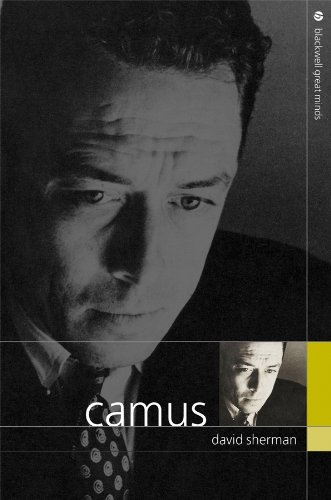
Ebook Info
- Published: 2008
- Number of pages: 232 pages
- Format: PDF
- File Size: 1.26 MB
- Authors: David Sherman
Description
Reflecting the profound influence he continues to exert on popular consciousness, Camus examines the complete body of works of French author and philosopher Albert Camus, providing a comprehensive analysis of Camus’ most important works―most notably The Myth of Sisyphus, The Stranger, The Fall, The Plague, and The Rebel―within the framework of his basic ethical orientation. Makes Camus’ concerns clear in terms that will resonate with contemporary readersReveals the unity and integrity of Camus’ writings and political activitiesDiscusses Camus’ ongoing relevance by showing how he prefigures many postmodern positions in philosophy, literature, and politics
User’s Reviews
Editorial Reviews: Review “Despite Camus’s own reluctance to be regarded as ‘a philosopher’ and ‘an existentialist’, David Sherman’s authoritative study establishes the importance of Camus’s contribution – in his fiction as well as his essays – to existential philosophy. Sherman’s Camus is an engaging man of ‘decency and courage’, and a great writer who eloquently articulated the modern human predicament.” “Professor David Cooper, Durham University” Review “Despite Camus’s own reluctance to be regarded as ‘a philosopher’ and ‘an existentialist’, David Sherman’s authoritative study establishes the importance of Camus’s contribution – in his fiction as well as his essays – to existential philosophy. Sherman’s Camus is an engaging man of ‘decency and courage’, and a great writer who eloquently articulated the modern human predicament.” –Professor David Cooper, Durham University From the Inside Flap History (much like his contemporaries) has tended to judge Camus harshly – as mediocre philosopher, conflicted man of the left and, worst of all, apologist for French imperialism. Yet, as David Sherman argues in this rewarding new study, a sensitive reading of the entirety of Camus’s writings reveals both a power and unity of philosophical purpose. The ethico-political sympathies manifested in these writings evidence an integrity that places him among the greatest and most vital humanist voices of our time. The book covers all of Camus’s significant writings and includes thorough expositions of The Myth of Sisyphus, The Stranger, The Fall, The Plague, and The Rebel. A discussion of the metaphysical and practical connotations of Camus’s celebrated concept of the Absurd lays the foundation for a discussion of the later works, which are considered in the context of Camus’s basic ethical orientation. This, it is contended, harks back (and, with its recent resurgence, forward) to a virtue ethics of sorts. It is argued that Camus’s literary characters are purified phenomenological portraits that reflect the existential temptations of an overwhelmed modern consciousness, and the ethico-political works reflect the efforts of a morally committed consciousness to come to grips with a modern world unable to make good the moral imperative. In the end, it is argued, Camus offers a phenomenological ethics, which is all that is left of virtue ethics when social life has broken down. From the Back Cover History (much like his contemporaries) has tended to judge Camus harshly as mediocre philosopher, conflicted man of the left and, worst of all, apologist for French imperialism. Yet, as David Sherman argues in this rewarding new study, a sensitive reading of the entirety of Camus’s writings reveals both a power and unity of philosophical purpose. The ethico-political sympathies manifested in these writings evidence an integrity that places him among the greatest and most vital humanist voices of our time. The book covers all of Camus’s significant writings and includes thorough expositions of The Myth of Sisyphus, The Stranger, The Fall, The Plague, and The Rebel. A discussion of the metaphysical and practical connotations of Camus’s celebrated concept of the Absurd lays the foundation for a discussion of the later works, which are considered in the context of Camus’s basic ethical orientation. This, it is contended, harks back (and, with its recent resurgence, forward) to a virtue ethics of sorts. It is argued that Camus’s literary characters are purified phenomenological portraits that reflect the existential temptations of an overwhelmed modern consciousness, and the ethico-political works reflect the efforts of a morally committed consciousness to come to grips with a modern world unable to make good the moral imperative. In the end, it is argued, Camus offers a phenomenological ethics, which is all that is left of virtue ethics when social life has broken down. About the Author The AuthorDavid Sherman is Associate Professor of Philosophy at the University of Montana at Missoula. He is the author of Sartre and Adorno: The Dialectics of Subjectivity (2007) and co-editor of The Blackwell Guide to Continental Philosophy (2003). Read more
Reviews from Amazon users which were colected at the time this book was published on the website:
⭐Plato may have presented inThe Republic the idea that political leaders should be philosphers in order to demonstrate that there is no hope that political leaders will in fact be of required quality. In his later books on that subject, The Statesman and The Laws, written after having some bitter experiences advising the rulers of Syracus, he reduced the required standards of political leaders while redefining their tasks. But the problem of inadequate and also bad political leaders remains with us, becoming all the more serious because of emerging fateful problems facing humanity which make high-quality political leaders essential, as explained in my recent book.High-quality political leaders need a personal philosophy fitting their increasingly important missions. Reading this well-written book on Camus and then The Fall and The Rebel by Camus, together wilth his play “Caligula,” will serve to introduce a political leader or a reader aspiring to become one to the pertinent ideas of Camus.Let me illustrate them by taking up three themes of particular importance for political leaders facing the emerging metamorphosis of humanity. The first one concerns the required ethics. As put in the book “Camus’s position resonates with …Aristotelian virtue ethics. Unlike Millean utilitariasnism and Kantian deontology, which focus on consequences and acts, respectively, the focus of virtue ethics in on the agent,…and it considers whether this personis is of fine character overall rather then one who just refrains from doing the wrong thing”(p. 24).Political leaders must be bound by some rules and consideration of consequences should be central to their pondering. And what are the virtues apprpriate to political leaders in different societies at various periods of history is far from obvious. But, still, a good measure of virtues is essential for being a high-quality political leaders, a demand which disqualified many of the present top level politicians worldwide.The second point, which is a hallmark of existentalism (p. 70), postulates that a person has always significant free choice and therefore carries much personal responsibility. True, the world is full with facticity, both external to a person and concerning a person himself, which strictly limits freedom of choice. But, still, “the facts never overdetermine how I might choose to approach them” (p. 71). Furthermore, what matters more than “facts” as resulting from the past is what we seek to bring about (p. 92), there always being choices on what to do.Therefore, for instance, to give an example of my own: The president of a country who does not do what she regards as necessary for long-term thriving because opinion polls show that the voters are more interested in the here and now and doing what is really appropriate may cost her the next elections, telling herself that she “is bound by the facts of public opinion,” betrays her mission.The third and last point to be mentioned here, out of many presented in the book, deals with the need to rebel against bad realilties, without the illusion that human being can be perfected and also doubts about their moral improvabililty. This, I claim, fully applies to contemporalry political leaders who in their minds should rebel againsts the present dismal state of existance of humanty and even worse likely to come. But, what I call the needed avant-garde politicians must engage in “public interest Machiavellianism,” hiding rebellious intentions and acts, otherwise in most societies, including nearly all democratic ones, he will lose his power to do what is necessary. As put well by Sartre, the counterpart of Camus (whom I will discuss in another book review) “There is a morality in politics…and when politics must betray its morality, to choose morality is to betray politics” (p. 174). Camus never fully accepted this position, but I read his The Rebe, as leading towards it, but with a strict warning that no goal justifies disproportional sacrifice of human values in the hope of realizing what is an impossible “utopia.”Thus, Camus warns against fanaticism, while recognizing the need for rejection of contemporary realities. I recommend this position as a a central component of the qualities required by political leaders in our world.This book is highly recommended to all who consider politics as their vocation – all the more so as the breeding grounds of many politicians in law and public policy schools neglect the study of life-philosophies despite their criticality.Professor Yehezkel DrorThe Hebrew University of Jerusalem
⭐Avant-Garde Politician: Leaders for a New Epoch
⭐Plato may have presented inThe Republic the idea that political leaders should be philosphers in order to demonstrate that there is no hope that political leaders will in fact be of required quality. In his later books on that subject, The Statesman and The Laws, written after having some bitter experiences advising the rulers of Syracus, he reduced the required standards of political leaders while redefining their tasks. But the problem of inadequate and also bad political leaders remains with us, becoming all the more serious because of emerging fateful problems facing humanity which make high-quality political leaders essential, as explained in my recent book.High-quality political leaders need a personal philosophy fitting their increasingly important missions. Reading this well-written book on Camus and then The Fall and The Rebel by Camus, together wilth his play “Caligula,” will serve to introduce a political leader or a reader aspiring to become one to the pertinent ideas of Camus.Let me illustrate them by taking up three themes of particular importance for political leaders facing the emerging metamorphosis of humanity. The first one concerns the required ethics. As put in the book “Camus’s position resonates with …Aristotelian virtue ethics. Unlike Millean utilitariasnism and Kantian deontology, which focus on consequences and acts, respectively, the focus of virtue ethics in on the agent,…and it considers whether this personis is of fine character overall rather then one who just refrains from doing the wrong thing”(p. 24).Political leaders must be bound by some rules and consideration of consequences should be central to their pondering. And what are the virtues apprpriate to political leaders in different societies at various periods of history is far from obvious. But, still, a good measure of virtues is essential for being a high-quality political leaders, a demand which disqualified many of the present top level politicians worldwide.The second point, which is a hallmark of existentalism (p. 70), postulates that a person has always significant free choice and therefore carries much personal responsibility. True, the world is full with facticity, both external to a person and concerning a person himself, which strictly limits freedom of choice. But, still, “the facts never overdetermine how I might choose to approach them” (p. 71). Furthermore, what matters more than “facts” as resulting from the past is what we seek to bring about (p. 92), there always being choices on what to do.Therefore, for instance, to give an example of my own: The president of a country who does not do what she regards as necessary for long-term thriving because opinion polls show that the voters are more interested in the here and now and doing what is really appropriate may cost her the next elections, telling herself that she “is bound by the facts of public opinion,” betrays her mission.The third and last point to be mentioned here, out of many presented in the book, deals with the need to rebel against bad realilties, without the illusion that human being can be perfected and also doubts about their moral improvabililty. This, I claim, fully applies to contemporalry political leaders who in their minds should rebel againsts the present dismal state of existance of humanty and even worse likely to come. But, what I call the needed avant-garde politicians must engage in “public interest Machiavellianism,” hiding rebellious intentions and acts, otherwise in most societies, including nearly all democratic ones, he will lose his power to do what is necessary. As put well by Sartre, the counterpart of Camus (whom I will discuss in another book review) “There is a morality in politics…and when politics must betray its morality, to choose morality is to betray politics” (p. 174). Camus never fully accepted this position, but I read his The Rebe, as leading towards it, but with a strict warning that no goal justifies disproportional sacrifice of human values in the hope of realizing what is an impossible “utopia.”Thus, Camus warns against fanaticism, while recognizing the need for rejection of contemporary realities. I recommend this position as a a central component of the qualities required by political leaders in our world.This book is highly recommended to all who consider politics as their vocation – all the more so as the breeding grounds of many politicians in law and public policy schools neglect the study of life-philosophies despite their criticality.Professor Yehezkel DrorThe Hebrew University of Jerusalem
Keywords
Free Download Camus 1st Edition in PDF format
Camus 1st Edition PDF Free Download
Download Camus 1st Edition 2008 PDF Free
Camus 1st Edition 2008 PDF Free Download
Download Camus 1st Edition PDF
Free Download Ebook Camus 1st Edition