Ebook Info
- Published: 2005
- Number of pages: 248 pages
- Format: PDF
- File Size: 1.72 MB
- Authors: Alfred Nordmann
Description
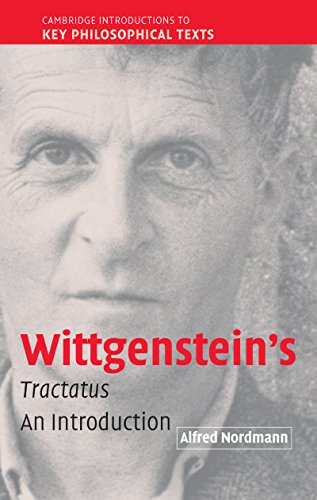
Ludwig Wittgenstein’s ‘Tractatus Logico-Philosophicus’ is one of the most important books of the twentieth century. It influenced philosophers and artists alike and it continues to fascinate readers today. It offers rigorous arguments but clothes them in enigmatic pronouncements. Wittgenstein himself said that his book is ‘strictly philosophical and simultaneously literary, and yet there is no blathering in it’. This introduction, first published in 2005, considers both the philosophical and the literary aspects of the ‘Tractatus’ and shows how they are related. It also shows how the work fits into Wittgenstein’s philosophical development and the tradition of analytic philosophy, arguing strongly for the vigour and significance of that tradition.
User’s Reviews
Reviews from Amazon users which were colected at the time this book was published on the website:
⭐This is a clearly written book, which, to me, is a marvel for any philosophy book. Also very important, Nordmann is presenting his interpretation, or elucidation, of the Tractatus more so than an introduction. The distinction I mean to highlight is that with an introduction you might expect the author to present the various leading interpretations of the Tractatus, giving each interpretation its fair presentation. This is not what Nordmann does. He is strictly giving you his interpretation, his idea of what is going on in the Tractatus.Nordmann argues that the Tractatus as a whole is one giant reductio ad absurdum argument. As such, he can consistently argue that the beginning premise is a hypothetical statement (thus written in the subjunctive mood). I don’t want to go into the details of his argument, but basically he’s saying that the sentences of the Tractatus are not one of the three types which Wittgenstein identifies in his book: namely, sentences with sense, sentences without sense (senseless) and sentences that are nonsense. Nordmann argues that the sentences of the Tractatus are subjunctive mood sentences, which, he believes, can be without sense and yet not be nonsense. That’s it. If you’re intrigued, then let me assure you that Nordmann offers a clear, coherent, and (you’ll have to judge for yourself) a plausibly compelling interpretation.My disclaimer is that I read the book (cover to cover) but simply for understanding. I didn’t read the book critically, meaning I didn’t do any philosophy on it. I simply took in what he was saying without referring to the various sources (e.g. the Tractatus, the Philosophical Investigations, the Notebooks 1912-1914, etc.) to determine whether my personal interpretation jived with Nordmann’s take.To me, this is an interpretation that deserves to be taken seriously. Whether you agree with it or not will come after some serious Wittgenstein study.
⭐
Keywords
Free Download Wittgenstein’s Tractatus: An Introduction (Cambridge Introductions to Key Philosophical Texts) in PDF format
Wittgenstein’s Tractatus: An Introduction (Cambridge Introductions to Key Philosophical Texts) PDF Free Download
Download Wittgenstein’s Tractatus: An Introduction (Cambridge Introductions to Key Philosophical Texts) 2005 PDF Free
Wittgenstein’s Tractatus: An Introduction (Cambridge Introductions to Key Philosophical Texts) 2005 PDF Free Download
Download Wittgenstein’s Tractatus: An Introduction (Cambridge Introductions to Key Philosophical Texts) PDF
Free Download Ebook Wittgenstein’s Tractatus: An Introduction (Cambridge Introductions to Key Philosophical Texts)