Ebook Info
- Published: 2008
- Number of pages: 432 pages
- Format: PDF
- File Size: 12.27 MB
- Authors: Pierre Hadot
Description
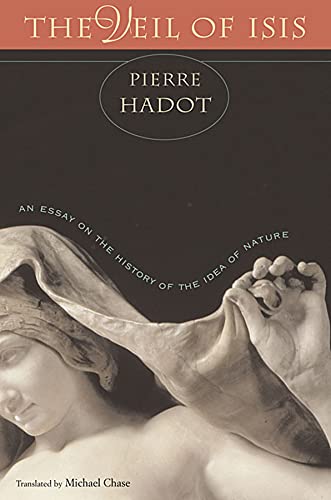
Nearly twenty-five hundred years ago the Greek thinker Heraclitus supposedly uttered the cryptic words “Phusis kruptesthai philei.” How the aphorism, usually translated as “Nature loves to hide,” has haunted Western culture ever since is the subject of this engaging study by Pierre Hadot. Taking the allegorical figure of the veiled goddess Isis as a guide, and drawing on the work of both the ancients and later thinkers such as Goethe, Rilke, Wittgenstein, and Heidegger, Hadot traces successive interpretations of Heraclitus’ words. Over time, Hadot finds, “Nature loves to hide” has meant that all that lives tends to die; that Nature wraps herself in myths; and (for Heidegger) that Being unveils as it veils itself. Meanwhile the pronouncement has been used to explain everything from the opacity of the natural world to our modern angst.From these kaleidoscopic exegeses and usages emerge two contradictory approaches to nature: the Promethean, or experimental-questing, approach, which embraces technology as a means of tearing the veil from Nature and revealing her secrets; and the Orphic, or contemplative-poetic, approach, according to which such a denuding of Nature is a grave trespass. In place of these two attitudes Hadot proposes one suggested by the Romantic vision of Rousseau, Goethe, and Schelling, who saw in the veiled Isis an allegorical expression of the sublime. “Nature is art and art is nature,” Hadot writes, inviting us to embrace Isis and all she represents: art makes us intensely aware of how completely we ourselves are not merely surrounded by nature but also part of nature.
User’s Reviews
Editorial Reviews: Review “The Veil of Isis is profoundly original in design. Pierre Hadot is both an eminent historian of philosophy and a philosopher himself. Both sides of his interest are evident in this outstanding study, in which the argument develops historically and analytically.”―Brian Stock, Professor of History and Comparative Literature at the University of Toronto“In The Veil of Isis Pierre Hadot, an eminent authority on Neoplatonic philosophy, addresses the exploration of nature in Western thought across more than two millennia. His mastery of a wide range of literature, philosophy, iconography, and technology from antiquity to the present reveals unsuspected links of thought and image throughout the long process of uncovering the secrets of nature. In a brilliant finale Hadot brings the whole evolution into conjunction with the many-breasted Artemis of Ephesus, the Egyptian goddess Isis, and the Freemasons. The book is a dizzying tour de force that would be the envy of a modern Plotinus.”―G. W. Bowersock, author of Mosaics as History“Decidedly, with this new book of a rare richness and clarity, about which he says he has been thinking for more than forty years, the philosopher… gives evidence of an tireless spirit of exploration.”―Roger-Pol Droit Le Monde des Livres“Pierre Hadot’s The Veil of Isis is an extremely ambitious work, giving us an account of the evolution of man’s attitude towards, and understanding of, nature from antiquity down to the present day. It is a very significant contribution to our understanding of this important topic-and it makes for good reading.”―Michael Frede, Professor Emeritus of the History of Philosophy, Keble College, Oxford“[Hadot] is an extraordinary guide to the history of the idea of nature from Heraclitus to now. You will find yourself in the company of a wise Greek, a pagan, a philosopher who believes that a role of philosophy is to teach us how to live.”―Ian Hacking, London Review of Books“Again and again sparks fly as Hadot reveals the enduring fascination of nature’s mystery.”―Tom D’Evelyn, Providence Journal“This very learned book displays an enormous scholarship and yet is a fascinating read.”―Robert J. Dostal, Bryn Mawr Classical Review“[Hadot] has written a remarkably insightful book on the theme of the secrets of nature and their significance for the history of science and ideas about nature. First published in 2004 by Editions Gallimard, it is now available in English through Michael Chase’s adept and eloquent translation…Of particular interest to historians of science will be Hadot’s conception of the Promethean attitude and the mechanization of nature…Hadot’s analysis is significant for its focus on Nature as female both in reality and as metaphor during the Renaissance and early modern era…[W]hatever view the reader may hold of the rise of science or of the consequences of the Promethean attitude, The Veil of Isis is a rewarding voyage through a multitude of texts, illustrations and historical figures that brings a set of complex and often contradictory ideas into a clear and compelling argument.”―Carolyn Merchant, British Journal for the History of Science“Pierre Hadot, professor emeritus of the Collège de France, has written a remarkably insightful book on the theme of secrets of nature and their significance for the history of science and ideas about nature. First published in 2004 by Editions Gallimard, it is now available in English through Michael Chase’s adept and eloquent translation…Of particular interest to historians of science will be Hadot’s conception of the Promethean attitude and the mechanization of nature…The Veil of Isis is a rewarding voyage through a multitude of texts, illustrations and historical figures that brings a set of complex and often contradictory ideas into a clear and compelling argument.”―Carolyn Merchant, British Journal for the History of Science About the Author Pierre Hadot was Professor Emeritus at the Collège de France. His books include Philosophy as a Way of Life and Plotinus.
Reviews from Amazon users which were colected at the time this book was published on the website:
⭐This is about 2/3 of a great book, which is still very good. Hadot is a very well known French philosopher of a not post-modern kind, and writes very clearly (and the translation by Michael Chase is beautiful). The book is a survey of the theme of penetrating the secrets of nature, and it is surprising how much mileage the author gets out of the idea. The first 2/3 of the book is spectacular, handling a range of ancient sources with aplomb and care. After that, it sort of winds down, and becomes spotty in dealing with the 19th and 20th centuries. I don’t usually want books bigger, but this one should have been. The dealings with Heidegger and Nietszche, though interesting, are really just sketches for arguments that need a lot more material and discussion; the same with the Romantic poets. The Orphic approach to Nature doesn’t really come off: it needed a lot more work. Nevertheless, I learned a lot. One hardly reads anything as ambitious as this, and carried off.
⭐everything – book and service – was OK. With very best Christmas wishes
⭐Good job
⭐There is much in Hadot’s The Veil of Isis to ponder and appreciate: the scholarly vein, the invaluable insights, the clarity of presentation, the sensibility of the philosopher and the ethical intrigues that art haunts us by. This is the best book on such matters since Joseph Campbell and Lewis Hyde have written on the subject, as it manages to expose analogies and interpretive intuitions that will lend you an intent to create more through art, literature and self-discovery than ever before. The ethics of the subject are unveiled with distinction and a verve that makes philosophy exciting, mythology pertinant, and the epistemic realm of nature a poetic art that enchants and inspires. Highly recommended.
⭐This book charts important territory that was brilliantly explored, as the authors note, by Carolyn Merchant in her Death of Nature. I almost gave up on this volume at once, due an ominously careless reference at the beginning (Thorvaldsen was not Swedish), but the material is vital and the approach appealing so I persisted and can offer two quotes to illustrate where the thinking goes afoul: First,”[t]he Promethean attitude, which consists of using technical procedures to tear Nature’s “secrets” from her in order to dominate and exploit her, has had a gigantic influence. It has engendered our modern civilization and the worldwide expansion of science and industry.” (p. 101) Yes, folks, it is our ‘attitude” that changes the world, not an expanding population’s need to utilize limited resources! Thought, not necessity, is the mother, or rather the father, of invention! Second, there are not-so-veiled imperatives of sentiment that warp the procedure of the thought:”The Christian character of this mechanistic revolution of the seventeenth century cannot be overemphasized.” This, we are told, is because that revolution “echoes God’s exhortation to Adam and Eve to “Subjugate the earth.”” (pp. 129-30). Nevermind that ‘subjugate’ is not a translation of the Hebrew, that one line does not a story make, and that said mechanistic revolution caused contemporary Christian theologians to wail in dismay; if we desire to jump on the bash-religion bandwagon, let us lose no opportunity to ride, however intellectually far-fetched.Again, this is an appealing approach to important material, and represents fascinating scholarship. Ultimately, however, the thinking is hasty and even irresponsible at times. Regretfully, I laid it aside midway, for life is short.
⭐Extremely good insight into the concept of veiled Deity. Highly recommended for anyone with an interest in comparative religion.
Keywords
Free Download The Veil of Isis: An Essay on the History of the Idea of Nature in PDF format
The Veil of Isis: An Essay on the History of the Idea of Nature PDF Free Download
Download The Veil of Isis: An Essay on the History of the Idea of Nature 2008 PDF Free
The Veil of Isis: An Essay on the History of the Idea of Nature 2008 PDF Free Download
Download The Veil of Isis: An Essay on the History of the Idea of Nature PDF
Free Download Ebook The Veil of Isis: An Essay on the History of the Idea of Nature