

Ebook Info
- Published: 2012
- Number of pages: 428 pages
- Format: PDF
- File Size: 1.78 MB
- Authors: Jeffrey Andrew Barash
Description
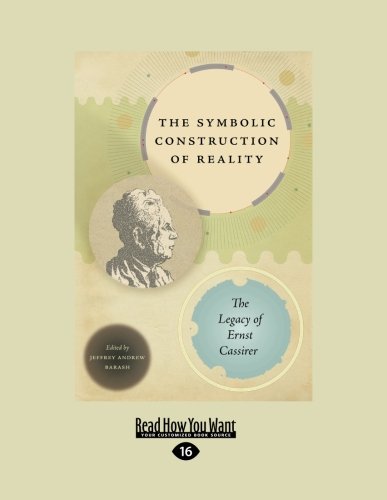
In 1933 eminent philosopher Ernst Cassirer (1874 – 1945) fled Nazi Germany for the United States. His fame in Europe having already been established through a public debate with Martin Heidegger in 1929, Cassirer would go on to become a noteworthy influence on American culture. His most important early writings focused on the symbol and symbolic interaction, exploring how human cultures – from early myth-based ones to our own modern, scientifically oriented time – have used symbols to mediate the basic forms of experience. Following this work, Cassirer extended his insights to encompass a broad spectrum of philosophical themes; from investigations into Western epistemological and scientific traditions to aesthetics and the philosophy of history to anthropology and political philosophy. Reflecting this diversity in Cassirer’s own work, The Symbolic Construction of Reality collects eleven essays by a wide range of contributors from different fields. Each essay analyzes a different aspect of his legacy, reassessing its significance for our contemporary world and bringing much-needed attention to this seminal thinker.
User’s Reviews
Keywords
Free Download The Symbolic Construction of Reality: The Legacy of Ernst Cassirer in PDF format
The Symbolic Construction of Reality: The Legacy of Ernst Cassirer PDF Free Download
Download The Symbolic Construction of Reality: The Legacy of Ernst Cassirer 2012 PDF Free
The Symbolic Construction of Reality: The Legacy of Ernst Cassirer 2012 PDF Free Download
Download The Symbolic Construction of Reality: The Legacy of Ernst Cassirer PDF
Free Download Ebook The Symbolic Construction of Reality: The Legacy of Ernst Cassirer