

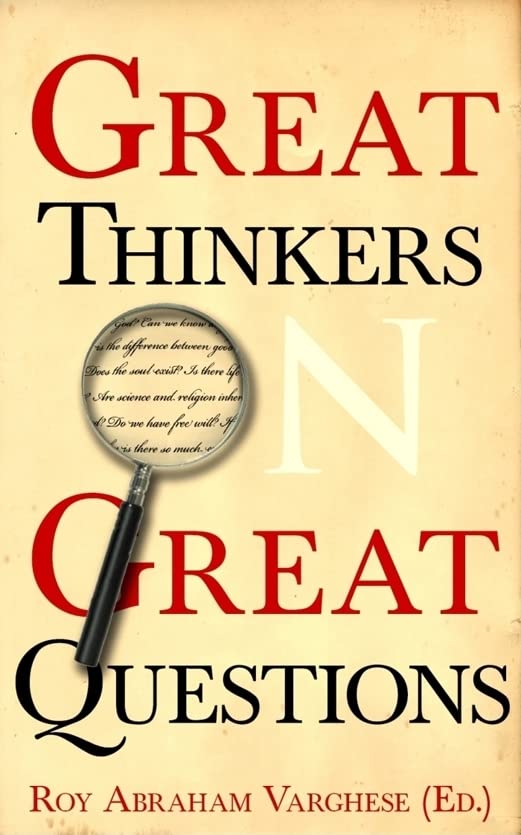
Ebook Info
- Published: 2009
- Number of pages: 256 pages
- Format: PDF
- File Size: 1.32 MB
- Authors: Roy Abraham Varghese
Description
Great minds of the 20th century answer life’s monumental questionsIs there a God? Are our choices free? Does the soul exist? “Great Thinkers on Great Questions” presents cogent answers from some of the greatest thinkers of modern times to fifteen of the most enduring questions faced by humanity. Drawing on a diverse range of views from such influential figures as Richard Swinburne, Alvin Plantinga and Keith Ward, the book broaches God and atheism, ethics, truth, free will, and the compatibility of science and religion. For questioning minds who seek alternative philosophical viewpoints, this is a unique insight into the fundamental questions which epitomize the human condition.
User’s Reviews
Editorial Reviews: Review “A truly great, accessible volume of replies by different philosophers to some of life’s most profound questions.” ― Charles Taliaferro”The lively format of this fascinating book enables us to watch eminent thinkers grapple incisively with classic positions and elegantly articulate their own powerfully compelling viewpoints.” ― Joseph Runzo”An impressive and diverse range of prominent philosophers, scientists, and other thinkers offer their answers to life’s ‘great questions’.” ― Tim Mawson – Lecturer in Philosophy, University of Oxford”A wonderful treasury of incisive arguments by eminent modern writers.” ― Robert Trigg – Emeritus Professor in Philosophy, Warwick University Review “The lively format of this fascinating book enables us to watch eminent thinkers grapple incisively with classic positions and elegantly articulate their own powerfully compelling viewpoints.” Review “An impressive and diverse range of prominent philosophers, scientists, and other thinkers offer their answers to life’s ‘great questions’.” About the Author Roy Abraham Varghese is an experienced author and editor on the subject of science and religion. His book Cosmic Beginnings and Human Endings won the Templeton Book Prize for Theology in 1995. Time magazine described his book Cosmos, Bios, Theos as “the year’s most intriguing book about God”. Read more
Reviews from Amazon users which were colected at the time this book was published on the website:
⭐This excellent book is divided up into five parts and addresses top questions by highly qualified Christian apologists.Part 1. CAN WE KNOW AND KNOWTHAT WE KNOW?Part II: IS MATTER THE WHOLE STORY?Part III: ARE RELIGION AND MORALITY SIMPLY ANDSOLELY BY-PRODUCTS OF THE SOCIOCULTURALENVIRONMENT?Part IV: IS THERE A GOD?Part V: WHAT CAN WE KNOW ABOUT GOD?CONTENTSContributors xiiiIntroduction: A Return to Universal Experience 1Part I: CAN WE KNOW AND KNOW 21THAT WE KNOW?RELATIVISM 23Great Question 1: It is commonly believed that “truth” is simply aproduct of perspective or genetics or cultural environment. We aretold by relativists that the human mind cannot really know anything.What is your assessment of relativism?Richard Swinburne 23Hugo Meynell 24Alvin Plantinga 27Gerard J. Hughes 28Josef Seifert 30George F. R. Ellis 31Ralph McInerny* 33William P. Alston* 34UNIVERSAL INSIGHTS PRESUPPOSED BY SCIENCE AND PHILOSOPHY 39Great Question 2: It is often said that the premises in an argumentalready “contain” their conclusions and therefore logical argumentscannot reveal anything new. Are there any fundamental insightsthat lie beyond scientific experimentation and philosophical argumentationto which the human mind has access?Alvin Plantinga 39Josef Seifert 40Ralph McInerny* 40* Follow-up questions and answers included.Part II: IS MATTER THE WHOLE STORY? 41THE EXISTENCE OF THE SOUL 43Great Question 3: Do you accept the existence of a soul or mindseparate from the body and, if so, on what basis?Richard Swinburne 43Alvin Plantinga 45Hugo Meynell 46Josef Seifert 47Sir Alfred Ayer* 48Ralph McInerny* 49G. E. M. Anscombe* 52John Lucas* 56John Foster* 57THE FREEDOM OF THE WILL 70Great Question 4: Are human decisions entirely shaped byheredity and environment or are human beings capable of freechoices? On what basis is it possible to accept the reality of freewill?Gerard J. Hughes 70Richard Swinburne 72Alvin Plantinga 74Hugo Meynell 75Josef Seifert 77Ralph McInerny* 78John Lucas* 79LIFE AFTER DEATH 83Great Question 5: Do you believe in a life after death and, if so,why?Josef Seifert 83Richard Swinburne 85Gerard J. Hughes 85REINCARNATION 87Great Question 6: What is your assessment of the theory of reincarnation?C.T.K. Chari* 87GREAT THINKERS ON GREAT QUESTIONS viii* Follow-up questions and answers included.Part III: ARE RELIGION AND MORALITY SIMPLY AND 95SOLELY BY-PRODUCTS OF THE SOCIOCULTURALENVIRONMENT?PSYCHOLOGY, SOCIOLOGY, AND RELIGIOUS BELIEF 97Great Question 7: Some thinkers hold that religion can beexplained entirely in psychological and sociological categories.Can it?Gerard J. Hughes 97Richard Swinburne 98Josef Seifert 99RIGHT AND WRONG 100Great Question 8: Can right be distinguished from wrong, goodfrom evil? More fundamentally is there an objective moral orderand can human beings become aware of it?Josef Seifert 100Richard Swinburne 101Alvin Plantinga 102Gerard J. Hughes 103George F.R. Ellis* 105Keith Ward* 106ATHEISM 108Great Question 9: Atheism – the rejection of the existence ofGod – is an intellectual option embraced by several thinkers.How do you explain atheism?Alvin Plantinga 108Richard Swinburne 109Gerard J. Hughes 111Hugo Meynell 112Josef Seifert 113CONTENTS ix* Follow-up questions and answers included.Part IV: IS THERE A GOD? 115THE EXISTENCE OF GOD 117Great Question 10: The existence of God has been one of themost hotly debated issues in the history of human thought.What are your own conclusions on the question of God’s existenceand on what basis do you affirm or deny the existence ofGod?Richard Swinburne 117Alvin Plantinga 120Gerard J. Hughes 120Brian Leftow 122Josef Seifert 125Russell Pannier, T. D. Sullivan 136Hugo Meynell* 138Ralph McInerny* 140Bernard J. F. Lonergan* 142H. D. Lewis* 145William P. Alston* 148GOD AND MODERN SCIENCE 154Great Question 11: What bearing, if any, does science have onreligion – particularly with respect to the questions of God’s existence,the origin of the universe, and the possibility of miracles?Richard Swinburne 154Hugo Meynell 155Gerard J. Hughes 156Josef Seifert 158Alvin Plantinga* 160Ralph McInerny* 164Owen Gingerich* 165George F. R. Ellis* 170Keith Ward* 184GREAT THINKERS ON GREAT QUESTIONS x* Follow-up questions and answers included.THE PROBLEM OF EVIL 191Great Question 12: The problem of evil, the problem ofreconciling the existence of evil and suffering with the existenceof an all-good, all-powerful God, has puzzled believers andunbelievers. What solution, if any, do you see to this problem?Richard Swinburne 191Gerard J. Hughes 193Alvin Plantinga 196Hugo Meynell 198Josef Seifert 199Sandra Menssen, T. D. Sullivan 202Ralph McInerny* 204PANTHEISM 206Great Question 13: How do you view pantheism, the notionthat we are all “part of” God, that God can be identified withthe world?Russell Pannier, T. D. Sullivan 206Richard Swinburne 208Hugo Meynell 208Alvin Plantinga 209Josef Seifert 209Ralph McInerny* 210William P. Alston 210DIVINE ACTION IN THE WORLD AND HUMAN HISTORY 212Great Question 14: What is your view on the possibility ofDivine action in the world and of the relation of Providence andhistory?Richard Swinburne 212Gerard J. Hughes 213Alvin Plantinga 214Josef Seifert 214CONTENTS xi* Follow-up questions and answers included.Part V: WHAT CAN WE KNOW ABOUT GOD? 219OMNISCIENCE, OMNIPOTENCE, ETERNITY, INFINITY 221Great Question 15: If God exists, what attributes can properlybe described as divine attributes?Gerard J. Hughes 221Alvin Plantinga 224Hugo Meynell 225Josef Seifert 225Ralph McInerny* 229Brian Leftow* 230Leo Sweeney 232Index 250CONTRIBUTORS1. Sir Alfred Ayer. Wykeham Professor of Logic, Oxford University,1959-78; President, Society for Applied Philosophy, 1982-1985.Delivered the Gifford Lectures. Works include Language, Truthand Logic (which introduced Logical Positivism to the Englishspeakingworld); The Foundations of Empirical Knowledge andConcept of a Person.2. G. E. M. Anscombe. Professor of Philosophy, CambridgeUniversity; Honorary Fellow of St. Hugh’s College and ofSomerville College, Oxford University; Fellow of the BritishAcademy. Widely recognized as one of today’s leading moralphilosophers, her works include An Introduction toWittgenstein’s Tractatus, Intention, and Three Philosophers(with Peter Thomas Geach). Also translator and co-editor of theposthumous writings (including Philosophical Investigationsand On Certainty) of Ludwig Wittgenstein.3. William P. Alston. Professor of Philosophy, Syracuse University;past President, American Philosophical Association; pastPresident, Society for Philosophy and Psychology. A distinguishedcontributor to the philosophy of language and the philosophyof mind, he has also been described as “one of the foremostcontributors to the analytical philosophy of religion.”Editor of the Cornell Studies in Philosophy of Religion. Worksinclude Philosophy of Language, A Realist Conception of Truth,and Perceiving God: The Epistemology of Religious Experience.4. C. T. K. Chari. Former Professor of Philosophy, MadrasUniversity. Member of the Prime Minister’s Council of IndianPhilosophy. Published extensively on subjects ranging fromHindu philosophy to logic, linguistics, information theory,mathematics, quantum physics, and parapsychology.Contributor on reincarnation to Wolman’s Handbook ofParapsychology.5. George F. R. Ellis. Professor of Applied Mathematics, Universityof Cape Town and Queen Mary College, University of London;President of the International Society of General Relativity andGravitation; author of numerous works on the evolution anddensity of the Universe and co-author (with Stephen Hawking,his former fellow-student) of The Large-Scale Structure ofSpace-Time.6. John Foster. Fellow, Brasenose College, Oxford. Works includeThe Immaterial Self.7. Owen Gingerich. Professor of Astronomy and of the History ofScience, Harvard University and former Chairman of theDepartment of the History of Science. Past Chairman of the USNational Committee of the International Astronomical Union.Delivered the George Darwin Lecture, the most prestigious lectureof the Royal Astronomical Society. Asteroid 2658=1980CK wasnamed in his honor by the International Astronomical Union.Works include Album of Science: The Physical Sciences in theTwentieth Century, The Great Copernicus Chase and OtherAdventures in Astronomical History, and The Eye of Heaven:Ptolemy, Copernicus, Kepler.8. Gerard J. Hughes. Chairman, Department of Philosophy,Heythrop College, University of London. Works includeAuthority in Morals, The Nature of God, and The PhilosophicalAssessment of Theology (edited).9. Brian Leftow. Professor of Philosophy, Fordham University. Editor ofa series of volumes on analytic philosophy and the divine attributes.Works include Divine Ideas and Time and Eternity.10. H. D. Lewis. Former Head of the Department of the Historyand Philosophy of Religion, London University. Past Presidentof the Mind Association and of the International Society forMetaphysics; former Chairman of the Council of the RoyalInstitute of Philosophy and Editor of the Muirhead Library ofPhilosophy from 1947 to 1978. Delivered the Gifford Lectures.Books include The Elusive Mind, The Self and Immortality, andOur Experience of God.11. Bernard J.F. Lonergan. Former Professor of Philosophy,Gregorian University and Boston College. Time magazine notedthat he “is considered by many intellectuals to be the finest philo-GREAT THINKERS ON GREAT QUESTIONS xivsophic thinker of the 20th century.” (Time, April 20 1970). Overa hundred and fify doctoral dissertations have been written on hiswork and an entire conference of fellow-philosophers was convenedto study his work. “77 of the best minds in Europe and theAmericas gathered to examine Lonergan’s profoundly challengingwork.” Works include Insight, which was described as having”become a philosophic classic comparable in scope to Hume’sInquiry Concerning Human Understanding,” (Newsweek, April20, 1970), Method in Theology, and Philosophy of God andTheology.12. John Lucas. Emeritus Fellow, Merton College, OxfordUniversity. Delivered the Gifford Lectures. Works include TheFreedom of the Will, The Nature of Mind, and TheDevelopment of Mind.13. Ralph McInerny. Michel P. Grace Professor of Medieval Studies,University of Notre Dame; Director of the Jacques MaritainCenter. Past President of the American Metaphysical Society andof the American Catholic Philosophical Association. Editor, TheNew Scholasticism. Works include The Logic of Analogy,Thomism in an Age of Renewal, and Boethius and Aquinas.14. Sandra Menssen. Associate Professor of Philosophy, Universityof St. Thomas. Has published extensively in philosophy of religion,biomedical ethics and gender studies, and is co-author(with T. D. Sullivan) of A Ship for Simmias? PhilosophicalObjections to Revelatory Claims.15. Hugo Meynell. Professor of Religious Studies, University ofCalgary. Fellow of the Royal Society of Canada. Works includeGod and the World, The Intelligible Universe, and TheTheology of Bernard Lonergan.16. Russell Pannier. Professor of Law, William Mitchell College ofLaw, St. Paul. His previous publications have been in the areasof logic, metaphysics, jurisprudence, and constitutional law.17. Alvin Plantinga. John A. O’Brien Professor of Philosophy,University of Notre Dame. Past President, AmericanPhilosophical Association. Delivered the Gifford Lectures.Plantinga has been described as “the most important philosopherof religion now writing.” Works include God and OtherMinds, The Nature of Necessity, and Warrant.CONTRIBUTORS xv18. Josef Seifert. Rector, International Academy of Philosophy,Liechtenstein. One of the most prominent contemporaryproponents of phenomenological realism, he has publishedextensively in English and German on epistemology, metaphysics,philosophy of mind, and philosophy of religion.Works include: Back to Things Themselves: APhenomenological Foundation for Classical Realism, Gott alsGottesbeweiss: Eine phänomenologische Neubegründung desontologischen Arguments (God as Proof of God’s Existence: APhenomenological Foundation for the Argument for theExistence of God from the Necessary Divine Essence), and Leibund Seele.19. T. D. Sullivan. Aquinas Professor of Philosophy and Theology,University of St. Thomas, St. Paul. Has published extensively inlogic, ethics, metaphysics, and the philosophy of religion. Coauthor(with Sandra Menssen) of A Ship for Simmias?Philosophical Objections to Revelatory Claims.20. Leo Sweeney. Research Professor of Philosophy, LoyolaUniversity, Chicago. President of the US section of theInternational Society for Neoplatonic Studies; President,American Catholic Philosophical Association. Works include AMetaphysics of Authentic Existentialism, AuthenticMetaphysics in an Age of Unreality, and Divine Infinity inAncient and Medieval Thought.21. Richard Swinburne. Nolloth Professor of the Philosophy of theChristian Religion, Oxford University. A distinguished contributorto philosophy of science, philosophy of mind, and philosophyof religion, he is the leading living proponent of rational”argumentative” theism. Delivered the Gifford Lectures. Worksinclude Space and Time, The Coherence of Theism, and TheEvolution of the Soul.22. Keith Ward. Regius Professor of Divinity, Oxford University. Heis one of the most prominent contemporary philosophers of religionin the United Kingdom. Works include God, Faith and theNew Millennium, Concepts of God, In Defence of the Soul, andGod, Chance and Necessity.
⭐This book should have been titled “Christian Thinkers on Great Questions” since it appears that almost all of the writers / philosophers / theologians used in this work edited by Roy Varghese are Christians of one type or another, and every question they address involves God, His existence and his impact on the world. Some of the contributors, e.g., George Ellis, Gerard Hughes, Richard Swinburne, have insightful philosophical discussions on these issues, but the dominant tone among the contributors is a philosophical Scholasticism. While (of course) Aristotle and Aquinas are intellectual giants, the philosophy that’s derived from their work, e.g., “unmoved movers”, has always seemed, at least to me, to be word-play and logic-chopping. It’s essentially based on word definitions and syllogisms, and while it’s a remarkable intellectual edifice, it’s unconvincing. I’m quite receptive to these thinkers’ conclusions, but the “Ontological Argument” is not the reason.
⭐The cover title overstated the scope and reputation of this book. Looking at the title, it seems that the impression the editor wished to make was that the book has covered all the main questions of this world and that the people who contributed their views represented the greatest of the great thinkers, and thus, the views held in the book are the best, if not the true, “answers” to the great questions. That was clearly a great misleading impression. First, the questions covered were not all the great questions in life. The editor declared in the “introduction” that the `Objective of this collection is not to present diversity for its own sake but to build a bridge between modern thought and the body of truth that has seemed obvious to the majority of the human race.” That was an arrogant and false statement; the converse is more probable since Christians forms only a small minority of humans. The editor may argue that his contributors were not referring specifically to the Christian God. One need only browse the book at the bookstore to satisfy himself if that was really the case. Secondly, virtually every contributor was a Christian apologist, and his (there was one female contributor, but I will use the male gender for convenience) contribution was in support of answering the posed questions affirmatively in line with Christian thinking. There was not a single voice forming any contrary view although such voices and writers are in abundance – Martin Thomas, Richard Dawkins, Bart Erhman, George Smith, Bertrand Russell, Daniel Dennett et al. If the editor professes not to present a diverse field as he declared, then he ought to have chosen a more accurate and appropriate title. He included a short paragraph from “Dr Alfred Ayer”, better known as A J Ayer. Ayer was not a Christian apologist (he was agnostic though some people have tried to claim that he had a late conversion to Christianity). He died in 1989. His short paragraph on logical positivism, taken out of context, tells the lay reader nothing. The rest of this book contain statements by the other contributors in simple layman’s language, shorn of detailed and technical arguments. It was designed to lead the unsuspecting and ignorant lay reader into thinking that the answers given by these “great thinkers” are all the answers they need and that all those answers are true.This book is more like a theological piece of work contributed by Christian apologists. Its true content was disguised under a title designed to sound like an intellectual work. It is not a book of science, evidence, or philosophy. It made its case on unproven statements. The converted Christian hardly needs this book; and the well informed reader will recognize the flaws at once. It is the uninitiated seeking answers to some of these questions who should be alerted to also read the books of the many other thinkers (I shan’t go into the advertising mode and claim greatness on their behalf – the readers will judge for themselves) who present contrary views.The flaws in the statements of the contributors are many and a complete refutation of them already exists in the works of the writers mentioned (there are many more) and a review would not be the appropriate medium to do that. However, some examples are necessary and useful. One of the great questions posed to the contributors was “Do you accept the existence of a soul or mind separate from the body, and, if so, on what basis?” First, this was a tricky question because it is really two questions – “Do you accept the existence of a soul?” and “Do you accept the existence of a mind separate from the body?” The first cannot be answered because none of the contributors (or indeed anyone else) was able to define what a “soul” is. Yet the contributors answered positively to it and then proceeded to explain their answer by the arguments used in arguments to the second question. The second question is a well known Cartesian dualist philosophical problem to which there are many opinions for and against. Many of the contributors appeared to give the impression that the “soul” is the same as the “mind” but if pressed, none of them will say that the soul is the mind because they know that if they commit themselves to that stand their position will become untenable. For example, how do the “souls” of brain-dead people and toddlers go to heaven? What is the point if their mind was non-existent?In another question, “What are your own conclusions on the question of God’s existence and on what basis do you affirm or deny the existence of God?” One of the contributors declared that the God whose existence we are considering is by definition, omnipotent, omniscient, perfectly good, perfectly free and so on.” then he quickly conflated his definition into three – omnipotent, omniscient, and perfectly free. He squeezed in “perfect goodness” under these three properties. The reason is perfectly clear. He cannot answer the big question “How could a “perfectly good” god have created or permit so much evil and bad in this world? That contributor attempted to do so in another question as to how to solve the “problem of evil”. The reader will see that that contributor hummed and hawed and made some statements but did not provide an answer to that question either.This book may merit reading because the views expressed in them can contribute to ongoing debates (if only to be shot down) relating to the questions posed, but it is not right to present it as if it carried the objective or best views on the topics discussed.
⭐From a R.C perspective its A great read.
Keywords
Free Download Great Thinkers on Great Questions in PDF format
Great Thinkers on Great Questions PDF Free Download
Download Great Thinkers on Great Questions 2009 PDF Free
Great Thinkers on Great Questions 2009 PDF Free Download
Download Great Thinkers on Great Questions PDF
Free Download Ebook Great Thinkers on Great Questions