Ebook Info
- Published: 2016
- Number of pages: 140 pages
- Format: PDF
- File Size: 2.36 MB
- Authors: David Hinton
Description
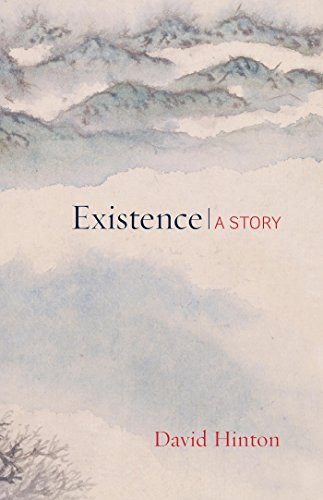
This is the story of existence, and it begins with a painting. Join David Hinton, the premier modern translator of the Chinese classics, as he stands before a single landscape painting, discovering in it the wondrous story of existence—and as part of that story, the magical nature of consciousness. What he coaxes from the image is nothing less than a revelation: the dynamic interweaving of mind and Cosmos, and the glorious dance of Absence and Presence that is the secret of that Cosmos.
User’s Reviews
Reviews from Amazon users which were colected at the time this book was published on the website:
⭐David Hinton has an unfortunate niche. On one hand, his empirical interpretation of Chinese philosophy and religion is probably unappealing to spiritual enthusiasts. On the other hand, dry academics might scoff at his creative interpretation and imagination. So that leaves Hinton somewhere between spiritual philosopher Alan Watts and established academician Bryan Norden. This, I suspect, is why his audience is relatively small. And that’s a tragedy, because this book is important!Let’s talk about the problems first. Hinton is a little repetitive. There are a few too many descriptions of “existence-tissue”. Hinton also has been criticized for heterodox translation choices without defending them well enough, which is fair. I think Hinton is a good translator, but he could do a better job giving the reader justifications and references when discussing alternate choices. He also fully translates Chinese names, which I like, but then sometimes doesn’t give the reader the simpler pinyin or wade-giles versions for reference.All that being said, this book is incredible and absolutely doesn’t depend on arguments about translation. Hinton is by far the most elegant explainer and interpreter of Chinese philosophy I’ve come across and this book is a must have addition to any Tao or Zen library. Difficult ideas are explained with ease and Hinton frames Taoist and Zen thought and practice brilliantly. Hinton also dives into the differences between the ancient Chinese and English languages in profound ways. I have never read a commentary of this depth from anyone else. And finally, he successfully argues for an interpretation of Taoist and Zen ideas that is fully compatible with our current scientific understanding.So much of eastern philosophy and religion feels stale these days. Much ink is spilled on nuanced explanations of ancient views, academic translations, or on the other extreme westernized spiritual practice. Of course, academic and spiritual works are perfectly fine. But Hinton’s work is fresh blood in the aging body of eastern thought and practice. It’s essential reading for anyone looking for a beautiful melange of modern poetic exposition and profound ancient wisdom. As an avid reader of Buddhist and Taoist writing, I highly recommend it!
⭐David Hinton’s “Existence: A Story,” a followup to “Hunger Mountain,” continues his exploration of Chinese philosophy via painting, calligraphy, poetry, Taoism, and Ch’an Buddhism. A tall order, and one he pulls off with finesse. Using an ethereal landscape painting by Shih-T’ao (1642-1707), Hinton manages to travel through the inner workings of the artist’s mind and explicate why such artwork provides us an opportunity for awakening in the most profound sense of the word.Any fan of “Hunger Mountain” will enjoy picking up the author’s trek through some of the most profound ideas coursing through the human experience. But what makes “Existence” even more interesting is the sheer exuberance shining through in the new work. There seems to be no question that Hinton has hit his stride, each book pushing the envelope a bit further, probing into the underbelly of what Lao Tzu and the old Ch’an masters have been trying to tell us for centuries. And thanks to Hinton, it’s possible that the “dark enigma” will now seem a little less shadowy. Good stuff!
⭐I’ve read all of David Hinton’s books and truly feel that he has changed my perspective on the Cosmos and my connection to it. “Existence” is a wonderfully deep and insightful book that I will forever cherish. Thank you again, David Hinton!
⭐I’ve been reading books on Taoism, Zen, and Ch’an Buddhism for five decades (gulp), and I find David Hinton not only the best translator, but also the clearest expositor. Existence is his second book of exposition rather than translation, following Hunger Mountain. I recommend reading Existence first. Hinton’s agenda is simpler. When I then reread Hunger Mountain, its several strands wove together more naturally. I don’t generally reread books, especially not right away, but I’ve reread these two books three times now, with increasing understanding. Too many books promise to “change your life”. Prolonged companionship with Hinton actually can. Just as the voices of classical Chinese poets speak in his voice, I hear his voice reorienting my relation to the world around me. My gratitude to him is difficult to express adequately.
⭐David Hinton seems to want to give us a summa of Asian mysticism. In doing this, he seeks to find everything in one painting by Shitao, accompanied by a poem by Yan-lü. While I have nothing but admiration for both the painter and the poet, I think Hinton reads an awful lot into the painting. This reminds me of others who attempted to explain too much — R.H. Blyth and Alan Watts come to mind. Wordy commentary obscures Asian wisdom. I prefer scholarship which seeks only to lay out the results of focused research and reflection and leaves us to come to personal understanding. Jonathan Hay’s treatment of Shitao is all we need.Another criticism I have is that Hinton tends to lump all Western philosophy together, simplifies it and overlooks or doesn’t care to know all its metaphysical insights. The mystery of existence, something originating in pre-Socratic philosophy and resurfacing in the scholastic philosophy of Thomas Aquinas and some who followed in his footsteps, gives priority to existence over ideas/concepts, and is radically anti-Cartesian. In his bias, Hinton is content to cite only Descartes as if he personified all Western philosophy and culture.A problem with some books published by Shambhala: they cater to the pseudo-mystical appetites of Westerners. I am not making any sort of unfavorable statement about Asian religion and philosophy, just the forms that these have taken in an atmosphere of Western consumerism.
⭐Wonderful book. I really appreciate the world view behind it but it also felt like a lovely introduction to Chinese painting and language what was an additional treat. I’m just starting to read Hunger Mountain now. One reviewer suggested reading Exsistence first and I’m glad I did.
⭐Origins and representation As the blurb says David Hinton uses this painting by the 16th century master Shitao to discuss Chinese beliefs about origins and the cosmos. As you might expect from this translator – this is interwoven with discussion of the Chinese written language.For those with little knowledge of classical Chinese cosmology, as I was, this book will be a revelation. It also gives great insight into the painting of Shitao and Chinese landscape painting in general. It took me straight to Hinton’s earlier book – Hunger Mountain – which is equally fascinating. So if you wish to hear about Absence, Prescence and the dark enigma as the source of the ten thousand things – this is the place.Many of the references are difficult to find. One is out of print but can be downloaded from the author’s website which you can find by googling Jonathan Hay Shitao (not permitted to put external websites in Amazon reviews!)
⭐Gift for friend who loves this elegant book
⭐Amazing to read.
⭐This is a fascinating book. I am not sure that I understand all of it, but it explains the concept of Chinese ideograms, and the Chinese world view that is their result. Though this is a cliché, it makes one think. It may not be to everyone’s taste, and some will find it difficult to follow, but others will find themselves going beyond into a new world of understanding. I was particularly intrigued by the concept of blank space in Chinese ideograms. We too often fail to see between the lines. Enough said. Highly recommended for some, but for others it may be a difficult read.
⭐Ausgehend von einem Bild des chinesischen Künstlers Shitao, der ein Gedicht von Huang Yan-lü als Quelle verwendet, dringt David Hinton in den Beziehungsreichtum der chinesischen Poesie und der kulturellen Besonderheit der chinesischen Malerei ein. Leere/ Abwesenheit und Fülle/ Präsenz dargestellt in den so sparsam eingesetzten – und deswegen zum Verfolgen mit dem Inneren herausfordernden- Worten bzw. Bildgegenständen. Eine spirituelle Sicht auf die Welt, die diesseitig und erreichbar ist.
⭐
Keywords
Free Download Existence: A Story in PDF format
Existence: A Story PDF Free Download
Download Existence: A Story 2016 PDF Free
Existence: A Story 2016 PDF Free Download
Download Existence: A Story PDF
Free Download Ebook Existence: A Story