

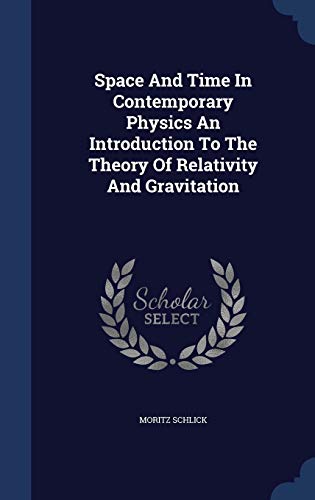
Ebook Info
- Published: 2015
- Number of pages: 116 pages
- Format: PDF
- File Size: 5.64 MB
- Authors: Moritz Schlick
Description
This work has been selected by scholars as being culturally important, and is part of the knowledge base of civilization as we know it. This work was reproduced from the original artifact, and remains as true to the original work as possible. Therefore, you will see the original copyright references, library stamps (as most of these works have been housed in our most important libraries around the world), and other notations in the work.This work is in the public domain in the United States of America, and possibly other nations. Within the United States, you may freely copy and distribute this work, as no entity (individual or corporate) has a copyright on the body of the work.As a reproduction of a historical artifact, this work may contain missing or blurred pages, poor pictures, errant marks, etc. Scholars believe, and we concur, that this work is important enough to be preserved, reproduced, and made generally available to the public. We appreciate your support of the preservation process, and thank you for being an important part of keeping this knowledge alive and relevant.
User’s Reviews
Reviews from Amazon users which were colected at the time this book was published on the website:
⭐How it addresses and clarifies difficult concepts that constitute the foundation of physics theories.
⭐I don’t think this is one that most people will want to buy, if they can get it from the library. Of its 87 pages of text, 20 pages are particularly significant and extremely worthwhile: Chapter 9 on “The Finitude of the Universe” and Chapter 10 “Relation to Philosophy.” Other than these, the book is largely a very sparse treatment of the conceptual fallout (aka interesting consequences) of Einstein’s theory of relativity. I can’t say that anything in the book is all that well explicated, but those aforementioned chapters are handled much better than the others. Much of what is found in this book will either be covered by philosophy of physics texts (introductory, even) that deal with relativity in any capacity, and any technical modern physics text (e.g., Thornton and Rex’s). I did enjoy Schlick suggestion that we consider expanding shells of light, rather than linear light rays; but, still, Schlick’s treatment was all too sparing.Overall, I’d say philosophers of physics and philosophers of science will be interested in chapters 9 and 10. The book, as a whole, being considerably dated, might be useful to a historian of science. I also think that parts of the work may interest a physicist seeking a deeper conceptual exploration than is found in the typical physics text, but that is still familiar to the physicist in its construction. I recommend this book, but definitely not strongly, only really suggesting that philosophers of physics give it a quick skim for interesting points and take a look at chapters 9 and 10. It’s short enough that I have to give it four stars, being that it is worth a lunch-break’s read.
⭐I don’t think this is one that most people will want to buy, if they can get it from the library. Of its 87 pages of text, 20 pages are particularly significant and extremely worthwhile: Chapter 9 on “The Finitude of the Universe” and Chapter 10 “Relation to Philosophy.” Other than these, the book is largely a very sparse treatment of the conceptual fallout (aka interesting consequences) of Einstein’s theory of relativity. I can’t say that anything in the book is all that well explicated, but those aforementioned chapters are handled much better than the others. Much of what is found in this book will either be covered by philosophy of physics texts (introductory, even) that deal with relativity in any capacity, and any technical modern physics text (e.g., Thornton and Rex’s). I did enjoy Schlick suggestion that we consider expanding shells of light, rather than linear light rays; but, still, Schlick’s treatment was all too sparing.Overall, I’d say philosophers of physics and philosophers of science will be interested in chapters 9 and 10. The book, as a whole, being considerably dated, might be useful to a historian of science. I also think that parts of the work may interest a physicist seeking a deeper conceptual exploration than is found in the typical physics text, but that is still familiar to the physicist in its construction. I recommend this book, but definitely not strongly, only really suggesting that philosophers of physics give it a quick skim for interesting points and take a look at chapters 9 and 10. It’s short enough that I have to give it four stars, being that it is worth a lunch-break’s read.
Keywords
Free Download Space And Time In Contemporary Physics An Introduction To The Theory Of Relativity And Gravitation in PDF format
Space And Time In Contemporary Physics An Introduction To The Theory Of Relativity And Gravitation PDF Free Download
Download Space And Time In Contemporary Physics An Introduction To The Theory Of Relativity And Gravitation 2015 PDF Free
Space And Time In Contemporary Physics An Introduction To The Theory Of Relativity And Gravitation 2015 PDF Free Download
Download Space And Time In Contemporary Physics An Introduction To The Theory Of Relativity And Gravitation PDF
Free Download Ebook Space And Time In Contemporary Physics An Introduction To The Theory Of Relativity And Gravitation