

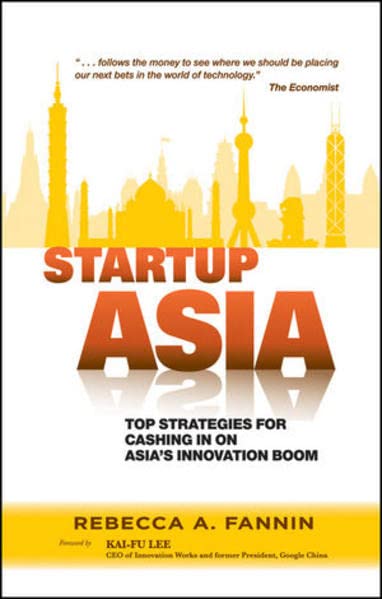
Ebook Info
- Published: 2011
- Number of pages: 256 pages
- Format: PDF
- File Size: 4.38 MB
- Authors: Rebecca A. Fannin
Description
Find out where the new innovation hot spots are, what the next consumer waves will be, and where to catch themAsia’s innovation hot spots are fast emerging as first-choice destinations for bright, young entrepreneurs. From Taiwan to Singapore, technology center hubs are forming to rival the original Silicon Valley. Startup Asia gives you a close-up view into the key growth trends shaping entrepreneurship in China and India, plus the new frontier market of Vietnam.Showing how entrepreneurs and investors can start up in Asia and go global, the book provides a first-hand, on-the-ground tour of the new technology centers that are gaining momentum all over Asia. Interviews with the most successful venture capitalists and entrepreneurs reveal their winning strategies and show how a new generation of entrepreneurs in China and India are no longer looking to the West for their cues—but are instead crafting their own local business models and success strategies.Shows entrepreneurs and investors how they can pursue their dreams of launching successful start-ups in AsiaReveals that many of the same venture investors that first funded young businesses in Silicon Valley moved into China, then India, and are now finding their way to VietnamAddresses the risks of doing business in Asia’s developing markets, including lack of intellectual property protection, political and regulatory shifts, bribery, and corruptionFrom high-profile Forbes contributor Rebecca Fannin, Startup Asia is the essential guide for anyone looking to trek into this new frontier.
User’s Reviews
Editorial Reviews: Review “Rebecca Fannin has established herself as the preeminent expert on the emerging innovation economies of Asia. There is no better guide to understanding the countries and companies that are commercializing the disruptive technologies and ideas of the future.” Jason Pontin Editor-in-Chief and Publisher, Technology Review”Rebecca Fannin, who caught the early waves of the Chinese Internet boom with her book Silicon Dragon, shows why we now need to be paying attention to VIC (Vietnam, India and China) in her forward-looking book Startup Asia. With diligent on-the-ground reporting and hard-won access, Fannin follows the money — the smart money of VCs who made money on both the U.S. and China Internet booms — to see where we should be placing our next bets in the world of technology.” Gady Epstein Correspondent, The Economist”Startup Asia starts out with a bang and picks up steam from there. Rebecca Fannin has done her homework. She catches the Asian markets, as she takes the reader through China, India and Vietnam. The force of Asian innovation and market presence will be with us forever. You’ll be well served by reading this excellent work and getting to know some of the players involved.” Dick Kramlich Chairman and Co-Founder, NEA”Startup Asia takes readers on a whirlwind tour of the kaleidoscope of tech startups and venture activity across Asia. Only Ms. Fannin can combine facts, data and compelling personal stories of entrepreneurs in Asia into such a rewarding read. Should be on the Kindle shelf for every business school course on Asia or entrepreneurship.” Ron Schramm Professor, Columbia Business School and Chinese European International Business School”Startup Asia is a must read! The shift of entrepreneurial activity to Asia is dramatically changing investment opportunities. No one has done more field research or has more thoughtful analysis and insights on this dramatic change than Rebecca Fannin!” Patrick J. McGovern Founder and Chairman, International Data Group”Rebecca Fannin delivers an inspirational journey from tech parks in India to half-constructed offices in Ho Chi Minh City. Startup Asia is a splendidly woven narrative of the leading entrepreneurs, venture capitalists and thinkers who are shaping the future that is being invented in Asia and envied around the globe.” Tony Nash Global Director, Custom Research, Economist Intelligence Unit From the Inside Flap Asia’s innovation hotspots are emerging as first-choice destinations for bright, young talents as the Silicon Dragon entrepreneurial revolution moves on from China to India, Vietnam and beyond. Forbes contributor Rebecca A. Fannin provides a first-hand, on-the-ground tour of Asia’s new tech centers. She catches China’s lead and shows how India promises to close the gap while Vietnam is on the frontier. Over 18 months from Shanghai to Singapore, Beijing to Bangalore, Taipei to Ho Chi Minh City, she interviewed 100 of Asia’s hottest up-and-comers and their venture investors. Now, she reveals the winning strategies of a new generation of entrepreneurs who no longer look to Facebook, Amazon and eBay for cues but are crafting their own business models, going global, and scoring IPOs on Wall Street. Whether it’s mobile, e-commerce, gaming, social networks, biomedical or cleantech deals, she tells how young upstarts are getting ahead with a toolbox of tactics. You’ll meet gutsy Vietnamese self-starter Nguyen Xuan Tai who made his search engine, Socbay, in the image of Google – and turned down an offer from Eric Schmidt. You’ll meet Harvard MBA Naveen Tewari who cranked up mobile ad network inMobi in Bangalore and expanded internationally. You’ll meet Ray Zhang who’s behind the wheel of fast accelerating Shanghai car rental service eHi. You’ll also meet the savvy venture capitalists who are betting on Asia. Whether you’re an entrepreneur, investor or tech whiz, you couldn’t ask for a better guide for your trek into the new frontier than Startup Asia. From the Back Cover “Rebecca Fannin has established herself as the preeminent expert on the emerging innovation economies of Asia. There is no better guide to understanding the countries and companies that are commercializing the disruptive technologies and ideas of the future.” Jason Pontin Editor-in-Chief and Publisher, Technology Review”Rebecca Fannin, who caught the early waves of the Chinese Internet boom with her book Silicon Dragon, shows why we now need to be paying attention to VIC (Vietnam, India and China) in her forward-looking book Startup Asia. With diligent on-the-ground reporting and hard-won access, Fannin follows the money — the smart money of VCs who made money on both the U.S. and China Internet booms — to see where we should be placing our next bets in the world of technology.” Gady Epstein Correspondent, The Economist”Startup Asia starts out with a bang and picks up steam from there. Rebecca Fannin has done her homework. She catches the Asian markets, as she takes the reader through China, India and Vietnam. The force of Asian innovation and market presence will be with us forever. You’ll be well served by reading this excellent work and getting to know some of the players involved.” Dick Kramlich Chairman and Co-Founder, NEA”Startup Asia takes readers on a whirlwind tour of the kaleidoscope of tech startups and venture activity across Asia. Only Ms. Fannin can combine facts, data and compelling personal stories of entrepreneurs in Asia into such a rewarding read. Should be on the Kindle shelf for every business school course on Asia or entrepreneurship.” Ron Schramm Professor, Columbia Business School and Chinese European International Business School”Startup Asia is a must read! The shift of entrepreneurial activity to Asia is dramatically changing investment opportunities. No one has done more field research or has more thoughtful analysis and insights on this dramatic change than Rebecca Fannin!” Patrick J. McGovern Founder and Chairman, International Data Group”Rebecca Fannin delivers an inspirational journey from tech parks in India to half-constructed offices in Ho Chi Minh City. Startup Asia is a splendidly woven narrative of the leading entrepreneurs, venture capitalists and thinkers who are shaping the future that is being invented in Asia and envied around the globe.” Tony Nash Global Director, Custom Research, Economist Intelligence Unit About the Author Rebecca A. Fannin is the author of Silicon Dragon (McGraw-Hill, 2008), a contributor to Forbes, and a consultant and public speaker. Her news and events group, Silicon Asia, www.siliconasiainvest.com, publishes e-newsletters and research, and develops conferences in tech hotspots. Since 1992, she has been reporting on innovation, technology and emerging economies. A former international editor at Red Herring, the Pulitzer-owned International Business, AdAge and the Asian Venture Capital Journal, Rebecca has also contributed to Inc., Worth, Fast Company, Chief Executive, The Deal, and Harvard Business Review and has appeared as a commentator on Fox Business News, Sky TV and CCTV. She has lectured at several universities, including Yale, Columbia and Harvard and her speaking engagements include the Asia Society, World Affairs Council, Overseas Press Club, the Foreign Correspondents Club, World Affairs Forum, the Northwest China Council, Vancouver Trade Club and Harvard Club. Rebecca has also consulted for KPMG, Econsultancy and Sony Ericsson among others and has testified as an expert witness on China’s Internet before a U.S.-China Trade Commission in Washington D.C. Originally from Lancaster, Ohio, Rebecca resides in New York City and San Francisco. She enjoys frequent reporting trips to China, India and other emerging markets. Read more
Reviews from Amazon users which were colected at the time this book was published on the website:
⭐CHINESE DAO IN 21ST CENTURY ACCORDING TO FUNG EXPLAINEDTHE RISE OF CHINA AS A POLITICAL MERITOCRACY AND CIVILIZATION STATEBY FRANCIS C W FUNG, PH. D.Fung’s essay of Chinese Dao (Ways) in 21st century is a five part Dao story of the rise of China as a meritocracy and civilization state. China is the only ancient civilization that has a continuous uninterrupted five thousand years history in the world. The Chinese Confucian philosophy extended to the world and heavily influenced the governance of South Eastern Asian nations to this day. The economic success of the Asian nations during the 20th century globalization is largely credited to the Confucian emphasis of education and hard work. But what has escaped the West’s global dialogue is the most important tradition of meritocracy governance of China as a civilization state. This is because the West is blinded by our liberal democratic ideology as not to see the most important Chinese contribution of meritocracy governance system to the world. The success of Singapore and China in the 20th century globalization as outstanding examples of meritocracy governed nations now proved the utter failure of the arrogant and premature Francis Fukuyama’s “theory of the end of civilization”.Throughout China’s five thousand years of rich civilization there were numerous outstanding philosophers such as Confucius, Mencius and Laotze etc. These and other famous philosophers created school of thoughts that are holistic and dedicated to serve all mankind for the good. These began with the Confucian governance system of Huang Dao (Grand Way) for the ultimate emperor. Confucian teachings of the grand way (Huang Dao) are; good governance must be based on the well-being of the people(Yi ren wei ben), to walk the grand way, the world works for the interest of all people(Da Dao zhi xing,Tien xia wei gong), select the outstanding and appoint the capable(Xuan xian yu neng) and unity of mankind(Sei jie da tong). Inspired by these grand holistic visions Chinese people are more inclined to think globally and holistically compared to the West that highly value individualism. These holistic inspirations will lead China to the 21st century to strive for win win cooperation and global community of common destiny as exemplified by the five Chinese Dao (ways) stories in Fung’s essay.The five Dao stories of the rise of China as a meritocracy and civilization state are:(I)CHINA AS THE CIVILIZATION STATE WITH THE GRAND WAY(HUANG DAO)China as a civilization state of long tradition with a predominant Confucian philosophy has practiced meritocracy throughout history. During the emperor days, the power of the emperors was constrained by the advice of their mandarin court. The mandarins in the court were selected through imperial examinations that were open to the whole population. The standard of the examinations were set by Confucian teachings of the grand way (Huang Dao), such as good governance must be based on the well-being of the people(Yi ren wei ben), the world works for the interest of all people(Tien xia wei gong), select the outstanding and appoint the capable(Xuan xian yu neng) and unity of mankind(Sei jie da tong). With this Confucian high ideal of the grand way(Huang Dao) to guide China’s meritocracy governance China remain the highest civilization state of the world for most world history. During the last two thousand years except for the last two hundred years China was the most advanced and prosperous empire in the world. China was behind in the European industrial revolution but guided by her civilization state meritocracy China rapidly caught up with the West during the last four decades. Today China is the second largest economy and the world’s number one trading nation again.(II) VERTICAL POLITICAL MERITOCRACY DEMOCRACY AS DAO PRACTICED IN CHINAAfter many years of extensive research, Daniel Bell, chair professor of the Schwarzman Scholars Program at Tsinghua University, in “The China Model” reported that China has a long tradition of meritocracy practice. The Chinese Communist Party (CPC) has a very large Organization Department which tests and trains the cadres for promotion. The tests and programs are rigorous and also include nominations by piers and superiors. Periodic skill trainings are conducted with sophisticated party school courses.Chinese political meritocracy is firmly implemented at top level of government and election at lower village level, not unlike the Bahai system of governance. Chinese top leaders at the politburo level need at least three terms of duty at large city or provincial level with hundreds of millions of citizens. This is called a vertical system of meritocracy democracy by Professor Daniel Bell. That we in the U.S. totally missed China’s development of the Dao of the political meritocracy democracy as legitimate governance system is because of our preoccupation to spread our liberal democracy ideology to maintain hegemony. The risks that we missed this China Dao of development cannot be overestimated. This is of paramount importance that the new Trump government now be informed of China’s vertical political meritocracy democracy so we can remain engaged with important development and stay competitive. (III) CHINESE DAO OF “HE” CULTURE IS SOCIALISM WTH CHINESE CHARACTERISTICS“HE” culture is the Chinese harmony philosophy of Confucian and Daoism teaching. According to Professor Daniel Bell, the eminent Western Confucian scholar at Tsinghua University, Confucians emphasize that a good life is characterized, first and foremost, by rich and diverse social relations. Harmony, at a minimum, means peaceful order in the absence of violence. Conflict is unavoidable; harmony is the result of dynamic balance of contending forces. The Confucian idea of harmony also values diversity (Hai na bei chuan, you yon na da).Under the grand Dao of harmony, Xi Jinping, the president of China, is travelling the world to promote win win cooperation, mutual development, and community of common destiny. Hope is high that the newly elected U.S. president will accept the new major power relation proposed by Xi and not confront China. Please refer to my published essay “Why Xi Jinping, the president of China is good for China and world harmony”. (Please google worldharmonyforum.blogspot.com/ under harmony renaissance).(IV) THE CHINESE DAO OF INTERNET CULTURE IS ABOUT GOOD FOR THE LARGEST DENOMINATION (YI REN WEI BEN)The Chinese belief is holistic, good for the largest denomination. American highly value individualism and freedom. Confucian philosophy teaches the grand way for the world (Huang Dao), such as good governance must be based on the well-being of all the people (Yi ren wei ben), the world works for the interest of all people (Tien xia wei gong) not just one nation, select the outstanding and appoint the capable (Xuan xian yu neng) and unity of mankind (Sei jie da tong). Because individualism is highly valued, the U.S. government uses the internet to promote identity politics and political correctness, by so doing sets a limit to its internet growth to the largest denomiation. On the contrary Chinese internet sets its sight on good for the largest demonization. As a result Chinese internet is more pervasive and far reaching. That is why even China is an internet late comer it’s internet is fast surpassing America. Of the ten largest internet enterprise five of them are in China and continue to grow. Today Nov 11 is the singles day Alibaba internet sale in China. In one day the sale of one trillion RMB sales surpassed the combined America total sales of Thanksgiving, Christmas and black Friday.(V) THE CHINESE DAO OF “ONE BELT ONE ROAD” INITIATIVEThe ancient Silk Road that connects Europe with China through Central Asia is more than just a road of commerce. It is also a road of exchange for people, culture, technolongy and civilization. The four great inventions of China were transmitted to Europe through the Silk Road. Without those important inventions the European renaissance may not have happened or would be drastically reduced in scale or delayed. In 2003 President Xi Jinping of China announced the grand initiative of the Economic Development Belt and the 21st Century Maritime Silk Road (abbreviated as One Belt one Road).Since launching the initiative China has set up the Silk Road fund and Asian Infrastructure Investment Bank to finance infrastructures all over the world. China also built many highways, bridges, ports and railways through many difficult terrains connecting China with Europe through Central Asia. Many nations on the strategic route including Central, Eastern Europe, Central Asia and Arab countries are now embracing the One Belt One Road Initiative. For more information on the fast growth of One belt One Road initiative, google the subject and specific essays such as “Europe Finally Wakes Up To The New Silk Road, And This Could Be Big”.March 31, 2015 is a historic moment. China successfully launched the Asian Infrastructure Bank to fund the New Silk Road Initiative to provide connectivity for the world. Japan the last U.S. major military alliance country announced today that it would join the China infrastructure bank! By now all U.S. allies have all broke from their military alliance with America and join the peaceful mutual development initiative. The only redeeming grace for America is to join as observer country at a later day. It is natural for China to launch the New Silk Road Initiative, because of all the historical, technological, financial capability and infrastructure building experience reasons. China in the last 39 years has built 20 trillion dollars of infrastructure in her own country. This super scale of construction in such a short time has no historical precedence!Francis C W Fung, Ph.D.Director GeneralWorld Harmony Organization, San Francisco, CA
⭐Rebecca Fannin has done a remarkable job of interviewing and reporting on dozens of entrepreneurs. What a great and comprehensive review of high tech startups in Vietnam, India and China. This is a must-read if you are in the high tech or VC industry. The innovation happening across Asia is amazing.
⭐Very informative
⭐Rebecca Fannin has spent more time on the ground with enterpreneurs and venture capitalists in Asia than any other journalist of any nationality. She lays on detail after detail about how the best and brightest young minds are flowing into high-tech start-ups, some of them coming from the United States. She also analyzes how America’s top venture capital firms are piling money into these start-ups in China, Vietnam, India and elsewhere.So far, these companies are largely imitating the work done by Google, Facebook, Twitter, eBay and the like, but they are engaged in micro-innovation to adapt those ideas to their markets. They also are advancing in the realms of smart energy and pharmaceuticals.When will these start-ups come up with ideas that go global and penetrate the more advanced markets? It won’t happen right away, Fannin says, but it clearly could happen within five to 10 years. These societies don’t have the intellectual property protection that the United States enjoys; their own financial systems have not yet learned how to allocate capital to the best ideas; and they face other challenges, whether infrastructure or heavy handed governments.But Fannin believes it’s just a question of time before the Asians put all the pieces together to create genuine world-changing innovation. It’s time that America recognizes this–and responds.William J. Holstein, author, “The Next American Economy: Blueprint For a Real Recovery.”See […]
⭐Not found.
Keywords
Free Download Startup Asia: Top Strategies for Cashing in on Asia’s Innovation Boom in PDF format
Startup Asia: Top Strategies for Cashing in on Asia’s Innovation Boom PDF Free Download
Download Startup Asia: Top Strategies for Cashing in on Asia’s Innovation Boom 2011 PDF Free
Startup Asia: Top Strategies for Cashing in on Asia’s Innovation Boom 2011 PDF Free Download
Download Startup Asia: Top Strategies for Cashing in on Asia’s Innovation Boom PDF
Free Download Ebook Startup Asia: Top Strategies for Cashing in on Asia’s Innovation Boom